A Guide to Heilongjiang (黑龙江): Harbin, Ice & the Russian Border
Heilongjiang (Hēilóngjiāng) is China’s northernmost and easternmost province, and the only one where winter is the main event rather than something to be endured. The name means “Black Dragon River” — the Chinese name for the Amur, which forms most of the province’s three-thousand-kilometre border with Russia.
It is a young province by Chinese standards, formally established only in 1907, and much of what makes it distinctive arrived with a railway. The result is a corner of China that looks and tastes unlike anywhere else: onion domes and cobbled streets in the capital, sausage and rye bread on the table, a river that freezes hard enough to drive on, and a city that rebuilds itself in ice every January.
A brief history of Heilongjiang
For most of recorded history this was not really China. The forests and river valleys north of the Willow Palisade were the homeland of Tungusic peoples — Jurchen, and later Manchu — who hunted, fished and traded here, and who twice went south to rule the whole country: as the Jin dynasty in the twelfth century, and as the Qing in 1644.
Having conquered China, the Qing then tried to keep their homeland empty. For much of the dynasty, Han Chinese settlement north of the palisade was formally prohibited, the region reserved as a Manchu preserve. The policy failed slowly and then all at once: by the late nineteenth century, with Russia pressing from the north and the empire needing bodies on the ground, the ban was abandoned and millions of migrants moved north from Shandong and Hebei in one of the largest voluntary migrations in modern history — the 闯关东 (chuǎng guāndōng), “rushing beyond the pass”.
The event that made modern Heilongjiang, though, was a railway. In 1898 Russia began building the Chinese Eastern Railway as a short cut across Manchuria to Vladivostok, and at the point where the line crossed the Songhua River it threw up a construction town. That town was Harbin. Within twenty years it had Russian churches, a stock exchange, a symphony orchestra and one of the largest Jewish communities in Asia — a genuinely cosmopolitan city that had barely existed a generation earlier.
The twentieth century then dealt with the province harshly. Japan seized Manchuria in 1931 and ran it as the puppet state of Manchukuo until 1945; the occupation included the biological warfare programme at Unit 731 outside Harbin, whose former headquarters is now a museum and a site of remembrance. After 1949 the province was rebuilt as the industrial heartland of the new republic — heavy machinery, coal, and from 1959 the enormous Daqing oilfield — earning the northeast the nickname 共和国长子 (gònghéguó zhǎngzǐ), “the eldest son of the republic”.
The Northeastern dialect and Standard Mandarin
Here is the good news for anyone learning Chinese: Heilongjiang speech is Northeastern Mandarin 东北官话 (dōngběi guānhuà), and it is close to the standard language. Not identical — but far closer than Cantonese, Shanghainese or the Hokkien of the southeast, and closer in many respects than the speech of Sichuan or Henan.
The reason is historical. The province was populated late and rapidly, largely by migrants from Shandong and Hebei, so it never developed the deep local divergence of provinces settled two thousand years earlier. What you hear instead is a distinct accent laid over a familiar grammar: flatter tones, a fondness for the retroflex er ending, and a delivery that Chinese speakers everywhere associate with warmth, bluntness and comedy. A great deal of Chinese stand-up, sketch comedy and the folk-opera form 二人转 (èrrénzhuàn) is performed in it.
Six words you will genuinely hear. The audio plays the Standard Mandarin reading of each — a local speaker will colour them differently, but the characters are the same.
Phrases worth knowing in Heilongjiang
Standard Mandarin, but pitched at this province — things you might actually say in Harbin in January.
Northeastern cooking: the coldest table in China
Northeastern food 东北菜 (dōngběi cài) is built for the climate: generous, starchy, sour and salty, with pickling and preserving at its centre because for five months of the year nothing grows. Portions are famously enormous. Nobody here has ever been accused of small plates.
Notable cities of Heilongjiang
Harbin 哈尔滨
A Russian railway town that became a Chinese metropolis. Harbin has onion domes, a pedestrianised cobbled street of art nouveau facades, a symphony orchestra founded in 1908, and the coldest winter of any major Chinese city — which it has turned into its biggest asset.
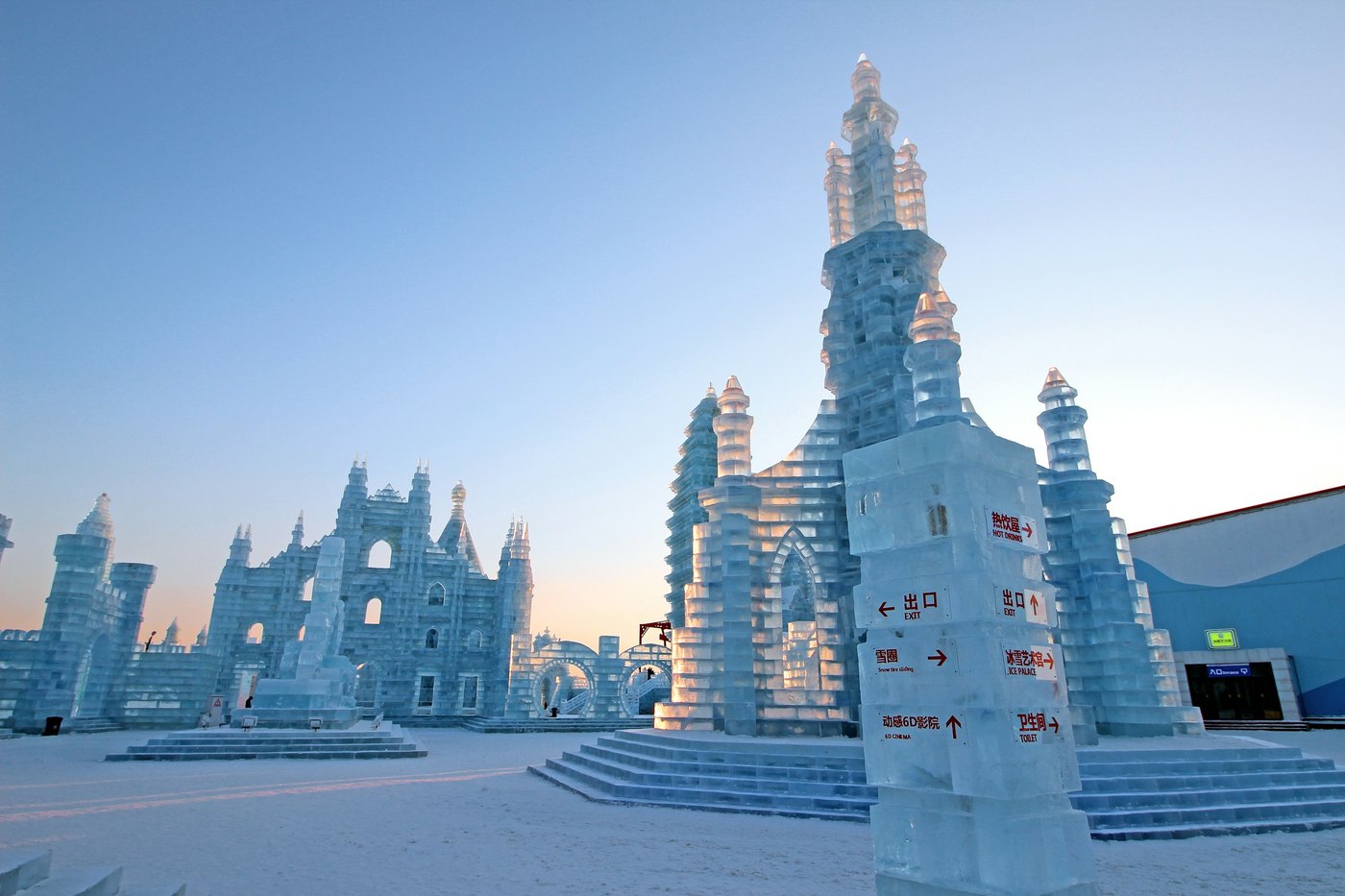
From early January the Ice and Snow World rises on the north bank of the Songhua: a temporary city of illuminated towers cut from river ice, with slides, skating and a Gothic cathedral in translucent blue. It is the largest event of its kind anywhere, and the reason most visitors come.
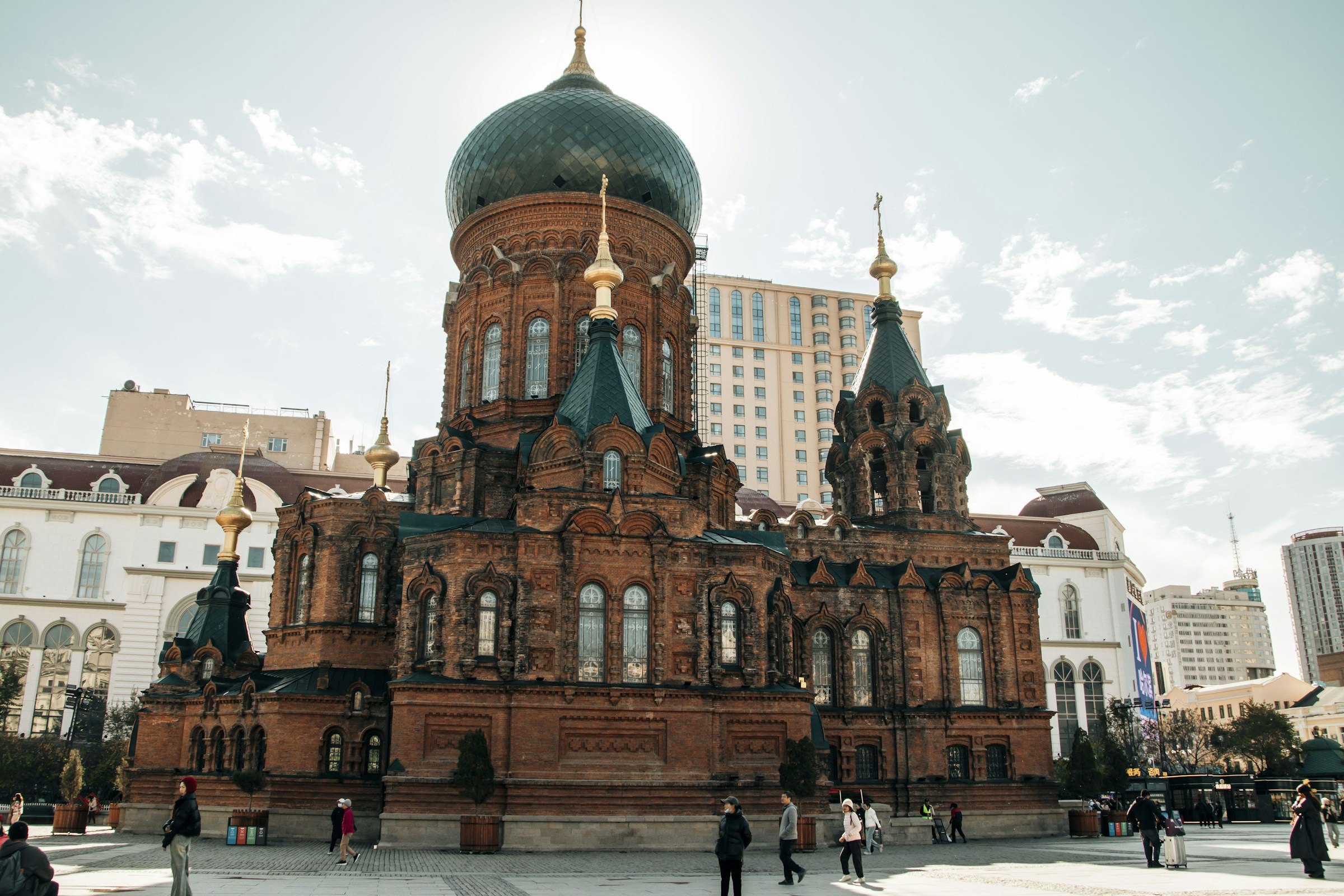
Don’t miss: Saint Sophia Cathedral, Zhongyang Street, the frozen Songhua, and a plate of guobaorou.
Qiqihar 齐齐哈尔
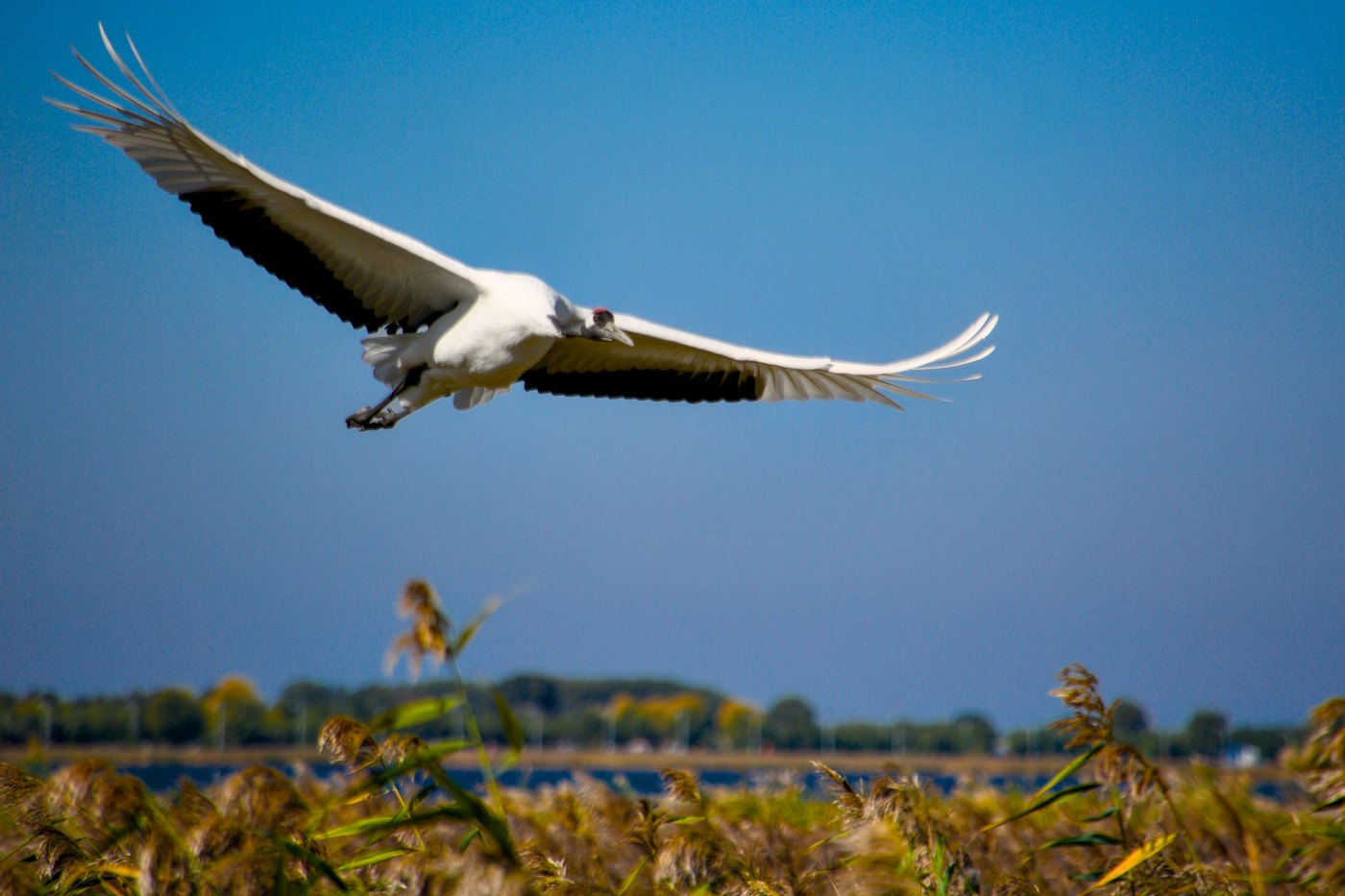
The province’s second city takes its name from a Daur word, and its nickname — 鹤城 (Hèchéng), Crane City — from the birds that nest on its doorstep. Zhalong National Nature Reserve, just outside town, is one of the world’s most important breeding grounds for the red-crowned crane.
The crane is not incidental in Chinese culture: it is the classical emblem of longevity, painted on scrolls and embroidered on robes for centuries. Seeing several hundred of them lift out of the reeds at once is the single best argument for going north in spring rather than winter.
Don’t miss: Zhalong wetlands at dawn, and the Nen River waterfront.
Mudanjiang 牡丹江
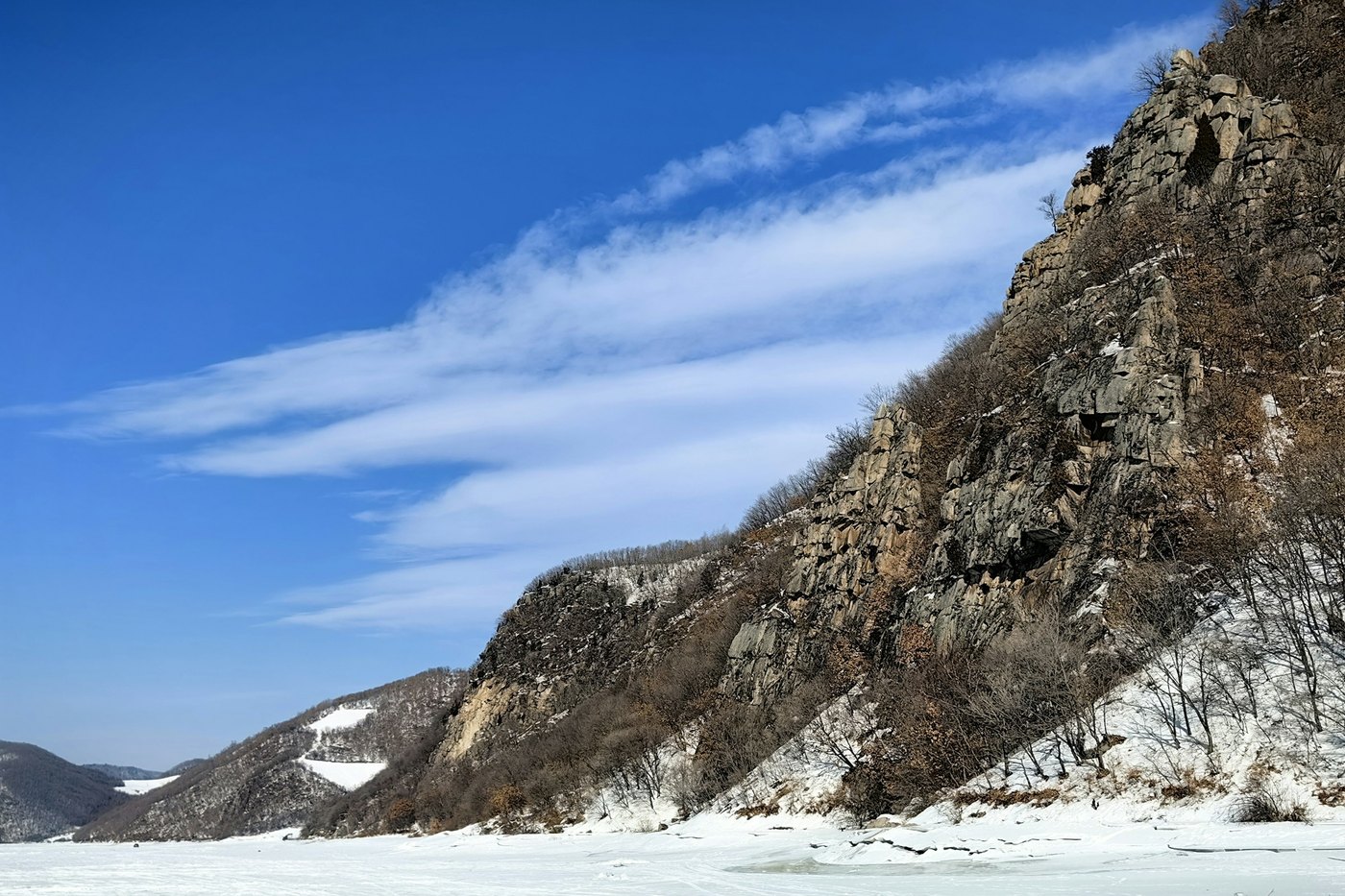
“Peony River” sits in the province’s southeast, in country shaped by old volcanoes. Jingpo Lake 镜泊湖 — “mirror lake” — was formed when lava dammed a river, and ends in the Diaoshuilou waterfall, which freezes into a wall of ice each winter.
Nearby, an Underground Forest grows inside a cluster of extinct craters. The city is also the gateway to Suifenhe on the Russian frontier, and to the remains of Bohai, a Tang-era kingdom whose capital stood here twelve centuries ago.
Don’t miss: Jingpo Lake, Diaoshuilou waterfall, and the crater forest.
Mohe 漠河
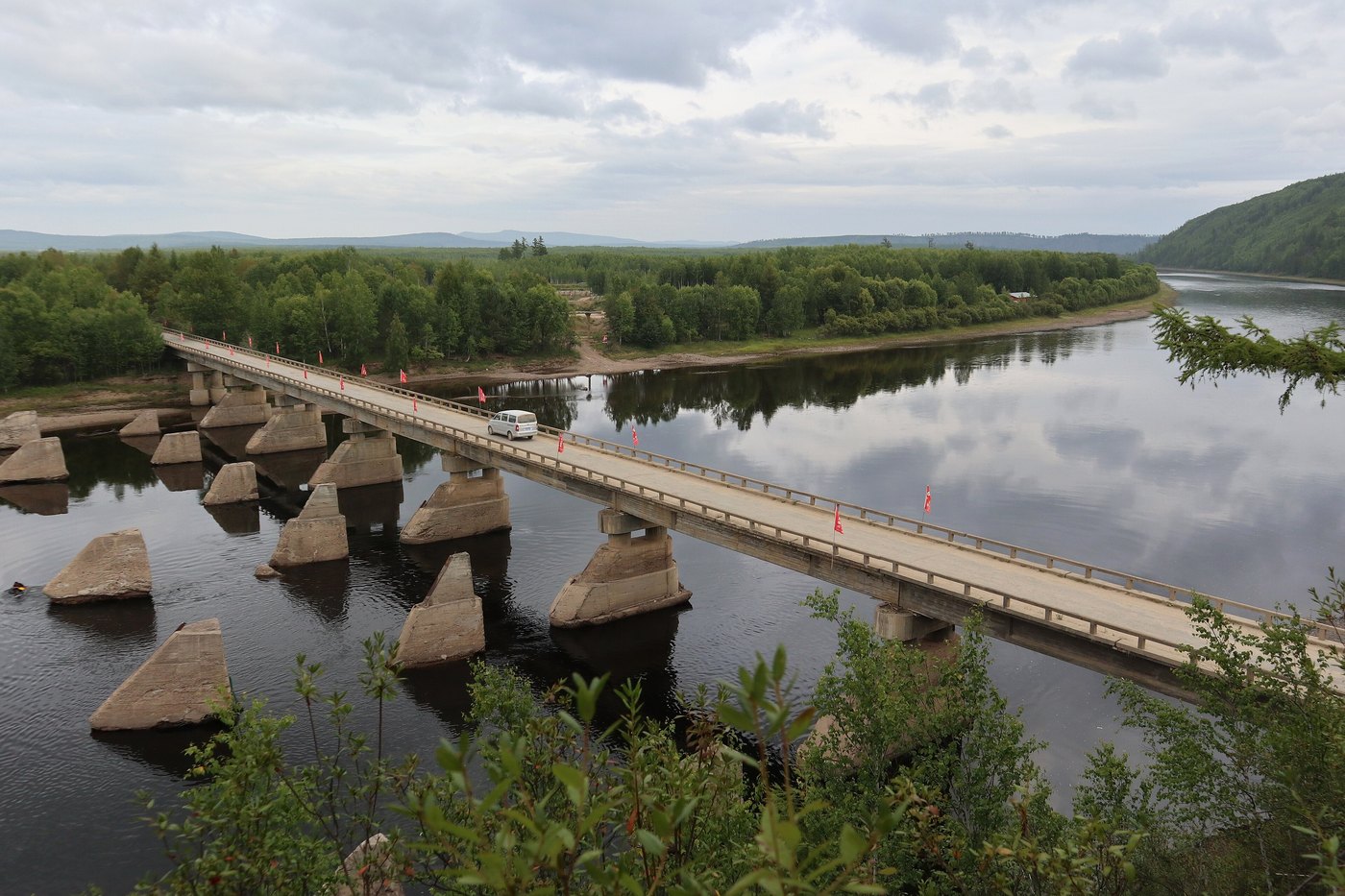
China’s northernmost settlement, on the Amur at the top of the Greater Khingan range. Winter temperatures here drop below −40 °C, and the village at the very tip of the country is called, straightforwardly, 北极村 (Běijícūn) — Arctic Village.
People come for two things: to stand at the northernmost point and photograph the marker, and for the slim chance of an aurora, which is occasionally visible from here and almost nowhere else in China. In midsummer the nights barely get dark at all.
Don’t miss: Arctic Village, the Amur bank, and the white nights around the summer solstice.
Heihe 黑河
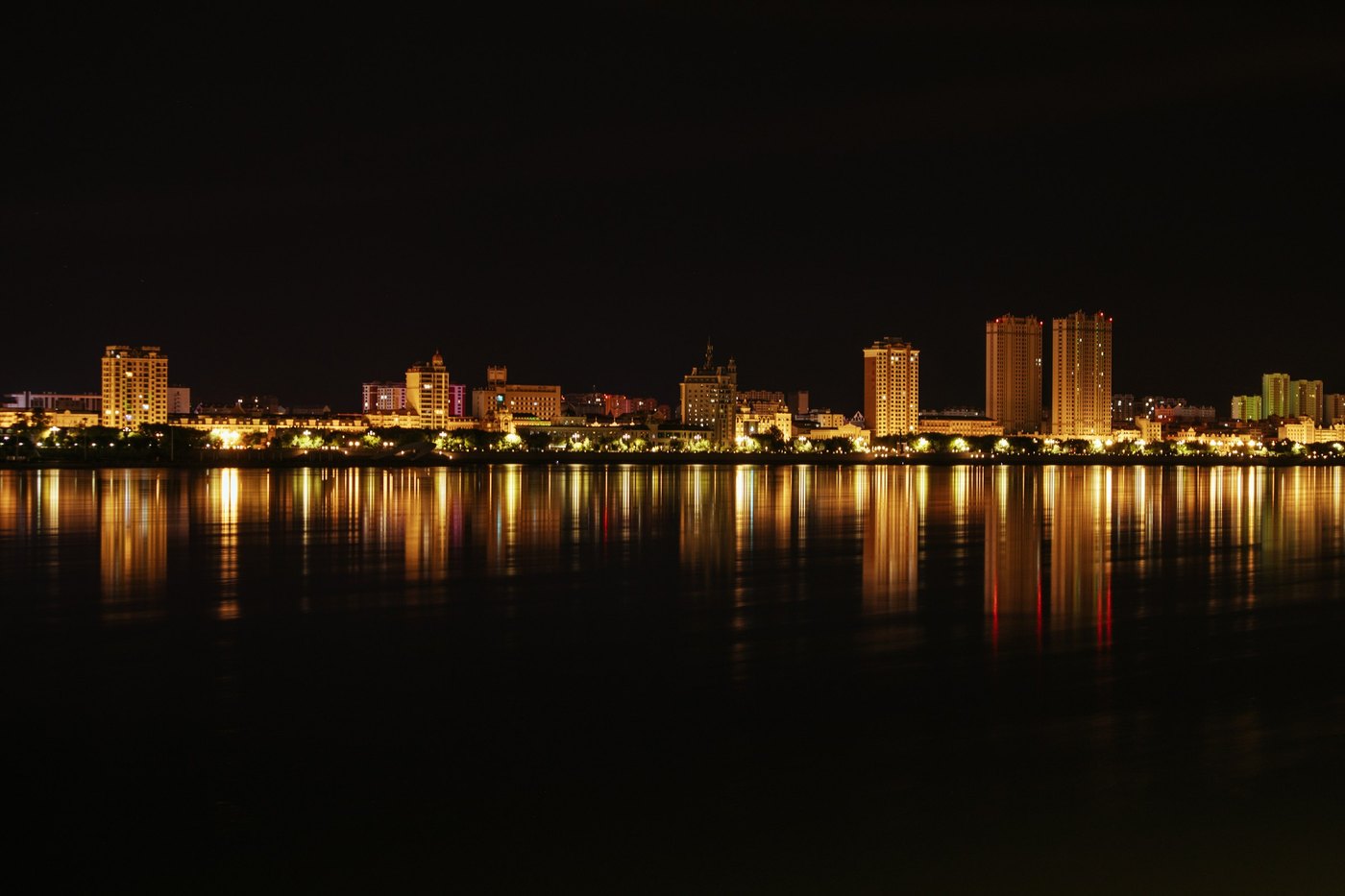
Heihe faces the Russian city of Blagoveshchensk directly across the Amur — the two are barely half a kilometre apart, close enough to watch each other’s traffic lights change. Nowhere else do a Chinese and a Russian city sit so close together.
For decades the crossing worked by boat in summer and by vehicles driven over the ice in winter. A road bridge finally opened in 2022, and the town runs on cross-border trade: Russian chocolate, flour and timber going one way, almost everything else going the other.
Don’t miss: the riverfront promenade, and the Aihui History Museum.
Iconic attractions across Heilongjiang
Harbin Ice and Snow World 冰雪大世界
A city built from Songhua river ice each January, lit from within and rebuilt from scratch every year. Ice lantern shows began here in 1963; the modern festival dates from 1985 and is now the largest winter festival on earth.
Saint Sophia Cathedral 圣索菲亚教堂
Completed in 1932 in wood and then rebuilt in brick, this Russian Orthodox church is Harbin’s emblem. It has not held services since the 1960s and now works as an architecture museum at the centre of a public square.
Zhongyang Street 中央大街
A 1.4-kilometre pedestrian street paved with square granite setts laid in 1924, lined with art nouveau, baroque and renaissance facades. It is the most complete stretch of European streetscape anywhere in China.
Zhalong Nature Reserve 扎龙自然保护区
Two thousand square kilometres of reed marsh near Qiqihar, and one of the last strongholds of the red-crowned crane. Spring and early summer are the seasons to come.
Wudalianchi 五大连池
“Five Connected Lakes” — a volcanic field where eruptions in the 1720s dammed a river into a chain of lakes. Black lava fields, cinder cones and mineral springs, and a UNESCO Global Geopark.
Yabuli Ski Resort 亚布力
China’s largest and oldest alpine ski area, developed for the 1996 Asian Winter Games. The season runs from November to April, which is longer than most European resorts manage.
Famous figures from Heilongjiang
Xiao Hong 萧红
Born in Hulan, near Harbin, and one of the outstanding Chinese writers of the twentieth century. Tales of Hulan River is a masterpiece of remembered childhood; she died in Hong Kong at thirty-one.
Chi Zijian 迟子建
Born in Mohe, at the top of the country, and one of China’s most decorated living novelists. The Last Quarter of the Moon tells the story of the Evenki reindeer herders of the Khingan forests.
Wang Jinxi 王进喜
The oil driller known as “Iron Man” 铁人 (tiěrén), whose crew opened the Daqing field in 1960. Not born here, but so bound to Daqing that he is inseparable from the province’s story.
Yang Yang 杨扬
Short-track speed skater from Tangyuan County who won China’s first ever Winter Olympic gold at Salt Lake City in 2002 — fittingly, for a province where children learn to skate on the river.
Shen Xue 申雪
Harbin-born pair skater who, with Zhao Hongbo, won the world championship three times and Olympic gold in 2010 after two bronzes. Harbin remains the centre of Chinese figure skating.
Li Jian 李健
Singer-songwriter from Harbin, known for a restrained, literary style unusual in Chinese pop, and for making a second career as a much-loved television talent-show mentor.
Heilongjiang’s modern economy
Heilongjiang feeds China and, for half a century, fuelled it. It is consistently the country’s largest grain-producing province — the plain that Chinese once called 北大荒 (běidàhuāng), “the great northern wilderness”, was reclaimed from the 1950s and is now called 北大仓 (běidàcāng), “the great northern granary”. Rice, maize and soybeans from this black earth reach every province.
The other half of the story is Daqing 大庆. Oil was struck here in 1959 — the year of the tenth National Day, which is where the name, “Great Celebration”, comes from — and the field became the largest in China and the symbol of industrial self-reliance. Wang Jinxi’s drilling crew entered national myth: the Iron Man who is said to have stirred a cement mix with his own body when the equipment failed. Daqing still produces oil, but output has fallen from its peak and the city is working through the long, difficult transition every resource town eventually faces.
That transition is the province’s central economic problem. The heavy industry that made the northeast “the eldest son of the republic” has aged, and Heilongjiang has one of the fastest-shrinking populations in China as young people leave for the south. The counterweights are agriculture, cross-border trade with Russia, forestry, and a winter tourism industry that grows every year.
Grain
China’s biggest producer — rice, maize and soybeans grown on some of the most fertile black soil in the world.
Oil & petrochemicals
Daqing remains a major field after six decades, with refining and chemicals built around it.
Russia trade
Border crossings at Heihe, Suifenhe and Tongjiang handle timber, energy, food and machinery in both directions.
Ice tourism
Harbin’s winter season now draws tens of millions of visits and has become a genuine growth industry.
Why Heilongjiang matters for Mandarin learners
If you are learning Chinese, the northeast is quietly one of the friendliest places in the country to practise. The accent is close to the standard, the grammar is the grammar you have been taught, and people are — by widespread Chinese agreement — direct, warm and inclined to talk to strangers. You will get more conversation here per hour than in almost any southern city.
The province is also a good corrective to the idea that China is culturally uniform. A place where the bread is Russian, the sausage is Lithuanian by descent, the emblematic building is Orthodox and the biggest annual event is made of ice does not fit the picture most learners start with. Understanding why Harbin looks like that — a railway, an empire, a migration — teaches more modern Chinese history than a chapter of a textbook.
For a wider view of how the country fits together, our Explore China map covers every province, and if the dialect interests you, the Mandarin pronunciation guide explains the sounds that regional accents move around.
Visiting Heilongjiang — practical notes
When to go. January is the point: the Ice and Snow World is open, the river is solid, and the whole province is doing what it is famous for. It is also brutally cold — daytime highs around −15 °C in Harbin and much lower further north. Late spring is the season for the cranes at Zhalong, and summer is short, green and pleasantly mild.
Getting there. Harbin Taiping International is the province’s hub, and high-speed rail reaches the city from Beijing in around five hours. Internal distances are large: Mohe is a two-hour flight or an overnight train from Harbin, and worth the effort only if the far north is the point of the trip.
Dressing for it. Visitors routinely underestimate this. Locals wear proper down, thermal layers, hats that cover the ears and boots rated well below freezing, and they are not being dramatic. Phone batteries die quickly in the cold; keep the phone inside your coat.
Crossing to Russia. Heihe and Suifenhe are working border crossings, but a Russian visa is required and rules change. Check current requirements before planning around it.
Test your Heilongjiang knowledge
1. What does the name Heilongjiang mean?
2. Which language family does Heilongjiang speech belong to?
3. Which country does Heilongjiang share a ~3,000 km border with?
4. Harbin exists largely because of what, built from 1898?
5. Which dish was invented in Harbin around 1907?
6. Zhalong Nature Reserve near Qiqihar protects which bird?
FAQs
Start your Mandarin journey
Want to learn the Standard Mandarin spoken across Heilongjiang and the rest of China? Online 1-on-1 lessons with a native speaker.