Teaching Mandarin to Western Students
A live four-week course for Chinese teachers who want to explain Chinese in plain language that makes sense to Western students. Join one-to-one by video call, or in a small group of up to four with individual feedback.
No commitment · No payment
- Length
- Four weeks
- Format
- Live by video call
- Who joins
- One-to-one, or groups of up to four
- Led by
- Will, founder of WillyChina
- From
- US$144 per teacher
For teachers who know their subject
You know Chinese from the inside, and you know how to teach it. This course adds the view from the student’s side: how tones, characters and everyday Chinese habits look to someone whose first language is English.
A textbook has to be complete. A student in front of you needs it to make sense. Teaching Mandarin to Western students is a craft of its own, and this course gives you four weeks to work on it.
Learning Mandarin yourself? Start with our Chinese courses.


Led by Will
Will, the founder of WillyChina, was born in China and raised in Sydney, speaking Mandarin at home and English everywhere else. He has spent more than ten years teaching Mandarin online to learners in more than 20 countries, from complete beginners and travellers to second-generation heritage learners and professionals preparing for meetings in Shanghai. His style is plain language over theory: words that make sense to the student in front of him, not explanations by the book.
Read more about Will and how we teach.
One idea, explained two ways
Here’s the kind of shift the course works on, using 客气 (kèqi, politeness). Both explanations are correct. The second starts from the student’s own life.
客气 (kèqi) is an adjective meaning polite or courteous. It also appears in set phrases such as 不客气 (bú kèqi, you’re welcome) and 别客气 (bié kèqi, no need to be polite).
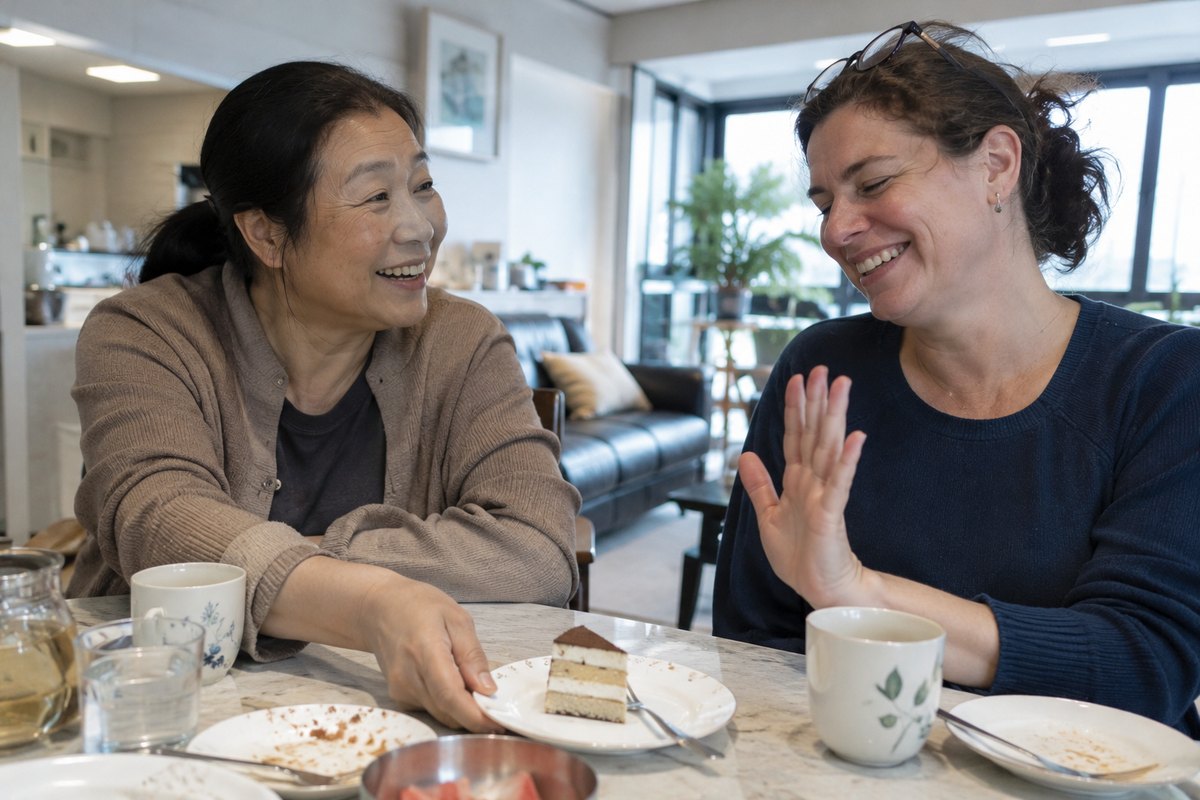
Think of the last time someone offered you the last slice of cake and you said, “No, no, you have it,” even though you wanted it. That little dance is 客气. So when a Chinese host says 别客气, they’re telling you that you can stop the dance and take the cake.
Teaching Mandarin to Western students, week by week
Understanding Western learners
You’ll exploreWhy adults learn Chinese, what they expect from a teacher, how they respond to feedback and how to build rapport.
Why it mattersStudents arrive with real reasons: a partner, a parent, a career move, a country.
Seeing Chinese from the English speaker’s side
You’ll exploreWhy tones and characters feel foreign, how to explain tones the way a Western ear hears them and how English can help.
Why it mattersA student’s first language can serve as scaffolding for learning their second language.
Running a lesson that works
You’ll explorePutting context ahead of drills, getting students speaking from the first lesson, correcting without discouraging and structuring a clear 60-minute lesson.
Why it mattersConfidence is built by speaking, not memorising, so students need room to try.
Teaching culture and bringing it together
You’ll exploreExplaining ideas like 客气 (kèqi, politeness) through the student’s own habits, using humour and story, and planning each student’s next steps.
Why it mattersCulture makes sense when it starts from what students would say at home.
A 60-minute lesson in four parts
This is the lesson shape we use at WillyChina, and it’s the starting point for week 3.
- Warm upThe student speaks first, using words from last week.
- IntroduceYou bring in something new, using real examples.
- Use itThe student puts it to work, and you correct as they go.
- Set practiceYou agree one short task for the coming week.
By the end of the course
The four weeks are built around three skills:
- Explain a difficult point in terms an English speaker understands
- Plan and run a lesson built around an adult’s own goals
- Build rapport and give feedback that suits Western students
Add a weekly practice hour
If you’re learning one-to-one, you can add a second hour each week. It’s a rehearsal: you practise what you’ve learnt with Will playing a Western student, and he gives you direct feedback.

What a rehearsal could look like
This is an illustration, not a real session.
客气 means polite.
So my host keeps refilling my plate. Should I be more polite?
Your definition is right. As a student, though, I still don’t know what to do with my plate. Try starting from something I’d do at home.
At home, you might say “no, I couldn’t” to a second helping, then take it anyway. Your host is doing the same dance from the other side.
Oh. So I can say no once, and they’ll offer again?
How it works and what it costs
- Book your intro callStart with a free 30-minute call about who you teach and what you’d like from the course.
- Choose your formatPick one-to-one or a small group, and a one-off course or carrying on monthly.
- Work through your weeksMeet Will live by video call each week, then stop there or carry on monthly.
One-to-one, one hour a week
Four weekly sessions at US$50 an hour.
One-to-one, two hours a week
Four weekly sessions and four practice hours at US$50 an hour.
| Group size | Per hour | Full course |
|---|---|---|
| Two teachers | US$43 | US$172 |
| Three or four teachers | US$36 | US$144 |
Monthly is the same price. Prices show in your own currency where we can tell it.
Small groups of up to four
A small group isn’t a classroom: two to four colleagues work with Will together, and each teacher gets individual feedback. Our Mandarin lessons for learners stay one-to-one or in pairs. This course is for teachers only.

FAQs
Talk to us about the course
Start with a free 30-minute intro call about who you teach and what you’d like from the course.