China is vast — almost incomprehensibly so. At 9.6 million square kilometres, it is the world’s third-largest country by area, roughly 1.25 times the size of Australia. But unlike Australia’s six states and two territories, China’s administrative structure is layered and complex, comprising 23 provinces, 5 autonomous regions, 4 directly administered municipalities, and 2 special administrative regions.
For Australians considering languages and dialects spoken across these regions, and see our guide to travel to China, doing business across the country, studying Mandarin, or simply trying to make sense of the news, understanding China’s provinces is genuinely useful. Each region has its own dialect, cuisine, history, economic character, and cultural identity. The differences between provinces can be as dramatic as the differences between countries.
This guide breaks down China’s administrative regions in plain English, giving Australian readers a practical and engaging overview of the full picture.
How China’s Administrative System Works
Before diving into the regions themselves, it helps to understand the structure. China divides its territory into several types of administrative units:
Provinces (省, shěng)
The standard administrative division, similar in concept to Australia’s states. There are 23 provinces (China counts Taiwan as its 23rd province, though Taiwan governs itself independently).
Autonomous Regions (自治区, zìzhìqū)
Five regions with significant ethnic minority populations that have a degree of legislative autonomy, though in practice they remain firmly under central government control.
Municipalities (直辖市, zhíxiá shì)
Four major cities administered directly by the central government rather than by a surrounding province. These are Beijing, Shanghai, Tianjin, and Chongqing.
Special Administrative Regions (特别行政区, tèbié xíngzhèngqū)
Hong Kong and Macau, which operate under a “one country, two systems” framework with their own legal and economic systems.
Now, let’s journey through them.
The Four Directly Administered Municipalities
Beijing (北京)
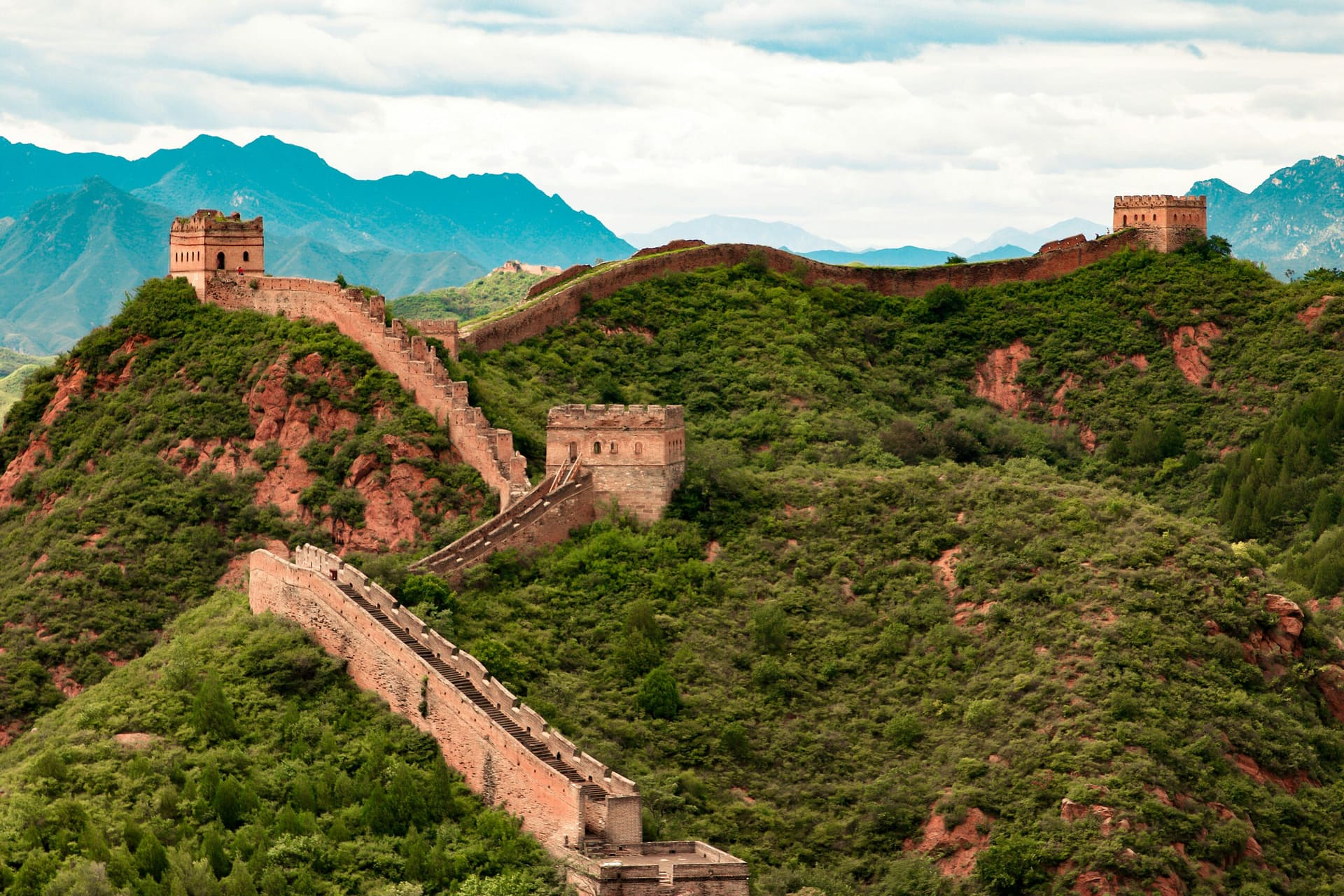
China’s capital and political heart, Beijing is home to around 22 million people, the Great Wall, the Forbidden City, and the headquarters of virtually every major state institution. It is the centre of Chinese political power and culture, and for Australians visiting China for business or diplomacy, Beijing is often the first port of call. The city’s dialect forms the basis of standard Mandarin (Putonghua), making it an ideal destination for language learners.
Shanghai (上海)
China’s financial capital and most cosmopolitan city, Shanghai is the closest thing in China to an international metropolis that Australians might immediately feel at home in. With its iconic skyline, world-class restaurants, thriving arts scene, and status as the country’s commercial hub, Shanghai is also home to a large Australian expat community. It is a major centre for Australian trade delegations and business investment.
Tianjin (天津)
Located just 30 minutes from Beijing by high-speed rail, Tianjin is one of China’s largest port cities and an important industrial and manufacturing hub. It is often overlooked by international visitors but plays a significant role in northern China’s economy and is worth exploring for its European-influenced architecture left from its colonial-era concession history.
Chongqing (重庆)
One of the world’s most populous cities, Chongqing is a sprawling municipality in southwest China that contains both a major urban centre and vast rural areas. Situated at the confluence of the Yangtze and Jialing Rivers, it serves as the gateway to the famous Three Gorges region. It is also renowned for its intensely spicy cuisine — a fair warning for Australians who prefer milder food.
The 22 Provinces (Excluding Taiwan)
Northern China
Hebei (河北)
surrounds Beijing and Tianjin and is one of China’s most important agricultural and industrial provinces. The Great Wall stretches across much of its landscape, and it hosted several events during the 2022 Beijing Winter Olympics.
Shanxi (山西)
is China’s coal heartland, a landlocked province with a remarkable history. It was the cradle of Chinese civilisation and contains some of the country’s oldest Buddhist temples and cave art, including the extraordinary Yungang Grottoes, a UNESCO World Heritage Site.
Shaanxi (陕西)
— not to be confused with Shanxi — is home to Xi’an, one of China’s greatest ancient capitals and the eastern terminus of the Silk Road. The famous Terracotta Warriors, one of the world’s greatest archaeological discoveries, are located just outside Xi’an. For Australians with an interest in ancient history, Shaanxi is unmissable.
Northeastern China (Dongbei)
Liaoning, Jilin, and Heilongjiang
make up the northeast — historically known as Manchuria. This rust-belt region was China’s industrial powerhouse during the Mao era and retains a heavy-industry character. Heilongjiang shares a border with Russia, and its capital Harbin is famous for its extraordinary annual Ice and Snow Festival, where massive sculptures carved from Siberian ice draw visitors from around the world. The region is also home to significant Korean and Russian cultural influences.
Eastern China
Shandong (山东)
is a large, prosperous coastal province known as the birthplace of Confucius and Mencius — two of China’s most influential philosophers. It is a major agricultural producer and has become an increasingly important high-tech and manufacturing hub. The city of Qingdao, home to China’s famous Tsingtao brewery, is a popular destination.
Jiangsu (江苏)
is one of China’s wealthiest provinces, anchored by the historic city of Nanjing (a former imperial capital) and the modern economic powerhouse of Suzhou. The region’s classical gardens, canals, and silk production have shaped Chinese aesthetics for centuries.
Zhejiang (浙江)
is the birthplace of Alibaba and a centre of Chinese entrepreneurialism and private enterprise. Its capital, Hangzhou, is famous for West Lake — one of China’s most celebrated natural landscapes — and has become a leading technology hub.
Anhui (安徽)
is an inland province best known internationally for its dramatic Huangshan (Yellow Mountain) scenery, which has influenced Chinese painting and poetry for millennia.
Fujian (福建)
sits across the Taiwan Strait and has historically been the origin province of a large proportion of the Chinese diaspora in Southeast Asia and Australia. Its Hokkien dialect is widely spoken among overseas Chinese communities. The province’s tea culture — including oolong and white teas — is world-renowned.
Jiangxi (江西)
is famous for Jingdezhen, the “porcelain capital of the world,” which has produced China’s finest ceramics for over a thousand years.
Southern China
Guangdong (广东)
is China’s most populous province and its economic engine. Home to the Pearl River Delta megacity cluster — including Guangzhou and Shenzhen — Guangdong has been at the heart of China’s economic transformation. Cantonese, spoken here, is the dialect most familiar to many in Australia’s Chinese community, given the historical immigration patterns from this region. Dim sum, roast duck, and Cantonese cuisine broadly trace their origins here.
Hainan (海南)
is China’s only tropical island province, often called the “Hawaii of China.” With its white sand beaches, palm trees, and duty-free shopping zones, Hainan is a popular domestic holiday destination and an emerging international tourism hub.
Central China
Henan (河南)
is China’s most populous province and its historical heartland. The Yellow River — the cradle of Chinese civilisation — runs through it. The ancient capital of Luoyang and the Shaolin Temple (birthplace of Kung Fu) are among its most famous drawcards.
Hubei (湖北)
gained global attention in 2020 as the location of Wuhan, where COVID-19 first emerged. Beyond recent history, Hubei is a major industrial and transport hub, bisected by the Yangtze River and home to the vast Three Gorges Dam.
Hunan (湖南)
is the birthplace of Mao Zedong and is famous for its fiery cuisine, revolutionary history, and spectacular karst landscape — the Zhangjiajie National Forest Park, which inspired the floating mountains in the film Avatar.
Southwestern China
Sichuan (四川)
is one of China’s most visited and celebrated provinces — and for good reason. Home to the giant panda, the spicy and mouth-numbing Sichuan cuisine beloved worldwide, the ancient Chengdu culture, and the jaw-dropping Jiuzhaigou Valley, Sichuan is on many Australian travellers’ bucket lists.
Guizhou (贵州)
is one of China’s least-developed but most scenically spectacular provinces, characterised by dramatic karst landscapes, colourful minority cultures, and the home of Moutai — China’s most famous and potent spirit.
Yunnan (云南)
is arguably China’s most diverse province, sharing borders with Myanmar, Laos, and Vietnam. It is home to 25 of China’s 55 recognised ethnic minority groups, extraordinary biodiversity, the ancient town of Lijiang, and some of the world’s finest pu-erh tea. For Australian travellers seeking an off-the-beaten-path Chinese experience, Yunnan is extraordinary.
Gansu (甘肃)
is a long, narrow province stretching along the ancient Silk Road. The Mogao Caves near Dunhuang contain some of the world’s finest Buddhist art, preserved in the desert for over a thousand years.
Qinghai (青海)
sits on the northeastern edge of the Tibetan Plateau and is the source of the Yangtze, Yellow, and Mekong rivers. It is one of China’s most remote and least visited provinces, offering a raw, high-altitude landscape of extraordinary beauty.
The Five Autonomous Regions
Inner Mongolia (内蒙古)
stretches across northern China along the Mongolian border, offering vast grasslands, nomadic culture, and the legacy of Genghis Khan. Camel trekking and horse riding experiences make it a unique travel destination.
Xinjiang (新疆)
is China’s largest administrative division and home to the Uyghur people, a Turkic-speaking Muslim minority. The region has been the subject of significant international concern in recent years over human rights issues. Geographically, it is stunning — with the Taklamakan Desert, the Tian Shan mountains, and the ancient Silk Road city of Kashgar.
Tibet (西藏)
is one of the world’s most iconic and spiritually significant regions. Perched on the “Roof of the World” at an average elevation of over 4,500 metres, Tibet is home to Tibetan Buddhism, the Potala Palace in Lhasa, and a culture that has captivated the global imagination. International visitors require a special permit to visit.
Guangxi (广西)
in southern China is famous for the otherworldly karst limestone scenery around Guilin and Yangshuo — landscapes that appear on the back of the Chinese 20-yuan note. It shares a border with Vietnam and has a large Zhuang ethnic minority population.
Ningxia (宁夏)
is a small landlocked region in north-central China with a significant Hui Muslim population and an emerging wine industry, taking advantage of conditions similar to those in Bordeaux.
The Two Special Administrative Regions
Hong Kong (香港)
remains one of the world’s great cities — a dense, dynamic, and fascinating fusion of Chinese and British culture. As a global financial hub with common law, English-language services, and a distinct Cantonese identity, Hong Kong is the most straightforward entry point to China for many Australians.
Macau (澳門)
is a former Portuguese colony that has reinvented itself as a gaming and entertainment capital, now surpassing Las Vegas in casino revenue. Its historic centre — a blend of Portuguese colonial and Cantonese architecture — is a UNESCO World Heritage Site.
Why This Matters for Australians
China is not a monolith. Understanding its regional diversity — the languages, cuisines, cultures, economies, and histories that differ dramatically from province to province — is essential for anyone seeking to genuinely engage with the country, whether as a traveller, a business professional, a student, or a curious observer. If you’re based in Australia and wondering whether it’s worth the effort, read our in-depth piece on why Australians should learn Mandarin Chinese.
For Australians, whose own country is similarly defined by vast regional differences, the parallel should feel intuitive. Just as you wouldn’t conflate a Queensland cattle station with inner-city Melbourne, you shouldn’t think of Chengdu and Shanghai as the same place simply because both sit within China’s borders.
The more deeply Australians understand China’s extraordinary internal diversity, the more effectively and respectfully they can engage with the world’s most consequential bilateral relationship.
If that understanding has sparked an interest in the language itself, Will’s Mandarin for Travellers course is a practical starting point for Australians planning their first trip to China.