A Guide to Inner Mongolia (内蒙古): Grasslands, Deserts & Hohhot
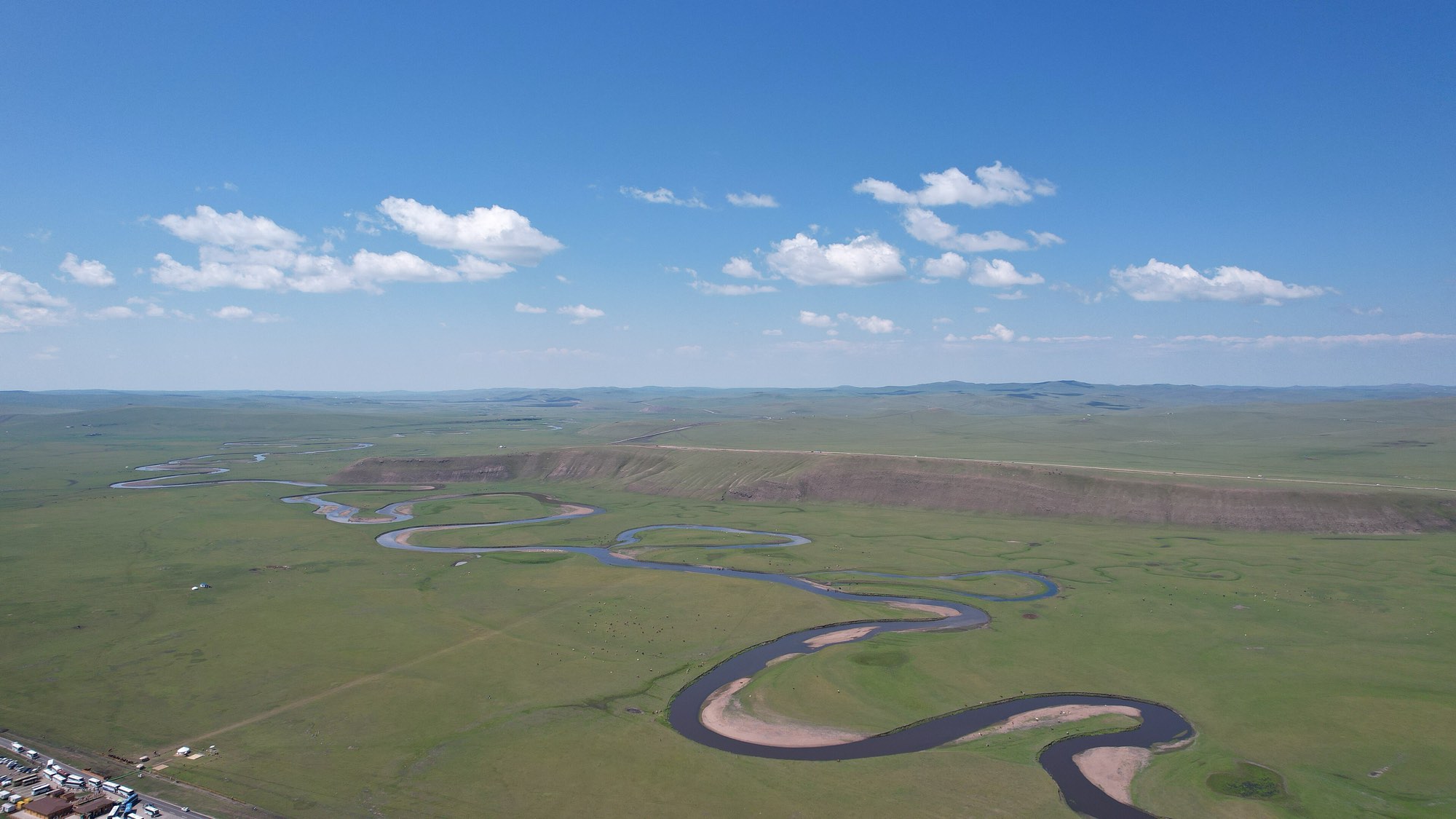
Inner Mongolia (Nèi Měnggǔ) runs in a long arc across the top of China, about 2,400 kilometres from the forests of the north-east to the deserts of the far west. It borders eight provinces and regions, as many as any province in China, as well as the countries of Mongolia and Russia.
For most visitors it means one thing: the grassland. Green hills roll to the horizon, horses and sheep graze around white gers, and on summer nights the sky is thick with stars. But the region also holds giant sand dunes, ancient ruins, Tibetan Buddhist temples, and a cuisine of mutton, milk and tea that warms you through some of the coldest winters in China.
A brief history of Inner Mongolia
People have lived on these steppes for a very long time. More than five thousand years ago, the Hongshan culture around today’s Chifeng carved some of the earliest jade dragons found in China. Later the grasslands belonged to a succession of horse-riding peoples: the Xiongnu, the Xianbei and the Khitan. Stretches of the Great Wall, built along this frontier by the kingdoms to the south more than 2,000 years ago, still run across the south of the region.
The Khitan founded the Liao dynasty in the early tenth century, with their Supreme Capital in what is now Chifeng. In the thirteenth century the Mongols under Genghis Khan swept across Asia, and his grandson Kublai Khan founded the Yuan dynasty in 1271, ruling China from Dadu, today’s Beijing, and spending his summers at Shangdu — the Xanadu of Marco Polo and Coleridge’s poem — on the grassland to the north.
After Yuan rule in China ended in 1368, the Mongols returned to the steppe. In the sixteenth century Altan Khan of the Tümed Mongols founded a city on the plain north of the Yellow River, today’s Hohhot, and brought Tibetan Buddhism back to his people; monasteries soon spread across the grasslands. Under the Qing dynasty the Mongol lands were organised into banners 旗 (qí), a word that survives as the name for counties here today.
Mongolian and Mandarin in Inner Mongolia
The traditional language of the Mongols here is Mongolian 蒙古语 (Měnggǔyǔ), a member of the Mongolic family and not related to Chinese. In Inner Mongolia it is written in the traditional Mongolian script 蒙古文 (Měnggǔwén), adapted from the Old Uyghur alphabet in the thirteenth century. It is written in vertical columns from top to bottom, and the columns run from left to right, which is rare among the world’s scripts. You will see it alongside Chinese on street signs and shopfronts across the region. Across the border in Mongolia, everyday writing mainly uses the Cyrillic alphabet, though since 2025 official documents there have also been written in the traditional script.
Chinese speech varies from east to west. Around Hohhot, Baotou and Ordos, people speak Jin 晋语 (Jìnyǔ), the Chinese of neighbouring Shanxi, which keeps a short “checked” tone and adds an extra syllable to many words. In the north-east, around Hulunbuir, Hinggan and Tongliao, people speak Northeastern Mandarin, as in Heilongjiang. For visitors none of this is a barrier: Standard Mandarin is spoken everywhere, and it is the language you will use.
Here are six words worth knowing. Most are Mongolian words that local Chinese has borrowed and written in characters for their sound. The audio plays the Standard Mandarin reading of the characters, which is how you will hear them in Chinese; in Mongolian they sound quite different, and some are spelt in more than one way in Chinese.
Phrases worth knowing in Inner Mongolia
Standard Mandarin, but pitched at Inner Mongolia — things you might actually say on the grassland, at a ger camp or at a Naadam fair.
Food of the grassland: mutton, milk and tea
Mongolian food 蒙餐 (Měng cān) was made for long winters and life on horseback: mutton, beef and dairy, cooked simply and served in generous portions. Herding families divide their food into the “red” foods of meat and the “white” foods of milk — tea, curd, butter and cream. In the farming country of central and western Inner Mongolia, oats and potatoes take over, and the regional cooking shares much with neighbouring Shanxi.
Notable cities of Inner Mongolia
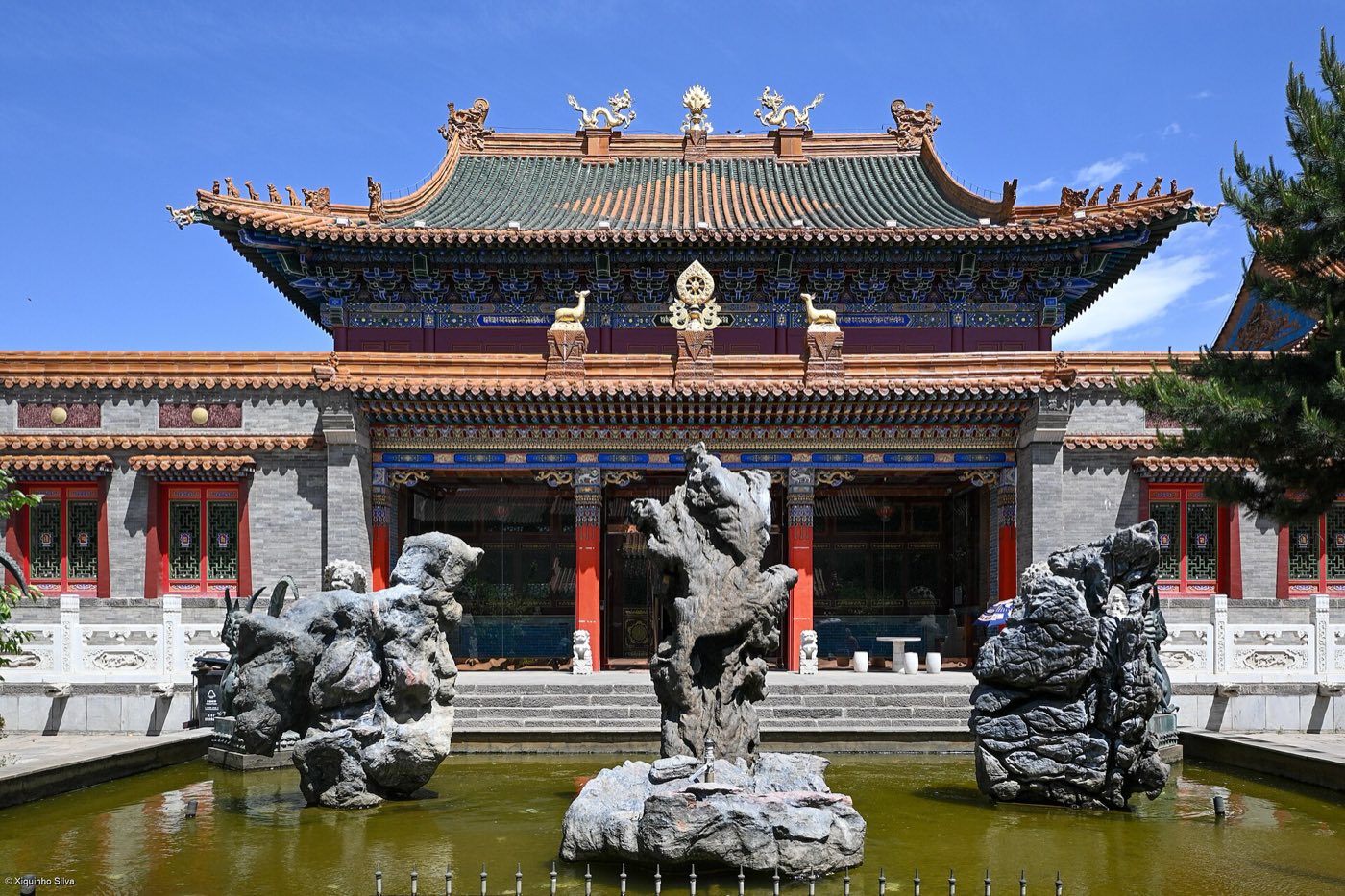
Hohhot 呼和浩特
The name means “blue city” in Mongolian. It was founded in the 1570s by the Mongol ruler Altan Khan, who also built the Dazhao Temple 大召寺 (Dàzhào Sì), still the city’s spiritual heart. South of town, a grassy mound known as 青冢 (Qīngzhǒng), the “green tomb”, is by tradition the grave of Wang Zhaojun, the Han court lady who married a Xiongnu ruler.
Today Hohhot is a lively university and dairy city, and the easiest gateway to the grasslands of Inner Mongolia, which begin within a couple of hours’ drive. Start the day the local way, with a steamer of mutton shaomai and a pot of brick tea.
Don’t miss: the Dazhao Temple, the dinosaur halls of the Inner Mongolia Museum, and a shaomai breakfast.
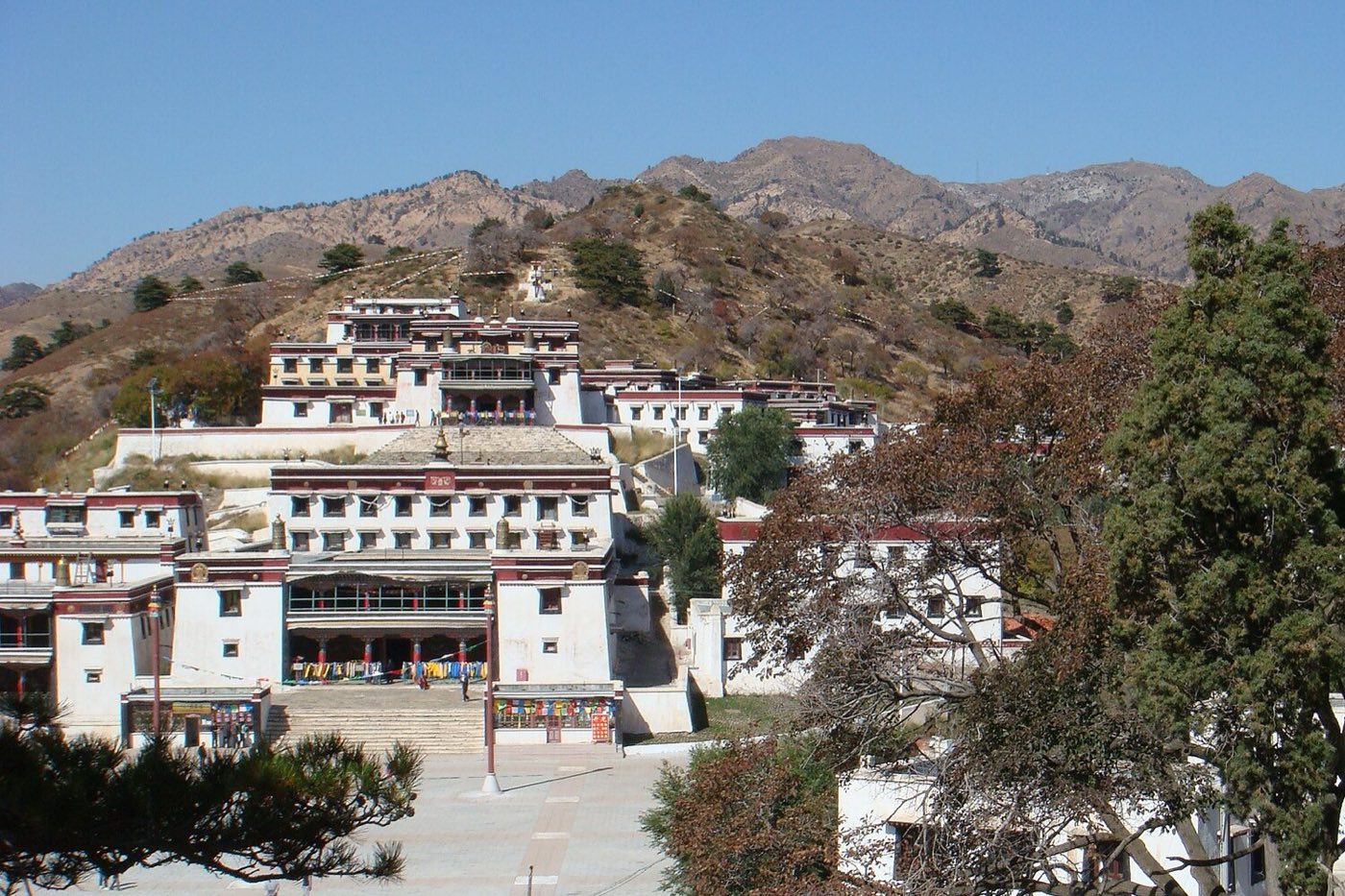
Baotou 包头
Baotou’s name comes from a Mongolian word usually explained as “place with deer”, and it still calls itself the Deer City 鹿城 (Lùchéng). It sits on the great northern bend of the Yellow River and is one of China’s big industrial cities, built on steel and on the rare-earth deposits of Bayan Obo to the north.
In the hills to the north-east stands the Wudang Lamasery, the largest Tibetan Buddhist monastery in Inner Mongolia, its white halls climbing the slope of a quiet valley. Its great expansion began in 1749.
Don’t miss: the Wudang Lamasery, the Yellow River at dusk, and the grassland at Xilamuren.
Ordos 鄂尔多斯
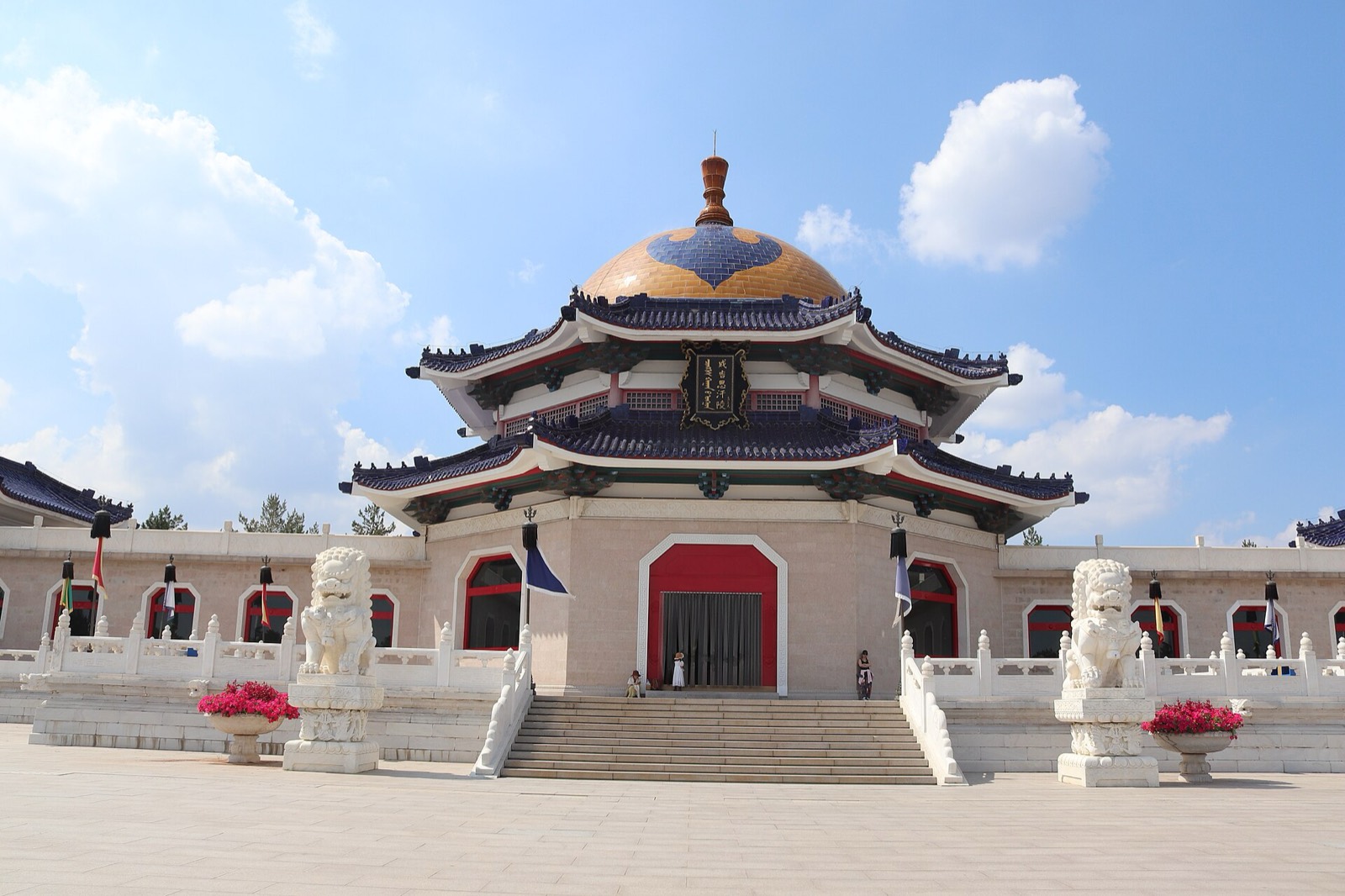
Ordos lies inside the great loop of the Yellow River, on a plateau of grassland and desert. Its most important site is the Genghis Khan Mausoleum 成吉思汗陵 (Chéngjísī Hán Líng) at Ejin Horo, a shrine of white halls where Genghis Khan has been honoured with ceremonies for centuries. Where he is actually buried remains unknown.
Ordos is also famous for cashmere, and for the “singing sands” of Xiangshawan on the edge of the Kubuqi Desert, where the dunes hum when you slide down them.
Don’t miss: the Genghis Khan Mausoleum, the singing sands of Xiangshawan, and the Ordos Museum.
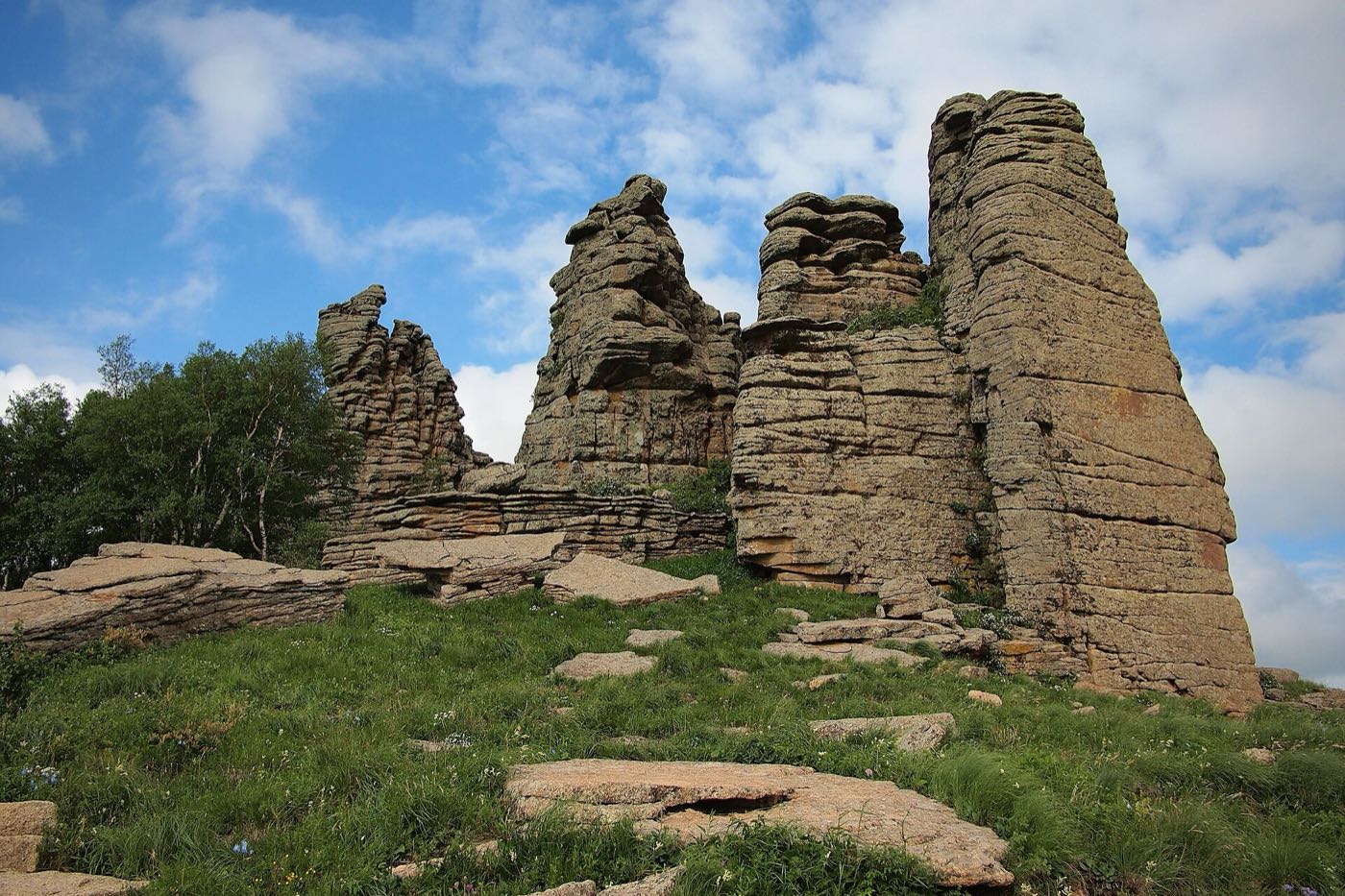
Chifeng 赤峰
Chifeng means “red peak”, after the red rock hill above the city that gave its name to the Hongshan culture 红山文化 (Hóngshān wénhuà). More than five thousand years ago its people carved jade dragons and pig-dragons, some of the earliest dragon images in China.
Later this was the heartland of the Khitan people, whose Liao dynasty built its Supreme Capital at Bairin Left Banner. To the north, the granite pillars of the Ashihatu Stone Forest stand on the grassland in the Hexigten Geopark.
Don’t miss: the Hongshan jades of the Chifeng Museum, the Ashihatu Stone Forest, and the Ulan Butong grassland.
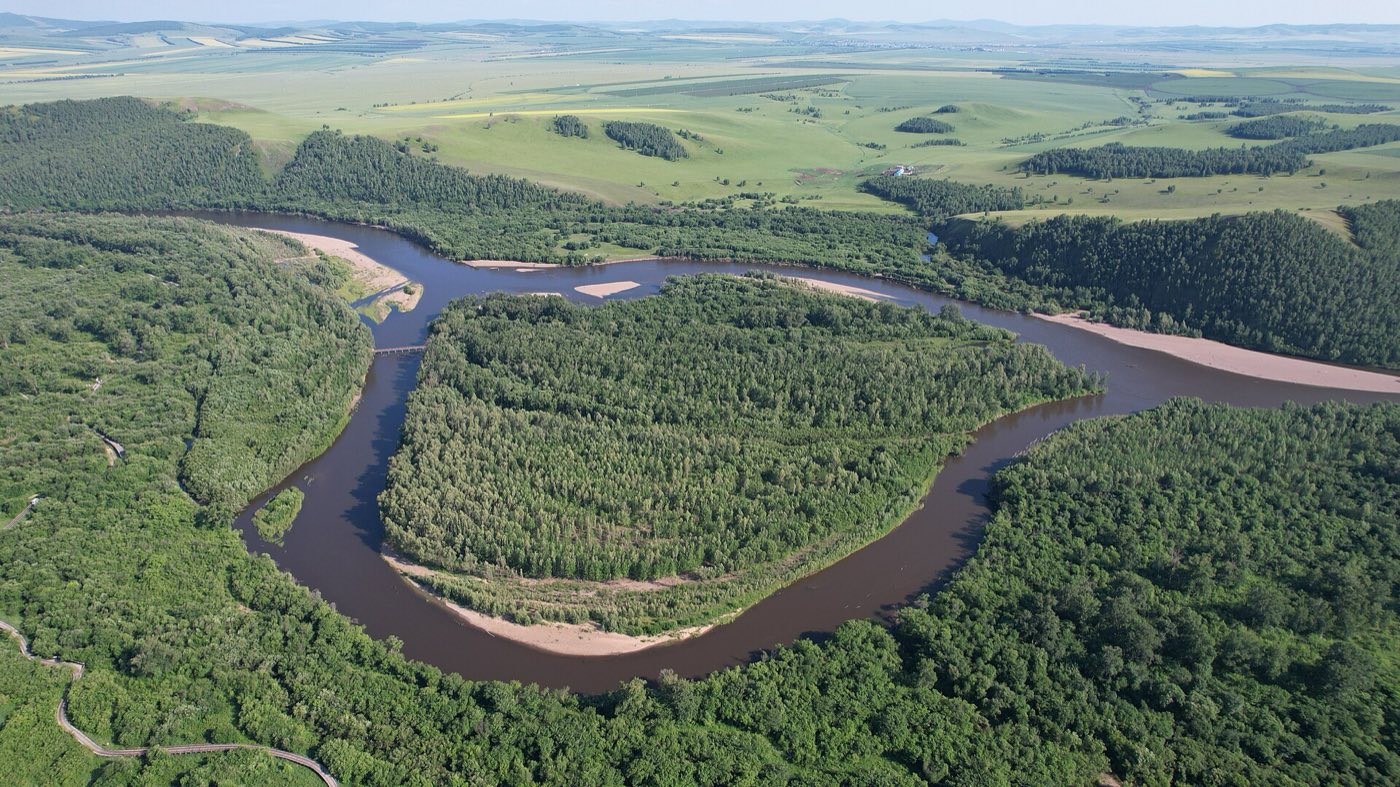
Hulunbuir 呼伦贝尔
Hulunbuir, named after its two great lakes, Hulun and Buir, covers the far north-east of the region: rolling grassland in the west and the forested Greater Khingan Mountains running down its middle. Its main town is Hailar, and in summer the grassland around it is at its best.
Along the Ergun River are wetlands and log-built villages, and at Manzhouli, on the border, Russian-style buildings line the streets. In the forests, Evenki families have herded reindeer for generations.
Don’t miss: the grassland around Hailar, the Ergun River wetlands, and Hulun Lake.
Iconic attractions across Inner Mongolia
Hulunbuir Grassland 呼伦贝尔大草原
Often described as China’s best-preserved grassland: green hills to the horizon, winding rivers, herds of horses, sheep and cattle, and white gers. Best in summer; the season runs from mid-May to mid-September.
Site of Xanadu 元上都遗址
The ruins of Shangdu, the summer capital built by Kublai Khan in the 1250s, whose name reached the West as Xanadu. Only earthen walls and foundations remain on the open grassland. Site of Xanadu has been a UNESCO World Heritage Site since 2012.
Badain Jaran Desert 巴丹吉林沙漠
Some of the tallest dunes on earth, rising hundreds of metres, with more than a hundred small lakes tucked between them. The Badain Jaran Desert – Towers of Sand and Lakes was listed by UNESCO in 2024.
Genghis Khan Mausoleum 成吉思汗陵
A shrine of three linked halls with domed roofs in Ejin Horo Banner, Ordos, where ceremonies in honour of Genghis Khan are still held through the year. It is a memorial rather than a grave: his burial place has never been found.
Ejina poplars and Khara-Khoto 额济纳胡杨林 · 黑城
In the far west, forests of desert poplar turn brilliant gold in early October. Nearby stand the ruins of Khara-Khoto, the “Black City”, a Tangut town on the edge of the desert that was abandoned in the fourteenth century.
Dazhao Temple 大召寺
Hohhot’s oldest temple, built by Altan Khan in 1579–80. This Tibetan Buddhist monastery is known above all for its silver statue of the Buddha.
Famous figures of Inner Mongolia
Wang Zhaojun 王昭君
Sent from the Han court to marry the Xiongnu ruler in 33 BC, she is remembered in poetry, opera and legend. Her traditional tomb is just south of Hohhot.
Yelü Abaoji 耶律阿保机
He united the Khitan peoples and founded the Liao dynasty, whose heartland lay in what is now Chifeng.
Xiao Chuo 萧绰
The Liao empress who ruled for her young son for more than twenty years, and is remembered as a highly able stateswoman and a renowned military commander.
Kublai Khan 忽必烈
The grandson of Genghis Khan and founder of the Yuan dynasty, he built his summer capital, Xanadu, on the grassland of what is now Inner Mongolia.
Altan Khan 俺答汗
The ruler of the Tümed Mongols who founded the city that became Hohhot and built its Dazhao Temple.
Tengger 腾格尔
Born in Ordos, he is famous for his powerful voice and for his signature song, 天堂 (Tiāntáng), “Heaven”, a tribute to the grassland of his homeland.
Inner Mongolia’s modern economy
Inner Mongolia’s economy was worth about ¥2.67 trillion in 2025. Its wealth comes from its sheer size and what lies under it and across it: herds and grassland, coal and gas, rare earths, and some of the strongest winds and sunniest skies in China.
The grasslands have made Inner Mongolia China’s biggest dairy region, and Hohhot calls itself the country’s “dairy capital”: two of China’s largest dairy companies, Yili and Mengniu, are based there. The open land has also made it a centre for wind and solar power. Baotou’s steelworks and the rare-earth mine at Bayan Obo, the largest deposit of its kind in the world, anchor heavy industry in the west.
Dairy and livestock
Cattle, sheep and goats on the grasslands supply milk, meat and wool to the whole country.
Wind, sun and coal
Vast wind and solar farms now stand alongside the coalfields of Ordos.
Rare earths
Bayan Obo, north of Baotou, holds the world’s largest rare-earth deposit, vital to magnets and electronics.
Cashmere
The fine underwool of the region’s goats makes Ordos one of the great cashmere centres of the world.
Why Inner Mongolia matters for Mandarin learners
Inner Mongolia is a lesson in how Chinese borrows. Hundreds of place names on the map are Mongolian words written in Chinese characters for their sound, not their meaning. Once you know a handful — 浩特 (hàotè) for “city”, 乌兰 (wūlán) for “red”, 呼和 (hūhé) for “blue” — the map starts to read like a story, and you learn to spot when a word in Chinese is really a guest from another language.
For everyday Mandarin it is a friendly place to practise: Standard Mandarin is spoken everywhere, and conversation round a table of mutton and milk tea flows easily. Around Hohhot you will also hear Jin, a cousin of Mandarin with its own sounds, which is a good test of your listening.
For the bigger picture, our Explore China map covers every province and region, and the guide to China’s provinces puts Inner Mongolia in context. To see how Mongolian, Jin and the other languages of China fit together, read our guide to languages and dialects in China.
Visiting Inner Mongolia — practical notes
When to go. June to September, when the grass is green and the gers are up; Naadam festivals are held in summer, mostly in July and August. Spring and autumn are short and windy, and winter is very cold, often below −30 °C in Hulunbuir, though that is when the snow and ice festivals happen.
Getting there. High-speed trains link Beijing with Hohhot in a little over two hours. For the far-flung corners, fly: Hailar, Manzhouli, Ordos, Chifeng and Ejina all have airports.
Getting around. Distances are enormous: the region stretches about 2,400 kilometres from east to west. Pick one area, such as Hohhot and the nearby grasslands, Ordos and the desert, or Hulunbuir, rather than trying to see it all.
On the grassland. On the grasslands of Inner Mongolia, stay a night in a ger camp to see the stars. Accept milk tea with both hands or your right hand, and walk round an ovoo clockwise.
Test your Inner Mongolia knowledge
1. What does the Mongolian name Hohhot (呼和浩特) mean?
2. Which character appears on Inner Mongolia’s number plates?
3. How is traditional Mongolian script written?
4. Which three contests make up Naadam?
5. Whose summer capital was Xanadu?
6. What is 手把肉 (shǒubǎròu)?
FAQs
Photographs: Hero (Mergel River, Hulunbuir) by Liuxingy, CC BY-SA 4.0, via Wikimedia Commons; Hohhot (Dazhao Temple, Hohhot) by xiquinhosilva, CC BY 2.0, via Wikimedia Commons; Baotou (Wudang Lamasery, Baotou) by 霧島聖, CC BY-SA 4.0, via Wikimedia Commons, cropped; Ordos (Genghis Khan Mausoleum, Ordos) by Liuxingy, CC BY-SA 4.0, via Wikimedia Commons; Chifeng (Ashihatu Stone Forest, Chifeng) by rheins, CC BY 3.0, via Wikimedia Commons, cropped; Hulunbuir (Erguna wetlands, Hulunbuir) by Liuxingy, CC BY-SA 4.0, via Wikimedia Commons.
Start your Mandarin journey
Want to learn the Standard Mandarin spoken across Inner Mongolia and the rest of China? Online 1-on-1 lessons with a native speaker.