Four thousand years, one timeline
From the first bronze-age kings to the last emperor — every major Chinese dynasty, with its dates, its greatest figures and the stories that shaped a civilisation. Tap any dynasty to explore.
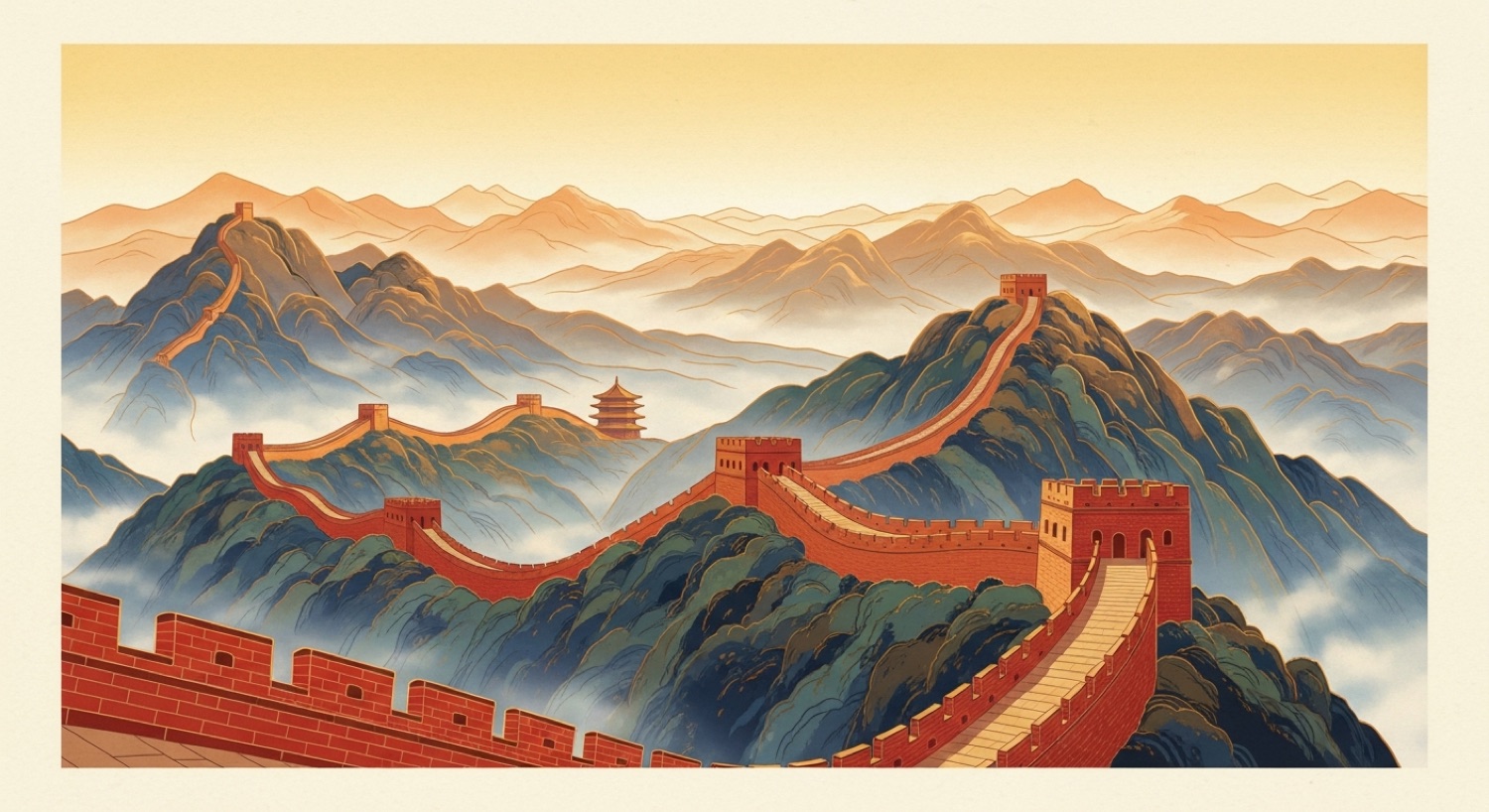
Chinese history is often told as a succession of dynasties — great families who rose, ruled, and fell in a rhythm the Chinese themselves called the “dynastic cycle.” Across four thousand years these dynasties gave the world paper and printing, poetry and philosophy, the Silk Road and the Great Wall. This timeline is your map to all of them — and a doorway into the language, idioms and culture that grew from each age.
The dynasty timeline
Tap a dynasty to see its dates, its story and its key figures. Deep-dive guides are being added one by one.
China’s first dynasty lives more in legend than in firm record. Its hero is Yu the Great, said to have won the throne by taming the great floods — labouring so tirelessly he passed his own home three times without going in. With it began the hereditary dynastic system that would rule China for the next four thousand years. Deep-dive coming soon.
The first dynasty we can read about in its own words. Shang diviners scratched questions to the gods onto oracle bones — the direct ancestor of every Chinese character written today — and cast breathtaking ritual bronzes for a powerful, if fearsome, royal cult. Deep-dive coming soon.
China’s longest-lasting dynasty, and the one that shaped its mind. As central power crumbled into the Spring & Autumn and Warring States periods, rival thinkers argued over how society should be ordered — producing Confucius, Laozi, Mozi and the “Hundred Schools of Thought” that still underlie Chinese values. Deep-dive coming soon.
Short, brutal and epoch-making. Qin Shi Huang, the First Emperor, conquered the warring states into a single empire — standardising the script, currency and even axle-widths, linking older walls into the first Great Wall, and taking the Terracotta Army to his tomb. The very word “China” descends from Qin. Deep-dive coming soon.
So formative that the Chinese majority still call themselves the 汉 (Han) people. The Han made Confucianism the creed of the state, invented paper, and opened the Silk Road — linking China to Central Asia, India and Rome for the first time. Deep-dive coming soon.
A brief, romantic age of civil war between the kingdoms of Wei, Shu and Wu. Its heroes and schemers — the warlord Cao Cao, the peerless strategist Zhuge Liang — were immortalised in Romance of the Three Kingdoms, still one of the best-loved stories in East Asia. Deep-dive coming soon.
Nearly three centuries of division and short-lived states, split between a Chinese south and a non-Chinese north. Turbulent as it was, this was the age when Buddhism sank deep roots in China and landscape poetry and calligraphy quietly flowered. Deep-dive coming soon.
Brief but pivotal — the Qin to the Tang’s Han. In under 40 years it reunited a shattered China and dug the Grand Canal, over 1,700 km of waterway still in use today, binding the rice-rich south to the northern capitals and setting the stage for the Tang. Deep-dive coming soon.
The high point of Chinese civilisation: the cosmopolitan capital Chang’an — the largest city on earth — the poetry of Li Bai and Du Fu, the only female emperor Wu Zetian, and the Silk Road at its dazzling peak. So glorious that overseas Chinese still call themselves “people of Tang.” Read the Tang deep-dive →
An age of astonishing invention and refinement. Printing, the compass and gunpowder all came of age; paper money and the world’s first industrial-scale economy appeared, alongside the poet Su Shi, exquisite landscape painting and Neo-Confucian philosophy. Deep-dive coming soon.
China ruled from the saddle, as the eastern realm of the vast Mongol empire founded by Kublai Khan, grandson of Genghis. It was the age Marco Polo claimed to have visited, when overland trade and a golden era of Chinese drama both flourished under foreign rule. Deep-dive coming soon.
Native Chinese rule restored, and one of its most iconic ages. The Ming built the Forbidden City, rebuilt the Great Wall in the stone form tourists walk today, and sent Admiral Zheng He‘s vast treasure fleets as far as Arabia and East Africa — decades before Columbus. Deep-dive coming soon.
China’s last dynasty, ruled by the Manchus from beyond the Wall. It grew into the largest, richest empire China had ever known, then was battered by the Opium Wars, foreign concessions and rebellion — until revolution ended two thousand years of imperial rule in 1912. Deep-dive coming soon.
The Republic of China (from 1912) ended millennia of dynastic rule, and the People’s Republic (from 1949) reshaped the nation again. In a single century the world’s oldest continuous civilisation became a modern global power. Deep-dive coming soon.
Explore by theme
Chinese history is more than a list of dynasties — more streams are being added.
Dynasties 朝代
Deep-dive guides to each great age — starting with the golden-age Tang.
👑SoonHistorical Figures 人物
Qin Shi Huang, Confucius, Wu Zetian, Sun Tzu, Zhuge Liang and more.
⚔️SoonGreat Events & Eras 大事
The Warring States, the Three Kingdoms, the Silk Road, the Opium Wars.
🧭SoonFour Great Inventions 四大发明
Paper, printing, the compass and gunpowder — China’s gifts to the world.
FAQs
Explore more of Chinese
History is where the language and culture come from. Keep going:
Learn the language of four thousand years
History, culture and Mandarin, taught together — in 1-on-1 online lessons with a native speaker.
Book a Free Intro Call