Famous Chinese Poems
The poems every Chinese speaker knows by heart — in hanzi, pinyin and native audio, explained line by line so you learn the classic and the language at the same time.
Chinese poems are not kept behind glass. Lines written twelve centuries ago still turn up in newspaper headlines, on tea packaging, in the names of restaurants and in the speeches of people who have never studied literature. A Mandarin speaker who has forgotten almost everything from school will still be able to finish 举头望明月 without pausing.
That is what makes poetry unusually good value for a learner. A short poem is a small, closed piece of language you can actually finish — twenty characters, four lines — and the vocabulary inside it is not decorative. 思 (to think of, to miss), 望 (to gaze), 故乡 (hometown): these are words you will use in ordinary conversation. Learning them inside a poem gives them somewhere to live.
Each of the Chinese poems below comes with the full text in characters and pinyin, a line-by-line reading with native audio, the historical situation the poem came out of, and the handful of lines that have escaped the poem and entered everyday speech.
The poems
Chinese poems with a full guide — start with the two every child learns, then the one adults quote when they mean business.
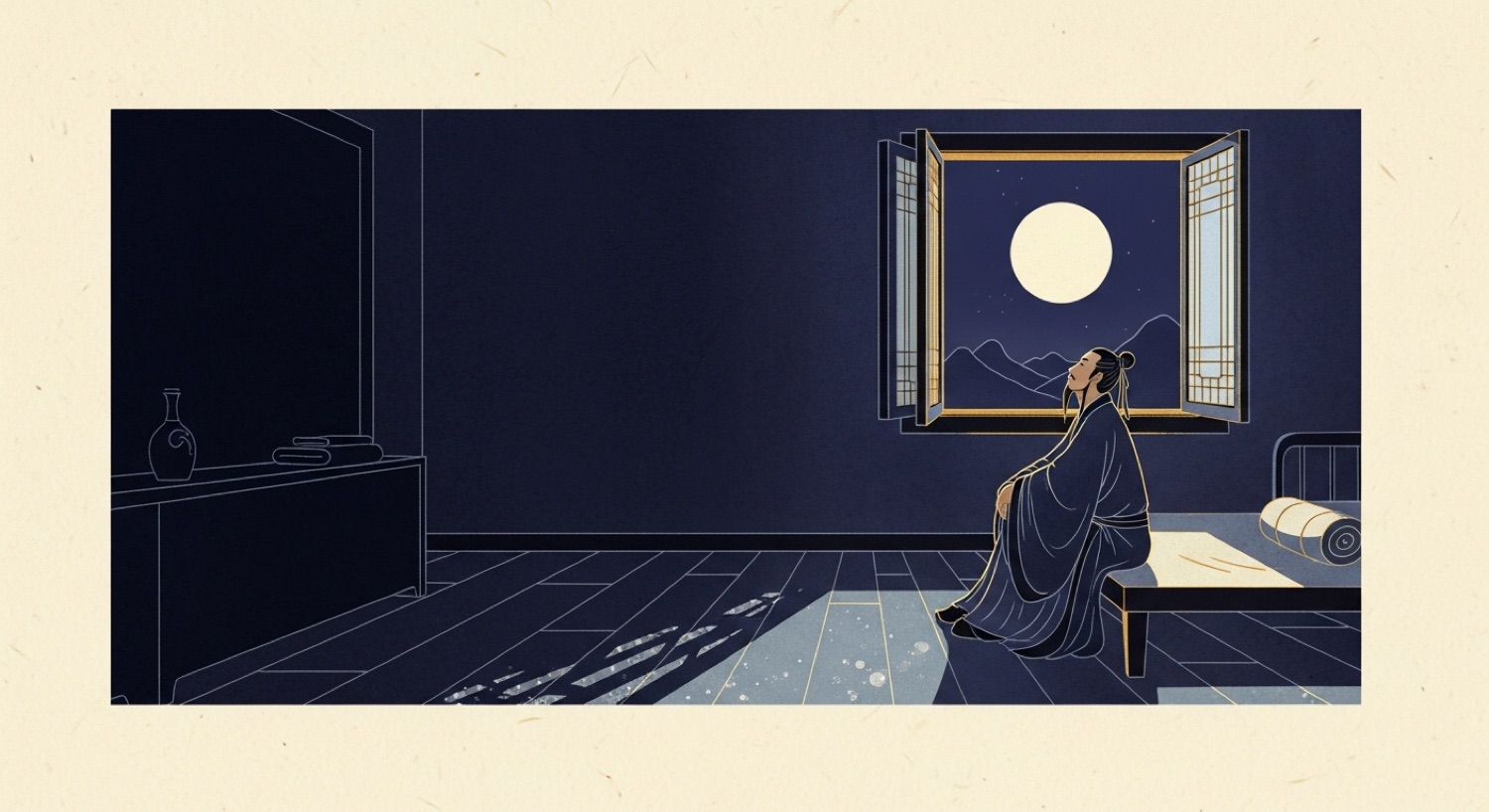
静夜思
Jìng Yè Sī Quiet Night Thoughts 李白 Lǐ Bái · Tang dynasty 诗 Quatrain20 characters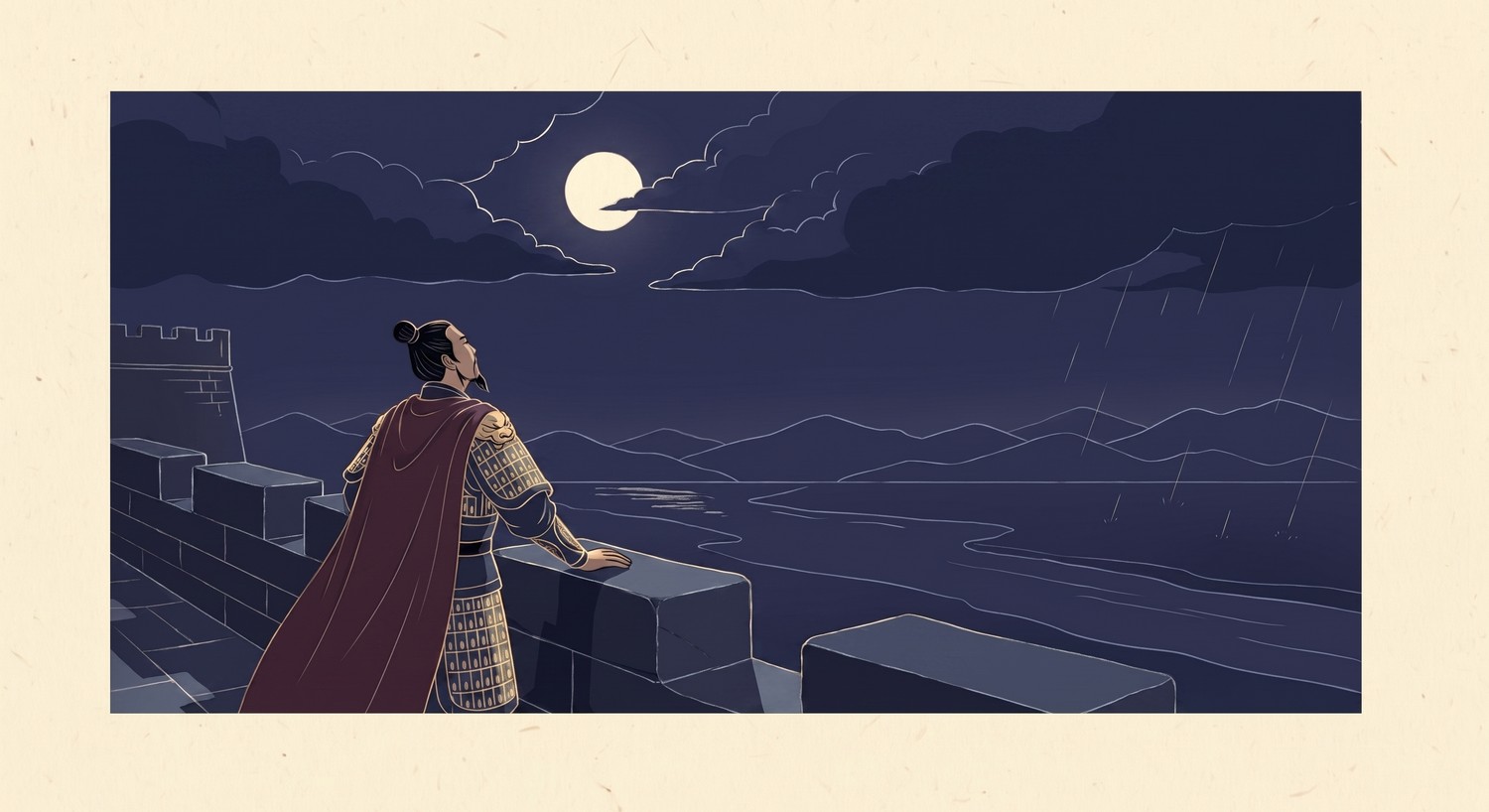
满江红
Mǎn Jiāng Hóng Full River Red 岳飞 Yuè Fēi · Southern Song 词 Cí lyric93 characters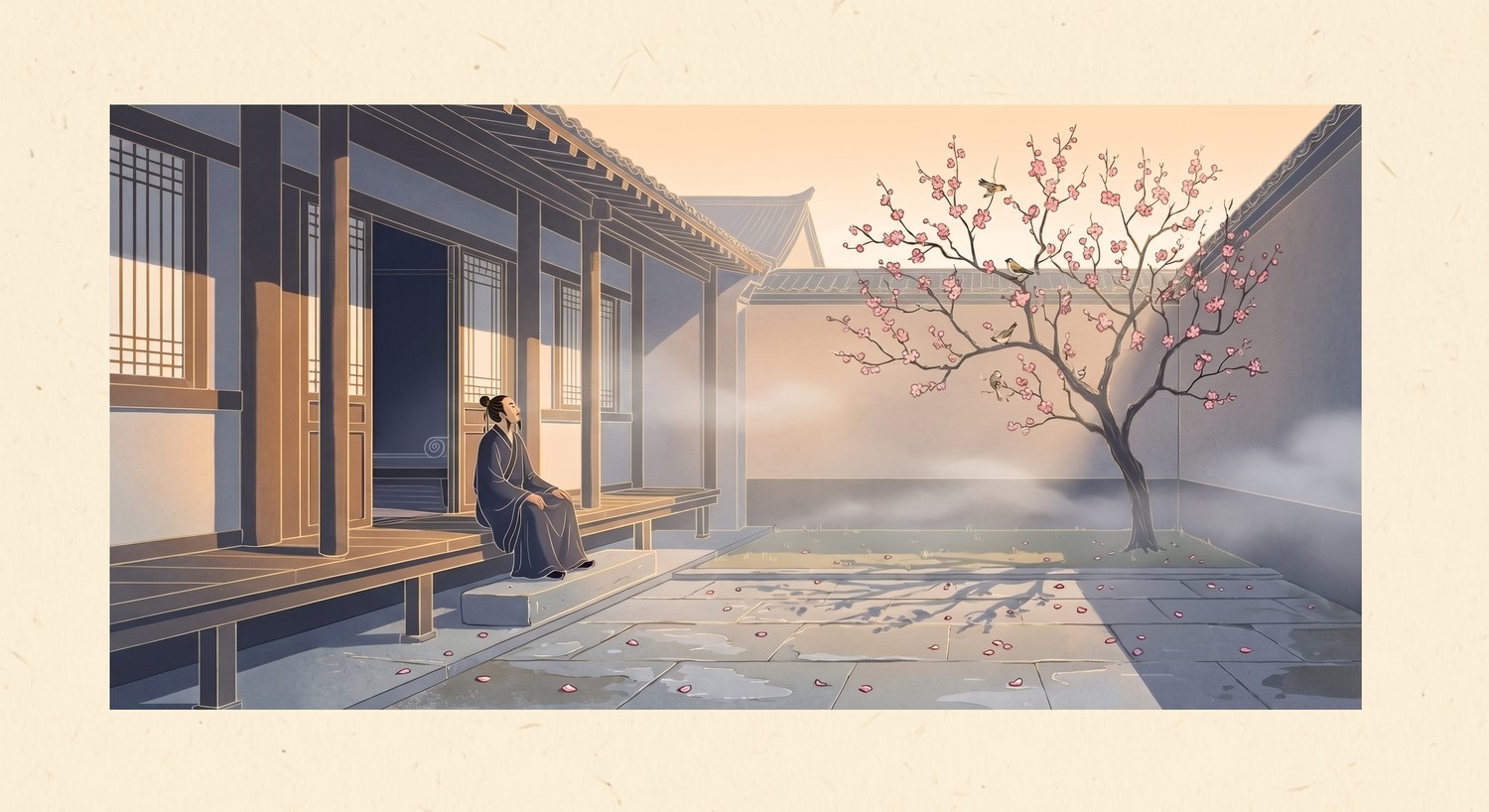
春晓
Chūn Xiǎo Spring Dawn 孟浩然 Mèng Hàorán · Tang dynasty 诗 Quatrain20 characters诗 or 词: the two kinds you will meet
Almost everything on this page is one or the other, and telling them apart takes about a minute.
Regular, self-contained verse
Every line is the same length — five characters or seven — and the poem stands on its own. A four-line version is a 绝句 (juéjù), a “cut-off verse”. This is the form most beginners meet first, because the shape is so regular that it is easy to hear and easy to hold in memory.
静夜思 is a 五言绝句 — four lines of five characters.
Words fitted to an existing tune
Lines are deliberately uneven, because the poet is filling a metrical pattern that already existed as a melody. The title names the tune, not the subject — which is why dozens of unrelated poems share one title and are told apart by their opening line instead.
满江红 is a tune name, so the poem is cited as 满江红·怒发冲冠.
When these poems were written
Two dynasties produced most of what is still quoted today, and they produced very different moods.
How to read a Chinese poem
Four habits that make classical lines far less intimidating than they look.
Read it in twos
Classical lines break into beats of two characters, with the odd one out at the end. A five-character line is heard as 2–2–1, not as five separate syllables. Once you hear that pulse, the line stops being a wall of characters.
Expect the pairing
Lines very often come in matched pairs, where each word answers the word above it — verb against verb, body part against body part, high against low. 举头 (raise head) sits directly against 低头 (lower head). Spotting the pairing tells you what a difficult character probably means.
Do not expect the grammar you have learned
Classical verse drops pronouns, particles and often the subject. “Before my bed, the bright moon shines” has no word for “my” in the original. The reader supplies it. This is a feature, not a gap.
Say it out loud
These were written to be heard. Tones carry a large part of the effect, and rhymes that have drifted in modern Mandarin still mostly land. Every poem on this page has native audio on each line for exactly this reason.
Poetry hiding in everyday Chinese
A surprising share of ordinary set phrases began as lines of verse.
Once you have a few Chinese poems in memory, you start hearing them in places that have nothing to do with literature. Four-character idioms — 成语, chéngyǔ — are the main route: a great many of them are lifted straight from a poem or a classical text, and Chinese speakers use them in conversation without thinking about where they came from.
The practical effect for a learner is that poems and idioms reinforce each other. Learn the poem and the idiom stops being an arbitrary string of four characters; learn the idiom and the poem has somewhere to land. If you want to come at the language from that direction, our guide to Chinese idioms covers the most common ones with the same line-by-line treatment.
For the wider tradition these poems sit inside — the novels, the philosophy and the folklore — start at the Chinese literature hub. If you would like to read the original texts in full, most of the classical canon is freely available on Chinese Wikisource.
FAQs
The questions learners ask most often about reading Chinese poetry.
Keep reading
Where to go next.
Read the classics in Mandarin
Chinese poems are a beautiful way into the language. We teach them line by line in 1-on-1 online lessons with a native speaker, at whatever level you are starting from.
Book a Free Intro Call