Mid-Autumn Festival · Moon Festival · Mooncake Festival — reunion under the year’s brightest moon
“Though a thousand miles apart, we share the same moon.”
- When
- 15th day of the 8th lunar month (mid Sep – early Oct)
- Also called
- Moon Festival · Mooncake Festival
- Greeting
- 中秋节快乐 · Zhōngqiū jié kuàilè
- Symbol
- The full moon
- Key food
- 月饼 · Mooncakes
- Theme
- Family reunion
Reunion under the full moon
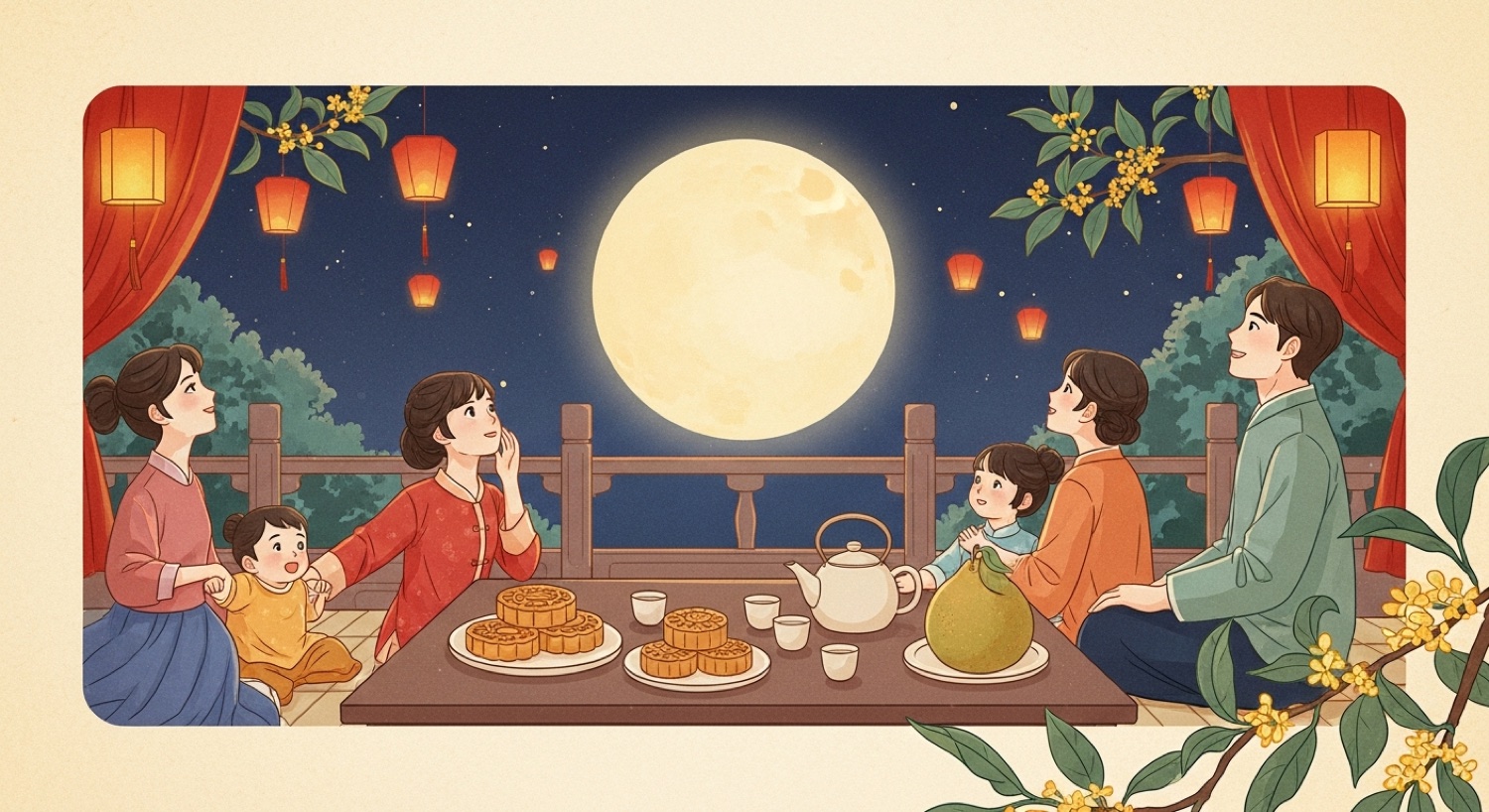
The Mid-Autumn Festival (中秋节, Zhōngqiū jié) — the Moon Festival — is the second most important holiday of the Chinese year, after Spring Festival. It falls on the 15th day of the eighth lunar month, the night the moon is at its fullest and roundest. And that roundness is the whole point: a full, complete circle stands for 团圆 (tuányuán), family reunion and togetherness.
Families gather to share a meal, gaze at the moon (赏月) and eat mooncakes, whose round shape echoes the moon above. It began as a harvest thanksgiving thousands of years ago, and it carries a gentle, reflective mood — of gratitude, of missing those far away, and of the quiet knowledge that wherever they are, everyone is looking up at the same moon.
Chang’e, the lady in the moon
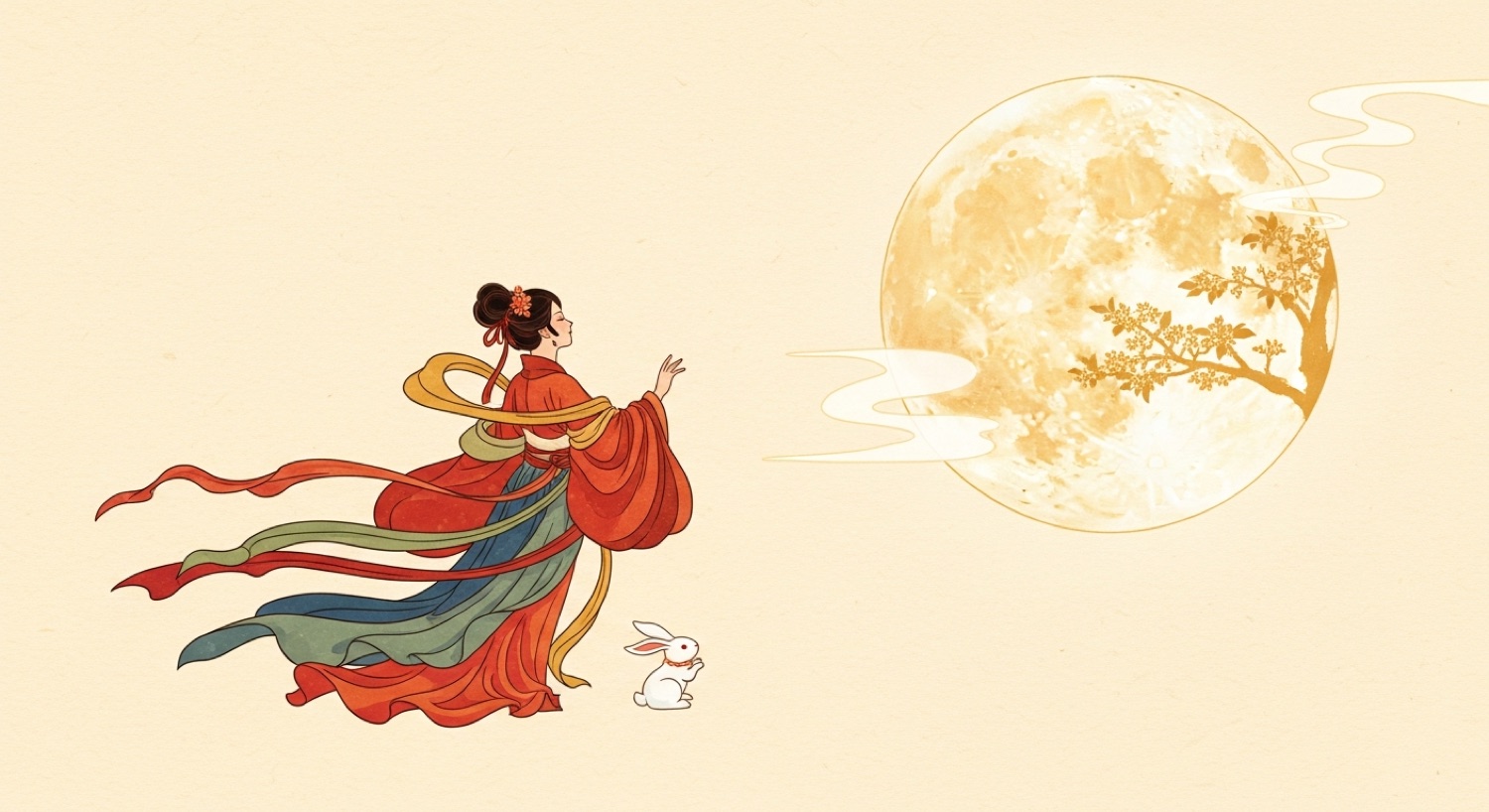
嫦In the age of legends, ten suns once scorched the earth, until the great archer Hou Yi (后羿) shot down nine of them and saved the world. As a reward he was given an elixir of immortality — but he could not bear to leave his beloved wife, Chang’e (嫦娥), so he asked her to keep it safe.
One day, while Hou Yi was away, a greedy apprentice tried to seize the elixir by force. To keep it from him, Chang’e swallowed it herself — and at once began to float upward, drifting higher and higher until she came to rest on the moon, the place nearest to the husband she had left behind.
Heartbroken, Hou Yi laid out her favourite foods in the moonlight and gazed up at her, and the villagers, moved by their love, did the same. To this day people look to the full Mid-Autumn moon — where Chang’e still lives with a 玉兔 (jade rabbit) pounding the elixir of immortality — and lay out mooncakes and fruit in her memory.
“Though a thousand miles apart…”
No festival in China is so bound to a single poem. In 1076, far from home and missing his brother, the Song poet Su Shi (苏轼) wrote a Mid-Autumn ci that every Chinese schoolchild still learns — and its closing lines have become the festival’s own blessing:
人有悲欢离合,月有阴晴圆缺,此事古难全。但愿人长久,千里共婵娟。
“People know sorrow and joy, parting and reunion; the moon has its dark and clear, its full and waning — such things have never been perfect. Yet may we be blessed with long life, and though a thousand miles apart, share the beauty of this same bright moon.”
— 苏轼《水调歌头·明月几时有》, written on Mid-Autumn night, 1076.Love a good moon poem? Li Bai’s 静夜思 (“Quiet Night Thoughts”) is the most famous of them all.
Traditions & customs
团圆 Family reunion
Like Spring Festival, Mid-Autumn is a homecoming — families gather for a meal beneath the full moon.
赏月 Moon-gazing
After dinner, everyone steps outside to admire the round, bright harvest moon together.
吃月饼 Eating mooncakes
Round mooncakes echo the full moon and reunion; they’re sliced into small wedges to share, and given as gifts.
提灯笼 Lanterns
Especially in the south, children carry bright lanterns and float them on water or hang them in the trees.
拜月 Honouring the moon
An older custom of laying out fruit and mooncakes as an offering to the moon and to Chang’e.
赏桂花 Osmanthus
The sweet osmanthus blooms at Mid-Autumn — enjoyed as osmanthus wine and cakes, and echoed in the tree said to grow on the moon.
Festive foods & what they mean
The Mid-Autumn table is round and golden — food chosen to mirror the moon and its blessings.
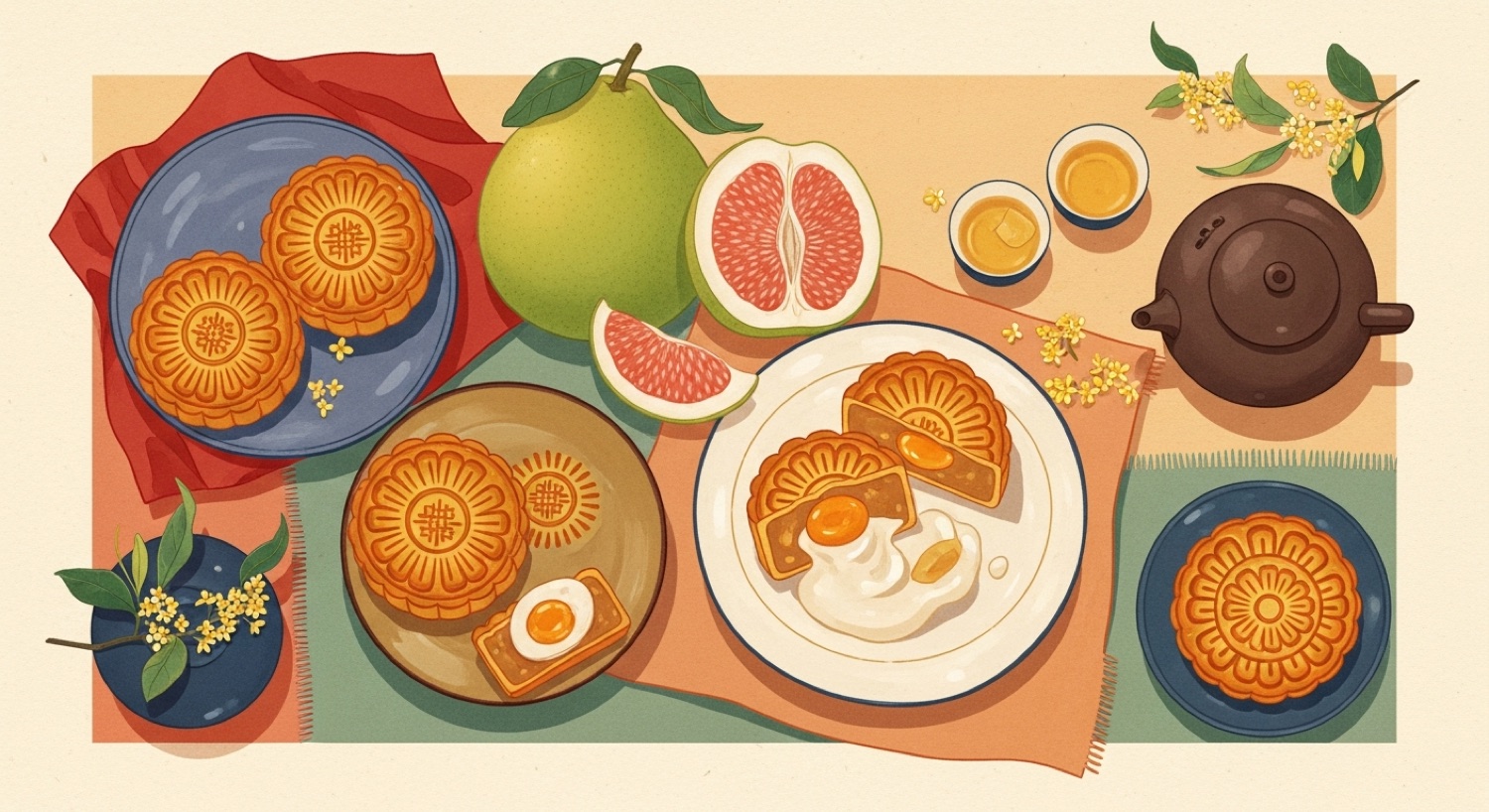
- 月饼 MooncakesThe star of the festival — round for reunion, richly filled with lotus-seed paste around a golden salted-egg yolk (the “moon”). Shared in wedges and given as gifts. Explore Chinese food →
- 柚子 PomeloRound and golden; 柚 (yòu) sounds like 佑 (“to bless and protect”). Children famously wear the peel as a little hat.
- 桂花 OsmanthusThe season’s sweet blossom, taken as osmanthus wine and cakes — a taste of the tree said to grow on the moon.
- 大闸蟹 Hairy crabA prized autumn delicacy, at its best right around the Mid-Autumn season.
Mid-Autumn greetings & phrases
Wishes for the festival — tap the speaker to hear each from a native speaker.
中秋节快乐
Zhōngqiū jié kuàilè
“Happy Mid-Autumn Festival.” The go-to greeting.
月圆人团圆
Yuè yuán rén tuányuán
“As the moon is full, may people be reunited.”
但愿人长久,千里共婵娟
Dàn yuàn rén chángjiǔ, qiānlǐ gòng chánjuān
“May we live long, and share this moon though a thousand miles apart.” Su Shi’s line — the loveliest thing to say.
Common misunderstandings
- “Moon Festival” and “Mooncake Festival” are just English names for the same holiday — the Mid-Autumn Festival.
- Mooncakes are rich and dense — they’re cut into small wedges and shared, not eaten whole like a cupcake.
- It’s a festival of family reunion, not romance — the romantic one is 七夕 (Qixi), China’s Valentine’s Day.
- Like all lunar festivals, the date moves on the Western calendar — but it’s always the 15th of the 8th lunar month, when the moon is full.
Quick quiz
1. What does the full Mid-Autumn moon symbolise?
2. In the legend, who lives on the moon?
FAQs
Talk about it in Mandarin
Learn the greetings, the stories and the language of the festivals — in 1-on-1 online lessons with a native speaker.
Book a Free Intro Call