A Guide to Henan (河南): Shaolin, Longmen & the Cradle of China
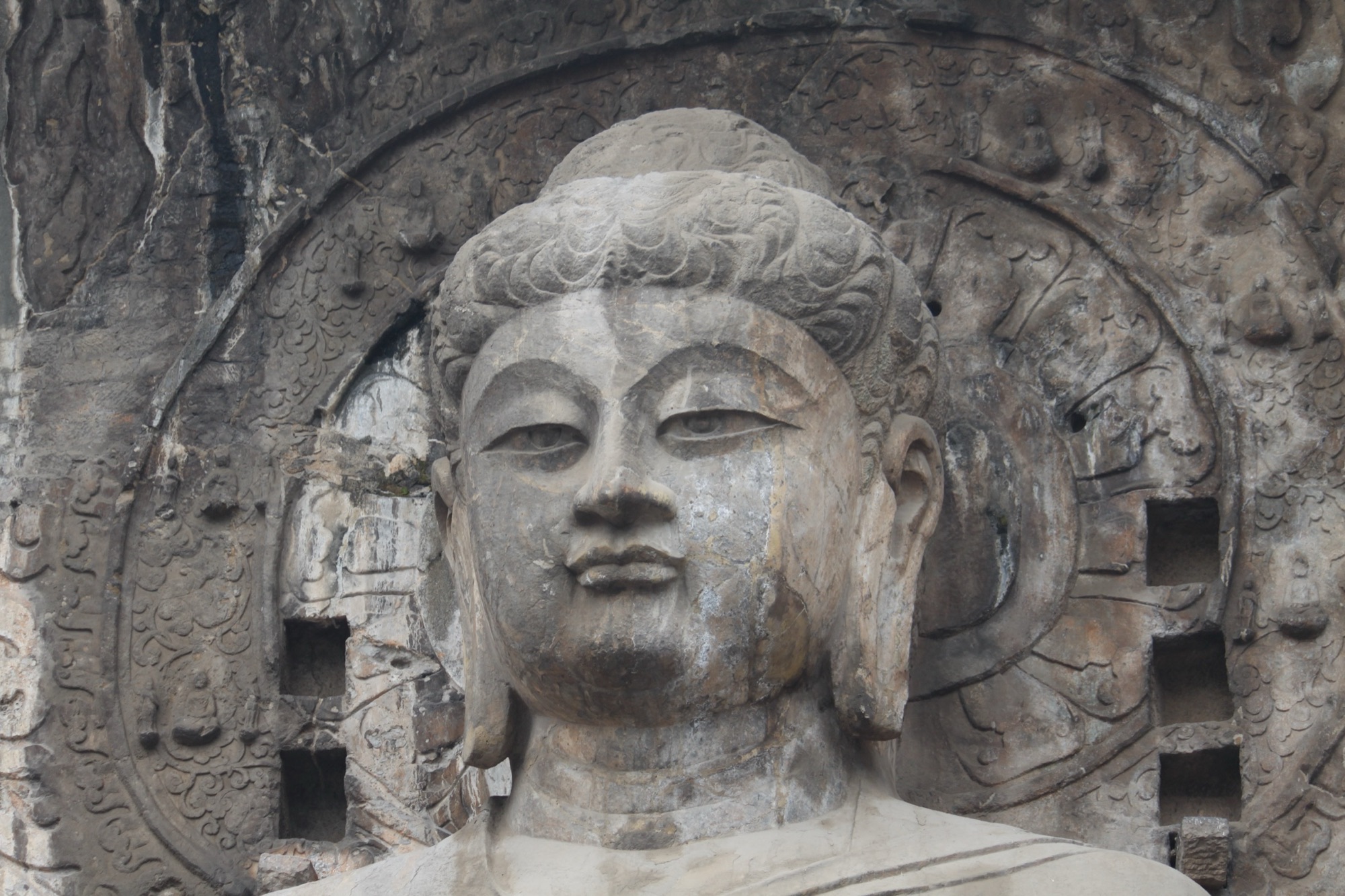
On the Central Plains of the Yellow River, at the very centre of the North China Plain, lies Henan (河南 Hénán) — the cradle of Chinese civilisation. This is the province where Chinese history began: the land of the first dynasties, the oracle bones that carry the earliest Chinese writing, and four of the country’s Eight Great Ancient Capitals.
For Mandarin learners, Henan is where the language comes home. Its speech is Zhongyuan (Central Plains) Mandarin, the historical core of the whole Mandarin family, and its towns hold three thousand years of history. This guide covers the history, the dialect, the food, five cities worth your time, and what all of it means for your Mandarin.
A brief history of Henan
Henan — the name means “south of the (Yellow) River” — sits at the heart of the plain the ancient Chinese called the Zhongyuan , the “Central Plains”. For more than three thousand years this was the political and cultural centre of China — the seat, in whole or in part, of over twenty dynasties, and home to four of the Eight Great Ancient Capitals.
The story begins in the Bronze Age. At Erlitou near Luoyang lie the ruins many identify as the capital of the semi-legendary Xia, China’s first dynasty; a few centuries later the Shang built their final capital at Yin, near modern Anyang, and there, on ox bones and turtle shells, the earliest known Chinese writing was inscribed. Luoyang went on to serve as capital for nine dynasties, and Kaifeng became the capital of the Northern Song and, in the eleventh century, one of the largest cities on earth.
The oracle bones, the first bronzes, the first written characters, the very idea of “China” — all of it was born on this stretch of the Yellow River.
As the empire’s centre of gravity drifted north to Beijing and south to the Yangtze, Henan’s ancient capitals faded and the Yellow River’s floods repeatedly reshaped the plain. Its modern chapter opened with the railways: Zhengzhou, once a modest county town, grew into a giant where China’s great north–south and east–west trunk lines crossed, and replaced Kaifeng as provincial capital in 1954. Today Henan is China’s granary and a manufacturing powerhouse. For wider context, see our guide to China’s provinces.
The Henan dialect and Standard Mandarin
Henan sits at the very heart of the Mandarin language. The speech of the Central Plains — the Henan dialect of Zhengzhou, Luoyang and Kaifeng — is the core of the Zhongyuan (Central Plains) Mandarin family, the group from which modern Standard Mandarin ultimately descends. When linguists say “Central Plains Mandarin”, this is the plain they mean.
Henan Mandarin and Standard Mandarin are broadly intelligible — a learner who has studied Putonghua for a few months will follow market traders, museum guides and noodle-shop owners with ease. The accent recasts the standard tones in a characteristic way and swaps in a handful of local words, the most famous being 中 for “OK”. Northern Henan shades toward Shanxi’s Jin Mandarin; the southwest, around Nanyang, edges toward the Southwestern Mandarin of Hubei.
For visitors the practical picture is simple: Standard Mandarin is taught in every school and understood by everyone, so your textbook Mandarin carries you across the whole province. For the wider picture, see our guide to languages and dialects in China.
The Henan dialect — words worth knowing
Henan speech is Zhongyuan (Central Plains) Mandarin, so the audio plays the Standard Mandarin reading of the characters — a local would give them a flatter, warmer Central Plains swing. Tap 🔊 for each.
Phrases worth knowing in Henan
Six phrases that earn their keep at the noodle stall, on the way to Shaolin and in front of the great Buddha at Longmen. Tap 🔊 for native audio. (For the distinctive local dialect words, see the section above.)
Yu cuisine: the Central Plains table
Yu cuisine (豫菜 Yù cài) is the original cooking of the Central Plains — once the imperial food of the ancient capitals, now the comfort food of a hundred million people. It runs on wheat rather than rice, on hand-pulled noodles and hearty soups, and on a mellow, balanced seasoning that historically prized harmony over any single strong flavour.
Its heart is noodles and broth: ribbon noodles in rich mutton stock, peppery breakfast soups, and delicate soup-filled buns descended from the Song court. Breakfast, above all, is a religion here. For a wider lens, see our regional Chinese cuisine guide.
Say the menu
Tap 🔊 to hear each dish in Mandarin:
Notable cities of Henan
Henan’s cities run from a modern rail-hub capital to three of China’s great ancient capitals and the home of Han science — five that frame the province’s character:
Zhengzhou郑州
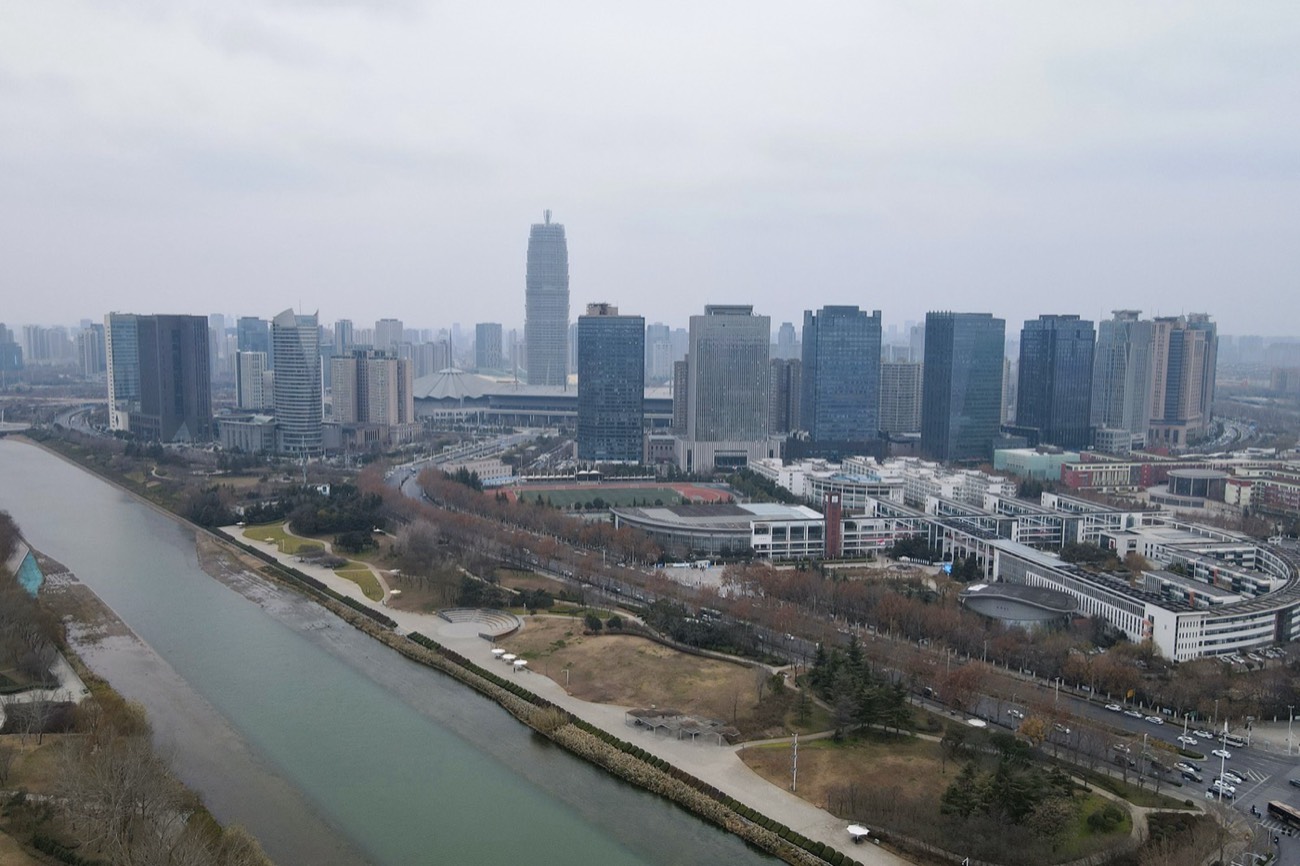
Zhengzhou grew from a county town into a metropolis of nearly thirteen million because of where it sits — the point where China’s busiest north–south and east–west rail lines cross, making it the country’s central railway crossroads and, today, a giant high-speed-rail interchange. Beneath the modern towers lie the 3,600-year-old rammed-earth walls of a Shang-dynasty capital.
The superb Henan Museum anchors the old centre, while the “big corn” Zhongyuan Twin Towers mark the CBD by Ruyi Lake. Zhengzhou is also the gateway to Mt Song and the Shaolin Temple, an hour west, and home to Foxconn’s vast “iPhone City”.
Deep-dive guide coming soon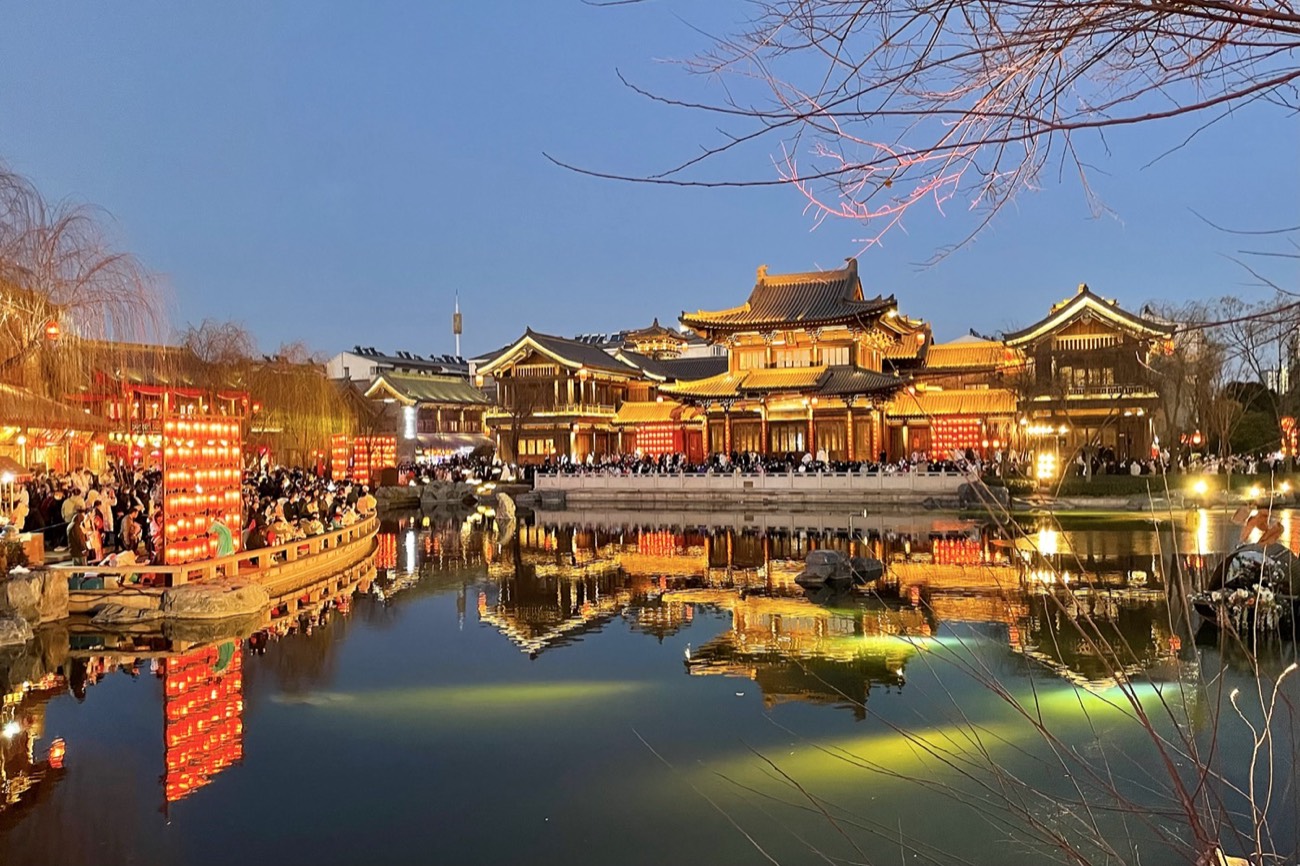
Luoyang洛阳
The ancient capital on the Yi and Luo rivers served as the seat of nine dynasties, and its treasures are among the greatest in China: the Longmen Grottoes and their colossal cliffside Buddhas, and the White Horse Temple, traditionally the first Buddhist temple in the country.
Each April the city erupts into colour for its famous peony festival, the flower Luoyang has been renowned for since the Tang. The reconstructed Sui-Tang old town lights up the evenings with Song-and-Tang pageantry.
Deep-dive guide coming soon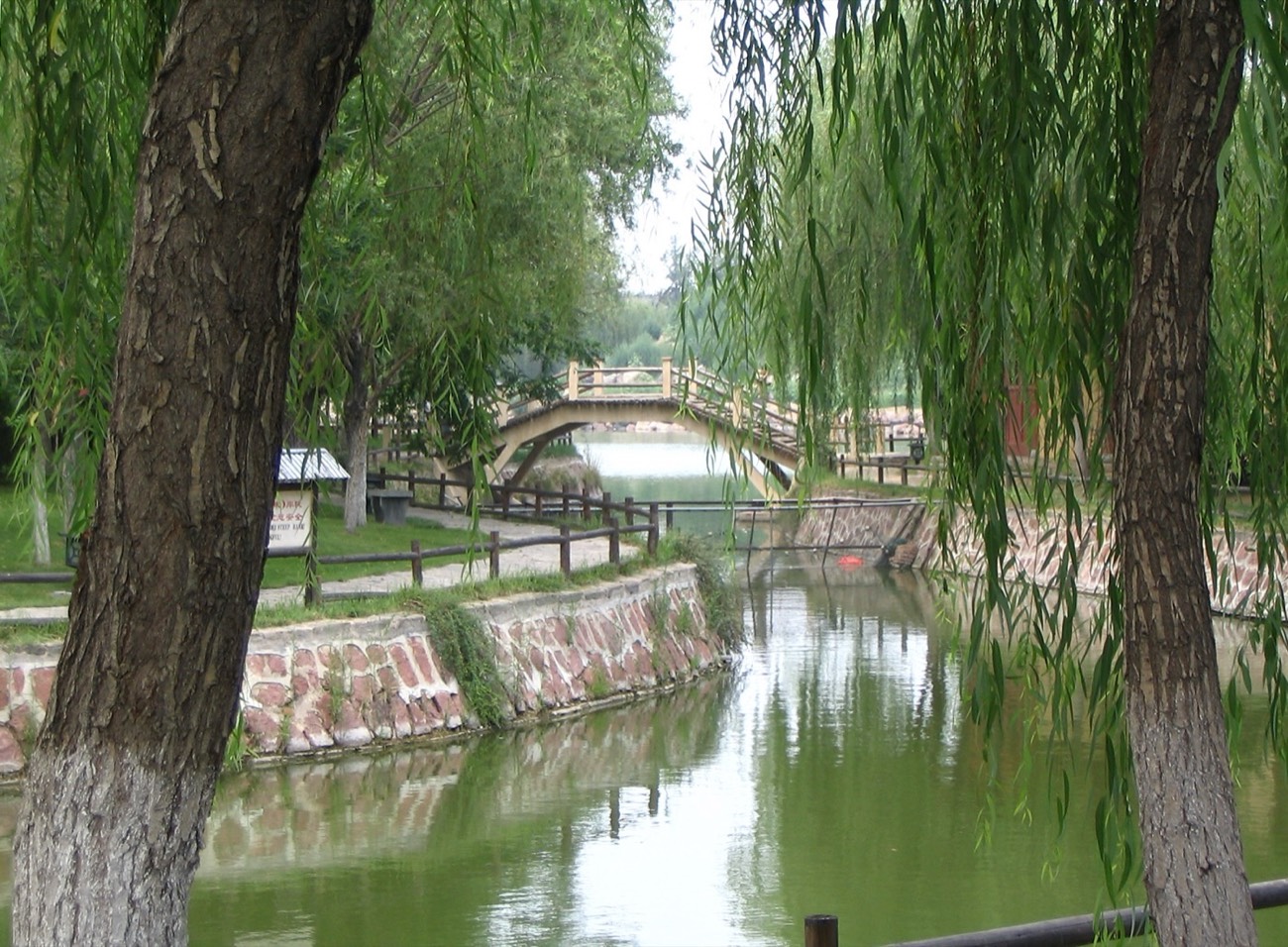
Kaifeng开封
Capital of the Northern Song and, in the eleventh century, one of the largest cities on earth — the world captured in the famous Along the River During the Qingming Festival scroll. The Iron Pagoda and Dragon Pavilion still crown the old town.
The riverside Millennium City Park brings the scroll to life with Song costumes, markets and acrobatics, and Kaifeng’s night market is one of the best street-food scenes in China.
Deep-dive guide coming soon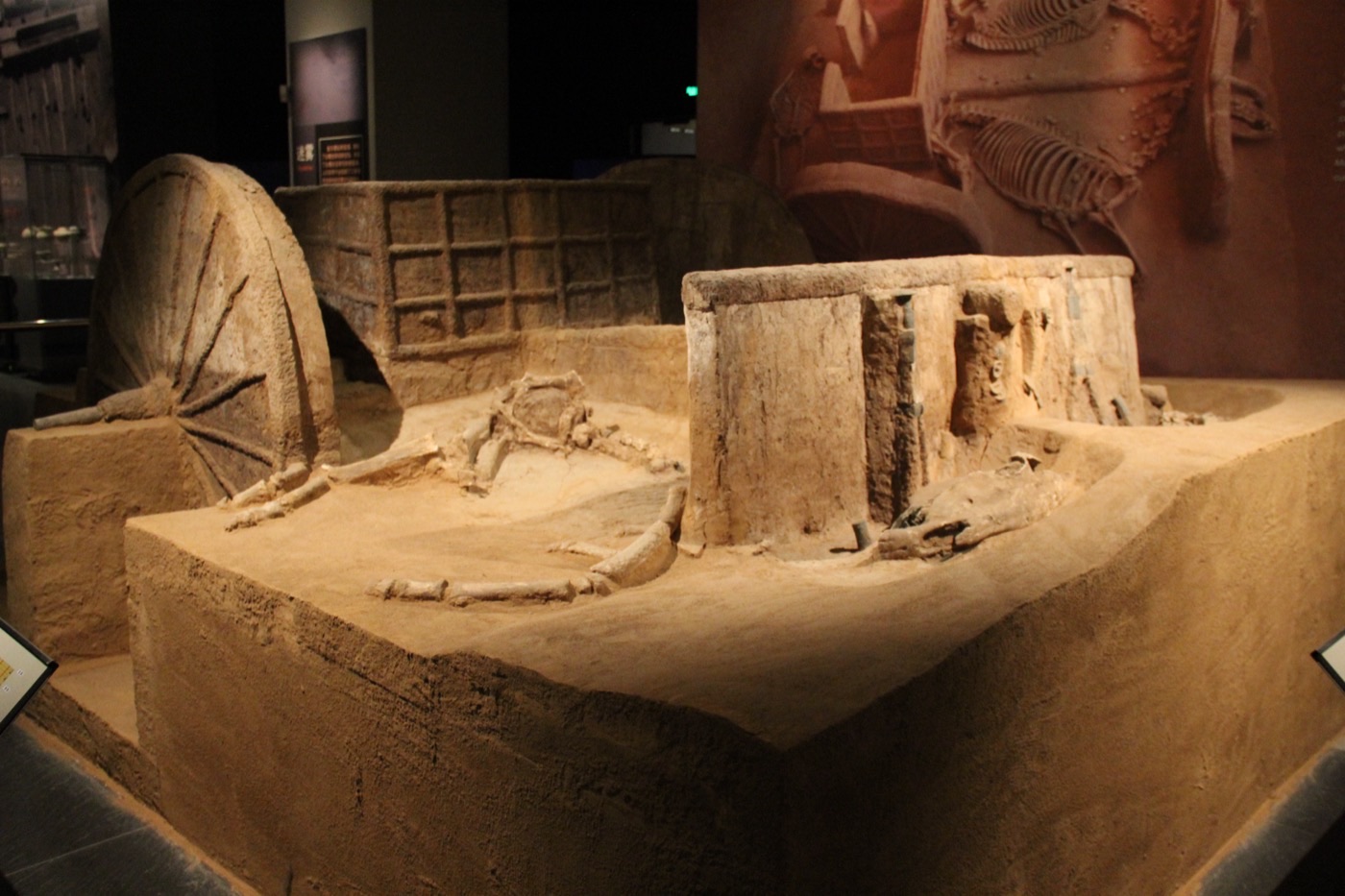
Anyang安阳
The northern Henan city on the Huan River was the site of Yin, last capital of the Shang dynasty — and it was here that the oracle bones bearing the earliest known Chinese writing were unearthed, along with the heaviest ancient bronze ever found.
The Yin Xu ruins and the National Museum of Chinese Writing make Anyang a pilgrimage for anyone drawn to the origins of the Chinese character. Nearby Tangyin is the birthplace of the Song hero Yue Fei.
Deep-dive guide coming soon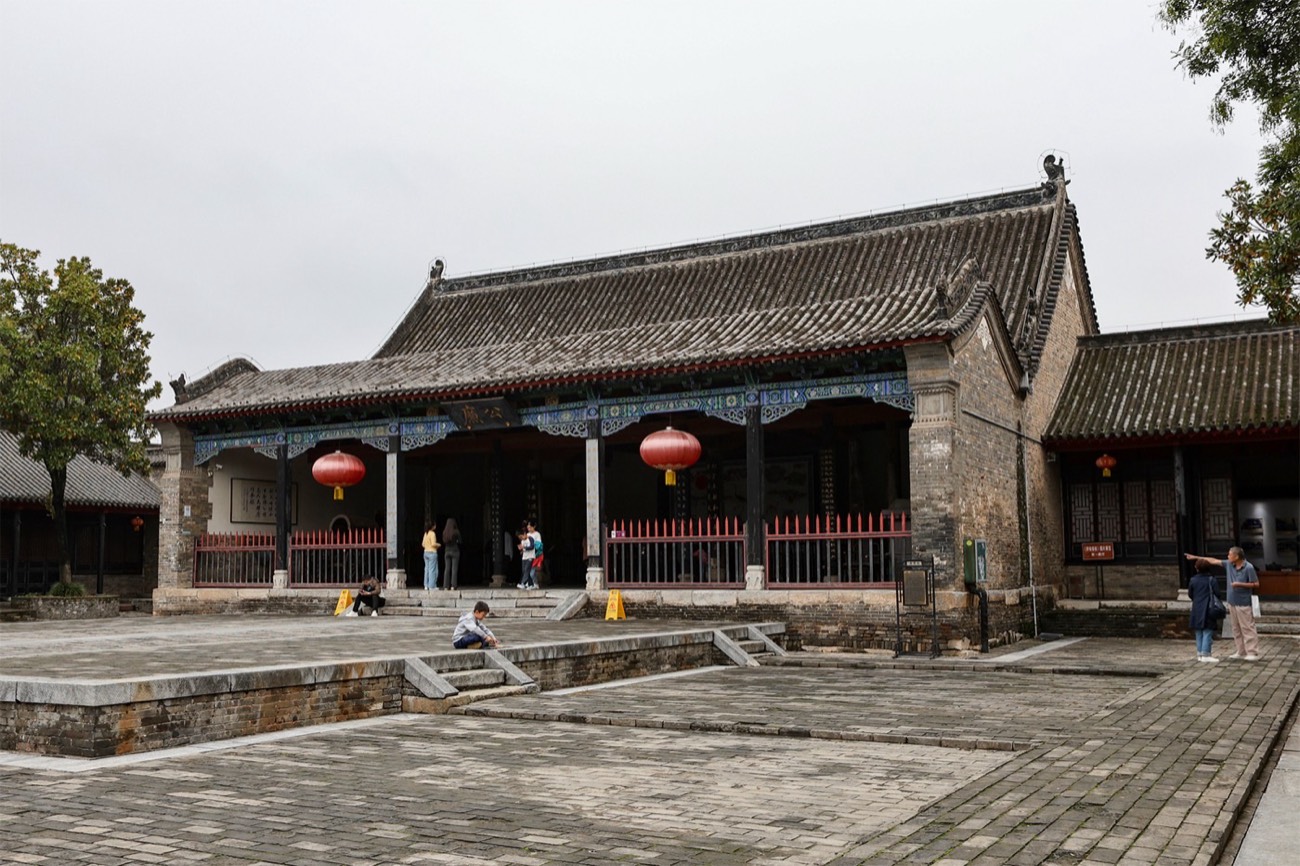
Nanyang南阳
Henan’s populous southwestern city, in the Han river basin, was a great centre of the Eastern Han — the home of the polymath Zhang Heng, inventor of the seismoscope, and the “Medical Sage” Zhang Zhongjing, a founding figure of traditional Chinese medicine.
Its remarkably intact prefectural yamen, the Medical Sage Shrine and a rich trove of Han stone-relief carvings make Nanyang an underrated stop, and the region is famous for its Dushan jade.
Deep-dive guide coming soonIconic attractions across Henan
Six Henan landmarks worth building a trip around — from a kung-fu monastery to a cliff of carved Buddhas and the birthplace of Chinese writing:
Shaolin Temple & Mt Song 少林寺 · 嵩山
Founded in 495 CE at the foot of Mt Song, the Central Sacred Mountain, Shaolin is the birthplace of Chan (Zen) Buddhism and Shaolin kung fu. The working monastery and its ancient Pagoda Forest form part of the UNESCO-listed Historic Monuments of Dengfeng, an hour west of Zhengzhou.
Longmen Grottoes 龙门石窟
A UNESCO World Heritage Site south of Luoyang — more than 100,000 Buddhist statues carved into the limestone cliffs along the Yi River from the Northern Wei to the Tang, crowned by the serene 17-metre Vairocana Buddha said to bear the features of Empress Wu Zetian.
Yin Xu 殷墟
A UNESCO World Heritage Site near Anyang — the ruins of Yin, last capital of the Shang, where the oracle bones bearing the earliest known Chinese writing were unearthed and the 800-kilogram Houmuwu ding, the heaviest ancient bronze ever found, was cast.
White Horse Temple 白马寺
Founded in 68 CE in Luoyang, traditionally the first Buddhist temple in China and the cradle from which Buddhism spread across East Asia — still a working monastery, now ringed by Indian, Thai and Burmese halls gifted by Buddhist nations.
Yuntai Mountain 云台山
A UNESCO Global Geopark near Jiaozuo and Henan’s premier natural landscape — red-sandstone gorges, turquoise pools and the 314-metre Yuntai Waterfall, one of the tallest in China.
Millennium City Park, Kaifeng 清明上河园
A living recreation of the Northern Song capital from the famous Qingming scroll — costumed markets, canal boats, acrobatics and martial-arts shows that bring eleventh-century Kaifeng, once the largest city on earth, back to life.
Famous figures from Henan
From the founder of Daoism to a Tang poet-sage and a modern Olympic champion, Henan has shaped Chinese thought, science and letters for millennia:
Laozi (老子)
The philosopher traditionally born at Luyi in eastern Henan, and author of the Dao De Jing — the founding text of Daoism and one of the most translated books in the world.
Du Fu (杜甫)
Revered with Li Bai as one of the two greatest poets in Chinese history, born at Gong County — modern Gongyi, between Luoyang and Zhengzhou.
Zhang Heng (张衡)
The Eastern Han astronomer and inventor from Nanyang who built the world’s first seismoscope; a lunar crater and an asteroid bear his name.
Zhang Zhongjing (张仲景)
The Han physician from Nanyang whose Treatise on Cold Damage established the diagnostic method still underpinning traditional Chinese medicine.
Yue Fei (岳飞)
China’s most celebrated patriot-general, born at Tangyin near Anyang — famed for the tattoo “serve the country with utter loyalty” on his back.
Deng Yaping (邓亚萍)
Born in Zhengzhou, one of the greatest table-tennis players in history — four Olympic golds and world number one for eight straight years.
Henan’s modern economy & global role
Henan is one of China’s largest provincial economies — the country’s granary and a manufacturing and logistics powerhouse at the geographic centre of the nation.
China’s granary
The country’s leading wheat producer, growing roughly a quarter of China’s crop, and home to food giants including Shuanghui, the world’s largest pork company.
Foxconn’s “iPhone City”
Foxconn’s Zhengzhou campus is the world’s largest iPhone assembly site, anchoring a fast-growing electronics cluster around the airport zone.
The crossroads of China
Zhengzhou is the hub of the national rail network; its Zhengzhou–Europe freight trains and air-cargo hub make it a key Belt-and-Road inland port.
The heritage circuit
Four ancient capitals, three UNESCO sites and the Shaolin Temple draw huge visitor numbers to one of China’s fastest-growing culture-tourism economies.
Why Henan matters for Mandarin learners
It is where China begins. As the cradle of Chinese civilisation — oracle bones, first bronzes, four ancient capitals — Henan is the deep source of the culture behind the language you are learning.
The dialect is the core of Mandarin. Henan speech is Zhongyuan (Central Plains) Mandarin, the historical heart of the whole Mandarin family, so everyday speech is close to the standard and easy to follow — with the fun local word 中 (zhōng) thrown in.
Standard Mandarin works everywhere. From Zhengzhou’s stations to Luoyang’s grottoes, Pǔtōnghuà is the shared tongue of transport, hotels and restaurants — the Chinese you’ve studied does real, daily work.
Zhengzhou is a practical, central base. Affordable and superbly connected, the capital puts Xi’an, Beijing and Wuhan all within a few hours by high-speed rail — an easy hub for putting Mandarin to use.
Visiting Henan — practical notes
Getting there: Zhengzhou is China’s central high-speed-rail hub — roughly 2.5 hours from Xi’an, Beijing or Wuhan — and Zhengzhou Xinzheng International Airport adds flights across China and beyond.
Getting around: fast trains link Zhengzhou, Luoyang, Kaifeng and Anyang, making a cradle-of-China circuit easy; Shaolin and Mt Song are about an hour from Zhengzhou by bus or car, and both Zhengzhou and Luoyang have modern metros.
When to come: April is the headline month, when Luoyang’s peony festival fills the city with colour; spring and autumn are the most comfortable seasons, while July and August are hot and humid.
Eat the province: seek out a bowl of huimian in Zhengzhou, a peppery hu la tang for breakfast, Kaifeng’s soup dumplings at the night market, and the twenty-four courses of the Luoyang Water Banquet.
A week in Henan: Zhengzhou and the Shaolin Temple; Luoyang for the Longmen Grottoes, White Horse Temple and the peonies; Kaifeng’s Song-dynasty old town; and Anyang for the oracle bones at Yin Xu.
Test your Henan knowledge
1. The Henan dialect belongs to which Chinese language family?
2. How many of China’s Eight Great Ancient Capitals are in Henan?
3. The iconic Henan word 中 (zhōng) means:
4. Shaolin Temple, at Mt Song, is the birthplace of:
5. The oracle bones — the earliest Chinese writing — were found at:
6. Henan’s one-character abbreviation is:
FAQs
Start your Mandarin journey
Want to learn the Standard Mandarin spoken across Henan and the rest of China? Online 1-on-1 lessons with a native speaker.