A Guide to Hainan (海南): Sanya’s Beaches, Coconuts & Li Culture
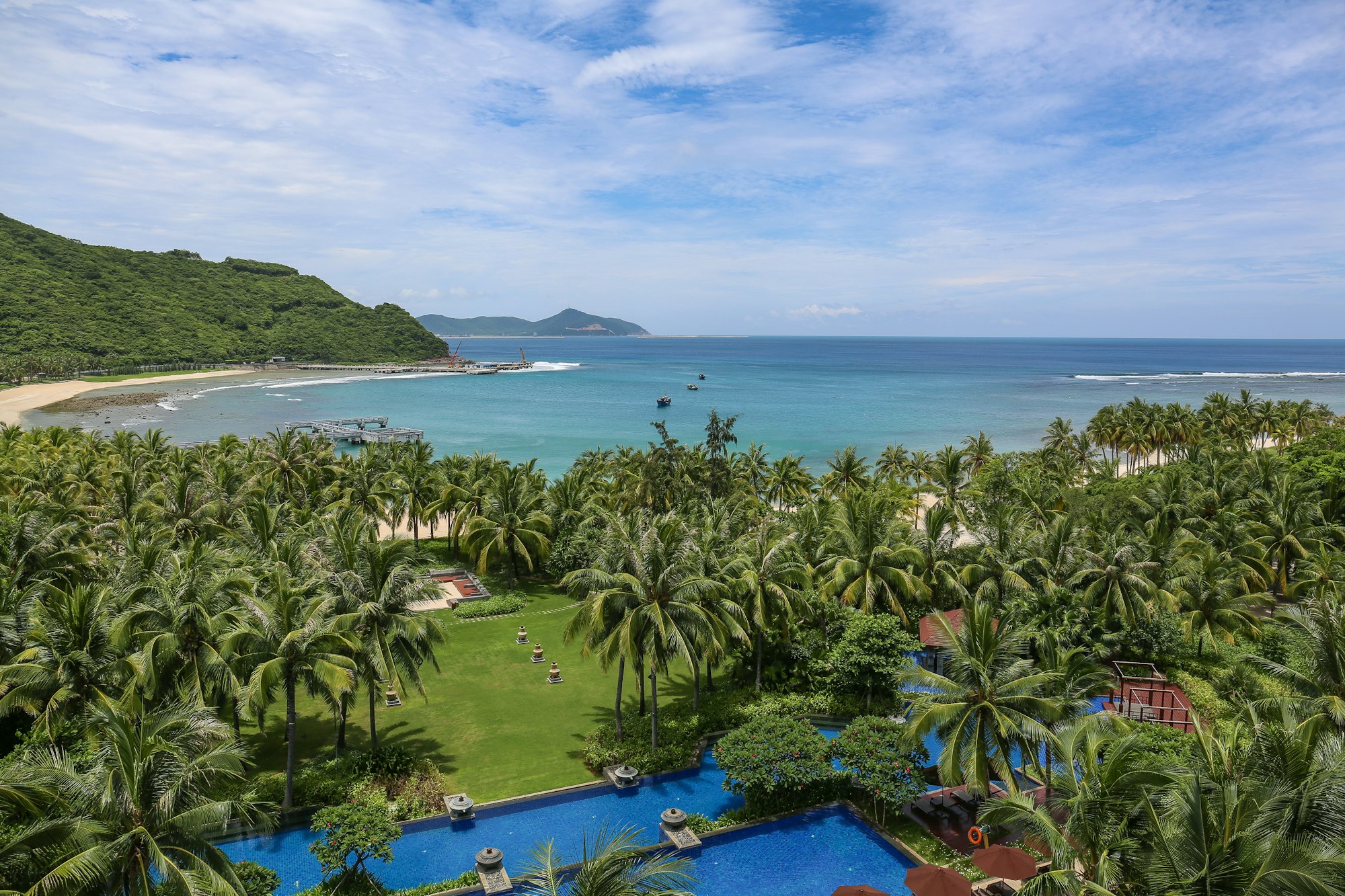
Floating in the South China Sea off the country’s southern tip, Hainan (海南 Hǎinán) is China’s tropical island province — its name means simply “south of the sea”. Palm-fringed beaches, rainforested mountains and a year-round summer have earned it the nickname “China’s Hawaii”, while a sweeping Free Trade Port experiment is reshaping its future.
For Mandarin learners, Hainan is an unusually easy and pleasant place to use the language. Because the local Hainanese dialect is a form of Min Chinese — unintelligible to Mandarin and Cantonese speakers alike — standard Mandarin is the genuine shared tongue between locals and visitors. This guide covers the history, the languages, the food, four places worth your time, and why an island of beaches, rainforest and Li culture is one of the most relaxing in China to practise what you’ve learnt.
A brief history of Hainan
The island’s first people were the Li, whose ancestors crossed from the mainland some three thousand years ago and whose villages, weaving and tattoo traditions still shape Hainan’s interior. For most of imperial history, the Han Chinese saw Hainan as the very edge of the civilised world — a place of exile. The great Song poet Su Dongpo was banished to Danzhou in 1097 and, characteristically, set about founding a school and teaching the locals instead of despairing.
Slowly the island grew into the empire. The Ming produced Hainan’s most famous son, Hai Rui — an official so incorruptible his name became a byword for honesty — and the scholar Qiu Jun rose to the very top of the Beijing bureaucracy. Through the Qing, Hainan remained a quiet prefecture of Guangdong, its coasts trading coconuts, pearls and salt.
The twentieth century brought sharper change. Guerrillas of the Qiongya Column, immortalised in the ballet The Red Detachment of Women, fought a long island campaign. In 1988 Hainan finally split from Guangdong to become a full province — and, on the same day, China’s largest Special Economic Zone. In 2018 the whole island was designated a Free Trade Port, the boldest of all China’s opening-up experiments, and the tourists and duty-free shoppers arrived in their millions.
The languages of the island
Hainan is more linguistically distinct from the mainland than its size suggests. The everyday Han language, Hainanese (海南话), is not a relative of Mandarin at all but a form of Min Chinese — the same broad family as Hokkien, Teochew and Taiwanese. A Mandarin speaker dropped into a Hainanese conversation will understand almost nothing, and even Cantonese offers no help.
Older and deeper still is the Li language (Hlai), a Kra-Dai language — related to Zhuang and Thai rather than to Chinese — spoken across the central highlands, alongside the languages of the Miao and the small Lingao and Cun communities. It is a reminder that Hainan was an Austronesian-facing, indigenous island long before it was a Chinese province.
For visitors and learners this produces a happy result: because no single local language is shared by everyone, standard Mandarin is the genuine lingua franca — used in schools, on the round-island trains, in every Sanya hotel and market. You will be understood everywhere, and your Mandarin gets a real workout rather than competing with a dominant local dialect.
Six Hainan words worth knowing
Hainanese (海南话) is a Southern Min variety quite distinct from Mandarin — closely related to Leizhou and Chaoshan speech and largely unintelligible to Mandarin speakers. The island is also home to the Li people and other groups with their own languages, making Hainan one of China’s richest dialect treasuries. Standard Mandarin is understood everywhere; tap 🔊 for the Standard Mandarin reading of each character.
Phrases worth knowing in Hainan
Six Mandarin phrases that earn their keep on the beach, at the seafood table and in the duty-free malls. Tap 🔊 for native audio.
Hainan’s table: sea, coconut & the four famous dishes
Hainan eats like the tropical island it is — light, fresh and built around three things: the sea, the coconut and the chicken. Its cooking prizes clean, natural flavour over heat or heavy sauce, letting just-caught seafood and free-range poultry taste of themselves.
At its heart are the four famous dishes (四大名菜) — Wenchang chicken, Jiaji duck, Dongshan goat and Hele crab — each tied to a particular town. Around them sits a whole tropical larder: coconut in everything from hotpot to dessert, mountains of seafood, and the rice-noodle breakfasts every Hainanese grew up on. Come hungry and eat by the water.
Say the menu
Tap 🔊 to hear each dish in Mandarin:
Notable cities of Hainan
Hainan’s highlights ring the island and rise into its green centre — the capital in the north, the resorts in the south, the surf on the east coast and the rainforest at its heart. Five very different places worth your time:
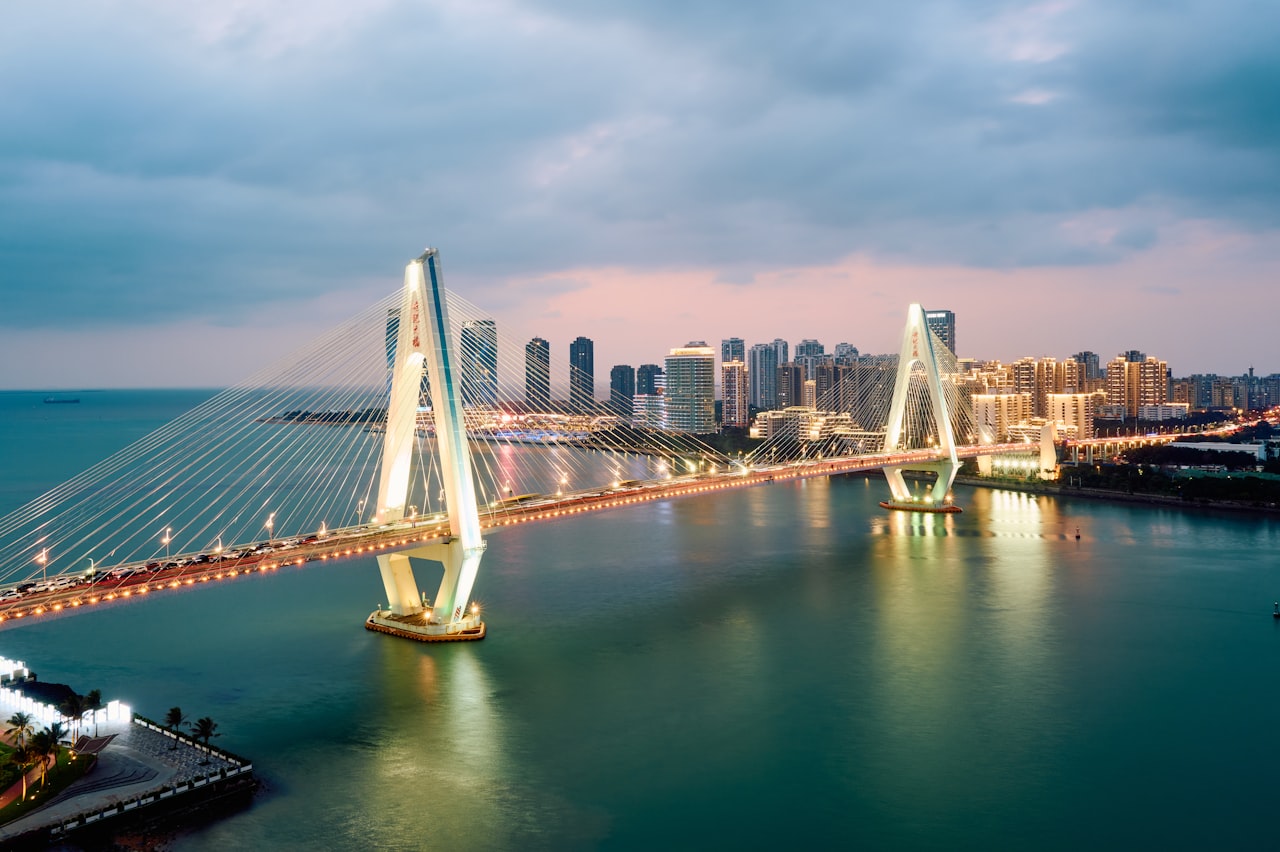
Haikou海口
Haikou, the “mouth of the sea”, is the island’s easygoing capital — greener, cheaper and more lived-in than Sanya. Its heart is the Qilou Old Street, blocks of arcaded shophouses built by returning overseas Chinese a century ago, now full of cafés and noodle shops. Nearby stand the tomb of the upright official Hai Rui and the Leiqiong volcanic geopark.
Most visitors arrive here — by plane or by the ferry across the strait from Guangdong — before riding the round-island train south. For learners, Haikou’s relaxed, untouristy streets are a friendly place to practise everyday Mandarin.
Deep-dive guide coming soon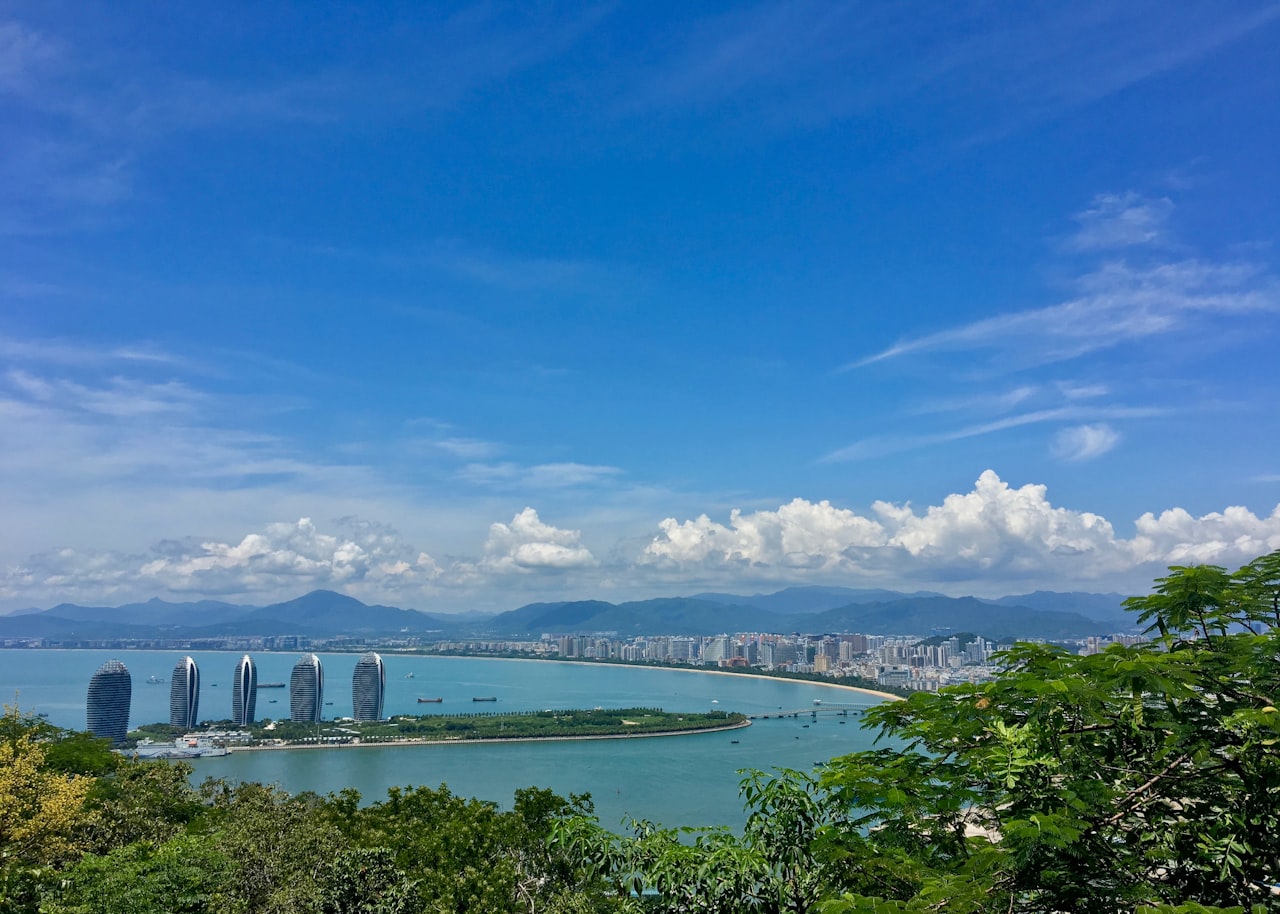
Sanya三亚
Sanya is the reason most people picture Hainan as a holiday: a south-coast city ringed by golden bays. Yalong Bay and Dadonghai draw the resorts and swimmers; Tianya Haijiao — “the edge of the sky and the rim of the sea” — draws the photographs; and the 108-metre Guanyin statue at Nanshan draws the pilgrims.
It is also the capital of duty-free shopping under the Free Trade Port, with some of the largest duty-free malls on earth. Busy and built-up, but the sand and water are the real thing — and Mandarin is the language of every counter and beach.
Deep-dive guide coming soon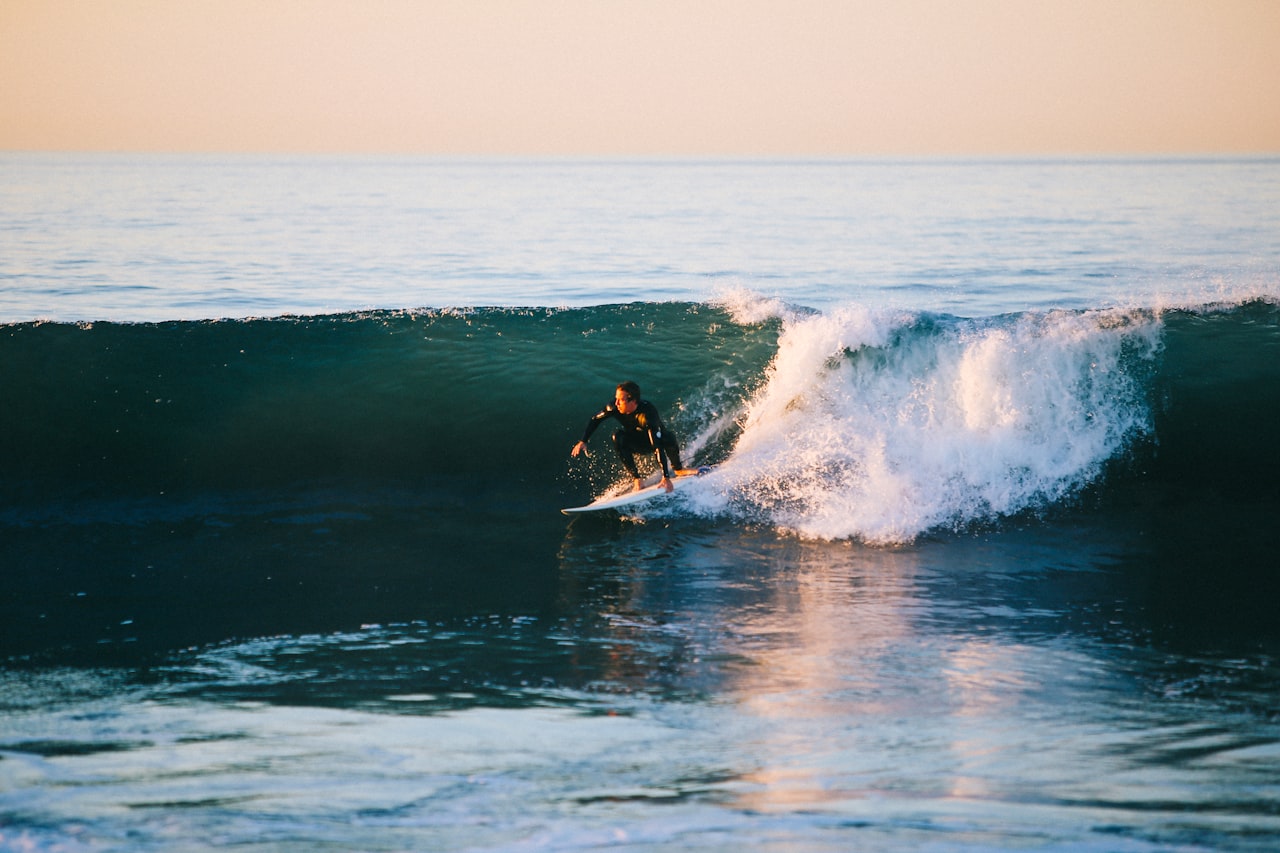
Wanning万宁
On the quieter east coast, Wanning is the home of Chinese surfing. Riyue Bay (Sun and Moon Bay) has the island’s most reliable swell and a growing scene of board-shops, hostels and surf schools, while Shimei Bay curves wide and white beside it. Inland, Dongshan Ridge grows the goats of one of the four famous dishes, and Xinglong’s plantations brew Hainan’s distinctive coffee.
Wanning is the laid-back, barefoot side of Hainan — a good place to slow down, learn to surf and practise unhurried, everyday Mandarin away from the resort crowds.
Deep-dive guide coming soon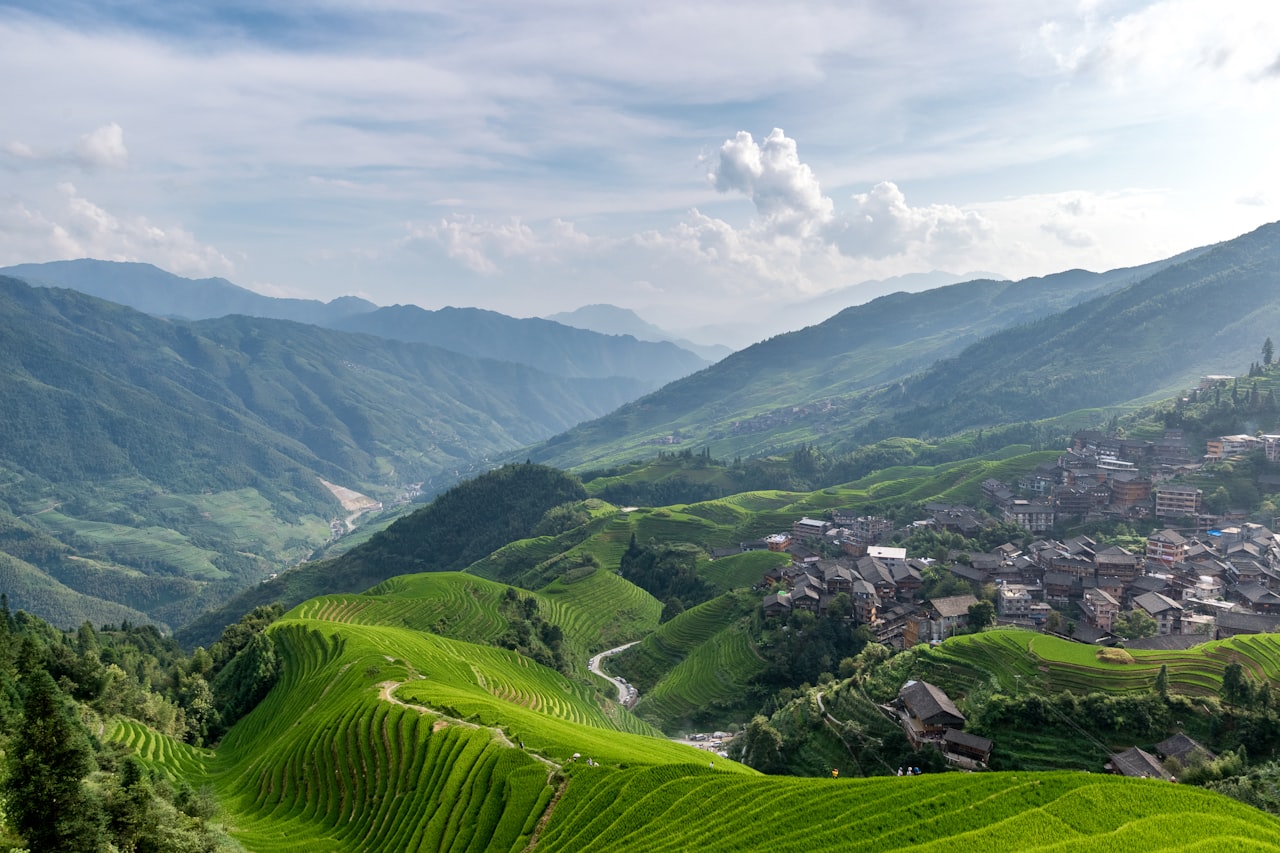
Wuzhishan五指山
Named for the “Five Finger Mountain” that is Hainan’s highest peak, Wuzhishan is the green, cool heart of the island and the homeland of the Li and Miao peoples. This is the gateway to the Hainan Tropical Rainforest National Park — misted ridges, river-drifting, and the canopy where the world’s rarest primate, the Hainan gibbon, still survives.
Li villages, brocade-weaving and bamboo-tube rice give the highlands a culture entirely unlike the coast. For travellers who want Hainan beyond the beach, Wuzhishan is the place — and a reminder of how deep the island’s indigenous roots run.
Deep-dive guide coming soon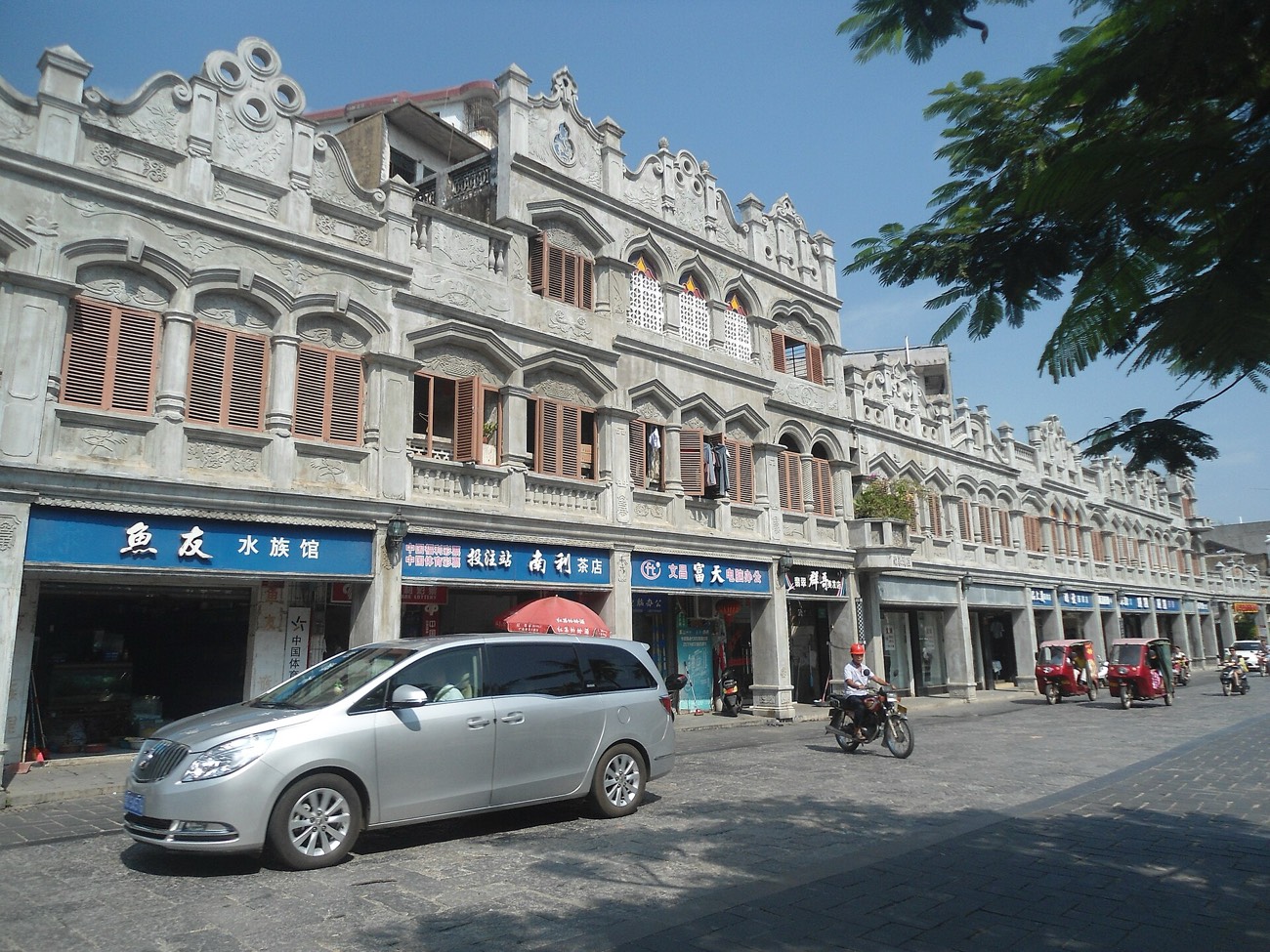
Wenchang文昌
On Hainan’s north-east coast, Wenchang is the island’s coconut capital and the home of Wenchang chicken, most famous of Hainan’s four signature dishes. Since 2016 it has also hosted China’s newest spaceport, where Long March rockets lift off over the sea.
Its old town keeps handsome arcaded qilou shophouses built by returning overseas Chinese — Wenchang is a famous hometown of the South-East Asian diaspora — their faded facades lining quiet, walkable streets.
Deep-dive guide coming soonIconic attractions across Hainan
Six Hainan landmarks worth building a trip around — from the country’s most famous beach to a UNESCO-listed field of volcanoes:
Yalong Bay & Sanya’s beaches 亚龙湾
A seven-kilometre arc of fine white sand and clear, warm water on Sanya’s south coast — the postcard Hainan beach, lined with resorts and backed by green hills. Dadonghai and Sanya Bay are the livelier, more local alternatives nearby.
Tianya Haijiao 天涯海角
“The edge of the sky, the rim of the sea” — a famous shore of giant inscribed boulders that for centuries marked, in the Chinese imagination, the very end of the known world. Now Hainan’s most iconic photo stop.
Nanshan & the Guanyin of the South Sea 南山海上观音
A vast Buddhist culture park west of Sanya, crowned by a 108-metre statue of Guanyin rising from the sea on a lotus — one of the tallest statues on earth and a major pilgrimage site.
Hainan Tropical Rainforest National Park 海南热带雨林国家公园
The island’s mountainous green core, from Wuzhishan to Jianfengling — primary tropical rainforest, waterfalls and canopy walks, and the last refuge of the critically endangered Hainan gibbon, the rarest primate in the world.
Haikou Volcanic Cluster Geopark 海口火山群
Just outside the capital, a field of dormant volcanic cones, craters and lava tubes — part of the Leiqiong UNESCO Global Geopark. Climb a crater rim for a view over Haikou and the strait.
Wuzhizhou Island 蜈支洲岛
A small coral-fringed island off the coast near Sanya, ringed by some of China’s clearest water. It’s the country’s premier diving and snorkelling spot, with bright reefs, jet-skis and powder-white sand a short boat ride from the mainland.
Famous figures of Hainan
An island of upright officials, exiled poets and revolutionaries whose influence reached far beyond its shores:
Hai Rui (海瑞)
Born in Haikou, Hai Rui became the most famous incorruptible official in Chinese history — so fearless he once sent the Jiajing Emperor a memorial having already bought his own coffin. His name is still shorthand for honesty in office.
Qiu Jun (丘濬)
Also from Haikou, Qiu Jun rose to be a Ming grand secretary and one of the era’s great scholars and economic thinkers — proof that the “edge of the world” could reach the very centre of power.
Su Dongpo (苏东坡)
The beloved Song poet spent his final exile in Danzhou from 1097. Rather than despair at the empire’s farthest frontier, he taught local students, dug wells and wrote — and is still honoured across Hainan today.
The Soong family
The hugely influential Soong family — including Soong Ching-ling, wife of Sun Yat-sen, and Soong May-ling, wife of Chiang Kai-shek — trace their ancestral roots to Wenchang on Hainan’s north-east coast.
Feng Baiju (冯白驹)
The Hainan-born leader of the Qiongya Column, who sustained a 23-year guerrilla struggle on the island — the campaign remembered in the famous ballet The Red Detachment of Women.
Wang Zuo (王佐)
A native of Lingao, Wang Zuo was one of Hainan’s celebrated “Four Great Talents” — a Ming scholar remembered for his poetry and learning, and a symbol of the island’s literary flowering.
Hainan’s modern economy & global role
Hainan’s economy is shaped by sun, sea and policy. A tropical climate and protected environment make it at once China’s holiday island, its boldest free-trade experiment and a warm-weather farm — with a rocket launch site on the side.
The island holiday
Tourism is Hainan’s heartbeat. Sanya’s resorts, the round-island high-speed railway and a year-round tropical climate draw tens of millions of mainland visitors — the island markets itself, with reason, as China’s premier beach destination.
Duty-free & openness
Since 2018 the entire island has been a Free Trade Port, China’s most ambitious opening-up experiment. Its most visible face is offshore duty-free shopping — the Haikou and Sanya duty-free complexes are among the largest in the world.
Coconuts, fruit & rockets
Hainan’s warmth makes it a winter market garden for the mainland — coconuts, rubber, tropical fruit, vegetables and fisheries. On the north-east coast, the Wenchang Space Launch Centre sends China’s heaviest rockets to orbit from the tropics.
Breeding the next harvest
Hainan’s endless summer lets crop scientists grow extra generations each year, so the island’s ‘Nanfan’ breeding bases around Yazhou Bay quietly underpin much of the nation’s seed development — an outsized role in China’s food security.
Why Hainan matters for Mandarin learners
Mandarin is genuinely the shared language. Because Hainanese is a Min dialect that outsiders — and even other southern Chinese — can’t follow, locals reach for standard Mandarin with any visitor. Few places give your Mandarin such a clear, unobstructed run.
It’s a huge tourism classroom. Hainan runs on domestic travellers, so the practical Mandarin of check-ins, taxis, seafood markets, beaches and duty-free counters is everywhere around you — high-frequency, immediately useful, and endlessly rehearsed.
It opens a window on the Min-dialect world. If you’re curious about Chinese beyond the standard language, hearing Hainanese — cousin to Hokkien and Taiwanese — is a vivid lesson in just how far the family stretches.
The pace makes practice easy. Hainan is built for slowing down. A relaxed beach or surf town is a low-pressure, confidence-building place to step out of the classroom and actually speak.
Visiting Hainan — practical notes
Getting there: Haikou Meilan and Sanya Phoenix are both international airports with flights across China and beyond. You can also drive or take a train onto the cross-strait ferry from Hai’an in Guangdong. Once on the island, the round-island high-speed railway loops the whole coast — Haikou to Sanya in well under two hours.
Getting around: The ring railway connects the main coastal cities quickly and cheaply; Wanning and the east-coast bays are stops along it. Reaching the interior — Wuzhishan and the rainforest park — is best done by bus or car, and rewards an overnight stay.
When to come: The dry season from October to April is ideal — warm, sunny and comfortable, and the peak around Chinese New Year is busy and pricey. Summers are hot, humid and wet, and the typhoon season runs roughly July to September, so check forecasts if you travel then.
Language in practice: Standard Mandarin is understood everywhere and is the default with visitors. English is common in Sanya’s resorts but patchy elsewhere — a little Mandarin goes a long way and is warmly received.
One week in Hainan: Two nights in Haikou (Qilou old town, the volcanic geopark), a night on the east coast at Wanning for the surf, three nights in Sanya for the beaches, Nanshan and duty-free, with a day or two inland to Wuzhishan for the rainforest if you can spare them.