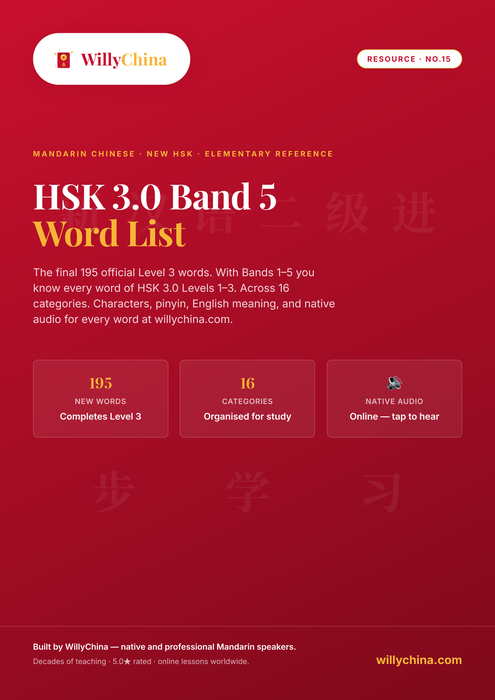
HSK 3.0 Band 5 Word List — PDF + Native Audio
The final 195 official HSK 3.0 Level 3 words. Finish this list and you know every word of Levels 1–3. Organised by category with characters, pinyin, English meaning and native pronunciation for every word. Tap any word below to hear it.
⬇ Download PDF (7 pages)Free — tell us where to send it and it’s yours. Want to practise it rather than just read it? HSK 3.0 Band 5 Complete Pack adds a tracing workbook, native audio for every entry and Anki decks — US$32, one payment.
- All 195 new HSK 3.0 Band 5 words
- Organised across 16 categories for structured study
- Character + pinyin + English meaning for each word
- Search + filter by category on the page
- Native pronunciation audio for every word
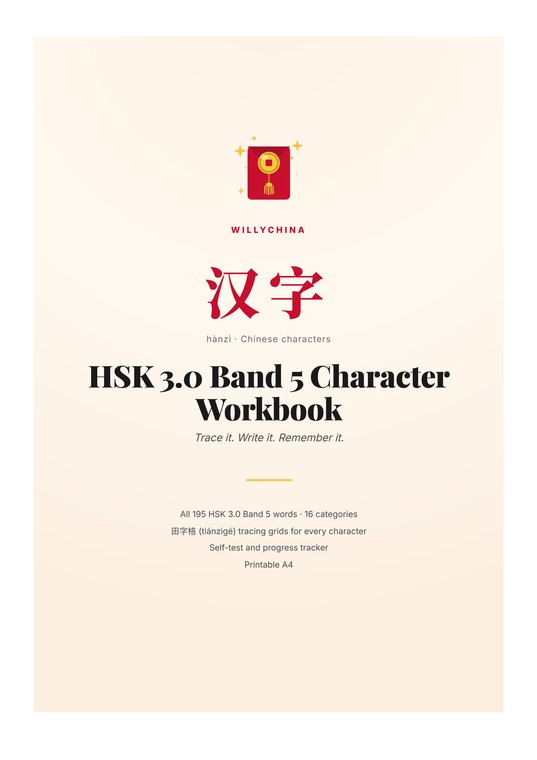
The word list above is free. This is the practice.
HSK 3.0 Band 5 Complete Pack
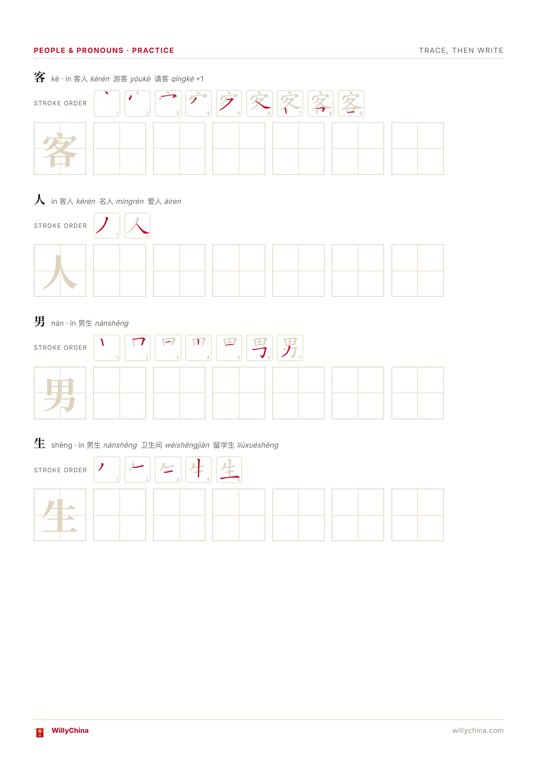
A 82-page character workbook with 田字格 (tiánzìgé) tracing grids for every character in the 195 Band 5 words, 390 audio files at natural and slow speed, and Anki flashcards in both directions.
See what is inside — US$32One payment · instant download · yours to keep
Tap any word to hear it spoken
Search by character, pinyin or English meaning. Filter by category. Tap any card to hear native Mandarin pronunciation.
No words match your search. Try a different term or clear filters.
What is HSK 3.0 Band 5?
Band 5 is the most practical list in the series. It is full of the words you need the moment you live, travel or study in Chinese: 护照 (hùzhào, passport), 行李 (xíngli, luggage), 地图 (dìtú, map), 冰箱 (bīngxiāng, fridge), 外卖 (wàimài, takeaway) and 信用卡 (xìnyòngkǎ, credit card). It names the four seasons, from 春天 (chūntiān, spring) to 冬天 (dōngtiān, winter), and gives you the classroom words 作业 (zuòyè, homework), 复习 (fùxí, to revise) and 学期 (xuéqī, term).
Every word is on the official Level 3 list in the HSK 3.0 syllabus. Band 4 took the more common half of the Level 3 words left after Bands 1–3; Band 5 holds all the rest. These words are less frequent in general text, but that is because they are specific, not because they are rare in daily life. You will use most of them every week.
You get all 195 words in three forms: an A4 PDF organised by category for printing and offline study, the search-and-filter grid above for quick lookup, and native Mandarin audio for every word (Microsoft Xiaoxiao, slowed slightly for clarity).
How to use this Band 5 word list
This is a list of concrete words, so learn it the way you would use it: by situation. Here’s how:
- Print the PDF and stick the Places page by your front door. Most of the 32 place words describe a journey you could take today.
- Learn by scene. Group the words you’d need at an airport (护照 hùzhào, 行李 xíngli, 起飞 qǐfēi, 晚点 wǎndiǎn), in a kitchen (冰箱 bīngxiāng, 盘子 pánzi, 筷子 kuàizi, 勺子 sháozi) or at school (作业 zuòyè, 黑板 hēibǎn, 课本 kèběn).
- Learn the eight directions together. Band 5 adds 东北 (dōngběi, northeast), 西南 (xīnán, southwest) and the rest. Chinese names east or west first, so “northeast” is literally “east-north”.
- Label your home. Write 沙发 (shāfā, sofa), 空调 (kōngtiáo, air conditioner) and 洗衣机 (xǐyījī, washing machine) on sticky notes. You’ll read each one dozens of times a week.
- Say the seasons and holidays with a date: 新年 (xīnnián, New Year), 节日 (jiérì, festival), 放假 (fàngjià, to have a holiday). Tie each to a real day in your calendar.
- Use the grid’s search to test yourself in English: type “bowl” or “lift” and say the Chinese before you look.
Finishing Band 5 means you know the vocabulary of the new Level 3 exam. The exam itself also tests listening, reading, handwriting and a compulsory speaking test. Our 1-on-1 HSK Preparation course follows the new format. If you want to speak rather than sit an exam, our Basics course turns these everyday words into everyday conversations.
The 16 categories in this Band 5 word list
This list groups the 195 words into 16 categories. Because Band 5 is so concrete, most categories map onto a place or a moment in your day.
- People & Pronouns (5) — 客人 (kèrén), 男生 (nánshēng), 邻居 (línjū) — guests, neighbours and visitors.
- Family (5) — 姐妹 (jiěmèi), 夫妻 (fūqī), 叔叔 (shūshu) — relatives and how to address them.
- Time & Dates (19) — 不久 (bùjiǔ), 平时 (píngshí), 好久 (hǎojiǔ) — the seasons, holidays and days either side of today.
- Numbers & Measure Words (2) — 公斤 (gōngjīn), 斤 (jīn) — weights at the market.
- Food & Drink (13) — 啤酒 (píjiǔ), 蛋糕 (dàngāo), 饮料 (yǐnliào) — drinks, fruit, snacks and the table.
- Places & Getting Around (32) — 南方 (nánfāng), 自行车 (zìxíngchē), 花园 (huāyuán) — the biggest group: home, town, travel and directions.
- School & Work (25) — 作业 (zuòyè), 数学 (shùxué), 练习 (liànxí) — the classroom, the campus and the office.
- Body & Health (9) — 牙 (yá), 耳朵 (ěrduo), 感冒 (gǎnmào) — colds, fevers, hospitals and exercise.
- Hobbies, Sport & Leisure (12) — 运动员 (yùndòngyuán), 晚会 (wǎnhuì), 得分 (défēn) — sport, parties and photos.
- Nature, Animals & Weather (7) — 草 (cǎo), 羊 (yáng), 月亮 (yuèliang) — grass, flowers, animals and the moon.
- Things & Objects (23) — 碗 (wǎn), 相机 (xiàngjī), 沙发 (shāfā) — clothes, appliances and the things in your bag.
- Everyday Verbs (12) — 刷 (shuā), 尝 (cháng), 分开 (fēnkāi) — daily routines, from brushing to moving house.
- Thinking & Feeling (6) — 难过 (nánguò), 懂得 (dǒngde), 喜爱 (xǐ’ài) — feelings, interest and understanding.
- Speaking & Communication (6) — 对话 (duìhuà), 邮件 (yóujiàn), 邮箱 (yóuxiāng) — emails, sentences and conversation.
- Adjectives & Descriptions (14) — 甜 (tián), 安静 (ānjìng), 瘦 (shòu) — taste, size, looks and cleanliness.
- Adverbs & Linking Words (5) — 常常 (chángcháng), 以外 (yǐwài), 不但 (bùdàn) — how often, in total, and “not only… but also”.

Sitting the new Level 3 exam?
With Band 5 you have all 1,000 words of Levels 1–3. The exam also tests listening, reading, handwriting and a compulsory speaking test. Our 1-on-1 HSK Preparation course drills those skills with mock papers and pacing technique.
Book a free HSK consultationA two-week study plan
Here’s a two-week plan for the whole Band 5 list at about 14 words a day, 15–20 minutes a session.
- Week 1: Places & Getting Around (32) + Time & Dates (19) + Food & Drink (13) + Nature, Animals & Weather (7) + Numbers & Measure Words (2) — 73 words. Out and about: places, travel, seasons, food and the outdoors.
- Week 2: School & Work (25) + Things & Objects (23) + Adjectives & Descriptions (14) + Hobbies, Sport & Leisure (12) + Everyday Verbs (12) + Body & Health (9) + Thinking & Feeling (6) + Speaking & Communication (6) + People & Pronouns (5) + Family (5) + Adverbs & Linking Words (5) — 122 words. At school, at home and with people. Then filter “All” in the grid and say every word before the audio plays.
After a fortnight you’ll have met every Band 5 word with native audio, and with it the whole of official Level 3. Band 6 starts Level 4. The HSK levels guide shows the whole ladder.
FAQs
Sources: word list from the official HSK 3.0 (November 2025) syllabus via Chinese Testing International; English glosses adapted from CC-CEDICT (CC BY-SA 4.0).
Ready to use all 1,000 words?
Vocabulary lists are a foundation — but you need real practice with feedback. Book a free 30-minute intro lesson.
Book a Free Intro LessonWant a teacher, not just a PDF?
Practise this with a native speaker
The list gets you the words. Saying them out loud to someone who corrects your tones is what makes them stick. Tell us where you’re up to and we’ll suggest a starting point — free, no obligation.
Thanks — that’s in. We’ll be in touch within 24 hours.
Free PDF
Where should I send it?
Tell us a little about you and the PDF is yours — it lands in your inbox straight away.
All fields are required. I’ll send new resources now and then, the odd note on learning Mandarin properly, and occasionally news about my workbooks. Unsubscribe any time. Privacy policy
Sent. Check your inbox — your download is starting now.
Before you go
You’ve got the reference. The HSK 3.0 Band 5 Complete Pack is the practice — a 82-page workbook with stroke order and tracing for every character in the 195 Band 5 words, 390 audio files (natural + slow), and two Anki decks.
See what’s inside — US$32One payment. Yours to keep.