Chinese Writing Practice
Free Chinese writing practice for HSK 1–6: learn each character’s stroke order on a 米字格 (mǐzìgé) grid, trace it, then review it with spaced repetition and printable practice sheets.
Why stroke order comes first
Writing strokes in the standard order makes handwriting faster, more accurate and easier to read, and it helps you remember characters. This Chinese writing practice tool is built around it in three ways.
For a sheet built around your own characters, use the Chinese character worksheet generator: type or paste any characters and print them with stroke order and 田字格 (tiánzìgé) grids.
Real stroke-order coaching
Every character animates in the correct order. Trace it under guidance; quiz yourself with no hints when you’re ready. Build muscle memory the right way.
Spaced repetition built in
Characters you struggle with come back sooner; characters you nail go longer between reviews. Powered by an SM-2 inspired scheduler.
Printable practice sheets
Download an A4 sheet for any character: its stroke order step by step, then 米字格 (mǐzìgé) cells where a red guide fades out.
Start your Chinese writing practice: free, no sign-up
Chinese writing practice in 4 steps
Pick a character
Browse HSK 1–6 or radicals. Search by hanzi, pinyin, or English meaning.
Watch the strokes
See the correct stroke order animated. Replay or slow it down to ½×.
Trace, then quiz
Trace with hints, then quiz yourself with no outline. Your mistakes feed the review queue.
Review daily
Come back tomorrow — your queue surfaces what you’re forgetting. Build streaks.
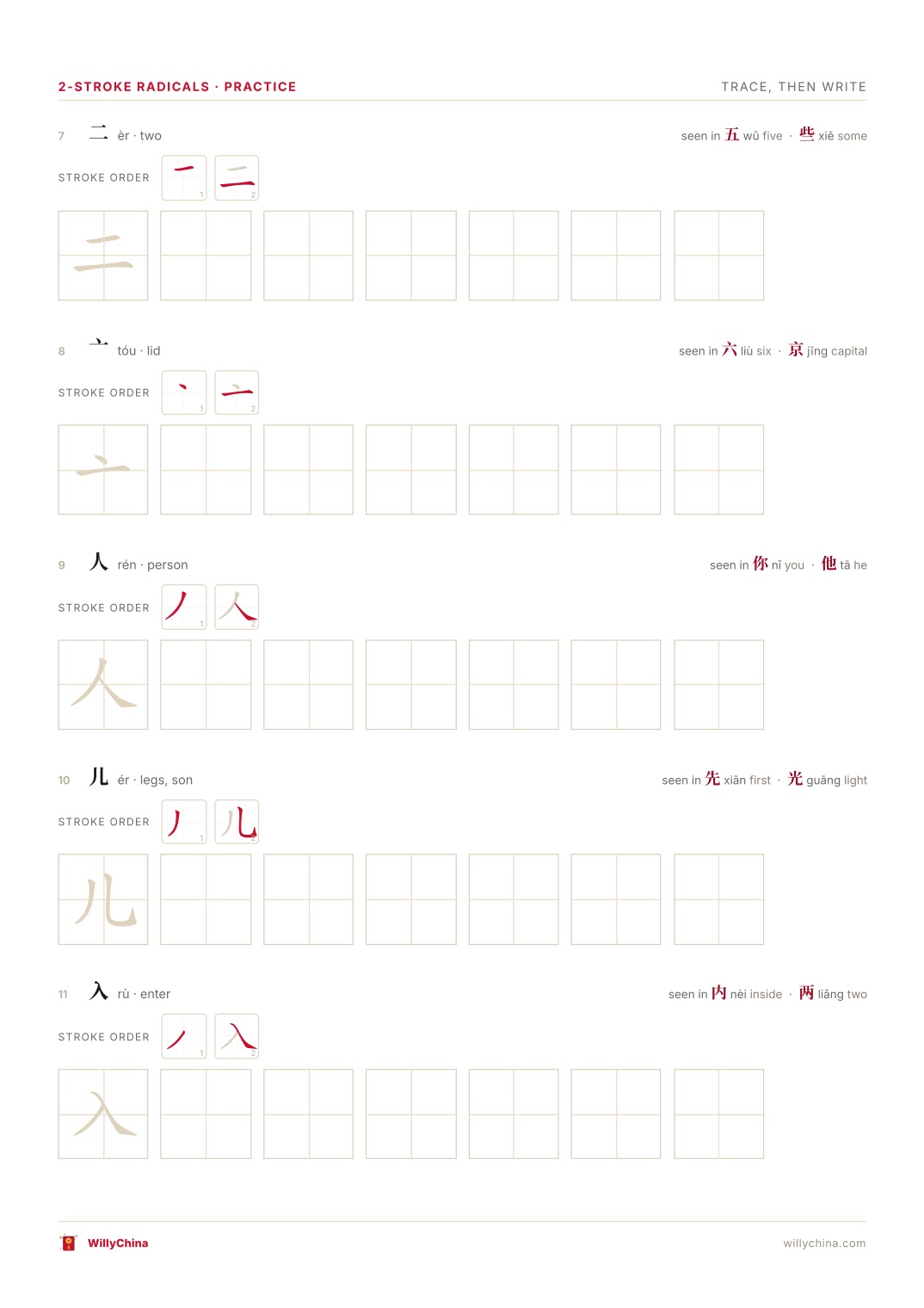
Practice on paper
The 214 Radicals Complete Pack
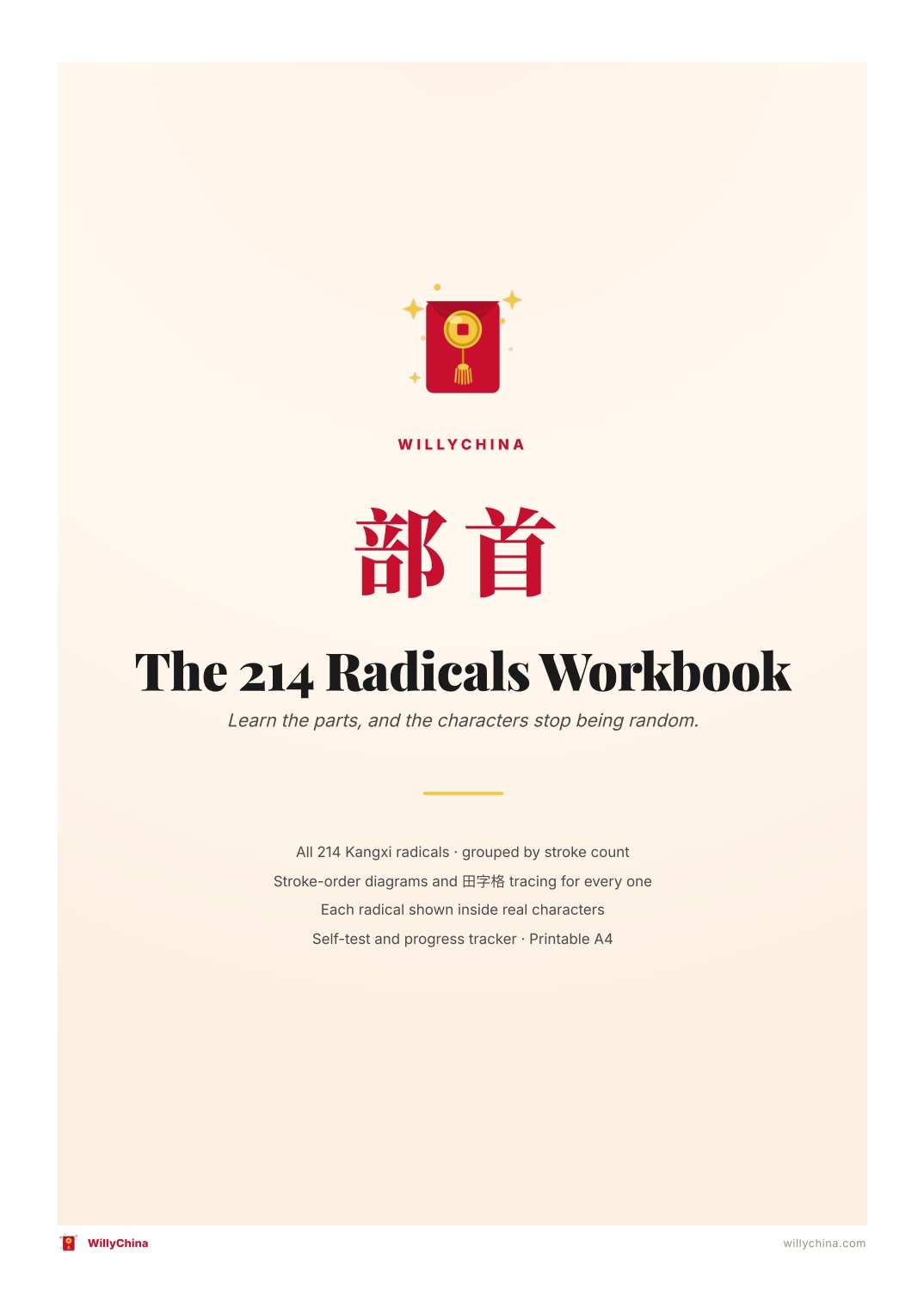
The trainer above is free and teaches one character at a time. The pack teaches the parts every character is built from: all 214 radicals, each shown inside real characters, with stroke-order diagrams and 田字格 (tiánzìgé) tracing.
- 69page workbook
- 830audio files
- 3Anki decks
US$21 · one payment · instant download · yours to keep
Seven stroke order rules for Chinese writing practice
Most characters follow a few general rules, so learn them early in your Chinese writing practice. Every example below is drawn from the same stroke data the trainer uses: earlier strokes in black, the new stroke in red.
- 1
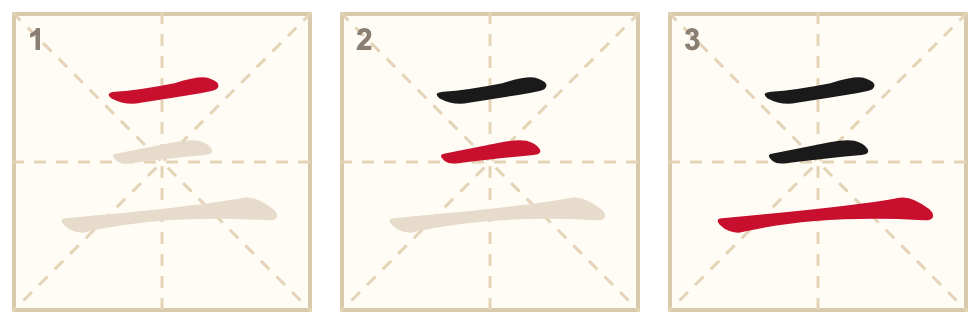
Top to bottom, left to right
三 (sān), three: each stroke runs left to right, starting with the top one.
- 2
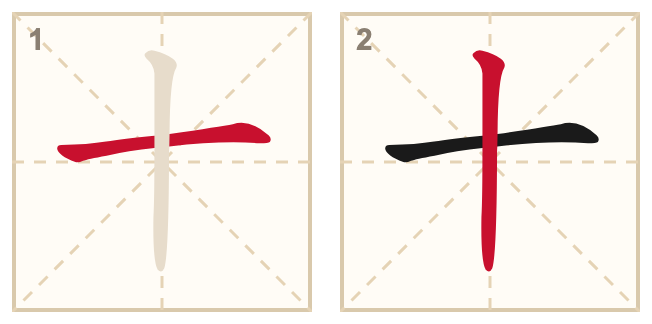
Horizontal before vertical
十 (shí), ten: the horizontal stroke comes first, then the vertical that crosses it.
- 3
Left-falling before right-falling
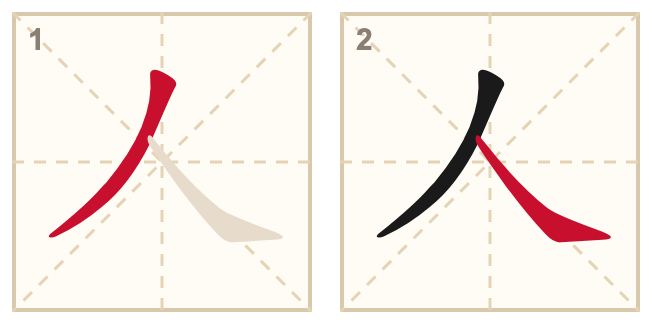
人 (rén), person: the stroke falling to the left comes before the one falling right.
- 4
Centre before the sides
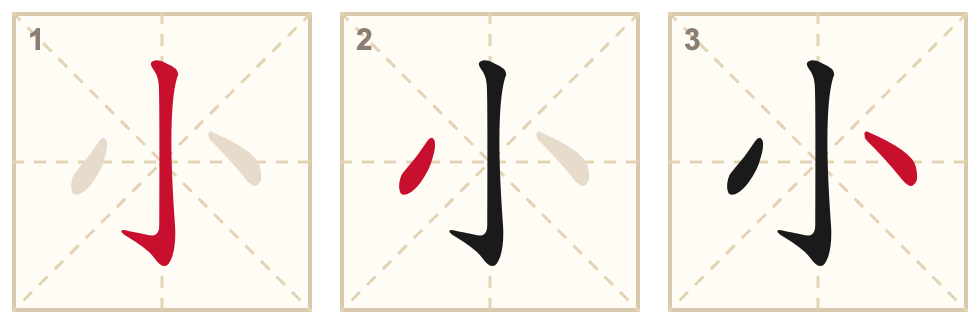
小 (xiǎo), small: the middle hook comes first, then the left and right dots.
- 5
Frame, inside, then close
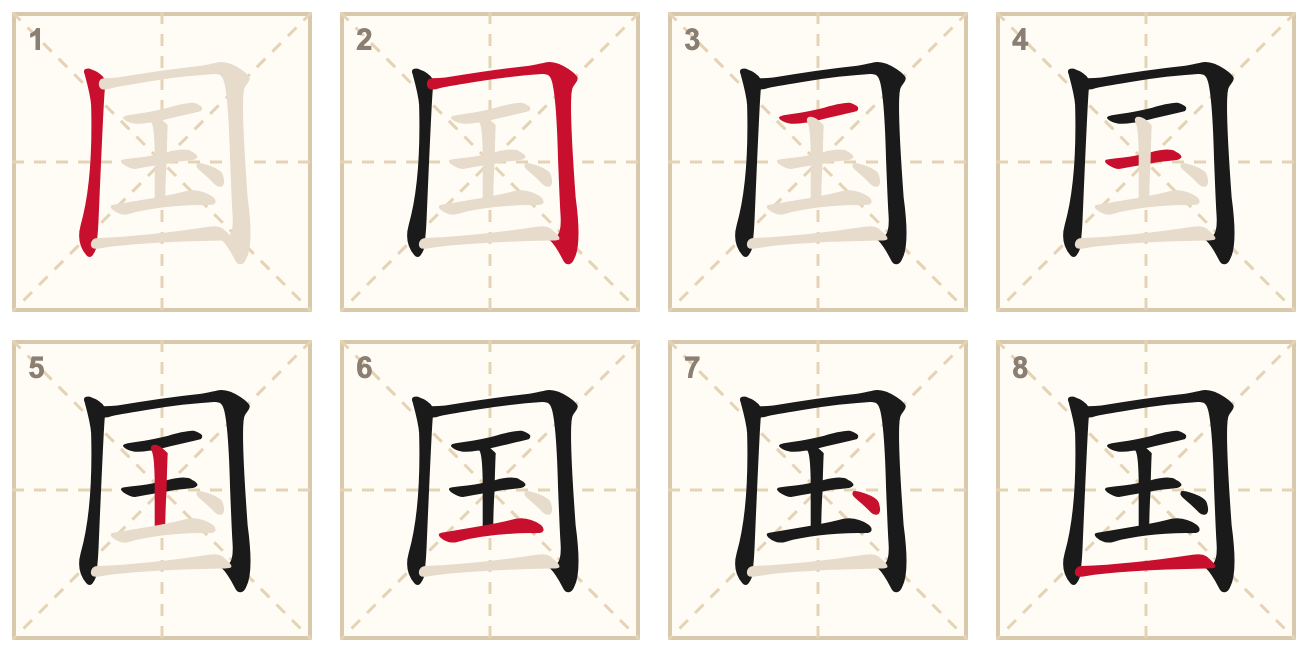
国 (guó), country: the frame goes first, then the inside, and the bottom stroke closes it.
- 6
Dots last
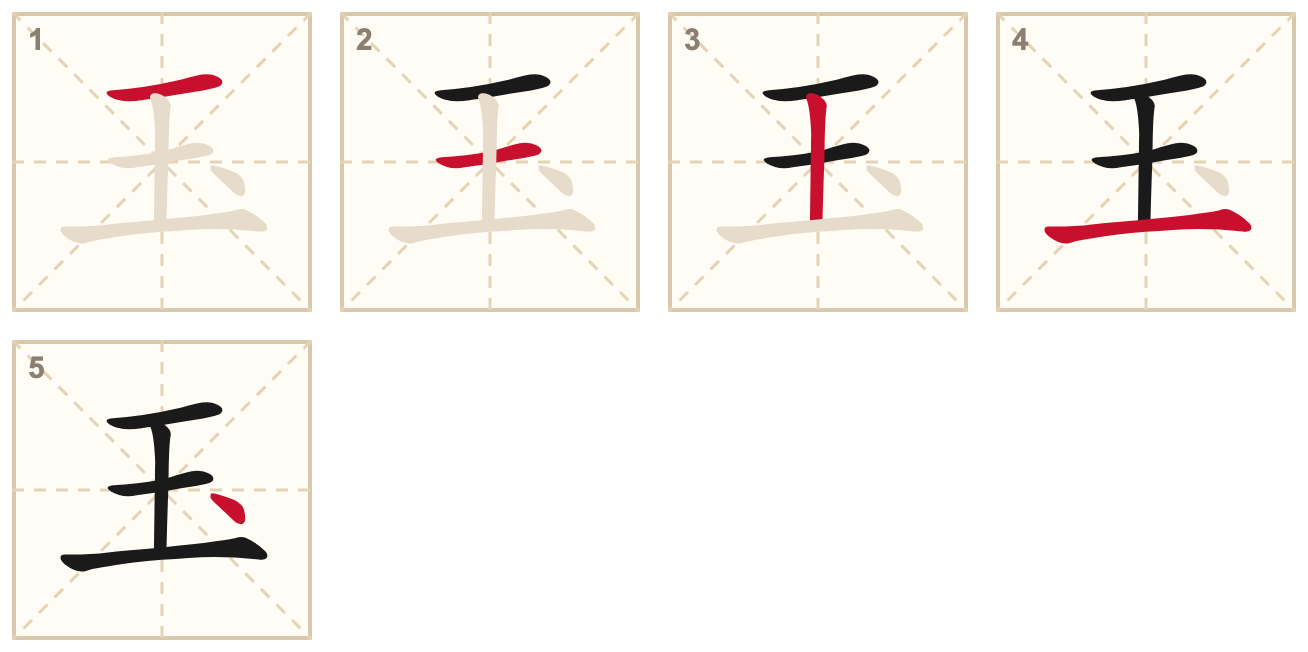
玉 (yù), jade: the small dot inside the character is the very last stroke.
- 7
Bottom enclosures last
这 (zhè), this: the 辶 (chuò) part that wraps underneath is written last.
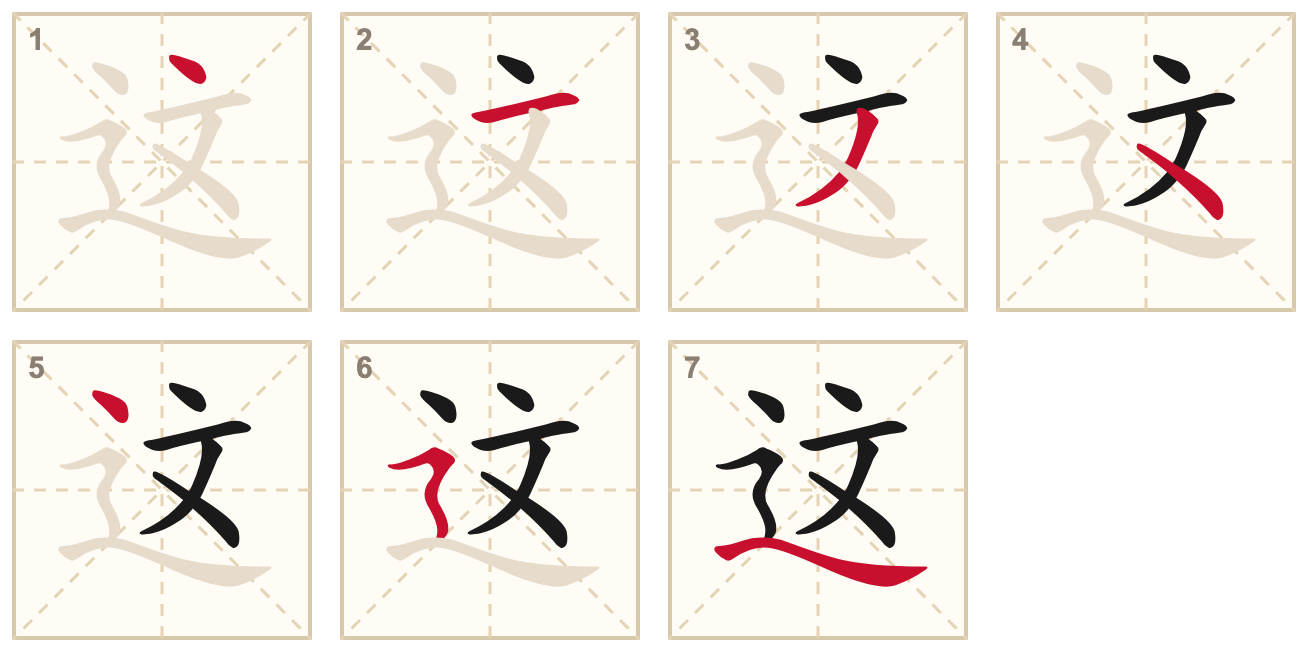
These are guidelines with exceptions, summarised from Stroke order on Wikipedia. The official standards of mainland China, Taiwan, Hong Kong and Japan agree on most characters but differ on some. The trainer shows each character’s order from Make Me a Hanzi.
Practice grids and daily review

The 米字格 (mǐzìgé) and 田字格 (tiánzìgé)
Chinese writing practice paper divides each square with guide lines, so you can see where every stroke belongs. The 田字格 (tiánzìgé) splits the square into four, like the character 田 (tián), field. The 米字格 (mǐzìgé) adds two diagonals, so its lines form the shape of 米 (mǐ), rice, and give you a guide for slanting strokes. The trainer and its practice sheets use the 米字格 (mǐzìgé).
Why a little review every day works
Spaced repetition shows new and difficult items more often and easier ones less often, a method well suited to learning the vocabulary of a new language. The trainer’s review queue works this way, so a few minutes of Chinese writing practice each day keeps the characters you have learned from slipping away.
FAQs
Explore the full library
 FoundationsComplete Pinyin ChartInteractive pinyin reference with native audio for every initial & final combination.Open chart
 ReferenceMandarin Tones CheatsheetOne-page reference of the four tones plus the neutral tone, with audio examples for every pairing.Hear the tones
 Building blocksChinese Radicals ChartAll 214 radicals — the building blocks every character is built from. Essential pairing for writing practice.Open the chart
 BrushChinese Calligraphy StudioWrite the same characters with an ink brush: trace a red model, then sign your piece with a seal.Open the studio
Free 30-minute intro call
Practise this with a native speaker
The trainer gets your hand moving. Practising with a teacher who corrects your characters and your tones is what makes them stick. Tell us where you’re up to and we’ll suggest a starting point.
- One-to-one lessons online, built around your goals
- A real reply within 24 hours
- No obligation, no sales pitch
Thanks, that’s in. We’ll reply within 24 hours.