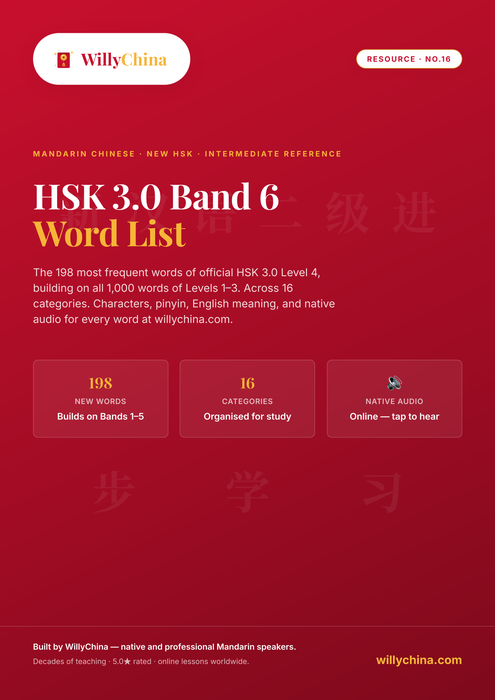
HSK 3.0 Band 6 Word List — PDF + Native Audio
The 198 most common words of official HSK 3.0 Level 4, building on all 1,000 words of Levels 1–3. Organised by category with characters, pinyin, English meaning and native pronunciation for every word. Tap any word below to hear it.
⬇ Download PDF (7 pages)Free — tell us where to send it and it’s yours. Want to practise it rather than just read it? HSK 3.0 Band 6 Complete Pack adds a tracing workbook, native audio for every entry and Anki decks — US$32, one payment.
- All 198 new HSK 3.0 Band 6 words
- Organised across 16 categories for structured study
- Character + pinyin + English meaning for each word
- Search + filter by category on the page
- Native pronunciation audio for every word
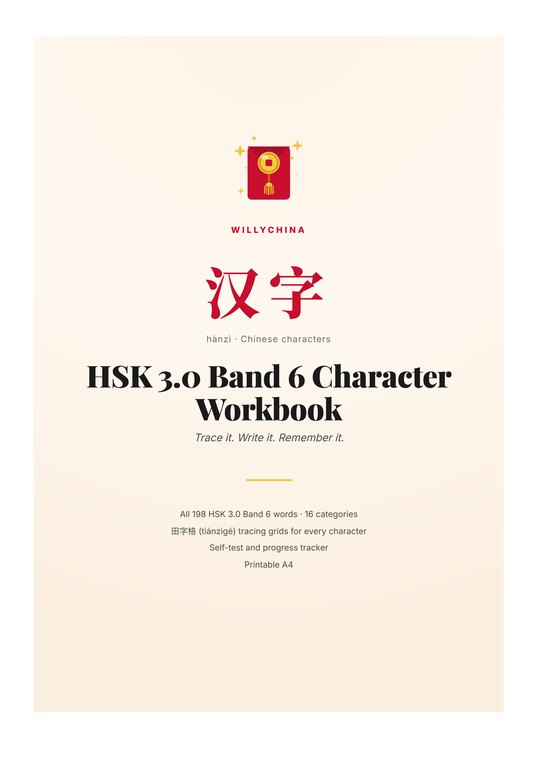
The word list above is free. This is the practice.
HSK 3.0 Band 6 Complete Pack
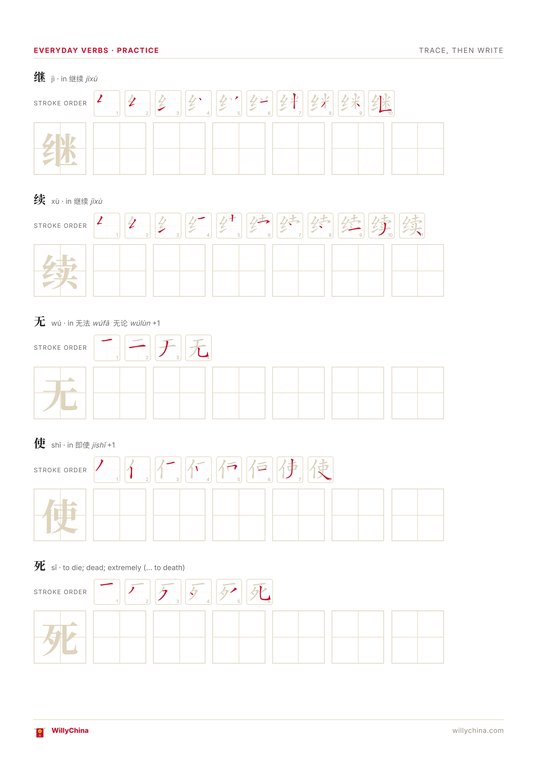
A 78-page character workbook with 田字格 (tiánzìgé) tracing grids for every character in the 198 Band 6 words, 396 audio files at natural and slow speed, and Anki flashcards in both directions.
See what is inside — US$32One payment · instant download · yours to keep
Tap any word to hear it spoken
Search by character, pinyin or English meaning. Filter by category. Tap any card to hear native Mandarin pronunciation.
No words match your search. Try a different term or clear filters.
What is HSK 3.0 Band 6?
Band 6 changes what you can say. Up to Level 3 you describe your day; from Level 4 you explain, compare and argue. That shift lives in the linking words on this list: 而 (ér, and yet), 却 (què, but), 因此 (yīncǐ, therefore), 即使 (jíshǐ, even if) and 无论 (wúlùn, no matter). It lives in abstract nouns such as 情况 (qíngkuàng, situation), 能力 (nénglì, ability) and 责任 (zérèn, responsibility), and in verbs such as 继续 (jìxù, to continue), 提供 (tígōng, to provide) and 放弃 (fàngqì, to give up).
Official Level 4 adds 1,000 new words, far too many for one list. We took the Level 4 words that Bands 1–5 had not yet covered, ranked them by how often they appear in real Chinese, and put the top 198 here. Because they are the most frequent, you will meet them in news, books, shows and conversation long before you sit an exam.
You get all 198 words in three forms: an A4 PDF organised by category for printing and offline study, the search-and-filter grid above for quick lookup, and native Mandarin audio for every word (Microsoft Xiaoxiao, slowed slightly for clarity).
How to use this Band 6 word list
Intermediate words are harder to picture than a passport or a fridge, so context matters more than ever. Here’s how to learn this list:
- Print the PDF and keep the Connectives page beside you when you read or write in Chinese. Spotting 而 (ér) and 却 (què) in real text is how they stick.
- Start with the verbs. Everyday Verbs (43 words) is the biggest category and comes first on this page for that reason.
- Learn linking words in pairs: 即使 (jíshǐ, even if) goes with 也 (yě, also); 无论 (wúlùn, no matter) goes with 都 (dōu, all); 不但 (bùdàn, not only) goes with 而且 (érqiě, but also). Learn the frame, not the single word.
- Notice the formal words. 之 (zhī), 与 (yǔ) and 将 (jiāng) are the written-style cousins of 的 (de), 和 (hé) and 会 (huì). You’ll read them in signs, news and formal writing more than you’ll say them.
- Write one sentence with each abstract noun. 这个情况很严重 (zhège qíngkuàng hěn yánzhòng, this situation is serious) teaches 情况 (qíngkuàng) better than its gloss.
- Listen for the reading. A few words use a less common reading here, such as 重 (chóng, again) and 待 (dāi, to stay). Tap them in the grid and listen to the reading on this list.
If you’re aiming at the new Level 4 exam, Band 6 is a strong start but not the whole syllabus; the exam also tests listening, reading, handwriting and speaking. Our 1-on-1 HSK Preparation course follows the new format. For conversation without an exam, our Basics course builds the confidence to use these words out loud.
The 16 categories in this Band 6 word list
This list groups the 198 words into 16 categories. The biggest are the verbs, the linking words, the adverbs and the abstract nouns, which is exactly where intermediate Mandarin grows.
- Everyday Verbs (43) — 继续 (jìxù), 无 (wú), 使 (shǐ) — the biggest group: continuing, providing, protecting and giving up.
- People & Pronouns (8) — 一切 (yīqiè), 任何 (rènhé), 此 (cǐ) — everything, anything, each and the other side.
- Family (4) — 父亲 (fùqīn), 父母 (fùmǔ), 母亲 (mǔqīn) — parents and siblings, in the more formal register.
- Time & Dates (6) — 之后 (zhīhòu), 之前 (zhīqián), 目前 (mùqián) — before, after, now and in the end.
- Numbers & Measure Words (4) — 部 (bù), 首 (shǒu), 台 (tái) — measure words for films, songs, machines and tasks.
- Places & Getting Around (7) — 内 (nèi), 区 (qū), 底 (dǐ) — districts, cities, addresses and markets.
- School & Work (16) — 调查 (diàochá), 研究 (yánjiū), 任务 (rènwu) — research, technology, jobs and the people who do them.
- Body & Health (2) — 血 (xiě), 痛 (tòng) — blood and pain.
- Nature, Animals & Weather (3) — 光 (guāng), 自然 (zìrán), 火 (huǒ) — light, fire and nature itself.
- Things & Objects (3) — 图 (tú), 刀 (dāo), 油 (yóu) — pictures, knives and oil.
- Thinking & Feeling (13) — 心 (xīn), 肯定 (kěndìng), 考虑 (kǎolǜ) — considering, understanding, dreams and pressure.
- Speaking & Communication (9) — 消息 (xiāoxi), 保证 (bǎozhèng), 联系 (liánxì) — contacting, suggesting, explaining and promising.
- Adjectives & Descriptions (16) — 美 (měi), 强 (qiáng), 整个 (zhěnggè) — serious, deep, basic and correct.
- Adverbs & Degree (19) — 就是 (jiùshì), 已 (yǐ), 重 (chóng) — at least, after all, still and once again.
- Connectives & Grammar Words (26) — 而 (ér), 将 (jiāng), 与 (yǔ) — the linking words of argument and explanation.
- Ideas, Society & Abstract Words (19) — 情况 (qíngkuàng), 成功 (chénggōng), 方式 (fāngshì) — situations, goals, ability, law and society.

Stepping up to Level 4?
Band 6 gives you the most common Level 4 words, but the exam also tests listening, reading, handwriting and speaking. Our 1-on-1 HSK Preparation course drills those skills with mock papers and pacing technique.
Book a free HSK consultationA two-week study plan
Here’s a two-week plan for the whole Band 6 list at about 14 words a day, 15–20 minutes a session.
- Week 1: Everyday Verbs (43) + Connectives & Grammar Words (26) + Adverbs & Degree (19) — 88 words. The engine of intermediate Mandarin: verbs, linking words and adverbs.
- Week 2: Ideas, Society & Abstract Words (19) + Adjectives & Descriptions (16) + School & Work (16) + Thinking & Feeling (13) + Speaking & Communication (9) + People & Pronouns (8) + Places & Getting Around (7) + Time & Dates (6) + Family (4) + Numbers & Measure Words (4) + Nature, Animals & Weather (3) + Things & Objects (3) + Body & Health (2) — 110 words. Abstract nouns, descriptions and the vocabulary of work and study. Then filter “All” in the grid and say every word before the audio plays.
After a fortnight you’ll have met every Band 6 word with native audio. The rest of Level 4 is the next rung, and the HSK levels guide shows the whole ladder.
FAQs
Sources: word list from the official HSK 3.0 (November 2025) syllabus via Chinese Testing International; English glosses adapted from CC-CEDICT (CC BY-SA 4.0).
Want a teacher for the step to Level 4?
Vocabulary lists are a foundation — but you need real practice with feedback. Book a free 30-minute intro lesson.
Book a Free Intro LessonWant a teacher, not just a PDF?
Practise this with a native speaker
The list gets you the words. Saying them out loud to someone who corrects your tones is what makes them stick. Tell us where you’re up to and we’ll suggest a starting point — free, no obligation.
Thanks — that’s in. We’ll be in touch within 24 hours.
Free PDF
Where should I send it?
Tell us a little about you and the PDF is yours — it lands in your inbox straight away.
All fields are required. I’ll send new resources now and then, the odd note on learning Mandarin properly, and occasionally news about my workbooks. Unsubscribe any time. Privacy policy
Sent. Check your inbox — your download is starting now.
Before you go
You’ve got the reference. The HSK 3.0 Band 6 Complete Pack is the practice — a 78-page workbook with stroke order and tracing for every character in the 198 Band 6 words, 396 audio files (natural + slow), and two Anki decks.
See what’s inside — US$32One payment. Yours to keep.