HSK 6 · Ideas

理所当然 lǐsuǒdāngrán “naturally” in Chinese

Said as lísuǒdāngrán

Traditional 理所當然

What 理所当然 means

  1. naturally
  2. as a matter of course
  3. as it should be by rights (idiom)
  4. proper and to be expected as a matter of course
  5. inevitable and right

How to say 理所当然

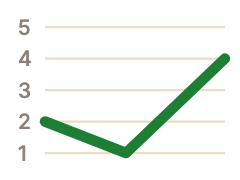
  • Pitch chart of the third tone: dips low then rises, 2 to 1 to 4 on the five-level scale理lǐ3rd tone, dipping
  • Pitch chart of the third tone: dips low then rises, 2 to 1 to 4 on the five-level scale所suǒ3rd tone, dipping
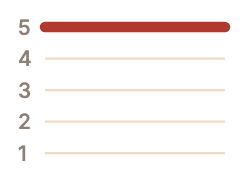
  • Pitch chart of the first tone: stays high and level, 5 to 5 on the five-level scale当dāng1st tone, high and level
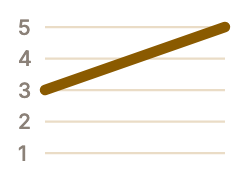
  • Pitch chart of the second tone: rises from mid to high, 3 to 5 on the five-level scale然rán2nd tone, rising

Said as lísuǒdāngrán. When two third tones meet, the first one rises into a second tone. You still write it with two third tones. How tone changes work

理所当然 in a sentence

  1. 我理所当然地觉得,他会通过考试。

    Wǒ lǐsuǒdāngrán de juéde, tā huì tōngguò kǎoshì.

    I took it for granted that he would pass the exam.

    Sentence #7774730 from Tatoeba

  2. 我们认为他的生意理所当然会获得成功。

    Wǒmen rènwéi tā de shēngyi lǐsuǒdāngrán huì huòdé chénggōng.

    We take it for granted that his business will succeed.

    Sentence #812291 from Tatoeba · translation adapted

  3. 我们视健康为理所当然,直到疾病侵袭。

    Wǒmen shì jiànkāng wéi lǐsuǒdāngrán, zhídào jíbìng qīnxí.

    We take our health for granted until illness strikes.

    Sentence #769685 from Tatoeba · converted to simplified characters · translation adapted

How 理所当然 is built

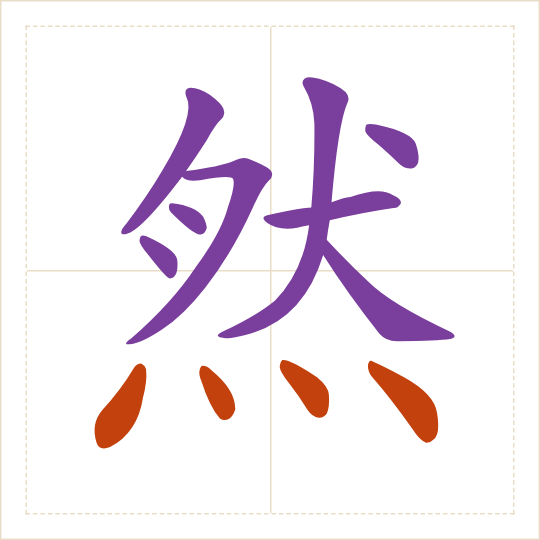
Each colour is one part of the character. Parts repeat across thousands of characters, so learning them makes new words easier. See all 214 in our radicals chart.
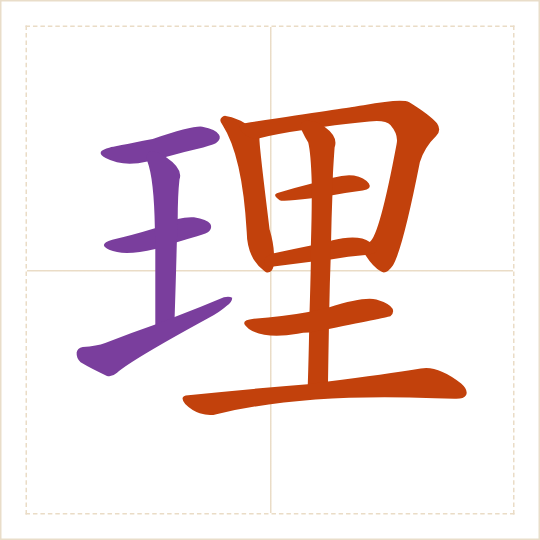
The character 理 (lǐ) with each of its parts in a different colour
理lǐtexture
  • 王king · wángMeaning part
  • 里village · lǐSound part

王 hints at the meaning (king); 里 (lǐ) hints at the sound. Compare it with lǐ.

Memory aid王 here is jade 玉: cutting jade along its grain. 里 (lǐ) gives the sound: to put in order, reason.
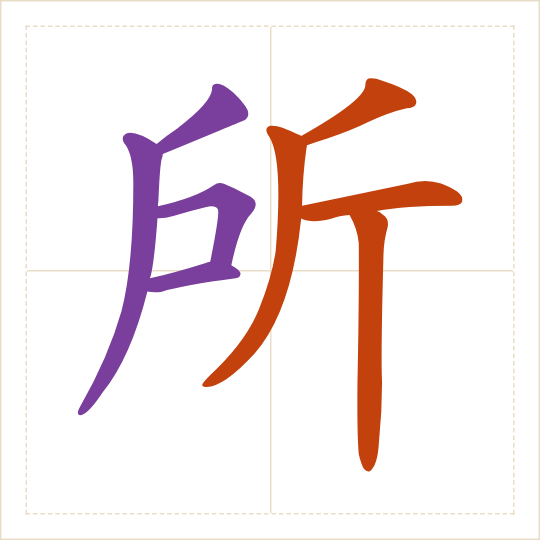
The character 所 (suǒ) with each of its parts in a different colour
所suǒactually
  • 户door · hù
  • 斤axe · jīn
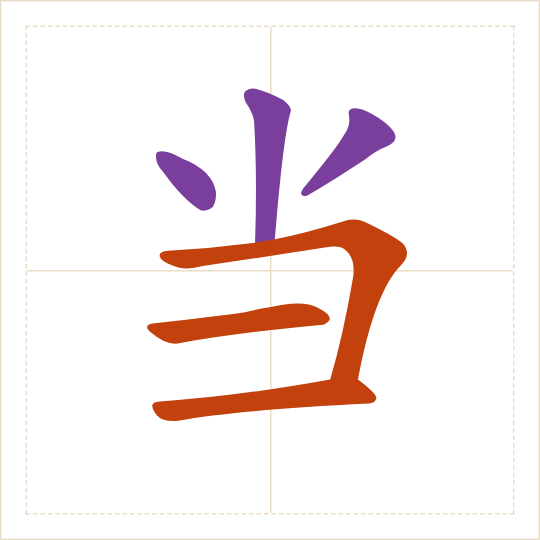
The character 当 (dāng) with each of its parts in a different colour
当dāngdong
  • ⺌small form of 小 · xiǎo
  • 彐snout · jì
The character 然 (rán) with each of its parts in a different colour
然ráncorrect
  • 肰dog meat · ránSound part
  • 灬fire form of 火 · huǒMeaning part

灬 hints at the meaning (fire); 肰 (rán) hints at the sound. Compare it with rán.

Memory aidFire 灬 under meat 肰. Its first meaning was “to burn”, now written 燃 (rán).

How to write 理所当然

理 11 strokes · 所 8 strokes · 当 6 strokes · 然 12 strokes

Watch the order, then press Try writing it and draw each stroke in the grid. Each stroke is checked as you go.
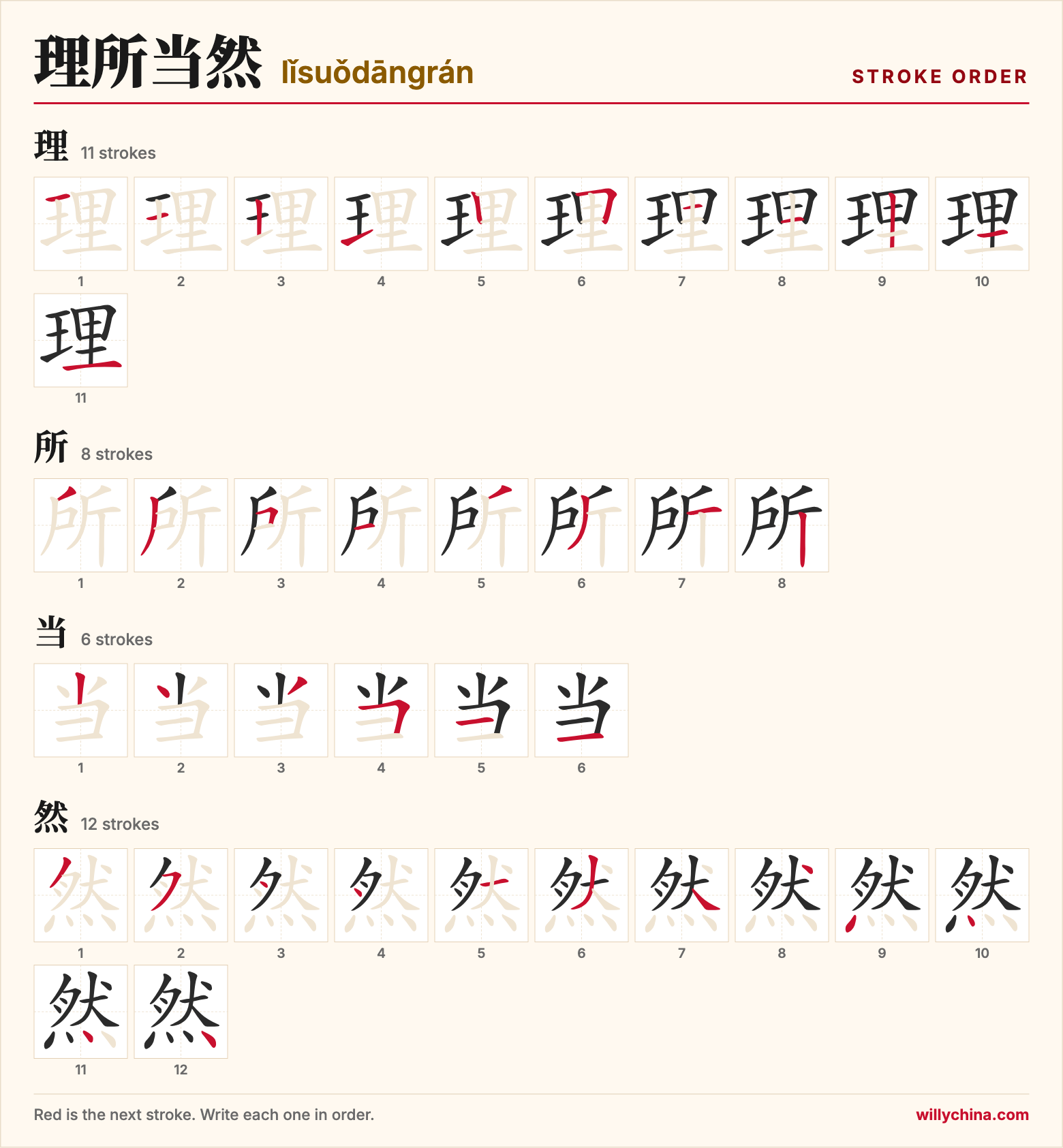
理所当然 (lǐsuǒdāngrán) stroke order chart: each stroke of the characters in the order you write them
Stroke order chart for 理所当然 (lǐsuǒdāngrán). Red marks the next stroke, so you can copy it onto paper one step at a time.

Words related to 理所当然

Words with 理

Words with 所

Words with 当

Words with 然

More words: Ideas & Concepts

FAQs

理所当然 (lǐsuǒdāngrán) means “naturally” or “as a matter of course”. It is an HSK 6 word.
Say it lǐsuǒdāngrán: lǐ with a 3rd tone, then suǒ with a 3rd tone, then dāng with a 1st tone, then rán with a 2nd tone. In speech it sounds like lísuǒdāngrán. When two third tones meet, the first one rises into a second tone. You still write it with two third tones. Press Listen at the top of this page to hear it, or Slowly to hear each tone clearly.
In Traditional characters, used in Taiwan and Hong Kong, 理所当然 is written 理所當然. The pronunciation is the same.
Add a Chinese (Simplified) pinyin keyboard to your phone or computer, type lisuodangran with no tone marks or spaces, then choose 理所当然 from the suggestions. Typing lisuodangran into this dictionary’s search box finds it too.
理所当然 is an HSK 6 word in the HSK 2.0 word lists.

Turn words into conversations

A dictionary gives you the words. A native teacher shows you how to use them. Start with a free 30-minute intro call.

Book a free intro call

Sources: meaning and pinyin checked by a native Mandarin teacher against the official HSK lists. Extra meanings from CC-CEDICT (CC BY-SA 4.0). Example sentences from Tatoeba (CC BY 2.0 FR). Character parts and stroke order from Make Me a Hanzi.