HSK 5 · Emotions
无所谓 wúsuǒwèi “to not matter” in Chinese
Traditional 無所謂
What 无所谓 means
- to not matter
- to not care
- to be indifferent
- not to matter
- cannot be said to be
How to say 无所谓
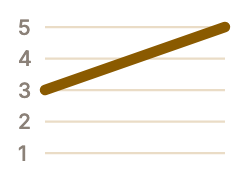 无wú2nd tone, rising
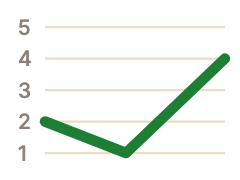 所suǒ3rd tone, dipping
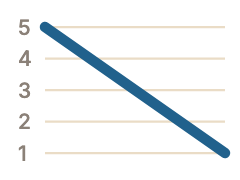 谓wèi4th tone, falling
无所谓 in a sentence
How 无所谓 is built
Each colour is one part of the character. Parts repeat across thousands of characters, so learning them makes new words easier. See all 214 in our radicals chart.
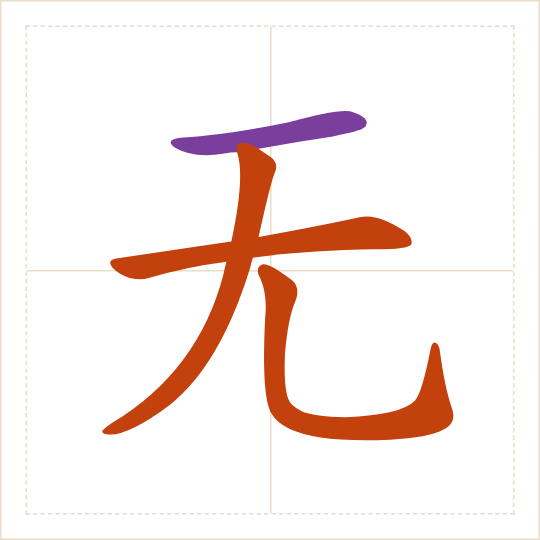
无wúnot to have
- 一one · yī
- 尢lame · wāng
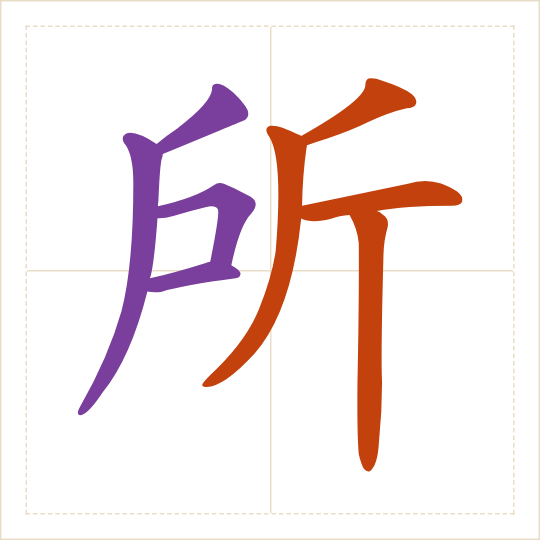
所suǒactually
- 户door · hù
- 斤axe · jīn
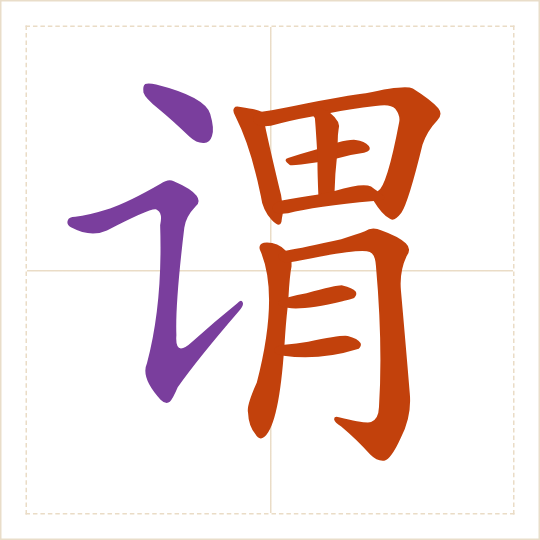
谓wèito speak
- 讠speech form of 言 · yánMeaning part
- 胃stomach · wèiSound part
讠 hints at the meaning (speech); 胃 (wèi) hints at the sound. Compare it with wèi.
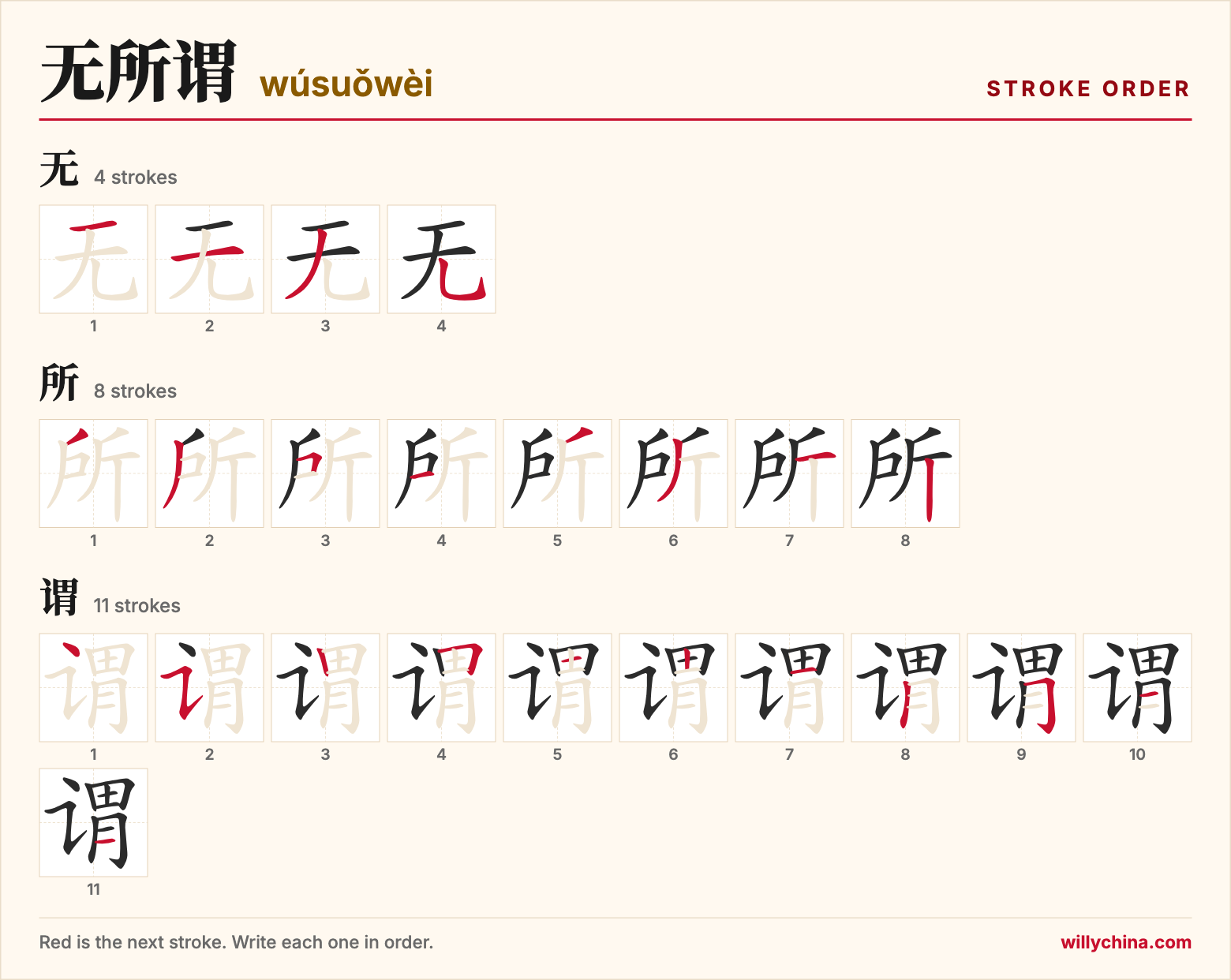
How to write 无所谓
无 4 strokes · 所 8 strokes · 谓 11 strokes
Watch the order, then press Try writing it and draw each stroke in the grid. Each stroke is checked as you go.
Words related to 无所谓
Words with 无
无wú · not to have无聊wúliáo · bored无论wúlùn · no matter what or how无法wúfǎ · to be unable to无奈wúnài · to have no alternative无数wúshù · countless无赖wúlài · rogue无比wúbǐ · incomparable无耻wúchǐ · shameless无辜wúgū · innocent
Words with 所
所以suǒyǐ · so厕所cèsuǒ · toilet所有suǒyǒu · all所suǒ · (grammar particle introducing a passive or relative clause)场所chǎngsuǒ · place理所当然lǐsuǒdāngrán · naturally力所能及lìsuǒnéngjí · within one’s ability众所周知zhòngsuǒzhōuzhī · as everyone knows
More words: Emotions & Attitudes
FAQs
无所谓 (wúsuǒwèi) means “to not matter” or “to not care”. It is an HSK 5 word.
Say it wúsuǒwèi: wú with a 2nd tone, then suǒ with a 3rd tone, then wèi with a 4th tone. Press Listen at the top of this page to hear it, or Slowly to hear each tone clearly.
In Traditional characters, used in Taiwan and Hong Kong, 无所谓 is written 無所謂. The pronunciation is the same.
Add a Chinese (Simplified) pinyin keyboard to your phone or computer, type wusuowei with no tone marks or spaces, then choose 无所谓 from the suggestions. Typing wusuowei into this dictionary’s search box finds it too.
无所谓 is an HSK 5 word in the HSK 2.0 word lists.
Sources: meaning and pinyin checked by a native Mandarin teacher against the official HSK lists. Extra meanings from CC-CEDICT (CC BY-SA 4.0). Example sentences from Tatoeba (CC BY 2.0 FR). Character parts and stroke order from Make Me a Hanzi.