HSK 3.0 Level 3 · Everyday Verbs
不见 bújiàn “to be missing” in Chinese
Traditional 不見
What 不见 means
- to be missing
- to have disappeared
- not to see
- not to meet
How to say 不见
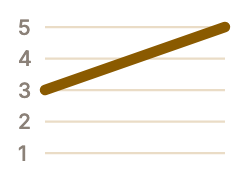 不bú2nd tone, rising
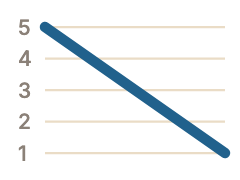 见jiàn4th tone, falling
Tone change. 不 is bù on its own. Before a fourth tone it changes to bú, and textbooks write that change in, as here. How tone changes work
不见 in a sentence
How 不见 is built
Each colour is one part of the character. Parts repeat across thousands of characters, so learning them makes new words easier. See all 214 in our radicals chart.
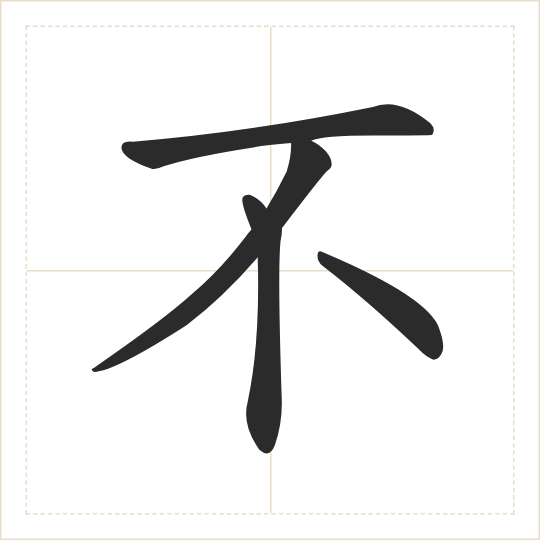
不 is a single shape of 4 strokes. Learn it whole, then watch its stroke order below.
Memory aidPicture a bar 一 across the top that nothing below can get past: not, no.
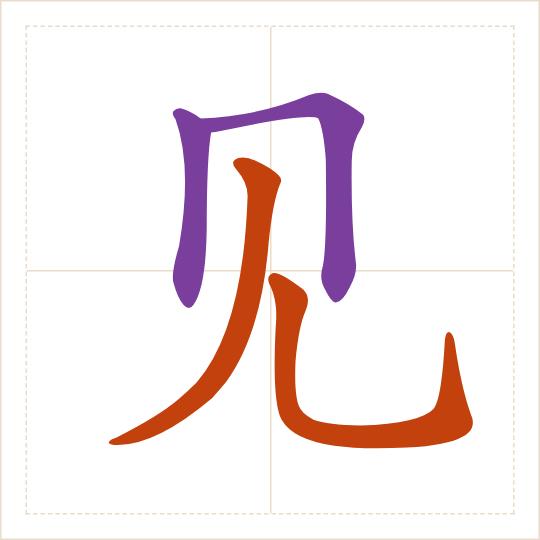
- 冂down box · jiōng
- 儿legs · ér
Memory aidSimplified from 見: a big eye 目 on top of a person 儿: to see.
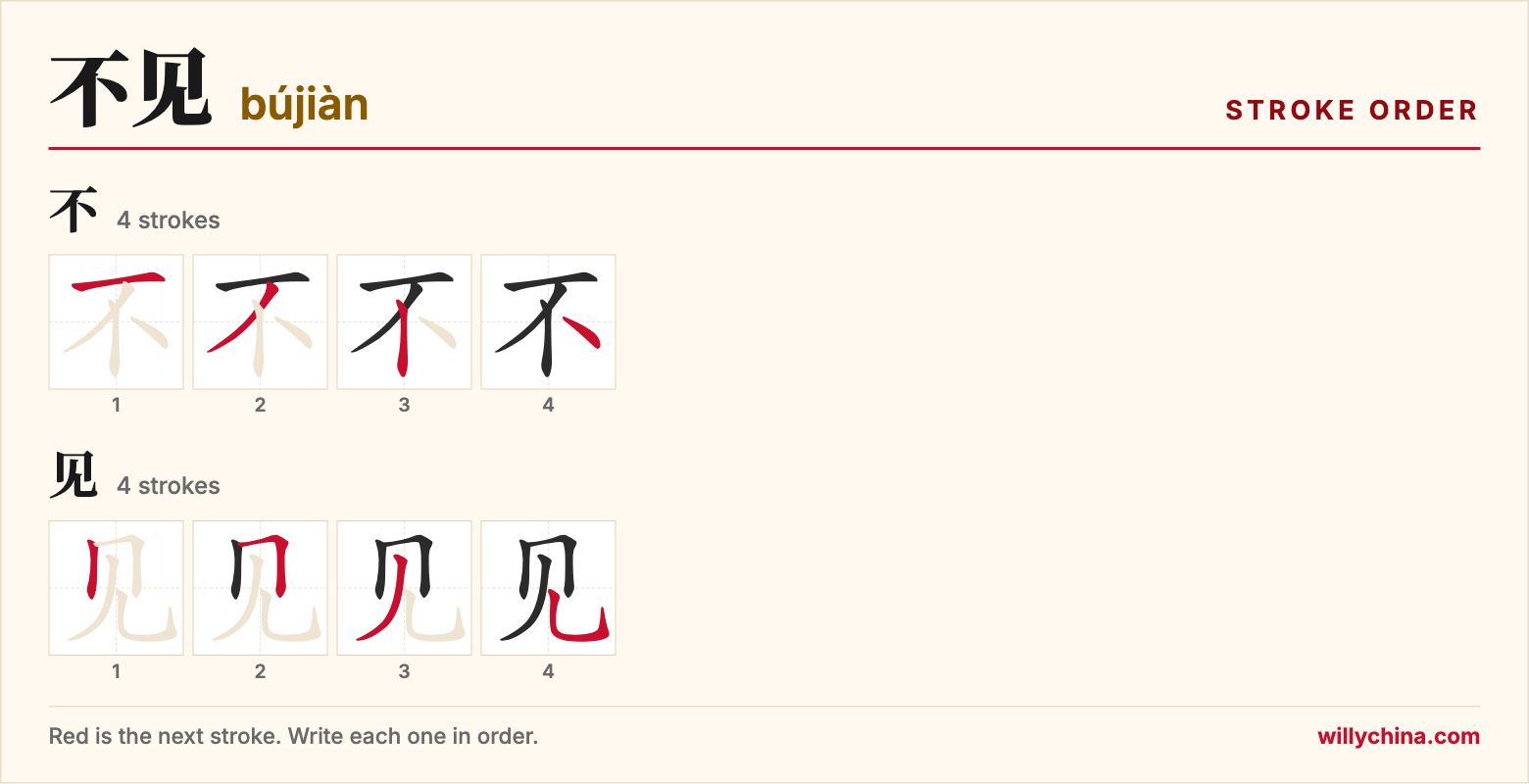
How to write 不见
不 4 strokes · 见 4 strokes
Watch the order, then press Try writing it and draw each stroke in the grid. Each stroke is checked as you go.
Words related to 不见
Words with 不
Words with 见
More words: Everyday Verbs
FAQs
Sources: meaning and pinyin checked by a native Mandarin teacher against the official HSK lists. Extra meanings from CC-CEDICT (CC BY-SA 4.0). Example sentences from Tatoeba (CC BY 2.0 FR). Character parts and stroke order from Make Me a Hanzi.