Home › China Today › Culture
A win is a win, and other things that do not translate
Joanna Wietrzyk finished her Hyrox Beijing race after a bowel accident and won. Australia debated her; China debated the organisers. Why the readings split.
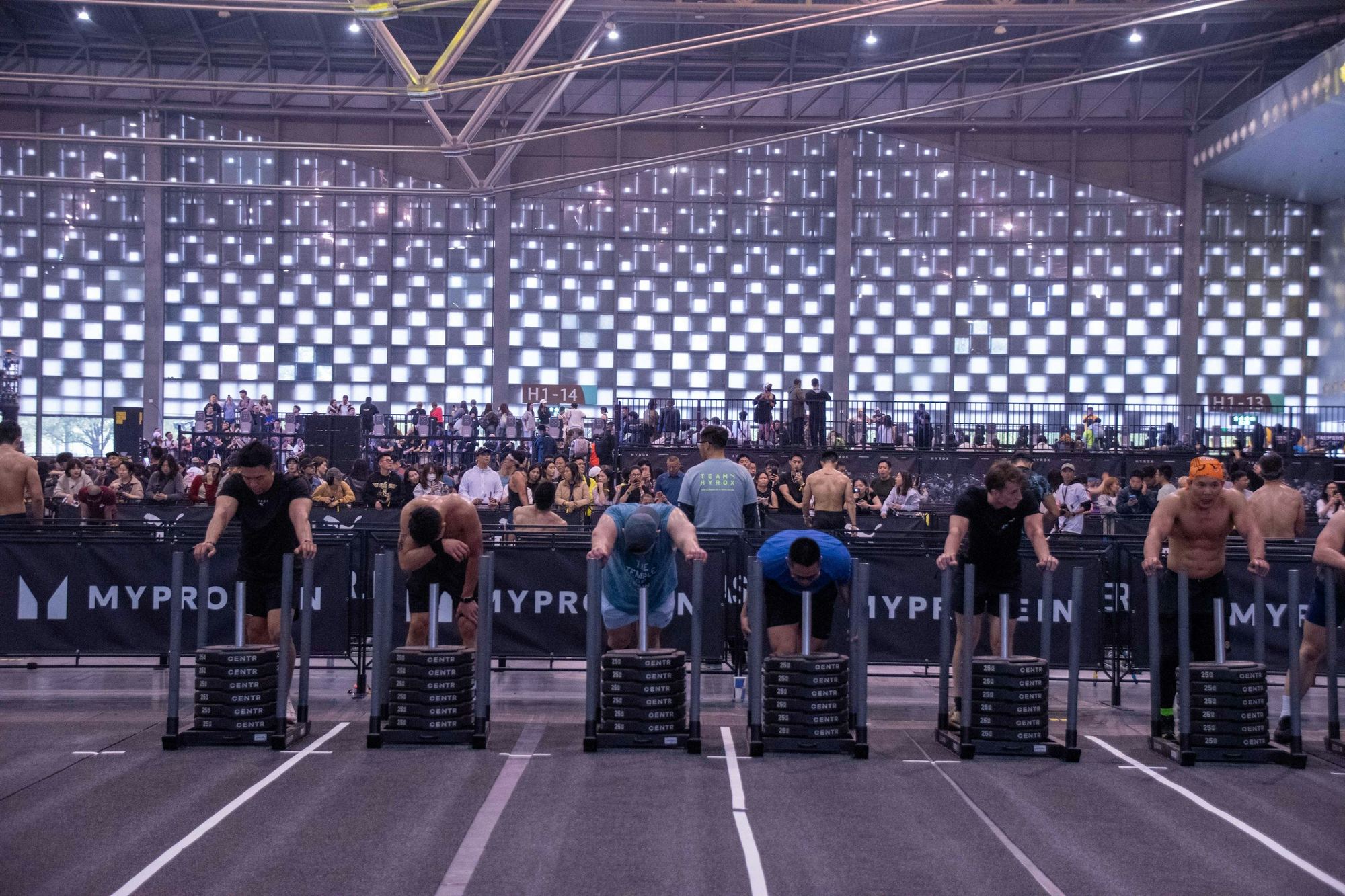
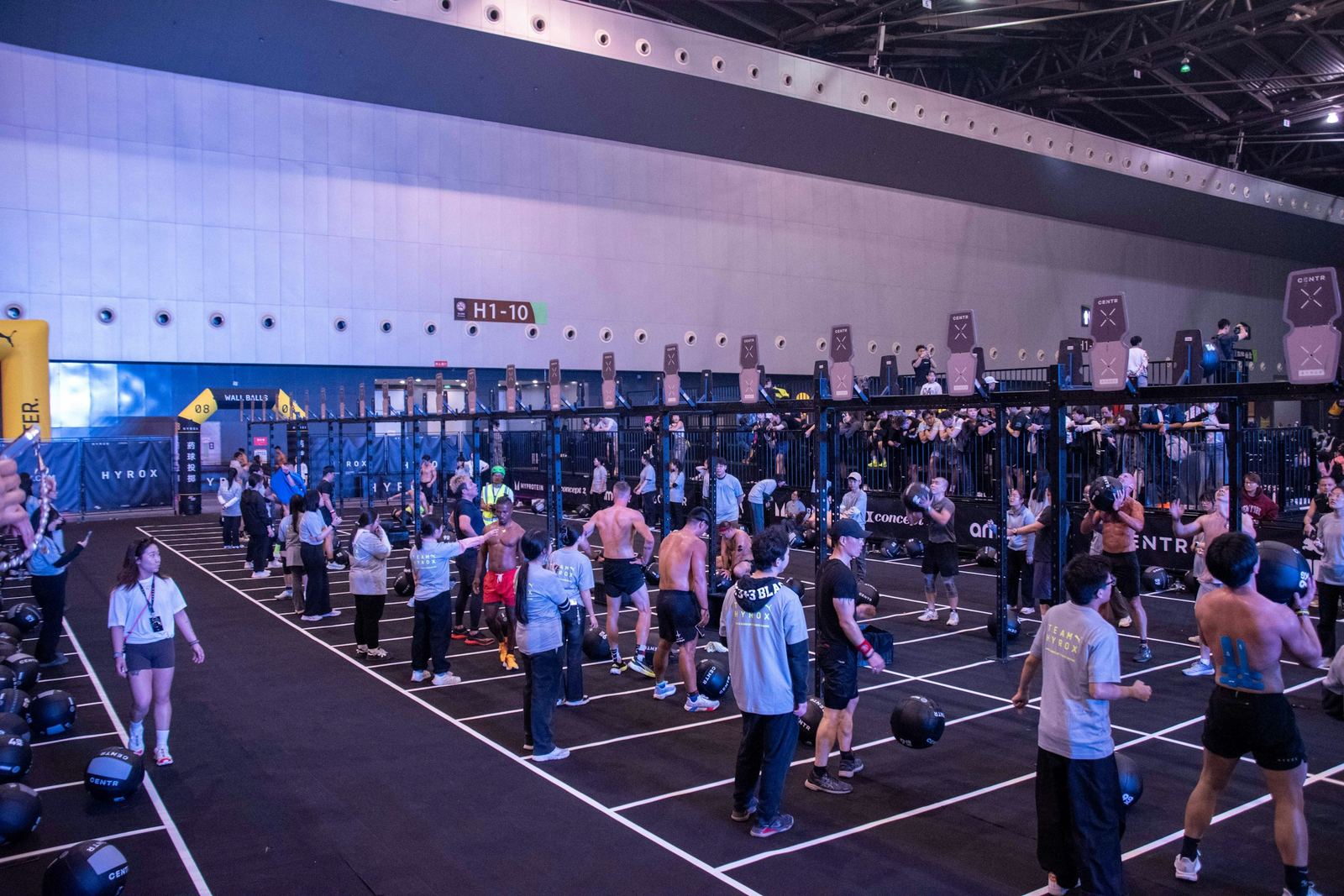
At 2:40 on the afternoon of Saturday 12 September, Joanna Wietrzyk started the Women’s Pro race at Hyrox Beijing, in the National Speed Skating Oval built for the 2022 Winter Olympics. An hour, one minute and twenty-three seconds later she crossed the line first.
Somewhere in between, she suffered faecal incontinence. She kept going — through the sled push, the burpee broad jumps, the wall balls — using the same mats, handles and lanes every other competitor in the session would use. Nobody stopped her. Video went up that night.
What happened next is the part worth an article, and it is not the part most of the coverage chose. Australia and the Chinese internet watched the same footage and had two different arguments. Not louder and quieter versions of one argument — two, about different subjects. That gap is a genuinely useful thing for anyone learning to operate in Chinese, because the vocabulary that gap is conducted in is vocabulary you will meet again.
What is actually established
Worth separating, because a great deal of what circulated was not.
Wietrzyk is 24, a fitness coach from Melbourne, and the first Australian woman to qualify for the Hyrox Elite 15 series. She holds the women’s solo world record: 54 minutes and 25 seconds, set in Warsaw in April. She won the Beijing race in 1:01:23 — nearly seven minutes off her own best, which is worth holding onto. Hyrox China said on Weibo that organisers “immediately closed off and isolated the affected area and track, and completed comprehensive disinfection”, that equipment was removed and waste disposed of under municipal standards, and that flooring would be replaced. Hyrox’s global statement said that “protocols designed for elite competition and mass participation became blurred, creating ambiguity in how they were applied and understood”.
By Monday, Hyrox China had gone further, acknowledging that the incident exposed “shortcomings” in the competition rules and saying it had proposed revisions to global headquarters. Those revisions landed: race directors may now withdraw an athlete whose “blood, vomit, urine, or faeces pose a welfare or contamination risk to the racer or to other racers”, recording the competitor as a DNF. The previous singles rulebook had a clause about spitting and clearing your nose. It had nothing about this.
The story was the most-viewed item on the Global Times site on the Monday. A Weibo hashtag on whether the competitor had been punished passed twenty-seven million views.
Wietrzyk has been approached for comment by several outlets and has not given one. What she did post on her Instagram account, and it is worth quoting in full because the short version has travelled badly, was a photograph of herself in a hospital bed: Go hard or go home they say… a win is a win. In all seriousness, thank you for all the support. I’ll be back soon. The post did not say why she was in hospital or connect it to the race. She has since deleted it.
It gets described as a victory selfie. It was not. It was somebody on a ward, half defiant and half thanking people, and the four words that detached themselves from it and went around the world were the least representative thing in it. That matters for what follows, because almost the entire Chinese reading of her is built on those four words.
The seven minutes are worth returning to as well. A world-record holder finishing nearly seven minutes outside her own best is not an athlete having a good day and pushing through for glory. It is an athlete who was, by any reading of the clock, already in serious trouble — and who then went to hospital. Very little of the commentary in either language made room for that.
The people who were on the floor
The competitors are the part most of the coverage skipped, and they were not arguing about character.
One participant at the Beijing race told the South China Morning Post: Think about how disgusting it is, especially when we use the exact same track. That is the entire objection in one sentence, and notice what it is not. It is not about her dignity, her toughness or whether she should feel ashamed. It is about the track, and the word doing the work is same.
The commercial consequence showed up within days. Li Hao, a participant signed up for the Hyrox race in Sanya, withdrew after the scandal. On RedNote, a poster asked the question the organisers have still not really answered: where were the course officials and the medical team, and why did nobody step in. On Weibo, someone pulled up the rulebook and pointed out that spitting or clearing your nose on the course carries a two-minute penalty — and that the document had nothing at all to say about this.
Zhu Meng, a Beijing sports commentator, put the principle in the form it kept returning to: true sportsmanship is about knowing where to draw the line, and competition should never come at the expense of public health, fairness or the rights of other athletes.
Read those together and a pattern is already visible before anyone mentions culture. Every one of them is about the shared surface, the absent official or the missing rule. Not one is about what kind of woman keeps running.
Two arguments, not one
The English-language reaction organised itself around her. Was continuing brave or selfish; would a man have been treated the same; what does an athlete owe a field. It is a character debate, and it takes the individual as the unit of analysis, because that is what sport in the Anglo tradition is largely about — the singular will, tested.
The Chinese reaction split differently. Some of it went at her, and bluntly: she’s so selfish — she kept running the whole way even though she had diarrhoea. But the heavier weight fell on the 主办方 (zhǔbànfāng), the organiser. The host is ultimately unprofessional. Why didn’t they consider the health of the other competitors and the public? The question was not what kind of person keeps running. It was what kind of 赛事 (sàishì) — what kind of run event — lets her.
CCTV’s Sunday analysis went the same way and higher: the controversy reflected a tension between the rapid commercial expansion of mass-participation sport and the gaps in its 规则 (guīzé), its rules. That is not a moral column about an athlete. It is a governance column about an industry, and it is the register Chinese state commentary reaches for when a foreign brand operating domestically gets something wrong.
The words the argument was conducted in
This is where it becomes useful rather than merely interesting.
The complaint was not primarily that what happened was disgusting. It was that it was a 公共卫生 (gōnggòng wèishēng) matter — a public-health matter — being treated as a private one. A Beijing athlete surnamed Wang put the point plainly to reporters: if Wietrzyk had been carrying a bacterial or viral infection, contamination like that could spread pathogens very quickly. Not an aesthetic objection. An epidemiological one.
Sitting behind it is 公德 (gōngdé), which CC-CEDICT gives as public ethics — and the useful thing about the word is that Chinese marks the distinction explicitly. 公德 is the ethics of how you behave in shared space. Its counterpart, 私德 (sīdé), is private moral conduct, the ethics of your own life. English has no comfortable everyday pair for this. We tend to run both through the single word “ethics” and then argue about which one we meant.
Once you have both words, the Chinese reading is easy to state: nobody much disputed Wietrzyk’s 私德 — her toughness, her right to decide what to do with her own body and her own race. The objection was that a 公德 question had been decided as though it were a 私德 one, and that the organiser, whose entire job is to hold the line between the two, had abstained.
公德 · 私德gōngdé · sīdé — public ethics and private moral conduct. Chinese carries the distinction in the words themselves; English has to stop and explain it.
The word that got thrown around less charitably is 素质 (sùzhì), which CC-CEDICT renders as inner quality and which in daily use sits somewhere near “basic standards” — the thing a person is accused of lacking when they queue badly or let a door swing back. It is a heavy word to aim at someone and it was aimed.
And there was a third strand, which it would be dishonest to leave out: 崇洋媚外 (chóngyáng mèiwài), the long-standing charge of revering everything foreign and pandering to foreigners. Some users argued the organisers had let a foreign athlete finish in circumstances where a domestic one would have been pulled. Whether that is true is unknowable from outside. That it was reached for immediately tells you something real about how a foreign sports brand’s decisions get read in China, which is: as decisions about who the event is for.
Why “a win is a win” landed the way it did
Four words, posted to Instagram, and they did more damage in Chinese than in English.
In the Anglo sporting frame the phrase is close to a shrug — the result stands, the record is the record, spare me. It is the language of a competitor who has decided not to litigate. Read through 公德, it says something else entirely: that the win is the only thing on the ledger, and that the cost distributed across everyone else in the session does not appear on it.
That is the whole collision in one caption. Not a translation problem in any literal sense — every word is simple. A problem of which ledger the sentence is being read against.
How Hyrox answered, in four moves
The organisers’ response is a small case study in getting to the right place slowly, and each step was read in China as evidence about the step before it.
Saturday night. Hyrox China posted on Weibo that the affected area and track had been closed off and isolated, that comprehensive disinfection was complete, that contaminated equipment had been removed and waste disposed of under municipal standards. Carpeting was replaced overnight and competition resumed the next day. The complaint about this statement was its tense: everything in it happened after the race, which was precisely the thing people were angry about.
Monday, early hours. Hyrox’s global account posted that it has clear procedures for biological contamination, and that “protocols designed for elite competition and mass participation became blurred, creating ambiguity in how they were applied and understood”. No apology. Chinese users read the passive voice exactly as you would expect — protocols do not blur themselves — and said so.

Then the co-founder. Moritz Fürste went on Instagram and said the thing the statements had avoided: Hyrox made a mistake by not reacting immediately during the race. That is the sentence the whole argument had been waiting for, and it arrived roughly seventy-two hours late. It is also, for a Chinese audience, the only part of the response that counted as 担当 (dāndāng) — responsibility actually picked up rather than described.
And a fourth move that deserves noting. Hyrox also drew a line under the pile-on: Frustration should never be directed towards the athletes themselves. They are the people who put themselves on the line, compete at the highest level and make competition what it is. Anyone sending threats through public comments or direct messages would be permanently banned from all Hyrox events. Whatever else the organisers got slowly, they got that one right, and they got it right while the criticism of them was still running hot.
Hyrox China had meanwhile gone further than its parent, acknowledging on the Monday that the incident exposed “shortcomings” in the rules and saying it had pushed revisions up to global headquarters. The local arm asking the mothership to change the rulebook, in public, within three days, is not a normal shape for a foreign brand’s China operation — and it is the detail a Chinese business reader would take from all this.
What the rule change concedes
Hyrox’s own language is the tell. Protocols “designed for elite competition and mass participation became blurred”: in other words, the event was running two different contracts at once. In elite competition, the athlete’s judgement about their own body is close to sovereign, and the sport’s mythology is built on people who carried on when they should not have. In mass participation, four hundred strangers share a set of handles in a sports hall.
Hyrox had a rule about spitting and no rule about this, which tells you which contract its rulebook was really written for. The new clause moves the decision from the athlete to the race director. That is, precisely, the thing the 舆论 (yúlùn) — the public opinion — on Weibo was demanding: that somebody with authority accept 担当 (dāndāng), the taking of responsibility upon oneself, rather than leaving a person mid-race to arbitrate a question about everyone else’s health.
It is worth noticing that the change came fast, and that Hyrox China said publicly it had pushed for it. A foreign brand in China responding to domestic 舆论 within seventy-two hours is itself the story a Chinese business reader would take from this.
The bit that is actually transferable
Strip out the specifics and a pattern remains that anyone working with China will meet in duller contexts.
An incident occurs. The Western reflex is to locate the individual and adjudicate their character. The Chinese reflex, in public at least, is to locate the party with structural responsibility and ask why the system permitted it. Both readings are available in both cultures — there were Australians blaming the organisers and Chinese users blaming the athlete — but the centre of gravity sits in different places, and the vocabulary makes it visible. A language that separates 公德 from 私德 makes the shared-space question easy to raise and hard to dodge.
You will not have this conversation about a race. You may well have it about a supplier who missed a deadline, a manager whose team made an error, a contract that did not anticipate something. The instinct to ask who failed rather than what allowed it reads, in Chinese, as a strange thing to care about first.
Wietrzyk has the record and the win, and both stand. What Beijing was arguing about, for the most part, was never her.
Eight terms this piece runs on, every gloss checked against CC-CEDICT. Tap any one to hear it.
Photographs by Leona Lee and Mathieu Improvisato.