Chinese Reading & Grammar Test
This free Chinese reading test finds your level in reading, sentence building and grammar. It adapts to you as you go, has audio you can play, and emails you a full report with what to work on next.
Take the free Chinese reading test
Your answers save as you go, so you can stop and come back later on the same device.
What the Chinese reading test covers
Each part checks a different skill, from recognising words to reading short articles.
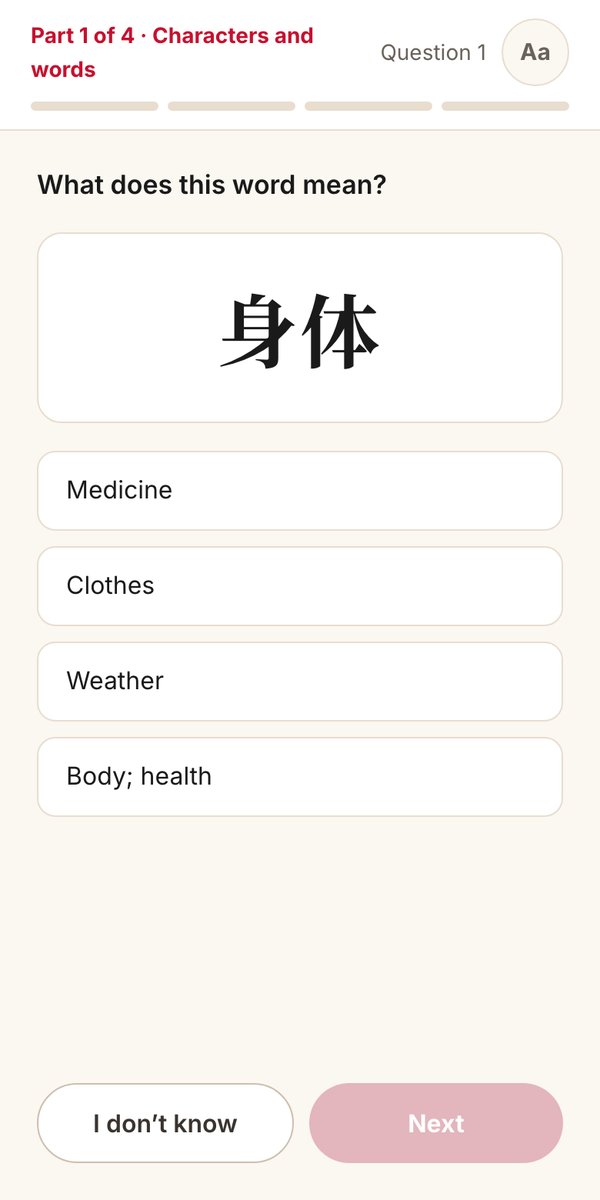
Characters and words
Choose what each word means. Every word comes from the official HSK 3.0 word list for its level, and there’s no pinyin to lean on.
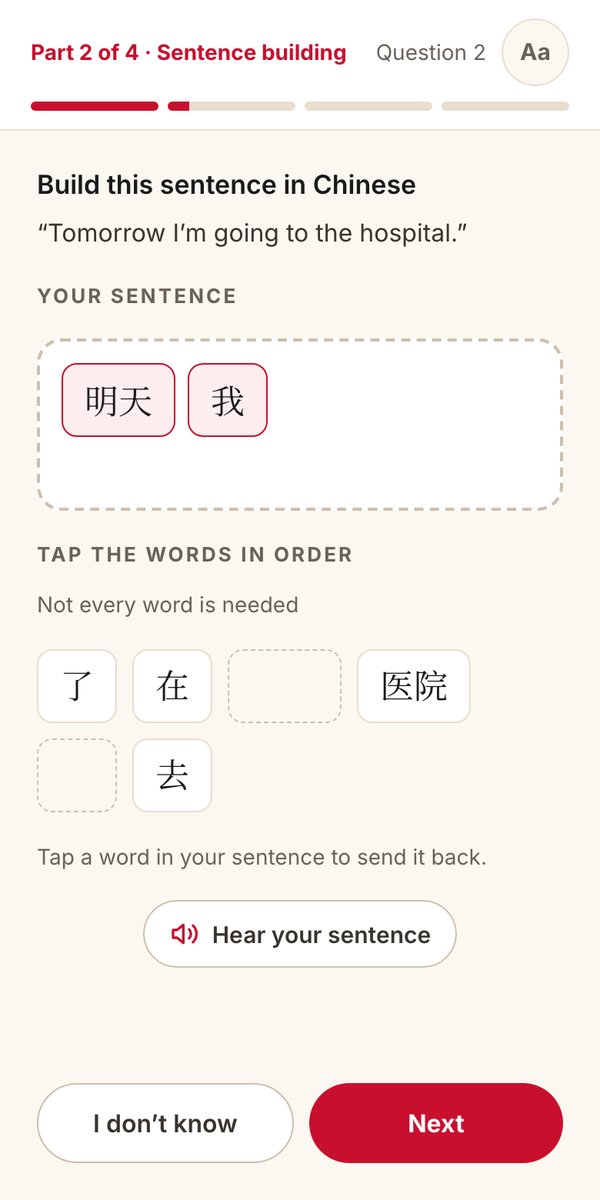
Sentence building
Tap words into order to say something in Chinese. Some words don’t belong, and from Level 3 you get a situation instead of an English sentence to translate.
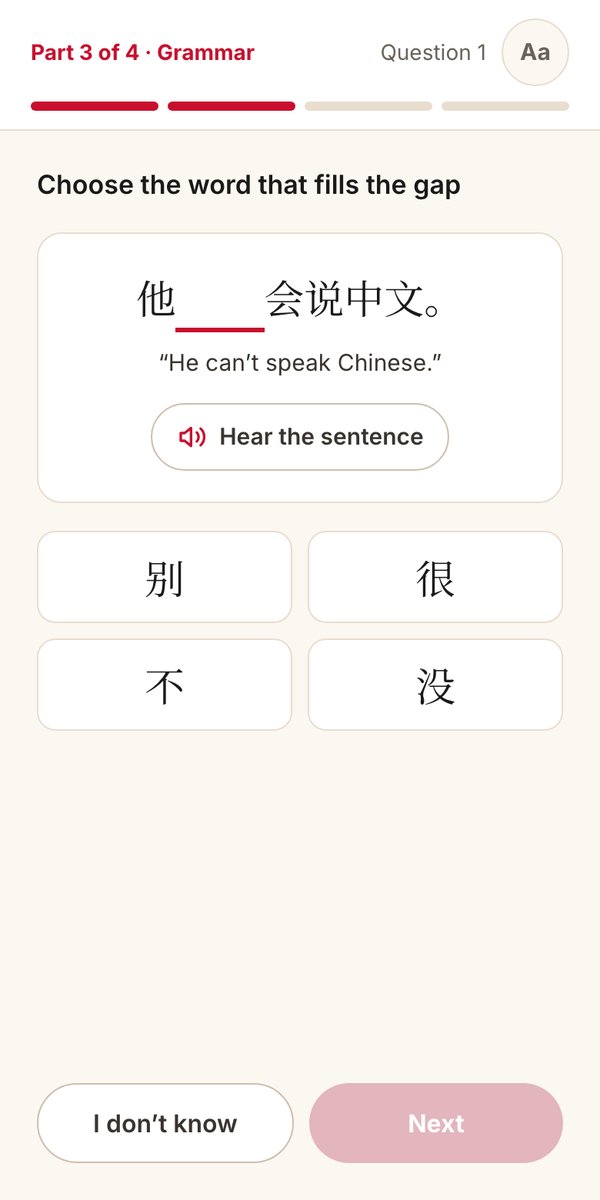
Grammar
Choose the word that fills the gap, from 的 (de) and 在 (zài) at Level 1 to 与其…不如 (yǔqí… bùrú, rather than) at Level 6.
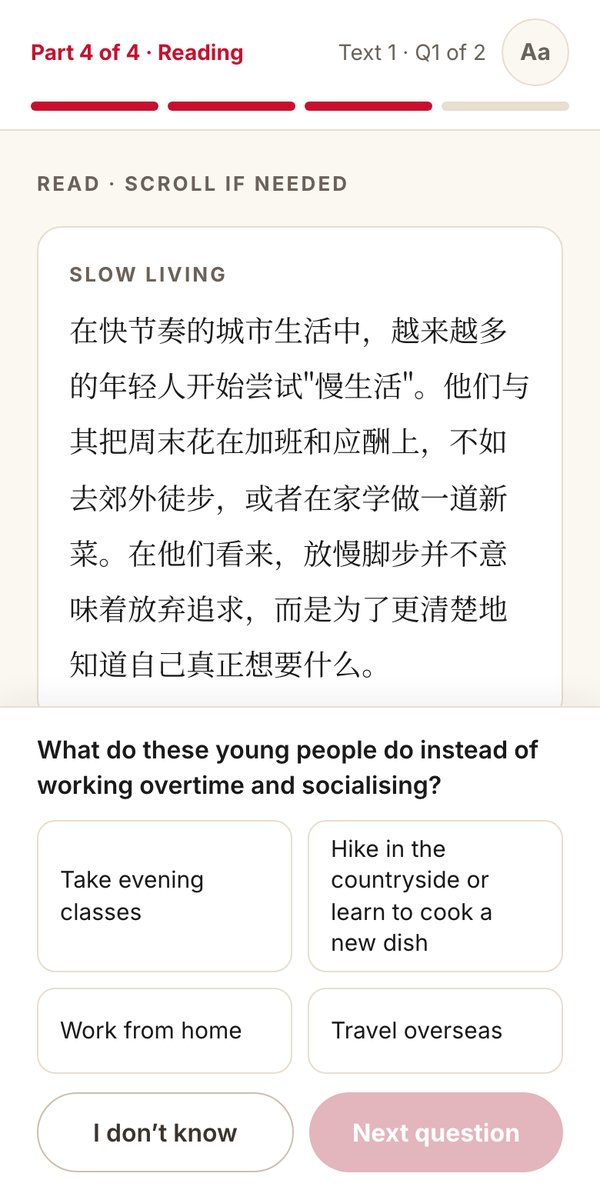
Reading
Read short notes, notices and articles, then answer two questions on each. The question stays on screen while you read.
How the Chinese reading test finds your level
Tell us how you read
Choose characters or pinyin, then say how you’d describe your Chinese. The test starts at that level.
It adapts as you go
Get two right in a row and the questions step up. Miss one and they step down, so most of the test sits close to your real level.
Hear it if you like
Sentence and grammar questions have audio you can tap to play. Nothing plays on its own.
Get your report
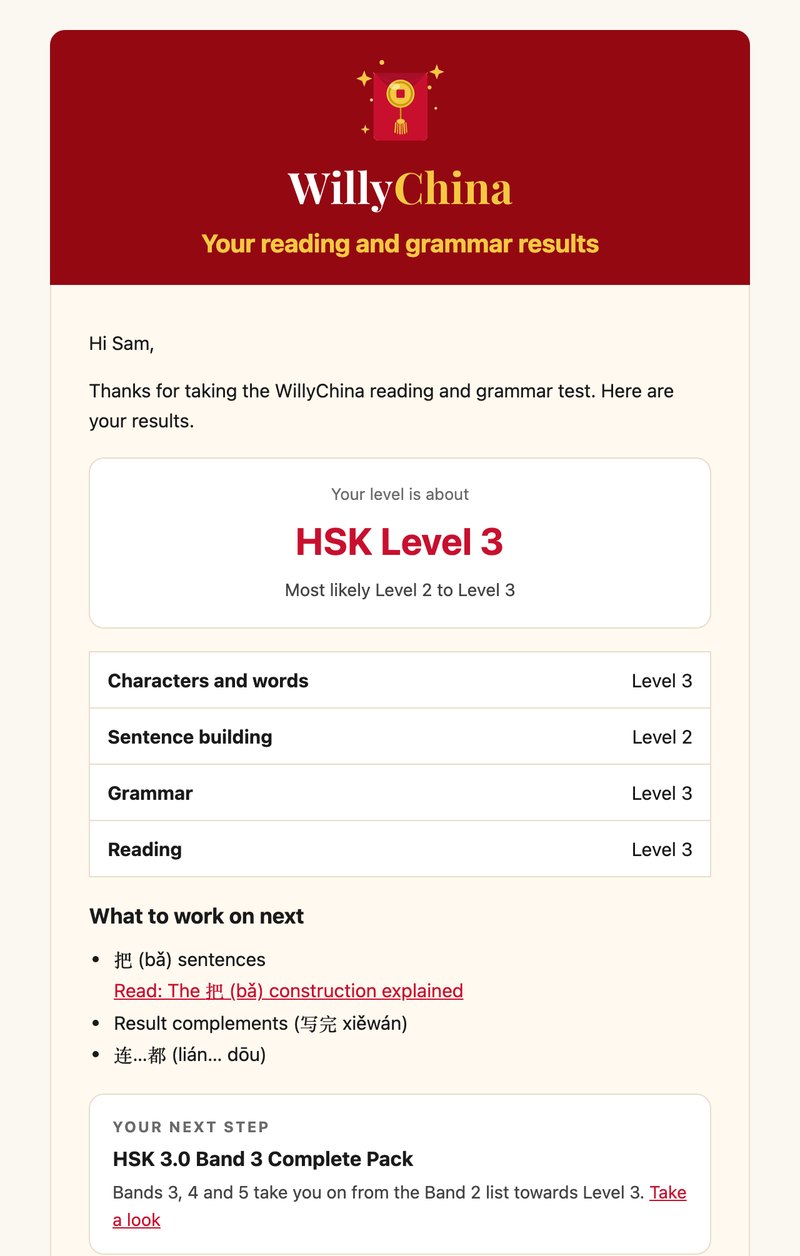
Your level, a level for each part and the grammar points to work on next, sent to your inbox.
Vocabulary levels follow the official HSK 3.0 word lists. Grammar levels are WillyChina’s own estimates against the HSK 3.0 grammar syllabus. The result is a placement guide, not an official HSK score. New to the levels? Read HSK 3.0 explained.
What you get from the Chinese reading test
- Your HSK 3.0 level, and the range it most likely falls in.
- A level for each part: words, sentence building, grammar and reading.
- Up to three grammar points to work on, with a link to the WillyChina guide that teaches each one where we have one.
- A next step for your level, from vocabulary packs to HSK preparation lessons.
- A review of every question you missed, with the right answer next to yours.
- A copy for Will, so if you book a call he already knows where you’re starting from.
You see your level as soon as you finish, and the full report arrives by email. Here’s a sample.
Take the Chinese reading test in pinyin
Plenty of people speak Chinese well but read very few characters, often because they learned at home or by listening. Choose the pinyin route at the start and the words part shows pinyin with audio, while every sentence and grammar question shows pinyin under each word.
The reading part is skipped on that route, since it can only test characters. Your report says so, and Will can check your reading with you in class.
Quick placement test or the full Chinese reading test?
Short on time? Start with the quick test. Want to know exactly where your reading and grammar stand? Take this one.
| Quick placement test | Reading & grammar test | |
|---|---|---|
| Time | About 5 minutes | About 25 to 35 minutes |
| Questions | 15 | Up to 26, adapting to you |
| Skills | Vocabulary, characters, tones, listening and grammar | Characters, sentence building, grammar and reading |
| Your result | Your HSK level and a shareable level card | A full report by email, with the grammar points to work on next |
What each HSK level means for your reading
Each level adds words to the one before. Here’s how many words each level covers in total, and what you’ll read at that level in this test.
| Level | Words in total | What you’ll read in this test |
|---|---|---|
| Level 1 | 300 | Short notes, signs and opening hours |
| Level 2 | 500 | Short messages about daily life |
| Level 3 | 1,000 | Notices, emails and short descriptions |
| Level 4 | 2,000 | Short articles on everyday topics |
| Level 5 | 3,600 | Opinion pieces on work and lifestyle |
| Level 6 | 5,400 | Essays on ideas, society and culture |
Word counts come from the HSK syllabus published by the Center for Language Education and Cooperation (November 2025). For exam dates and formats, see the official HSK page from Chinese Testing International.