Spring Festival · Chinese New Year · Lunar New Year — the biggest celebration of the Chinese year
“Out with the old, in with the new — and a fresh year of luck.”
- When
- 1st day of the 1st lunar month (late Jan – mid Feb)
- Duration
- 15 days · Eve → Lantern Festival
- Also called
- Chinese New Year · Lunar New Year
- Greeting
- 新年快乐 · Xīnnián kuàilè
- Colours
- Red & gold
- Symbol
- That year’s zodiac animal
China’s biggest celebration
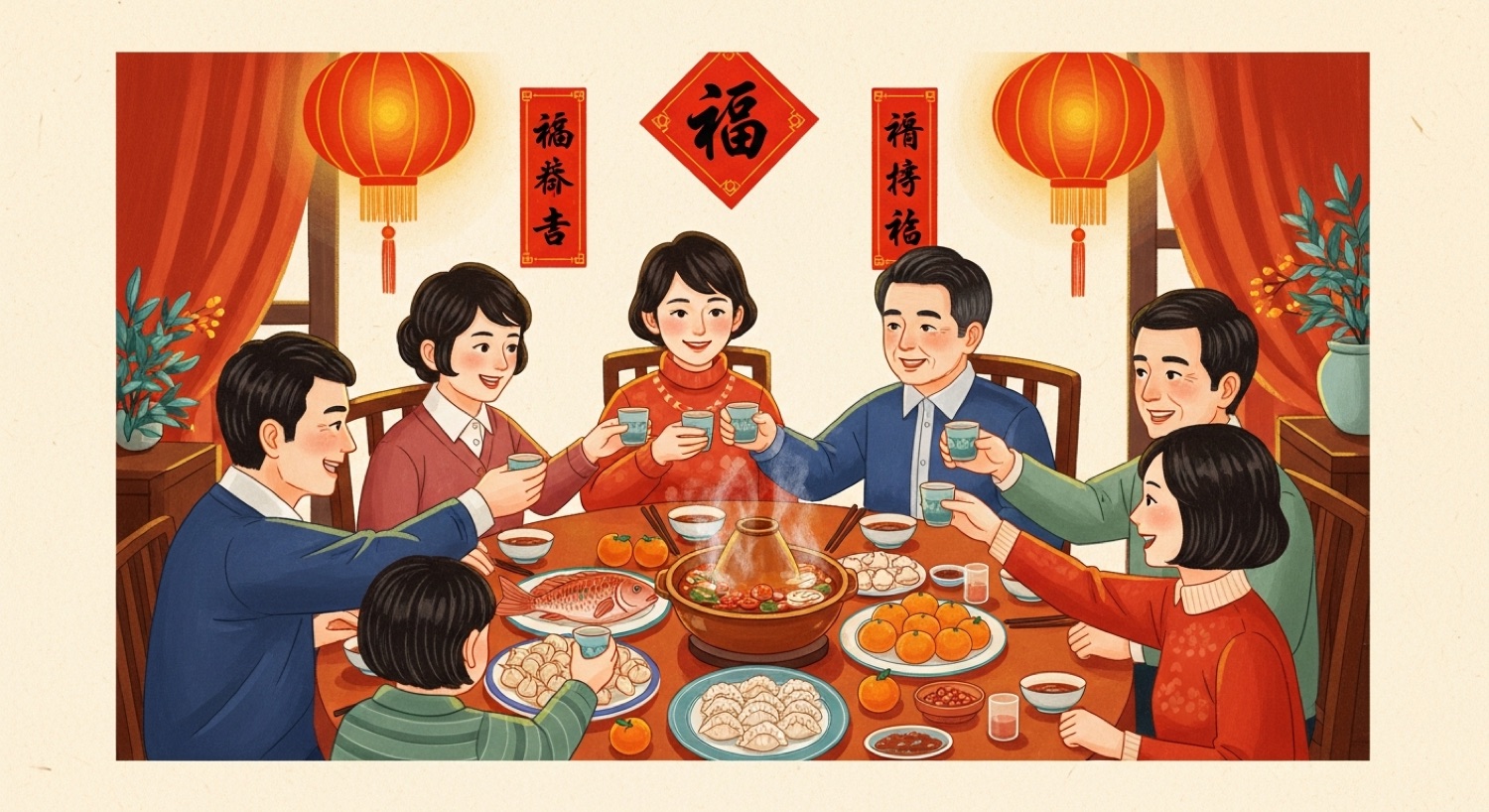
Spring Festival (春节, Chūnjié) — known in English as Chinese New Year — is the most important holiday of the Chinese year. It marks the turn of the lunar calendar, and for the world’s Chinese communities it means one thing above all: going home. Hundreds of millions travel to be with family for the reunion dinner on New Year’s Eve, in what is often called the largest annual human migration on Earth.
At its heart, Spring Festival is about sweeping out the old year and welcoming the new one with as much luck as you can gather — red everywhere, doors dressed in couplets, tables heavy with symbolic food, and children clutching red packets of lucky money. The celebration runs a full fifteen days, from New Year’s Eve to the Lantern Festival that closes it.
The legend of Nian, the New Year beast
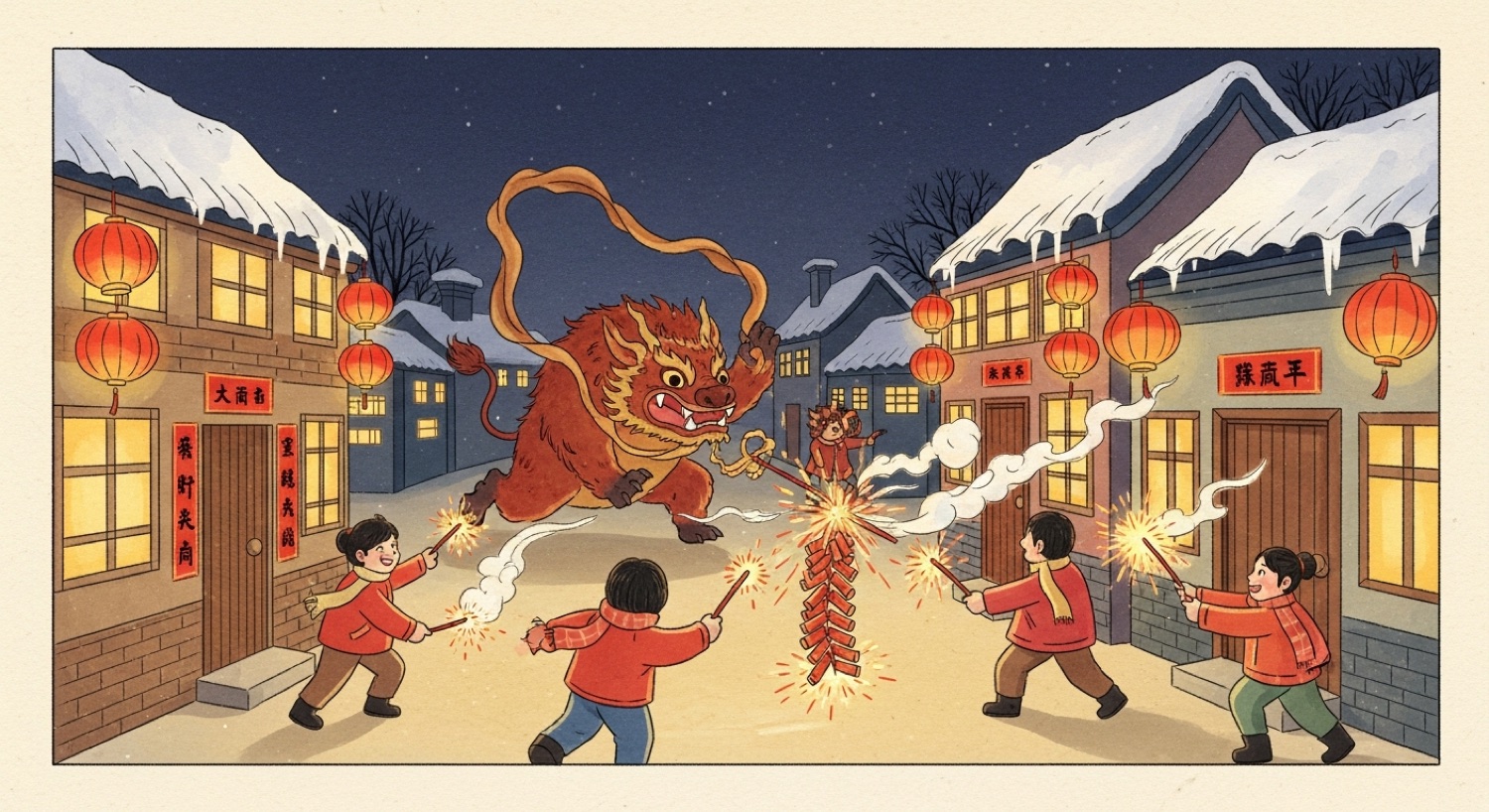
年Long ago, the story goes, a fearsome beast called Nián (年) would come down from the mountains each New Year’s Eve to devour crops, livestock and even villagers. Year after year, people fled to the hills to hide — until they noticed the monster’s weaknesses: it was terrified of the colour red, of bright light, and of loud noise.
So the villagers stood their ground. They pasted red couplets on their doors, hung red lanterns, wore red clothes and set off crackling firecrackers. The beast recoiled and fled, and never troubled them again. To this day, the red decorations, the lanterns and the fireworks of Spring Festival all echo that first night the villagers frightened Nian away — which is why celebrating the New Year is still called 过年 (guònián), literally “passing the Nian.”
A note on the name: the festival hasn’t always been called 春节. When the new Republic adopted the Western calendar in the 1910s, the term 春节 (“Spring Festival”) was formally proposed in 1914 to distinguish the traditional lunar new year from the Gregorian New Year, 元旦 (Yuándàn). The celebration itself, of course, is thousands of years older.
Traditions & customs
年夜饭 Reunion dinner
The New Year’s Eve feast — the most important meal of the year, shared with the whole family gathered under one roof.
红包 Red packets
Red envelopes of “lucky money” given by elders to children and unmarried juniors, for good fortune in the year ahead.
春联 Spring couplets
Lines of poetry on red paper pasted around doorways — and the character 福 (fortune), often hung upside-down as a pun: 福倒 (“fortune upside-down”) sounds like 福到 (“fortune arrives”).
放鞭炮 Firecrackers
Fireworks and firecrackers to scare off bad luck (and the beast Nian) and welcome the new year with a bang.
守岁 Staying up
Families stay awake through New Year’s Eve to “guard the year,” a wish for long life for one’s parents.
拜年 New Year visits
In the first days, people visit relatives and friends to exchange good wishes — and children collect their red packets.
舞龙舞狮 Dragon & lion dance
Drums, cymbals and dancers in dragon and lion costumes bring energy and luck to streets and doorsteps.
大扫除 Spring cleaning
Homes are cleaned before the New Year to sweep out the old — but never on New Year’s Day itself, which would sweep the good luck away.
Festive foods & what they mean
Almost every New Year dish is a pun or a symbol — the food is chosen for the luck its name or shape suggests.
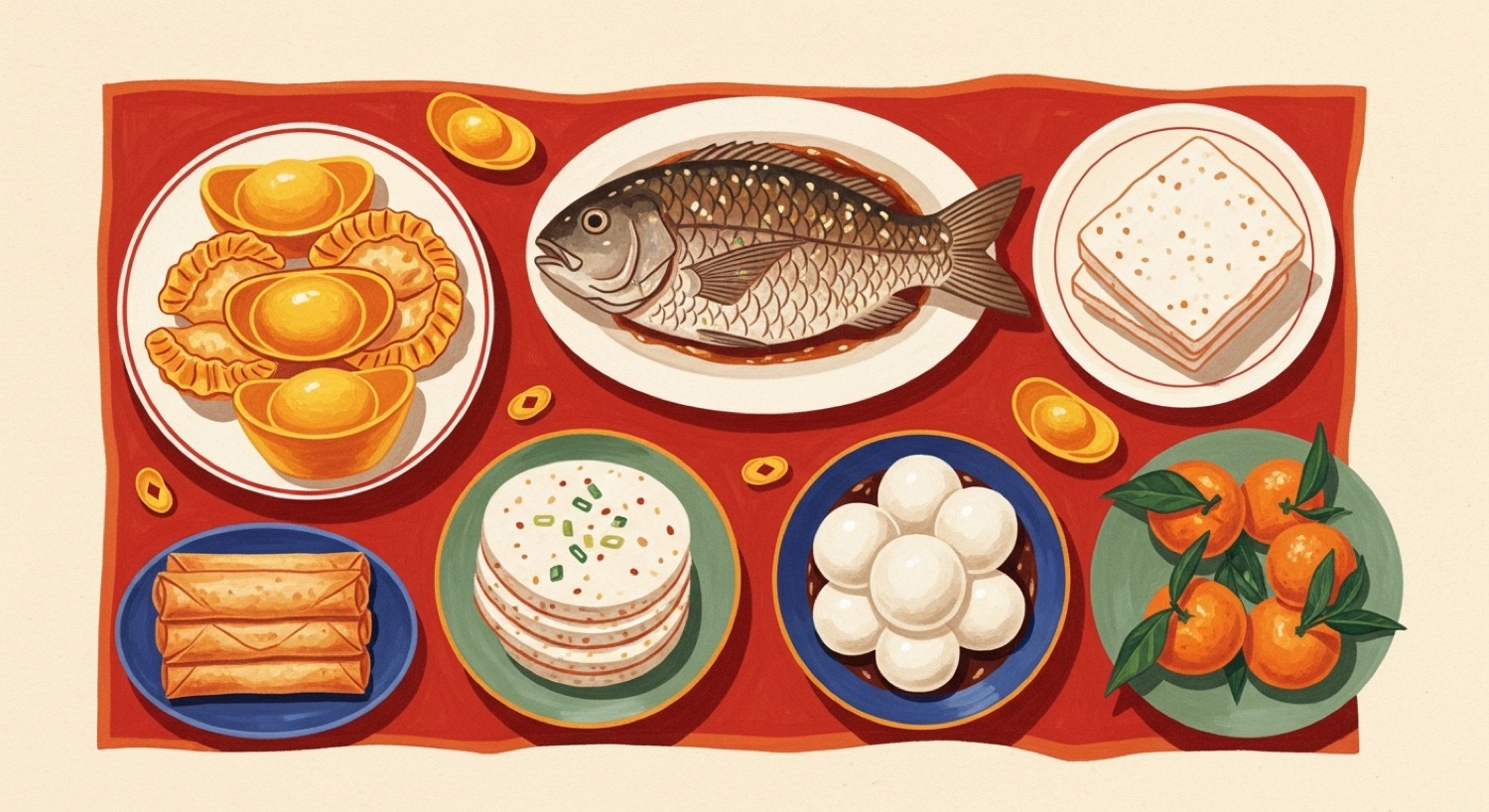
- 饺子 DumplingsShaped like old gold ingots — a wish for wealth. The classic northern New Year food. Get our dumpling recipe →
- 鱼 Whole fish鱼 (yú, “fish”) sounds like 余 (yú, “surplus”): 年年有余 — “surplus every year.” Traditionally not finished, so plenty is left over.
- 年糕 Rice cakeNiángāo sounds like 年高 — rising “higher year by year” in wealth or status.
- 汤圆 TāngyuánRound glutinous rice balls — their roundness stands for reunion and family togetherness.
- 橘子 MandarinsGolden and round, a symbol of luck and abundance — often given as gifts.
New Year greetings & phrases
The essentials for wishing someone well — tap the speaker to hear each one from a native speaker.
新年快乐
Xīnnián kuàilè
“Happy New Year.” The all-purpose greeting.
春节快乐
Chūnjié kuàilè
“Happy Spring Festival.”
恭喜发财
Gōngxǐ fācái
“Wishing you prosperity.” Especially common in the south and among Cantonese speakers.
万事如意
Wànshì rúyì
“May all your wishes come true.”
年年有余
Niánnián yǒuyú
“May you have surplus every year” — the wish behind the fish on the table.
How the festival unfolds
- New Year’s Eve · 除夕
The reunion dinner, staying up to “guard the year,” and firecrackers at midnight. - Day 1
Wishing elders a happy new year; wearing red and new clothes; no cleaning, no sharp words. - Day 2
Married daughters return to visit their own parents. - Day 5 · 破五
Welcoming the God of Wealth (财神); shops traditionally reopen. - Day 15 · Lantern Festival
Lanterns, riddles and sweet tāngyuán bring the celebration to a glowing close.
Common misunderstandings
- “Spring Festival” and “Chinese New Year” are the same holiday — 春节 is simply the official Chinese name.
- It follows the lunisolar calendar, so the date moves each year (late January to mid-February) — it isn’t a fixed date.
- The 福 character is hung upside-down on purpose — it’s a lucky pun (福倒 “upside-down” ≈ 福到 “arrives”), not a mistake.
- Several cultures share the lunar new year — Korean Seollal and Vietnamese Tết fall on the same day, with their own distinct traditions.
Quick quiz
1. Why do people set off firecrackers at Spring Festival?
2. Why is a whole fish served at the New Year table?
FAQs
Talk about it in Mandarin
Learn the greetings, the stories and the language of the festivals — in 1-on-1 online lessons with a native speaker.
Book a Free Intro Call