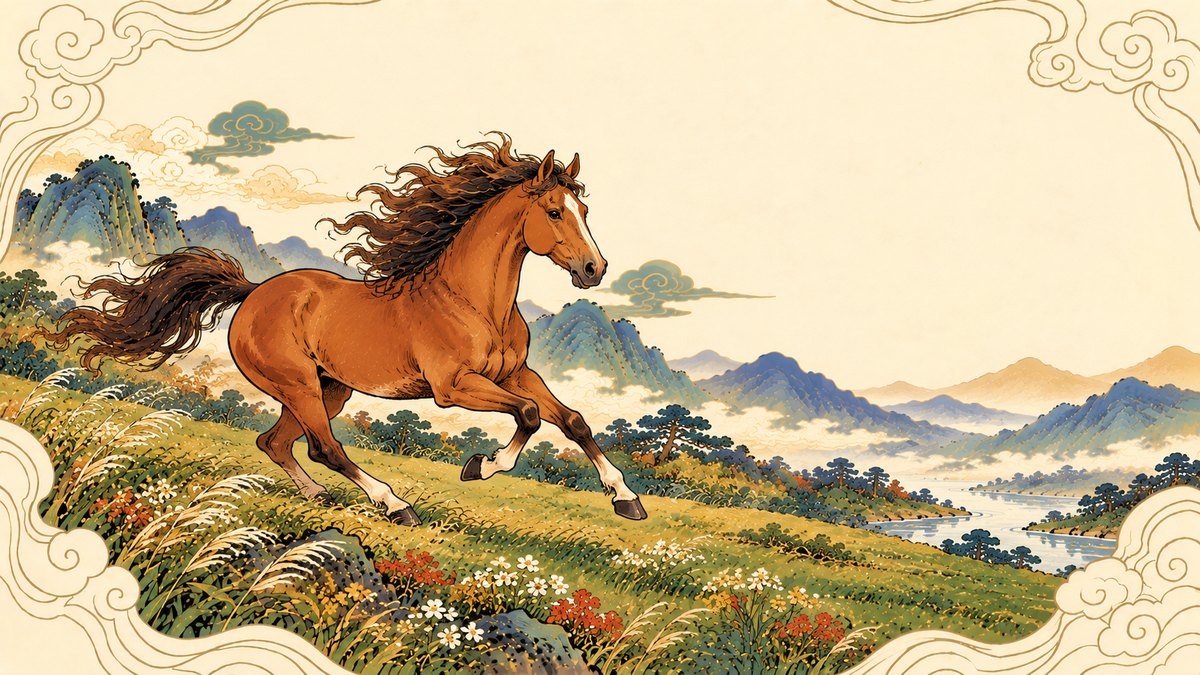
Energetic, free-spirited and warm: the seventh animal of the Chinese zodiac, and the sign of the current year, which runs to 5 February 2027.
- Recent Horse years
- 2002 · 2014 · 2026
- This Horse year runs to
- 5 February 2027
- Fixed element
- Fire (yang)
- Best matches
- Tiger · Dog · Goat
- Clashes with
- Rat
- The Horse’s hours
- 11 am – 1 pm (午时 wǔshí)
Are you a Horse?
The zodiac year doesn’t start on 1 January. It starts at Chinese New Year, which falls anywhere from 21 January to 20 February. So if you were born in January or February, your birth year alone can’t tell you your animal. Enter your full date of birth for the exact answer.
Every Year of the Horse, with exact dates
| Year | Chinese name | Element | Begins | Ends |
|---|---|---|---|---|
| 1918 | 戊午 wùwǔ | Earth Horse | 11 Feb 1918 | 31 Jan 1919 |
| 1930 | 庚午 gēngwǔ | Metal Horse | 30 Jan 1930 | 16 Feb 1931 |
| 1942 | 壬午 rénwǔ | Water Horse | 15 Feb 1942 | 4 Feb 1943 |
| 1954 | 甲午 jiǎwǔ | Wood Horse | 3 Feb 1954 | 23 Jan 1955 |
| 1966 | 丙午 bǐngwǔ | Fire Horse | 21 Jan 1966 | 8 Feb 1967 |
| 1978 | 戊午 wùwǔ | Earth Horse | 7 Feb 1978 | 27 Jan 1979 |
| 1990 | 庚午 gēngwǔ | Metal Horse | 27 Jan 1990 | 14 Feb 1991 |
| 2002 | 壬午 rénwǔ | Water Horse | 12 Feb 2002 | 31 Jan 2003 |
| 2014 | 甲午 jiǎwǔ | Wood Horse | 31 Jan 2014 | 18 Feb 2015 |
| 2026 | 丙午 bǐngwǔ | Fire Horse | 17 Feb 2026 | 5 Feb 2027 |
| 2038 | 戊午 wùwǔ | Earth Horse | 4 Feb 2038 | 23 Jan 2039 |
Dates follow the lunar calendar’s New Year, the convention used for the zodiac in everyday Chinese life. Some fortune-tellers instead start the year at 立春 (lìchūn, Start of Spring, around 4 February), so a few early-February birthdays get read differently. In 2026 the gap was unusually wide: 立春 fell on 4 February, but New Year not until the 17th.
How to write 马, and the horse hiding inside it
马 (mǎ) began as a picture of a whole horse, stood on end the way the earliest script drew many animals: head at the top, mane streaming down the neck, legs to one side and the tail at the bottom. The Shuowen Jiezi says the character shows the horse’s head, mane, tail and four legs, and in the traditional form 馬 the four dots along the bottom are still usually read as the legs. Some later scholars read the early forms a little differently, as an eye, mane and tail, but every ancient form exaggerates the mane. Simplified 马 squeezes all of it into three strokes, borrowing the shape from cursive handwriting.
3 strokes · the top corner first, then the long zigzag with a hook, then the bottom stroke last
3,000 years of 马, in four steps
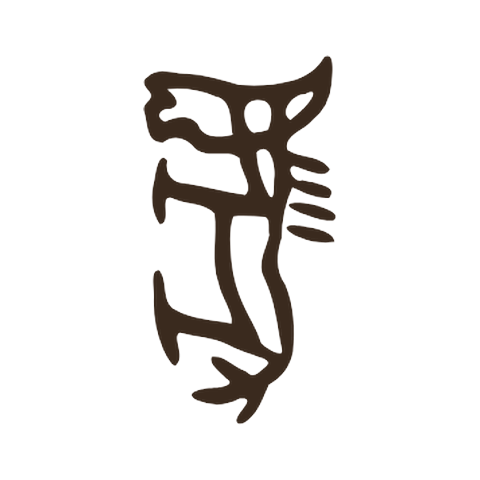 Oracle boneShang dynasty, c. 1250 BCE
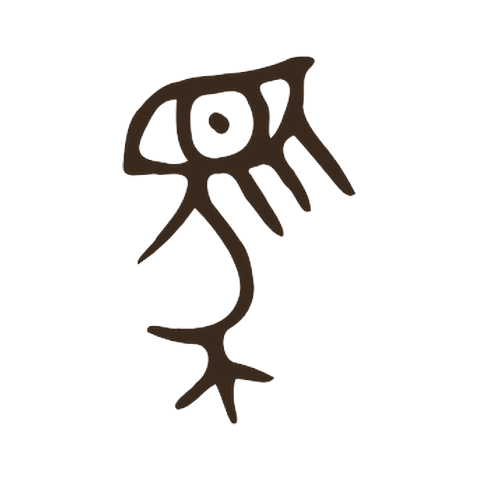 BronzeWestern Zhou, c. 1000 BCE
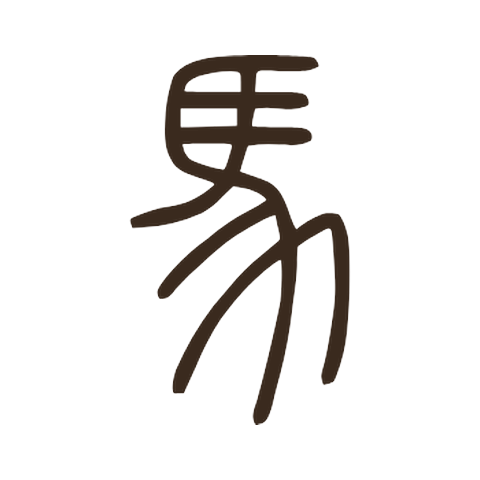 Small sealQin dynasty, 221 BCE
- 马TodayTraditional 馬, simplified 马
Ancient forms: public-domain drawings from the Ancient Chinese Characters project on Wikimedia Commons.
Six characters built from 马
Horses carried armies, mail and officials across early China, so 马 turns up all over the language. In some characters it brings the meaning of riding and driving, and in some of the most common words you’ll learn it only brings the sound. Tap the speaker to hear each one.
Want the system behind cards like these? Read how Chinese characters actually work and the stroke order rules, then practise 马 on the free writing practice board.
The horse in everyday Chinese
Learners meet 马 long before they meet a horse. It hides in some of the most common words in Mandarin, and in most of them no horse is involved at all. The best known is 马上 (mǎshàng): literally “on horseback”, but in daily speech it simply means “right away”. The usual explanation is that someone already in the saddle can leave at once.
马上
mǎshàng
At once, right away. Literally “on the horse”.
马路
mǎlù
Road, street. Literally “horse road”.
马马虎虎
mǎmǎhūhū
So-so, careless. Literally “horse horse tiger tiger”.
河马
hémǎ
Hippopotamus. Literally “river horse”, just like the Greek.
马马虎虎 is the one every learner loves. Its origin is unclear; a popular story tells of a painter who drew a tiger’s head on a horse’s body and couldn’t decide which it was. Whatever the truth, 我马马虎虎 (wǒ mǎmǎhūhū) is how Chinese speakers say they’re doing just okay.
The Horse personality
Zodiac personalities are folk tradition, not science, and Chinese people treat them much the way others treat star signs: half seriously, often with a smile. Still, the character traditionally given to people born in the Year of the Horse is remarkably consistent across centuries of almanacs. It’s the free spirit of the twelve.
Warm and enthusiastic
rèqíng. Horses throw themselves into people and plans, and their energy is catching.
Lively
huópō. Cheerful, quick and full of movement: the friend who always suggests going somewhere.
Independent
dúlì. Horses like to run their own race. Freedom matters more to them than almost anything.
Straightforward
zhíshuǎng. Open and honest, they say what they think, and you always know where you stand.
And the other side
Impatient
jízào. Horses want everything done now, and waiting tests them.
Headstrong
gùzhí. Once a Horse has chosen a direction, it is very hard to turn.
Quick to lose interest
sān fēnzhōng rèdù. “Three minutes of heat”: a saying for passions that burn bright and fade fast.
Restless
zuò bu zhù. Literally “can’t sit still”. Routine and long meetings are a Horse’s natural enemies.
Lucky things, by tradition
Almanacs don’t fully agree on the Horse’s lucky charms, and we’d rather show you that than pretend otherwise. Here is what the major sources share, and where they split.
| Lucky | What the sources say | Agreement |
|---|---|---|
| Numbers | 2 and 3 in every list, and 7 in most, plus numbers made of them, such as 23 or 37 | Agreed |
| Flowers | Calla lily and jasmine, with marigold added in some lists | Mostly |
| Colours | Yellow in most lists, plus green, or brown and purple, depending on the almanac | Disputed |
| Numbers to avoid | 1, 5 and 6 in the major lists, though some yearly forecasts call 1 lucky | Mostly |
Which Horse are you? The five elements
Every animal returns once every 12 years, but it pairs with each of the five elements only once every 60. So a 1966 Horse and a 2026 Horse share both animal and element: both are Fire Horses.
甲午 jiǎwǔ · 1954 · 2014
The Wood Horse is said to be the most sociable and cooperative Horse: warm, curious and happy to work in a team. Its traditional caution is spreading itself across too many interests.
丙午 bǐngwǔ · 1966 · 2026
Fire is the Horse’s own fixed element, so the Fire Horse is the most intense of all: passionate, brave and impossible to ignore. Tradition sees its challenge as cooling its temper. 2026 is a Fire Horse year.
戊午 wùwǔ · 1918 · 1978 · 2038
The Earth Horse is said to be the steadiest Horse: kinder, more careful and slower to make big decisions than the rest. It keeps the Horse’s energy but adds patience.
庚午 gēngwǔ · 1930 · 1990
The Metal Horse is said to be the most determined Horse: bold, ambitious and fiercely independent. Its traditional weakness is refusing to take advice.
壬午 rénwǔ · 1942 · 2002
The Water Horse is the most adaptable Horse: witty, easygoing and a natural talker. Tradition says it changes plans, and moods, as easily as water changes course.
Horse compatibility
Zodiac compatibility isn’t a list of opinions. It’s geometry. Place the twelve animals around a circle, and the classic matches form fixed shapes: triangles of allies, pairs of secret friends, and opposites that clash. Here is the Horse’s position.
- Best: Tiger 虎 and Dog 狗The Three Harmonies (三合 sānhé), the green triangle. These three share a bold, loyal and freedom-loving outlook and are traditionally the happiest pairing for friendship, business or marriage.
- Secret friend: Goat 羊The Six Harmonies (六合 liùhé), the gold line. The Goat’s calm steadies the Horse’s restless energy.
- Clash: Rat 鼠The Six Conflicts (六冲 liùchōng), straight across the circle. The careful, calculating Rat and the impulsive Horse pull in opposite directions.
- Friction: Ox 牛The Six Harms (六害 liùhài), the dashed line. A milder mismatch: the patient Ox and the restless Horse can wear on each other.
See the other pairings from each side: the Tiger, the Dog, the Goat and the Rat.
The Horse in Chinese culture
马到成功 Success on arrival
mǎ dào chénggōng. “Success the moment the horse arrives”, an image of victory won as soon as the cavalry rides in. Today it’s a favourite good-luck wish before exams, interviews and new ventures, and in a Horse year it’s on every greeting card.
塞翁失马 The old man who lost his horse
sài wēng shī mǎ. In the Huainanzi (2nd century BCE), an old man on the frontier loses his horse, and it comes back leading another. His son breaks a leg riding it, and that injury spares him from war. Good and bad luck can swap places, as one of the best-loved Chinese idioms reminds us. Read the full story of 塞翁失马.
马踏飞燕 The Flying Horse of Gansu
mǎ tà fēi yàn. A bronze horse in full gallop, balanced on one hoof on a flying swallow. Made around the 2nd century CE, it was found in 1969 in a Han-dynasty tomb at Leitai in Wuwei and is now in the Gansu Provincial Museum. See more in our Gansu guide.
奔马 Xu Beihong’s galloping horses
bēnmǎ, “galloping horse”. The painter 徐悲鸿 Xú Bēihóng (1895–1953) is known above all for his ink horses, all flying manes and bold, wet brushstrokes. His horses, including the Eight Horses (八骏图 bā jùn tú), are widely reproduced, and in a Horse year they turn up everywhere.
Famous people born in the Year of the Horse
Horses share their sign with a Beatle, two of the best-known names in Chinese cinema and a Nobel Prize-winning scientist. Here are some of the most famous, with the element of each one’s Horse year.
- Tu Youyou 屠呦呦Pharmaceutical chemist, Nobel Prize for artemisininBorn 30 Dec 1930 · Metal Horse
- Paul McCartneySinger and songwriter, The BeatlesBorn 18 Jun 1942 · Water Horse
- Jackie Chan 成龙Actor and martial artist, Hong KongBorn 7 Apr 1954 · Wood Horse
- Ang Lee 李安Film director, TaiwanBorn 23 Oct 1954 · Wood Horse
- Rowan AtkinsonActor, Mr BeanBorn 6 Jan 1955 · Wood HorseBorn 18 days before Chinese New Year 1955, so many lists get this one wrong
- Gordon RamsayChef and restaurateurBorn 8 Nov 1966 · Fire Horse
- Jay Chou 周杰伦Singer and songwriter, TaiwanBorn 18 Jan 1979 · Earth HorseBorn 10 days before Chinese New Year 1979, so many lists get this one wrong
- Emma WatsonActor, Hermione in the Harry Potter filmsBorn 15 Apr 1990 · Metal Horse
- Zheng Qinwen 郑钦文Tennis player, Olympic championBorn 8 Oct 2002 · Water Horse
We checked every full date of birth against the exact Chinese New Year date, so people born in January or early February are placed in the right year. That is where most published lists go wrong.
The Year of the Fire Horse, 2026
The Fire Horse year, 丙午年 (bǐngwǔ nián), runs from 17 February 2026 to 5 February 2027. Fire is the Horse’s own element, so tradition reads this as a doubly fiery year: one for momentum, travel and bold beginnings, with a warning not to rush. For the festival itself, the fifteen days and the greetings, see our guide to the Spring Festival.
běnmìngnián, “your own zodiac year”. If you were born in a Horse year (2014, 2002, 1990, 1978, 1966…), 2026 is your 本命年 until 5 February 2027. Tradition says it’s a year to be careful, so many people wear something red all year round, often red socks, a red string bracelet or red underwear, which shops sell in a rush before every New Year.
Talk about your sign in Mandarin
Asking someone’s zodiac animal is one of the most natural small-talk questions in Chinese, and a polite way to guess an age without asking. Here is the whole conversation.
我属马
wǒ shǔ mǎ
“I’m a Horse,” literally “I belong to the horse”.
你属什么?
nǐ shǔ shénme?
“What’s your zodiac sign?”
你也属马吗?
nǐ yě shǔ mǎ ma?
“Are you a Horse too?”
今年是我的本命年。
jīnnián shì wǒ de běnmìngnián.
“This year is my zodiac year.”
Common misunderstandings
- “I was born in January 1979, so I’m a Goat.” Not quite: the Goat year only began on 28 January 1979, so you’re an Earth Horse, like the singer Jay Chou, born on 18 January. Check any date with the tool above.
- “Fire Horse girls are bad luck.” This superstition is strongest in Japan, where the Fire Horse is called hinoeuma, and births there fell by about a quarter in 1966. It’s folklore with no basis in the classical system, and plenty of families happily welcome Fire Horse babies in 2026.
- “马上 means ‘on a horse’.” Literally, yes, but no one uses it that way. 我马上来 (wǒ mǎshàng lái) means “I’ll be right there”, horse or no horse.
- “妈 and 吗 must have something to do with horses.” They don’t. In both, 马 only gives the sound, mā and ma. That’s how most Chinese characters work.
Quick quiz
1. In the traditional character 馬, what are the four dots at the bottom usually said to be?
2. Which sign forms the Three Harmonies triangle with the Horse and the Tiger?
3. What does 马上 (mǎshàng) mean in everyday Chinese?
FAQs
The Year of the Horse comes round every 12 years: 1930, 1942, 1954, 1966, 1978, 1990, 2002, 2014 and 2026. Each one starts at Chinese New Year rather than on 1 January. The current Horse year began on 17 February 2026 and runs to 5 February 2027.
Yes. 2026 is a Fire Horse year (丙午 bǐngwǔ), which began on 17 February 2026 and ends on 5 February 2027. Anyone born between 1 January and 16 February 2026 is still a Snake, the sign of the year before.
马马虎虎 (mǎmǎhūhū) means “so-so” or “careless”, literally “horse horse tiger tiger”. Its origin is unclear, though a popular story blames a painter who couldn’t decide whether he’d drawn a horse or a tiger. You’ll hear it as a modest answer to “How are you?” or “Is your Chinese good?”.
Traditionally the Tiger and the Dog, which form the Three Harmonies (三合) with the Horse, and the Goat, its Six Harmonies (六合) partner. The Rat is the Horse’s clash sign, sitting directly opposite on the zodiac wheel.
The sources agree on 2 and 3 as the Horse’s lucky numbers, and most add 7. Calla lilies and jasmine are its usual flowers. Colours vary most: yellow appears in most lists, with green, or brown and purple, added depending on the almanac. These are folk associations, so treat them as tradition rather than rules.
The Horse’s fixed element is Fire, and it’s a yang sign. Each Horse year also carries a rotating element (Wood, Fire, Earth, Metal or Water), set by the year’s heavenly stem. 2026 is Fire, 2014 was Wood and 2002 was Water.
In the legend of the Great Race, the Jade Emperor ranked the animals by the order they crossed a great river. In the best-known version, the Horse was galloping towards sixth place when the Snake, hidden coiled around its hoof, darted out in front. The startled Horse reared back, and the Snake took sixth, leaving the Horse seventh. Read the whole story on our Chinese zodiac guide.
Say 我属马 (wǒ shǔ mǎ), literally “I belong to the horse”. To ask someone else, say 你属什么? (nǐ shǔ shénme?), “What’s your sign?”. It’s a polite, roundabout way to guess someone’s age, since the answer narrows it to every 12 years.
Say “我属马” like a native
The zodiac is one of the easiest conversations to start in Mandarin. Learn the words, the tones and the stories behind them in 1-on-1 online lessons with a native speaker.
Book a Free Intro Call