Clever, resourceful and quick-witted: the first animal of the Chinese zodiac, and the sign of the year that begins on 11 February 2032.

- Recent Rat years
- 2008 · 2020 · 2032
- Next Rat year begins
- 11 February 2032
- Fixed element
- Water (yang)
- Best matches
- Dragon · Monkey · Ox
- Clashes with
- Horse
- The Rat’s hours
- 11 pm – 1 am (子时 zǐshí)
Are you a Rat?
The zodiac year doesn’t start on 1 January. It starts at Chinese New Year, which falls anywhere from 21 January to 20 February. So if you were born in January or February, your birth year alone can’t tell you your animal. Enter your full date of birth for the exact answer.
Every Year of the Rat, with exact dates
| Year | Chinese name | Element | Begins | Ends |
|---|---|---|---|---|
| 1924 | 甲子 jiǎzǐ | Wood Rat | 5 Feb 1924 | 23 Jan 1925 |
| 1936 | 丙子 bǐngzǐ | Fire Rat | 24 Jan 1936 | 10 Feb 1937 |
| 1948 | 戊子 wùzǐ | Earth Rat | 10 Feb 1948 | 28 Jan 1949 |
| 1960 | 庚子 gēngzǐ | Metal Rat | 28 Jan 1960 | 14 Feb 1961 |
| 1972 | 壬子 rénzǐ | Water Rat | 15 Feb 1972 | 2 Feb 1973 |
| 1984 | 甲子 jiǎzǐ | Wood Rat | 2 Feb 1984 | 19 Feb 1985 |
| 1996 | 丙子 bǐngzǐ | Fire Rat | 19 Feb 1996 | 6 Feb 1997 |
| 2008 | 戊子 wùzǐ | Earth Rat | 7 Feb 2008 | 25 Jan 2009 |
| 2020 | 庚子 gēngzǐ | Metal Rat | 25 Jan 2020 | 11 Feb 2021 |
| 2032 | 壬子 rénzǐ | Water Rat | 11 Feb 2032 | 30 Jan 2033 |
| 2044 | 甲子 jiǎzǐ | Wood Rat | 30 Jan 2044 | 16 Feb 2045 |
Dates follow the lunar calendar’s New Year, the convention used for the zodiac in everyday Chinese life. Some fortune-tellers instead start the year at 立春 (lìchūn, Start of Spring, around 4 February), so a few early-February birthdays get read differently. In 2032 the two fall a week apart: 立春 on 4 February, New Year on the 11th.
How to write 鼠, and the teeth at the top
鼠 (shǔ) is a picture of the animal itself. In the modern character, the top part, shaped like 臼 (jiù, a mortar), is the rat’s open mouth with its teeth bared. Below it, the two short hooked strokes with their dots are the feet and claws, and the long sweeping hook on the right is the back and tail. The oldest oracle-bone versions draw the whole rat in profile, sometimes with small dots around it whose meaning scholars haven’t settled.
13 strokes · the mouth on top first, then each foot with its two dots, then the long tail hook last
3,000 years of 鼠, in four steps
 Oracle boneShang dynasty, c. 1200 BCE
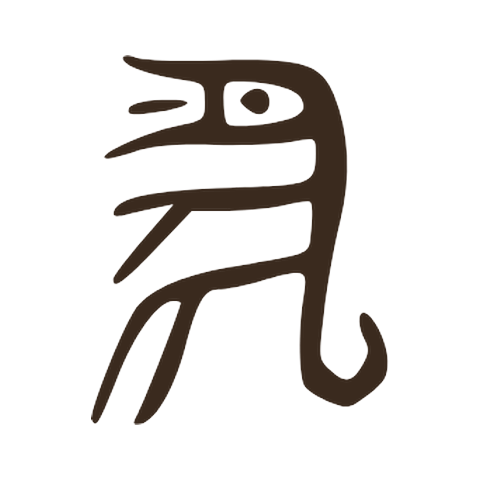 Large sealPre-Qin style, catalogued in 1661
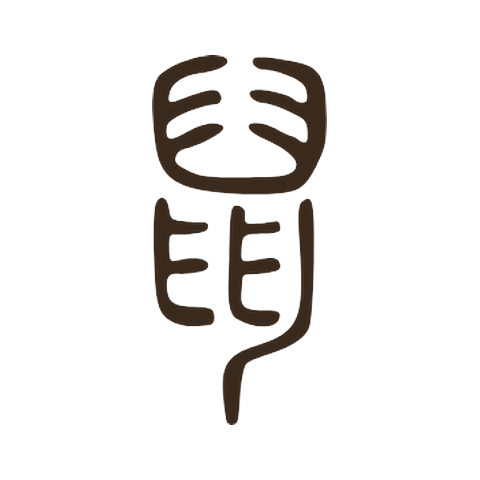 Small sealQin and Han, as in the Shuowen
- 鼠TodaySame in simplified and traditional
Ancient forms: public-domain drawings from the Ancient Chinese Characters project on Wikimedia Commons.
Six characters built from 鼠
鼠 doesn’t build everyday words the way some animals do. Instead it’s the radical that files away China’s small, furry, burrowing creatures, usually with a second part added for the sound. Several of them aren’t rodents at all. Tap the speaker to hear each one.
Want the system behind cards like these? Read how Chinese characters actually work and the stroke order rules, then practise 鼠 on the free writing practice board.
Rat or mouse, and why 老?
Chinese doesn’t split rats from mice. 鼠 covers both, and in everyday speech the animal is 老鼠 (lǎoshǔ). That 老 doesn’t mean old: a baby mouse is still a 小老鼠, a “little 老鼠”. It’s a prefix that a handful of animal names carry, like 老虎 lǎohǔ, the tiger, and no one is quite sure how the Rat came to have it. On its own, 鼠 turns up in names for many other creatures.
老鼠
lǎoshǔ
Rat or mouse, the everyday word. The 老 is a prefix, not “old”.
松鼠
sōngshǔ
Squirrel. Literally “pine 鼠”.
袋鼠
dàishǔ
Kangaroo. Literally “pouch 鼠”.
鼠标
shǔbiāo
A computer mouse, borrowed from the English idea.
In northern China you’ll also hear 耗子 (hàozi), a colloquial word for the same animal, and Mickey Mouse is 米老鼠 (Mǐ Lǎoshǔ). The Hong Kong Observatory’s official calendar calls this the year of the Mouse. We use “Rat”, the most common choice in English today.
The Rat personality
Zodiac personalities are folk tradition, not science, and Chinese people treat them much the way others treat star signs: half seriously, often with a smile. Still, the character traditionally given to people born in the Year of the Rat is remarkably consistent across almanacs. It’s the sharpest and most resourceful of the twelve, and the first.
Clever
cōngming. Quick to learn and quick to see a way through. In the Great Race legend, brains, not speed, put the Rat first.
Quick-witted
jīling. Alert and nimble, the friend who spots the opportunity, or the exit, before anyone else.
Thrifty
jiéjiǎn. Rats are said to save for a rainy day, the way their namesakes store grain for winter.
Sociable
rényuán hǎo. Charming and easy to like, at home in almost any group.
And the other side
Timid
dǎnxiǎo. Tradition says Rats would rather slip away than face a fight, which is why the idiom 胆小如鼠 means “as timid as a mouse”.
Suspicious
duōyí. Sharp eyes can see threats that aren’t there.
Stingy
xiǎoqi. Thrift taken a step too far: careful with every coin, and sometimes with every favour.
Calculating
ài suànji. Always weighing the short-term gain, sometimes at the cost of the long view.
Lucky things, by tradition
For once the major almanac sources largely agree on the Rat’s lucky charms. Year-by-year forecasts sometimes add or swap a number, so treat these as the traditional core rather than a fixed rule.
| Lucky | What the sources say | Agreement |
|---|---|---|
| Numbers | 2 and 3, and numbers made of them, such as 23 or 32 | Agreed |
| Colours | Blue, gold and green | Agreed |
| Flowers | Lily and African violet | Agreed |
| Numbers and colours to avoid | 5 and 9; yellow and brown, though annual forecasts sometimes differ | Mostly |
Which Rat are you? The five elements
Every animal returns once every 12 years, but it pairs with each of the five elements only once every 60. So a 1972 Rat and a 2032 Rat share both animal and element: both are Water Rats.
甲子 jiǎzǐ · 1924 · 1984 · 2044
The Wood Rat is said to be the most self-assured Rat: talented, decisive and generous, with a knack for leading a team. Its traditional caution is to tend its friendships as carefully as its plans.
丙子 bǐngzǐ · 1936 · 1996
The Fire Rat is the boldest Rat: energetic, outgoing and quick to try something new. It’s said to be brave and friendly, with impatience as its weak spot.
戊子 wùzǐ · 1948 · 2008
The Earth Rat is the steadiest Rat: honest, responsible and good at managing people and money. Tradition says its firmness can tip into stubbornness.
庚子 gēngzǐ · 1960 · 2020
The Metal Rat is said to be sharp and strategic, and especially good with money. Almanacs split on its temper: some call it calm and reserved, others quick to anger.
壬子 rénzǐ · 1972 · 2032
Water is the Rat’s own fixed element, so the Water Rat is the Rat at full strength: intuitive, persuasive and full of initiative. Tradition warns that its moods can swing. 2032 is a Water Rat year.
Rat compatibility
Zodiac compatibility isn’t a list of opinions. It’s geometry. Place the twelve animals around a circle, and the classic matches form fixed shapes: triangles of allies, pairs of secret friends, and opposites that clash. Here is the Rat’s position.
- Best: Dragon 龙 and Monkey 猴The Three Harmonies (三合 sānhé), the green triangle. Together these three form the Water trine, traditionally the quickest and most ambitious partnership in the zodiac and a happy match for friendship, business or marriage.
- Secret friend: Ox 牛The Six Harmonies (六合 liùhé), the gold line. The steady Ox grounds the restless Rat, the same partnership that carried the Rat across the river in the Great Race.
- Clash: Horse 马The Six Conflicts (六冲 liùchōng), straight across the circle. The Horse sits directly opposite on the zodiac wheel, and its free spirit is said to collide with the Rat’s careful planning.
- Friction: Goat 羊The Six Harms (六害 liùhài), the dashed line. A quieter mismatch: tradition says the gentle Goat and the shrewd Rat struggle to see eye to eye.
See the other pairings from each side: the Dragon, the Monkey, the Ox and the Horse.
The Rat in Chinese culture
鼠咬天开 The Rat bites open the sky
shǔ yǎo tiān kāi. A folk creation story says the world began as a sealed chaos until the Rat gnawed it open at midnight, letting the air flow and yin and yang part. It’s told to explain why the Rat owns 子 (zǐ), the first Earthly Branch and the hour around midnight. Folklorists treat it as a later explanation, not the origin of the zodiac; a version is recorded by the Ming-dynasty writer Li Changqing.
老鼠嫁女 The Rat’s wedding
lǎoshǔ jià nǚ. In many regions one night of the Spring Festival belongs to the rats: families go to bed early so as not to disturb the Rat’s wedding procession. The third night is the most common date, but it varies by place; the writer Lu Xun remembered waiting up on the fourteenth. New Year prints show the bride in a sedan chair with a band and gifts, and often a large cat waiting at the end of the road.
投鼠忌器 Spare the dishes
tóu shǔ jì qì. “Want to throw something at the rat, but fear breaking the dishes.” The Han scholar Jia Yi quoted it as a village saying in a memorial preserved in the Book of Han, and it still means holding back because you might damage something precious. One of many Chinese idioms starring the Rat, most of them unflattering.
松鼠鳜鱼 Suzhou’s squirrel fish
sōngshǔ guìyú. Suzhou’s showpiece dish: a mandarin fish boned, scored and deep-fried so it fans out like a squirrel’s bushy tail, then doused in hot sweet-and-sour sauce that is said to make it sizzle like a squirrel’s chatter. 松鼠 is the squirrel, a “pine 鼠”. Read about the region in our Jiangsu guide.
Famous people born in the Year of the Rat
Rats have made their mark in film, music and sport. Here are nine born in Rat years, from six different decades and all five elements.
- Marlon BrandoActor, United StatesBorn 3 Apr 1924 · Wood Rat
- Olivia Newton-JohnSinger and actor, AustraliaBorn 26 Sep 1948 · Earth Rat
- Colin FirthActor, EnglandBorn 10 Sep 1960 · Metal Rat
- Lang Ping 郎平Volleyball champion and coach, TianjinBorn 10 Dec 1960 · Metal Rat
- Wayne GretzkyIce hockey player, CanadaBorn 26 Jan 1961 · Metal RatBorn 20 days before Chinese New Year 1961, so many lists get this one wrong
- Kelly Chen 陈慧琳Singer and actor, Hong KongBorn 13 Sep 1972 · Water Rat
- Jane Zhang 张靓颖Singer-songwriter, ChengduBorn 11 Oct 1984 · Wood Rat
- Cristiano RonaldoFootballer, PortugalBorn 5 Feb 1985 · Wood RatBorn 15 days before Chinese New Year 1985, so many lists get this one wrong
- ZendayaActor and singer, United StatesBorn 1 Sep 1996 · Fire Rat
We checked each full date of birth against the exact date of Chinese New Year in that year, so January and early-February birthdays are placed in the right sign.
The Year of the Water Rat, 2032
The Water Rat year, 壬子年 (rénzǐ nián), runs from 11 February 2032 to 30 January 2033. Water is the Rat’s own element, so tradition reads 2032 as the Rat at its most intuitive and resourceful: a year for fresh starts, learning and careful plans, fitting for the sign that opens the whole cycle. For the festival itself, the fifteen days and the greetings, see our guide to the Spring Festival.
běnmìngnián, “your own zodiac year”. If you were born in a Rat year (2020, 2008, 1996, 1984, 1972…), 2032 is your 本命年. Tradition says it’s a year to be careful, so many people wear something red all year round, often red socks, a red string bracelet or red underwear, which shops sell in a rush before every New Year.
Talk about your sign in Mandarin
Asking someone’s zodiac animal is one of the most natural small-talk questions in Chinese, and a polite way to guess an age without asking. Here is the whole conversation.
我属鼠
wǒ shǔ shǔ
“I’m a Rat,” literally “I belong to the rat”. Yes, both words are shǔ, in the same tone.
你属什么?
nǐ shǔ shénme?
“What’s your zodiac sign?”
你也属鼠吗?
nǐ yě shǔ shǔ ma?
“Are you a Rat too?”
今年是我的本命年。
jīnnián shì wǒ de běnmìngnián.
“This year is my zodiac year.”
Common misunderstandings
- “I was born in January 1985, so I’m an Ox.” Not quite: the Ox year only began on 20 February 1985, so you’re a Wood Rat, like Cristiano Ronaldo, born on 5 February that year. Check any date with the tool above.
- “The Rat is a bad-luck sign because rats are pests.” Not in the tradition. As the first sign, the Rat stands for beginnings, and it was traditionally linked with cleverness, plenty and many children, since rats breed fast and store food. Plenty of families are delighted to have a Rat baby.
- “老鼠 means ‘old rat’.” The 老 (lǎo) here is a prefix, not “old”, just as 老虎 is simply “tiger”. A young mouse is a 小老鼠, a “little 老鼠”.
- “The Rat tricked the Cat out of the zodiac.” That’s a popular folk tale with many versions, not part of the zodiac’s history. In China the Cat was simply never one of the twelve, although in Vietnam a Cat takes the Rabbit’s place.
Quick quiz
1. What does the 臼-shaped top of 鼠 picture?
2. Which sign is the Rat’s Six Harmonies partner, the animal it rode in the Great Race?
3. What does the 老 in 老鼠 (lǎoshǔ, rat) mean?
FAQs
The Year of the Rat comes round every 12 years: 1924, 1936, 1948, 1960, 1972, 1984, 1996, 2008, 2020 and 2032. Each one starts at Chinese New Year rather than on 1 January. The next begins on 11 February 2032 and runs to 30 January 2033.
Yes. 2032 is a Water Rat year (壬子 rénzǐ). It begins on 11 February 2032. Anyone born between 1 January and 10 February 2032 is still a Pig, the sign of the year before.
Both. The Chinese character 鼠 (shǔ) covers rats and mice alike, and the everyday word 老鼠 (lǎoshǔ) does too. “Rat” is the more common English choice, though some calendars, including Hong Kong’s, say “Mouse”.
Traditionally the Dragon and the Monkey, which form the Three Harmonies (三合) with the Rat, and the Ox, its Six Harmonies (六合) partner. The Horse is the Rat’s clash sign, sitting directly opposite on the zodiac wheel.
The main sources agree on 2 and 3 as the Rat’s lucky numbers, and on blue, gold and green as its colours, with lilies and African violets as its flowers. Yellow and brown, and the numbers 5 and 9, are usually listed as ones to avoid. These are folk associations, so treat them as tradition rather than rules.
The Rat’s fixed element is Water, and it’s a yang sign. Each Rat year also carries a rotating element (Wood, Fire, Earth, Metal or Water), set by the year’s heavenly stem. 2032 is Water, 2020 was Metal and 2008 was Earth.
In the legend of the Great Race, the Jade Emperor ranked the animals by the order they crossed a great river. The small Rat couldn’t win on speed, so it rode across on the Ox’s back and leapt off just before the finish, landing first. Read the whole story on our Chinese zodiac guide.
Say 我属鼠 (wǒ shǔ shǔ), literally “I belong to the rat”. The two words sound identical, shǔ, which makes it a favourite with learners. To ask someone else, say 你属什么? (nǐ shǔ shénme?), “What’s your sign?”.
Say “我属鼠” like a native
The zodiac is one of the easiest conversations to start in Mandarin. Learn the words, the tones and the stories behind them in 1-on-1 online lessons with a native speaker.
Book a Free Intro Call