HSK 6 · Verbs

意味着 yìwèizhe “to mean” in Chinese

Traditional 意味著

What 意味着 means

  1. to mean
  2. to signify
  3. to imply

How to say 意味着

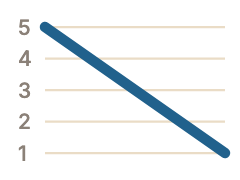
  • Pitch chart of the fourth tone: falls from high to low, 5 to 1 on the five-level scale意yì4th tone, falling
  • Pitch chart of the fourth tone: falls from high to low, 5 to 1 on the five-level scale味wèi4th tone, falling
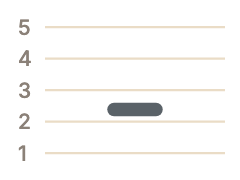
  • Pitch chart of the neutral tone: short and light, with no contour of its own着zheneutral tone, light and short

Grey pinyin is a neutral tone: say it short and light. More on the neutral tone

意味着 in a sentence

  1. 这是不是意味着你不会来了?

    Zhè shì bu shì yìwèizhe nǐ bú huì lái le?

    Does this mean you’re not coming?

    Sentence #333800 from Tatoeba · translation adapted

  2. 考试不及格意味着再等待一年。

    Kǎoshì bùjígé yìwèizhe zài děngdài yì nián.

    Failing the exam means waiting another year.

    Sentence #1300706 from Tatoeba · translation adapted

  3. 沉默就意味着同意。

    Chénmò jiù yìwèizhe tóngyì.

    Silence means consent.

    Sentence #414244 from Tatoeba · translation adapted

How 意味着 is built

Each colour is one part of the character. Parts repeat across thousands of characters, so learning them makes new words easier. See all 214 in our radicals chart.
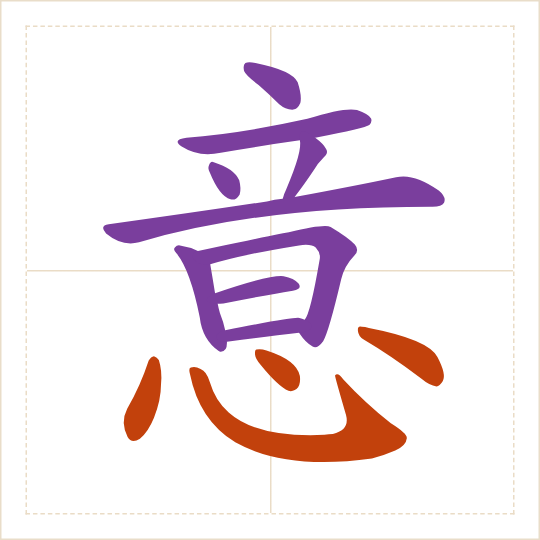
The character 意 (yì) with each of its parts in a different colour
意yìidea; thought; meaning; sense
  • 音sound · yīnSound part
  • 心heart · xīnMeaning part

心 hints at the meaning (heart); 音 (yīn) hints at the sound. Compare it with yì.

Memory aidA sound 音 from the heart 心: a thought, a meaning.
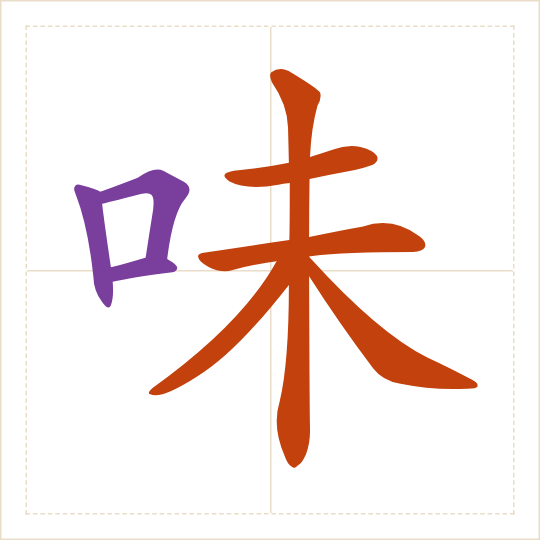
The character 味 (wèi) with each of its parts in a different colour
味wèitaste
  • 口mouth · kǒuMeaning part
  • 未part of the characterSound part
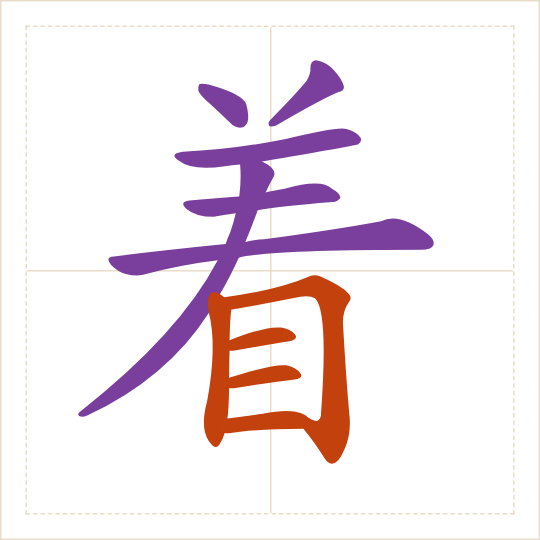
The character 着 (zhe) with each of its parts in a different colour
着zheaspect particle indicating action in progress
  • 羊sheep · yáng
  • 目eye · mù

How to write 意味着

意 13 strokes · 味 8 strokes · 着 11 strokes

Watch the order, then press Try writing it and draw each stroke in the grid. Each stroke is checked as you go.
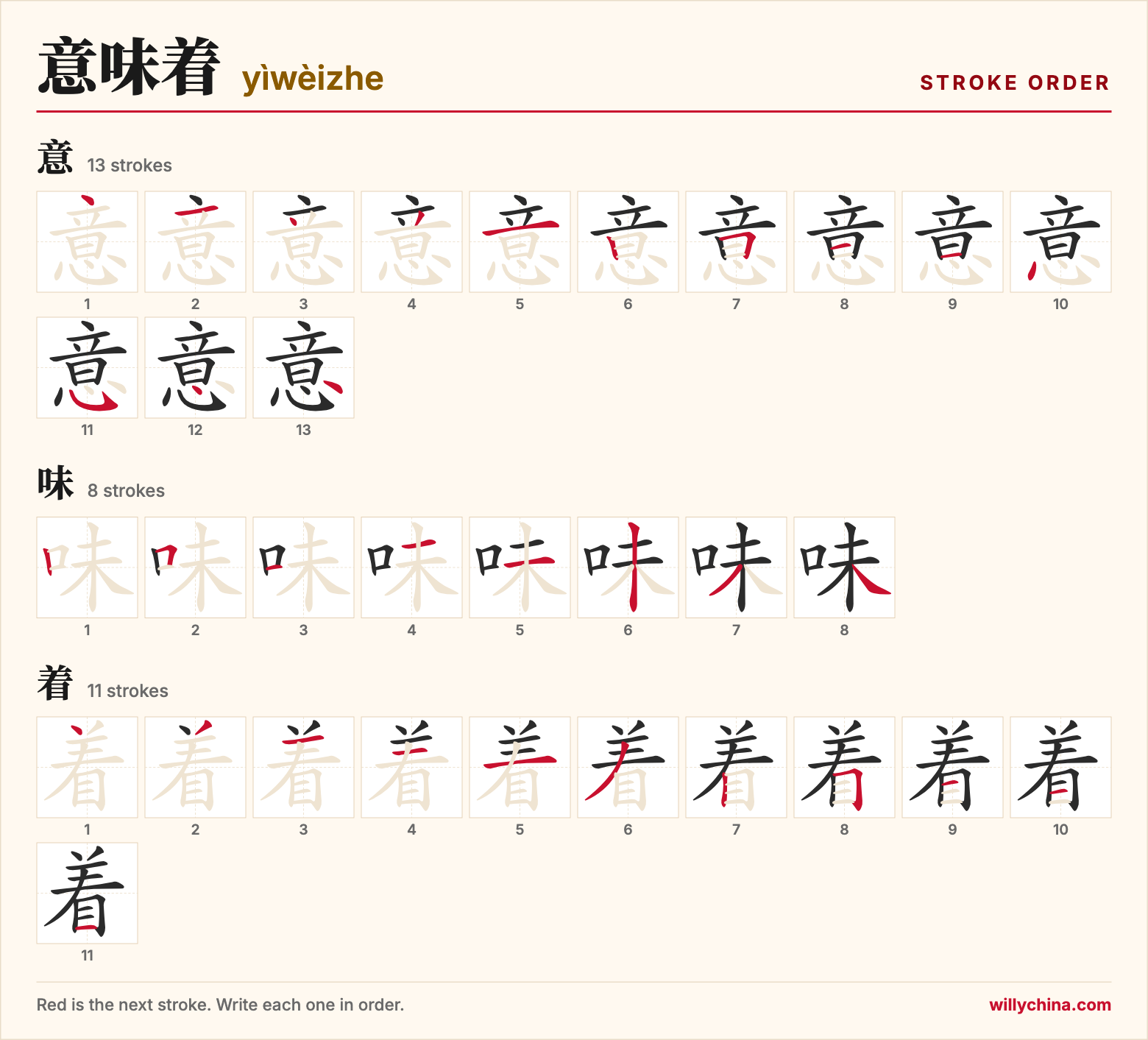
意味着 (yìwèizhe) stroke order chart: each stroke of the characters in the order you write them
Stroke order chart for 意味着 (yìwèizhe). Red marks the next stroke, so you can copy it onto paper one step at a time.

Words related to 意味着

Words with 意

Words with 味

Words with 着

More words: Thinking & Talking

FAQs

意味着 (yìwèizhe) means “to mean” or “to signify”. It is an HSK 6 word.
Say it yìwèizhe: yì with a 4th tone, then wèi with a 4th tone, then zhe with a neutral tone. Press Listen at the top of this page to hear it, or Slowly to hear each tone clearly.
In Traditional characters, used in Taiwan and Hong Kong, 意味着 is written 意味著. The pronunciation is the same.
Add a Chinese (Simplified) pinyin keyboard to your phone or computer, type yiweizhe with no tone marks or spaces, then choose 意味着 from the suggestions. Typing yiweizhe into this dictionary’s search box finds it too.
意味着 is an HSK 6 word in the HSK 2.0 word lists.

Turn words into conversations

A dictionary gives you the words. A native teacher shows you how to use them. Start with a free 30-minute intro call.

Book a free intro call

Sources: meaning and pinyin checked by a native Mandarin teacher against the official HSK lists. Extra meanings from CC-CEDICT (CC BY-SA 4.0). Example sentences from Tatoeba (CC BY 2.0 FR). Character parts and stroke order from Make Me a Hanzi.