HSK 3 · Verbs
着急 zháojí “to worry” in Chinese
Traditional 著急
What 着急 means
- to worry
- feel anxious
- to feel a sense of urgency
- to be in a hurry
How to say 着急
 着zháo2nd tone, rising
- 急jí2nd tone, rising
着急 in a sentence
How 着急 is built
Each colour is one part of the character. Parts repeat across thousands of characters, so learning them makes new words easier. See all 214 in our radicals chart.
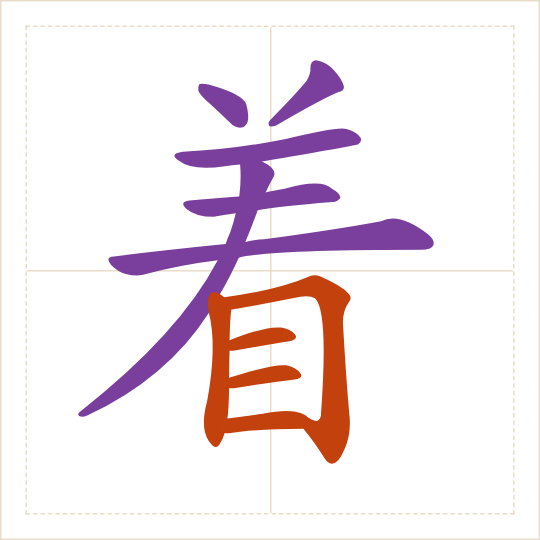
着zháoto touch
- 羊sheep · yáng
- 目eye · mù
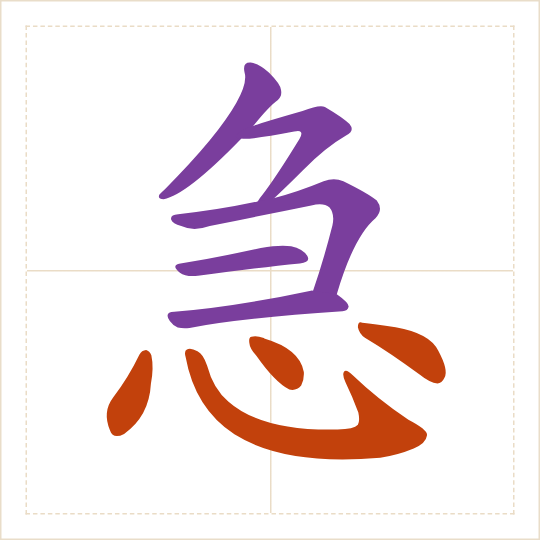
急jíurgent
- 刍to mow · chúSound part
- 心heart · xīnMeaning part
心 hints at the meaning (heart); 刍 (chú) hints at the sound. Compare it with jí.
How to write 着急
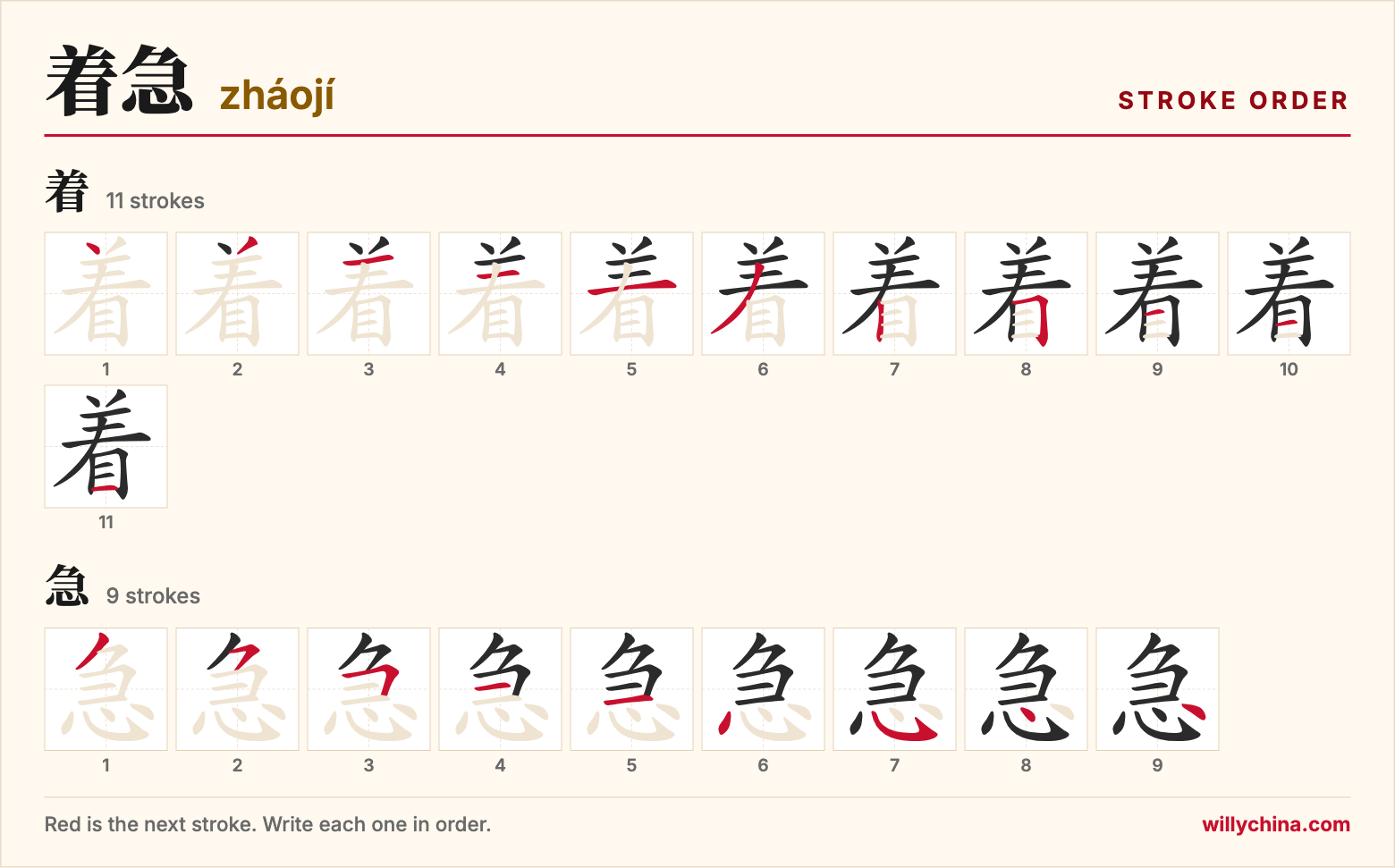
着 11 strokes · 急 9 strokes
Watch the order, then press Try writing it and draw each stroke in the grid. Each stroke is checked as you go.
Words related to 着急
Words with 着
着zhe · particle for an ongoing action or state (-ing)接着jiēzhe · next随着suízhe · along with着凉zháoliáng · to catch a cold着火zháohuǒ · to catch fire着想zhuóxiǎng · to consider (the needs of)着重zhuózhòng · to emphasise着手zhuóshǒu · to set about沉着chénzhuó · calm and collected执着zhízhuó · persistent
Words with 急
急jí · anxious急诊jízhěn · emergency treatment紧急jǐnjí · urgent急忙jímáng · hastily急剧jíjù · sharp焦急jiāojí · anxious急切jíqiè · eager急躁jízào · impatient急功近利jígōngjìnlì · eager for quick results and profit急于求成jíyúqiúchéng · too eager for success
More words: Thinking & Talking
FAQs
着急 (zháojí) means “to worry” or “feel anxious”. It is an HSK 3 word.
Say it zháojí: zháo with a 2nd tone, then jí with a 2nd tone. Press Listen at the top of this page to hear it, or Slowly to hear each tone clearly.
In Traditional characters, used in Taiwan and Hong Kong, 着急 is written 著急. The pronunciation is the same.
Add a Chinese (Simplified) pinyin keyboard to your phone or computer, type zhaoji with no tone marks or spaces, then choose 着急 from the suggestions. Typing zhaoji into this dictionary’s search box finds it too.
着急 is an HSK 3 word in the HSK 2.0 word lists.
Sources: meaning and pinyin checked by a native Mandarin teacher against the official HSK lists. Extra meanings from CC-CEDICT (CC BY-SA 4.0). Example sentences from Tatoeba (CC BY 2.0 FR). Character parts and stroke order from Make Me a Hanzi.