HSK 6 · Adjectives

难能可贵 nánnéngkěguì “rare and commendable” in Chinese

Traditional 難能可貴

What 难能可贵 means

  1. rare and commendable
  2. praiseworthy
  3. rare and precious
  4. valuable
  5. remarkable

How to say 难能可贵

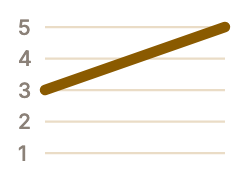
  • Pitch chart of the second tone: rises from mid to high, 3 to 5 on the five-level scale难nán2nd tone, rising
  • Pitch chart of the second tone: rises from mid to high, 3 to 5 on the five-level scale能néng2nd tone, rising
  • Pitch chart of the third tone: dips low then rises, 2 to 1 to 4 on the five-level scale可kě3rd tone, dipping
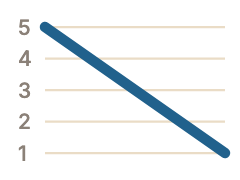
  • Pitch chart of the fourth tone: falls from high to low, 5 to 1 on the five-level scale贵guì4th tone, falling

难能可贵 in a sentence

  1. 他这么年轻就这么有责任心,真是难能可贵。

    Tā zhème niánqīng jiù zhème yǒu zérènxīn, zhēn shì nánnéngkěguì.

    It’s really admirable that he’s so responsible at such a young age.

    Sentence by WillyChina

  2. 在困难面前不放弃,这种精神难能可贵。

    Zài kùnnan miànqián bú fàngqì, zhè zhǒng jīngshén nánnéngkěguì.

    Not giving up in the face of difficulty is a rare and precious quality.

    Sentence by WillyChina

How 难能可贵 is built

Each colour is one part of the character. Parts repeat across thousands of characters, so learning them makes new words easier. See all 214 in our radicals chart.

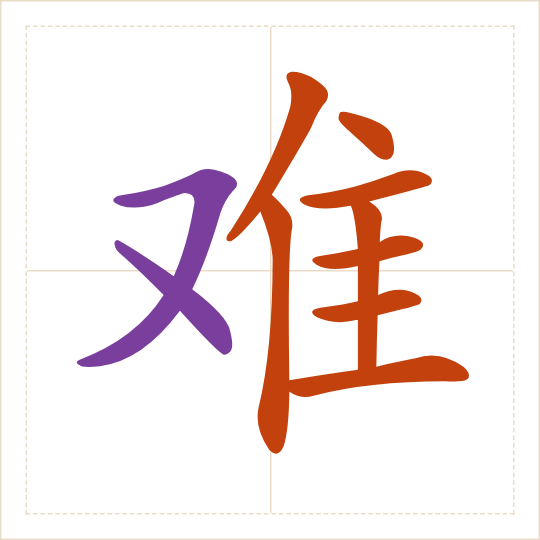
The character 难 (nán) with each of its parts in a different colour
难nándifficult
  • 又again · yòu
  • 隹short-tailed bird · zhuī

Memory aidPicture a hand 又 trying to catch a bird 隹: difficult.

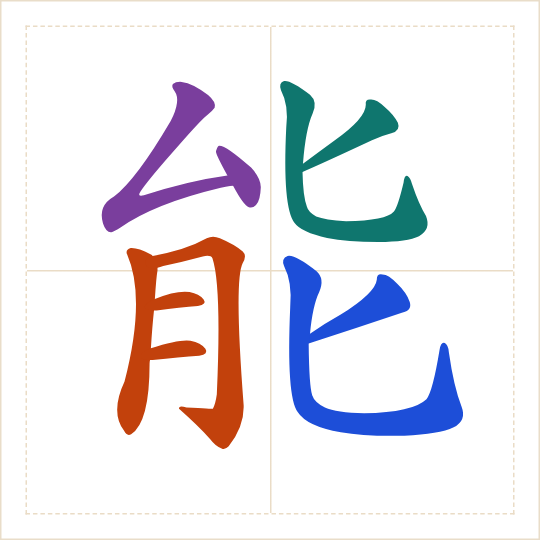
The character 能 (néng) with each of its parts in a different colour
能néngcan
  • 厶private · sī
  • ⺼meat form of 肉 · ròu
  • 匕spoon · bǐ
  • 匕spoon · bǐ

Memory aidDrawn from a bear. It was borrowed for “can, be able to”.

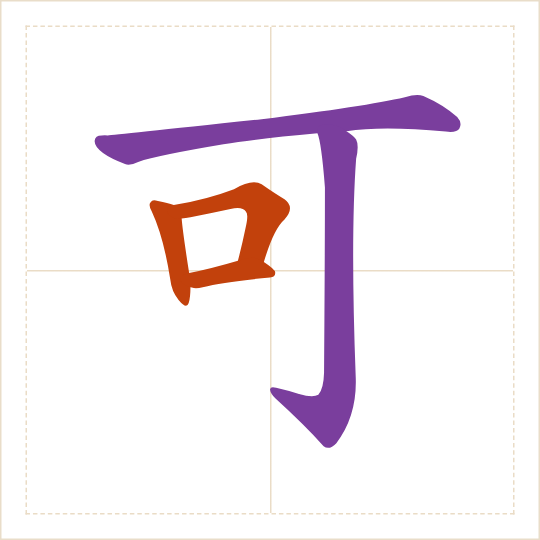
The character 可 (kě) with each of its parts in a different colour
可kěcan; may; able to; -able
  • 丁part of the characterMeaning part
  • 口mouth · kǒuSound part

Memory aidPicture a mouth 口 saying yes: can, may.

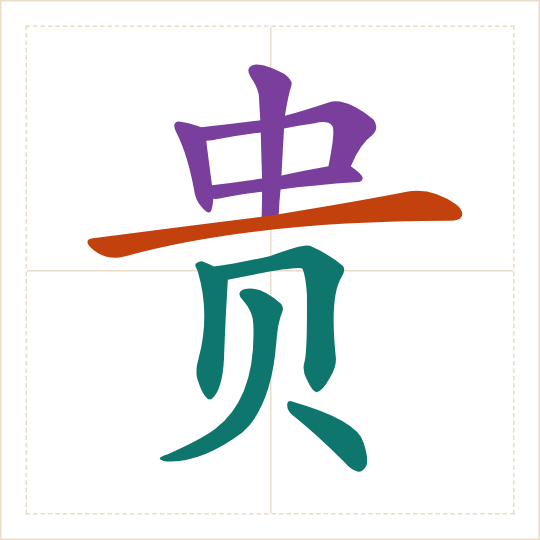
The character 贵 (guì) with each of its parts in a different colour
贵guìexpensive
  • 中central · zhōng
  • 一one · yī
  • 贝sea shell · bèiMeaning part

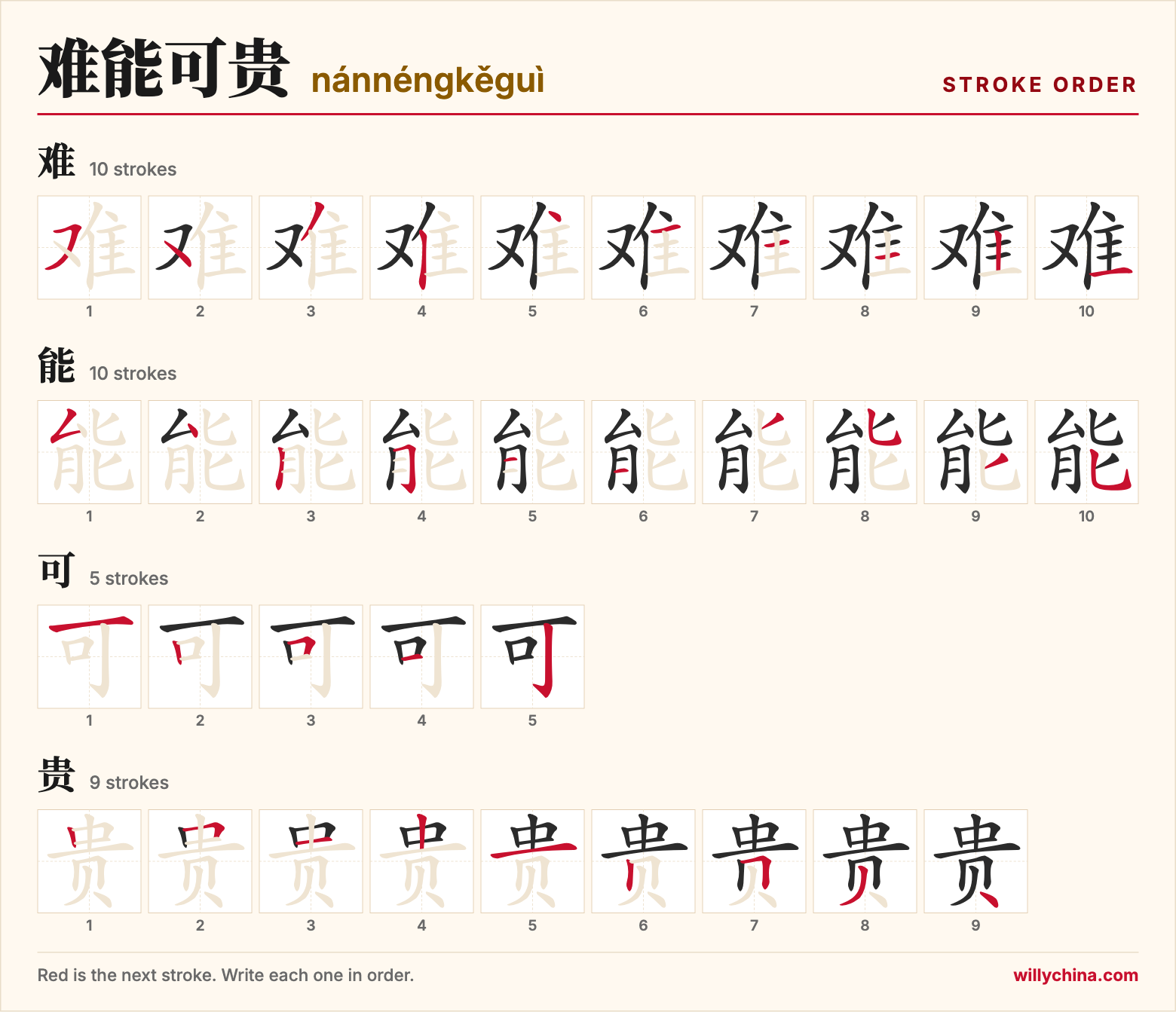
How to write 难能可贵

难 10 strokes · 能 10 strokes · 可 5 strokes · 贵 9 strokes

Watch the order, then press Try writing it and draw each stroke in the grid. Each stroke is checked as you go.

难能可贵 (nánnéngkěguì) stroke order chart: each stroke of the characters in the order you write them
Stroke order chart for 难能可贵 (nánnéngkěguì). Red marks the next stroke, so you can copy it onto paper one step at a time.

Words related to 难能可贵

Words with 难

Words with 能

Words with 可

Words with 贵

More words: Adjectives

FAQs

难能可贵 (nánnéngkěguì) means “rare and commendable” or “praiseworthy”. It is an HSK 6 word.
Say it nánnéngkěguì: nán with a 2nd tone, then néng with a 2nd tone, then kě with a 3rd tone, then guì with a 4th tone. Press Listen at the top of this page to hear it, or Slowly to hear each tone clearly.
In Traditional characters, used in Taiwan and Hong Kong, 难能可贵 is written 難能可貴. The pronunciation is the same.
Add a Chinese (Simplified) pinyin keyboard to your phone or computer, type nannengkegui with no tone marks or spaces, then choose 难能可贵 from the suggestions. Typing nannengkegui into this dictionary’s search box finds it too.
难能可贵 is an HSK 6 word in the HSK 2.0 word lists.

Turn words into conversations

A dictionary gives you the words. A native teacher shows you how to use them. Start with a free 30-minute intro call.

Book a free intro call

Sources: meaning and pinyin checked by a native Mandarin teacher against the official HSK lists. Extra meanings from CC-CEDICT (CC BY-SA 4.0). Example sentences written by WillyChina. Character parts and stroke order from Make Me a Hanzi.