HSK 3.0 Level 4 · Everyday Verbs
留下 liúxia “to leave behind” in Chinese
Same in Traditional
What 留下 means
- to leave behind
- to stay behind
- to keep
- to remain
- not to let (sb) go
How to say 留下
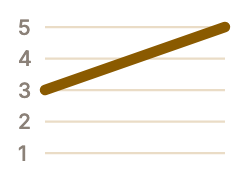 留liú2nd tone, rising
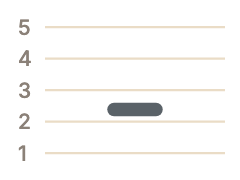 下xianeutral tone, light and short
Grey pinyin is a neutral tone: say it short and light. More on the neutral tone
留下 in a sentence
How 留下 is built
Each colour is one part of the character. Parts repeat across thousands of characters, so learning them makes new words easier. See all 214 in our radicals chart.
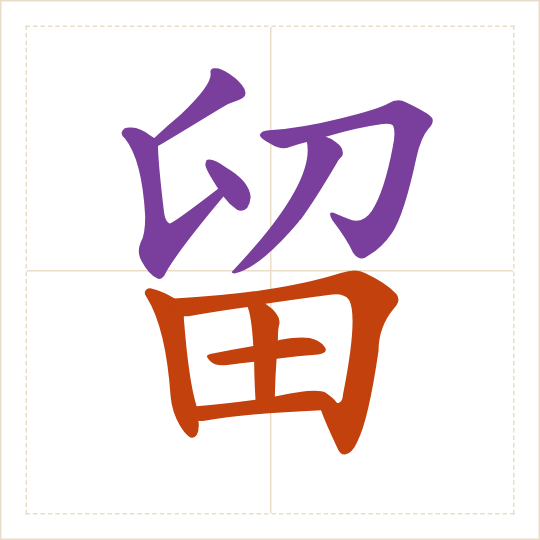
留liúto leave
- 卯part of the character
- 田field · tián
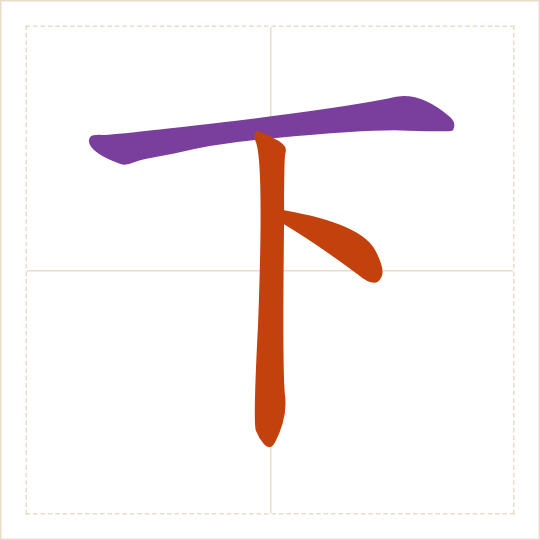
下xiàdownlight in 留下
- 一one · yī
- 卜divination · bǔ
Memory aidA short stroke below the line: down, below.
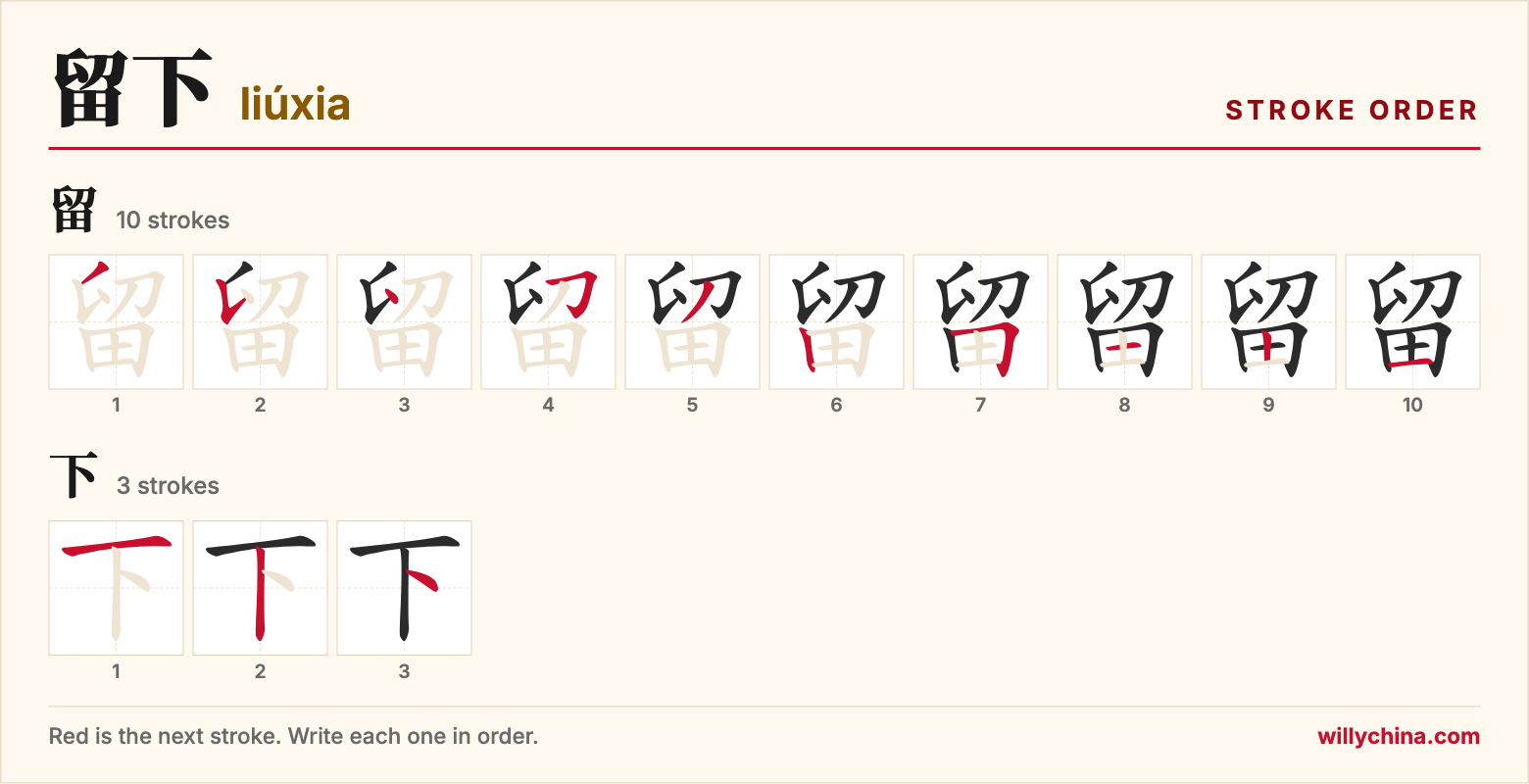
How to write 留下
留 10 strokes · 下 3 strokes
Watch the order, then press Try writing it and draw each stroke in the grid. Each stroke is checked as you go.
Words related to 留下
Words with 留
留学liúxué · study abroad留学生liúxuéshēng · international student留liú · to stay保留bǎoliú · to keep留神liúshén · to be careful残留cánliú · to remain留念liúniàn · to keep as a memento遗留yíliú · to be left over留恋liúliàn · to be reluctant to leave拘留jūliú · to detain
Words with 下
下xià · down下午xiàwǔ · afternoon下雨xiàyǔ · to rain下班xiàbān · to finish work下课xiàkè · to finish class一下yíxià · (after a verb) briefly下面xiàmiàn · below下去xiàqù · to go down下来xiàlai · to come down以下yǐxià · below
More words: Everyday Verbs
FAQs
留下 (liúxia) means “to leave behind” or “to stay behind”. It is an HSK 3.0 Level 4 word.
Say it liúxia: liú with a 2nd tone, then xia with a neutral tone. Press Listen at the top of this page to hear it, or Slowly to hear each tone clearly.
Yes. 留下 is written the same way in Simplified and Traditional characters.
Add a Chinese (Simplified) pinyin keyboard to your phone or computer, type liuxia with no tone marks or spaces, then choose 留下 from the suggestions. Typing liuxia into this dictionary’s search box finds it too.
留下 is an HSK 3.0 Level 4 word in the official 2021 syllabus, and it is on our HSK 3.0 Band 6 word list. It is not on the older HSK 2.0 word lists.
Sources: meaning and pinyin checked by a native Mandarin teacher against the official HSK lists. Extra meanings from CC-CEDICT (CC BY-SA 4.0). Example sentences from Tatoeba (CC BY 2.0 FR). Character parts and stroke order from Make Me a Hanzi.