HSK 3.0 Level 1 · Everyday Verbs
开车 kāichē “to drive a car” in Chinese
Traditional 開車
What 开车 means
- to drive a car
- to drive a car (or train etc)
How to say 开车
 开kāi1st tone, high and level
- 车chē1st tone, high and level
开车 in a sentence
How 开车 is built
Each colour is one part of the character. Parts repeat across thousands of characters, so learning them makes new words easier. See all 214 in our radicals chart.
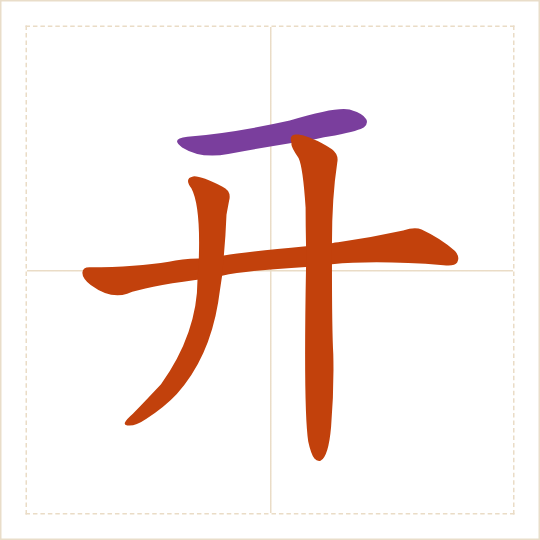
开kāito open
- 一one · yī
- 廾two hands · gǒng
Memory aidSimplified from 開: two hands lifting the bar of a gate 門: to open.
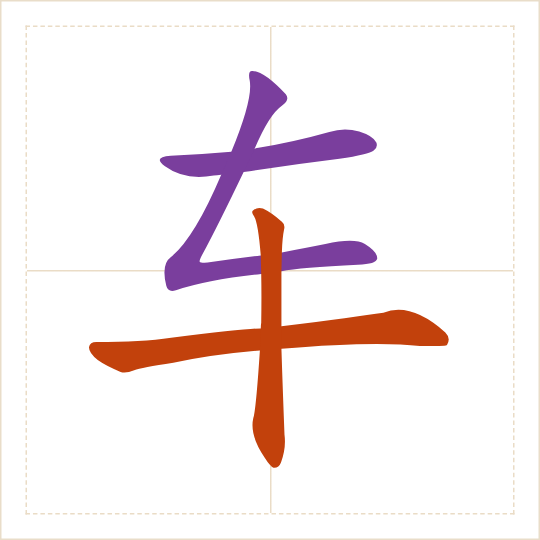
车chēcar
- 七seven · qī
- 十ten · shí
Memory aidSimplified from 車: a cart seen from above, with its axle and two wheels.
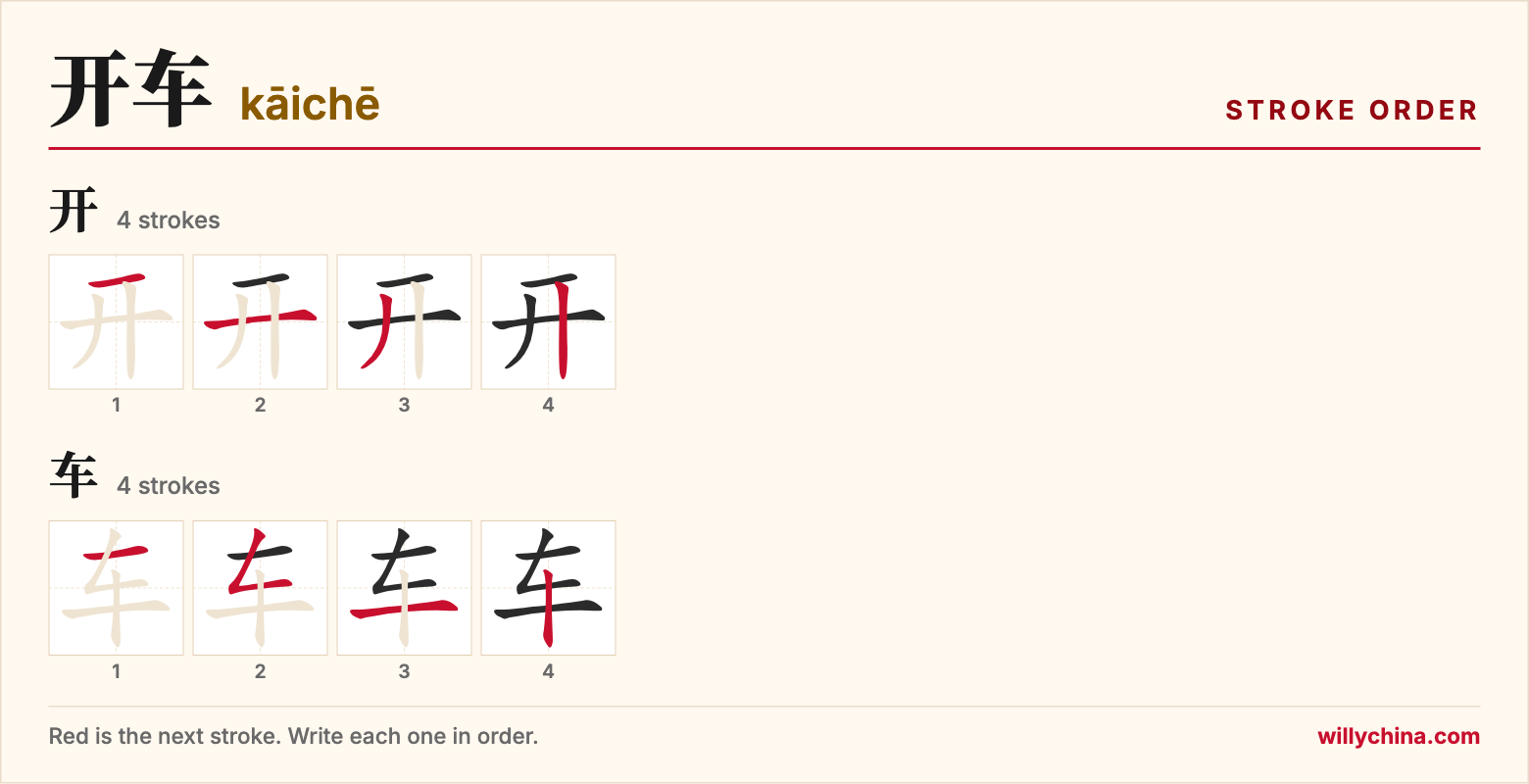
How to write 开车
开 4 strokes · 车 4 strokes
Watch the order, then press Try writing it and draw each stroke in the grid. Each stroke is checked as you go.
Words related to 开车
Words with 开
开kāi · to open开始kāishǐ · to begin开学kāixué · to start a new school term打开dǎkāi · to open离开líkāi · leave开会kāihuì · to have a meeting开花kāihuā · to bloom分开fēnkāi · to separate开机kāijī · to switch on (a device)开心kāixīn · to feel happy
Words with 车
车chē · car火车huǒchē · train出租车chūzūchē · taxi车站chēzhàn · rail station打车dǎchē · to take a taxi (in town)火车站huǒchēzhàn · train station公交车gōngjiāochē · public transport vehicle公共汽车gōnggòng qìchē · bus汽车qìchē · car自行车zìxíngchē · bike
More words: Everyday Verbs
FAQs
开车 (kāichē) means “to drive a car” or “to drive a car (or train etc)”. It is an HSK 3.0 Level 1 word.
Say it kāichē: kāi with a 1st tone, then chē with a 1st tone. Press Listen at the top of this page to hear it, or Slowly to hear each tone clearly.
In Traditional characters, used in Taiwan and Hong Kong, 开车 is written 開車. The pronunciation is the same.
Add a Chinese (Simplified) pinyin keyboard to your phone or computer, type kaiche with no tone marks or spaces, then choose 开车 from the suggestions. Typing kaiche into this dictionary’s search box finds it too.
开车 is an HSK 3.0 Level 1 word in the official 2021 syllabus, and it is on our HSK 3.0 Band 1 word list. It is not on the older HSK 2.0 word lists.
Sources: meaning and pinyin checked by a native Mandarin teacher against the official HSK lists. Extra meanings from CC-CEDICT (CC BY-SA 4.0). Example sentences from Tatoeba (CC BY 2.0 FR). Character parts and stroke order from Make Me a Hanzi.