Chinese Calligraphy Studio
Write Chinese calligraphy with an ink brush on your phone, tablet or computer. Trace a red model the way 描红 (miáohóng) copybooks teach, watch each character written stroke by stroke, then keep your piece with your own name seal.
- Free, no sign-up
- Finger, stylus or mouse
- Thousands of characters
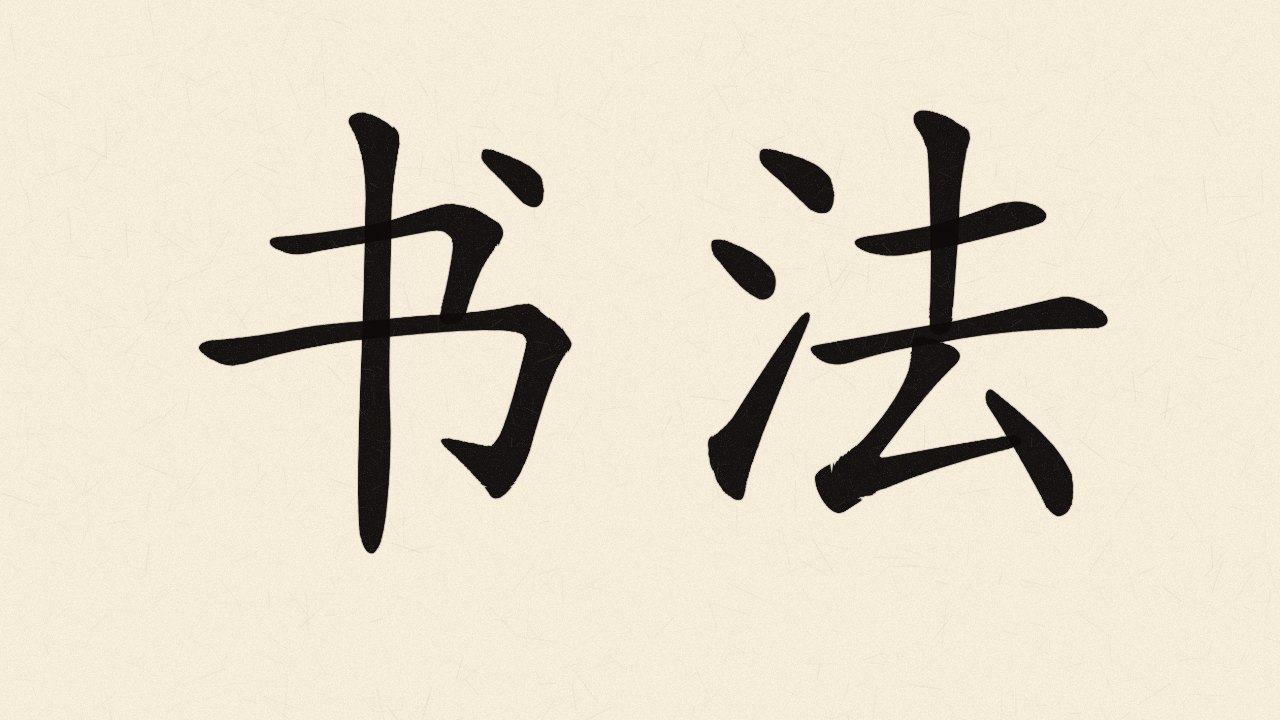
Write Chinese calligraphy with a brush
Pick a character and tap Show me to watch it written, then write your own Chinese calligraphy over the red model.
Loading the calligraphy studio…
Your writing stays on your device: nothing you write is uploaded. Model strokes come from Make Me a Hanzi (Arphic Public Licence); pinyin and meanings come from the WillyChina Chinese Dictionary, which builds on CC-CEDICT (CC BY-SA 4.0).
Your Chinese calligraphy, ready to keep
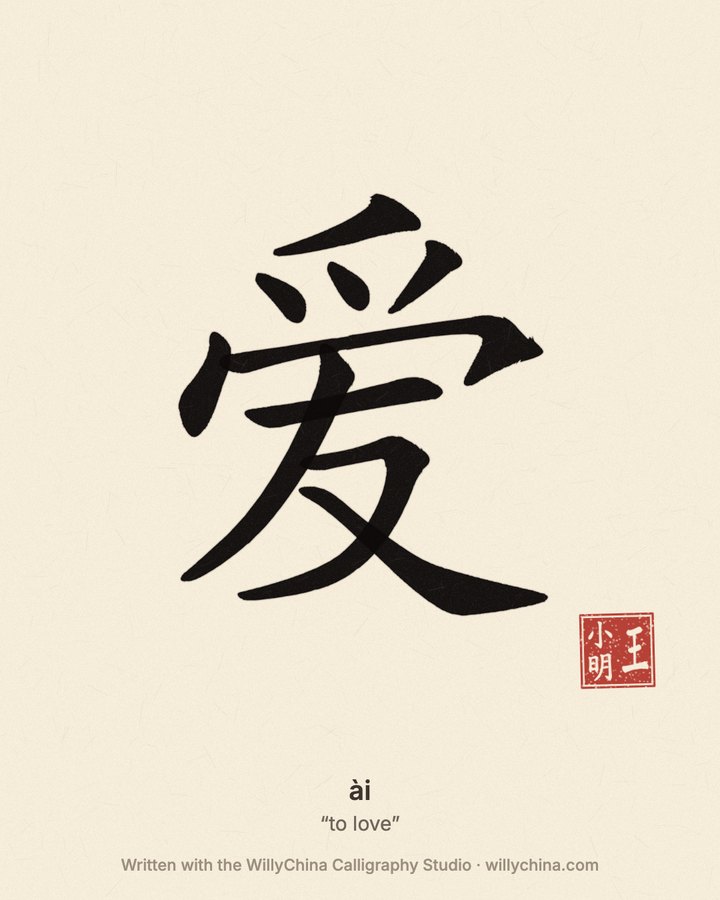
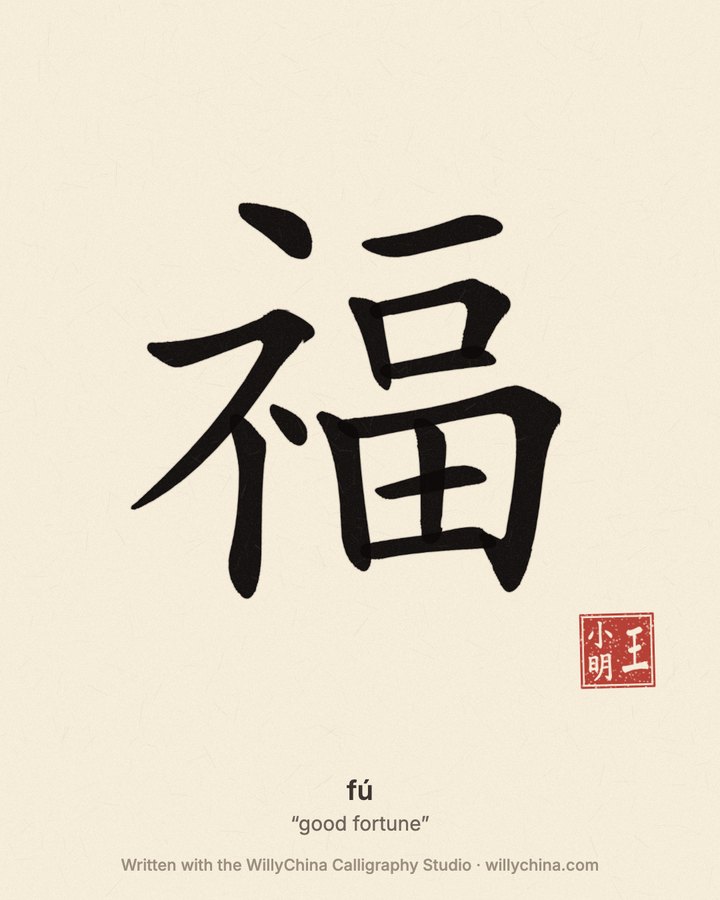
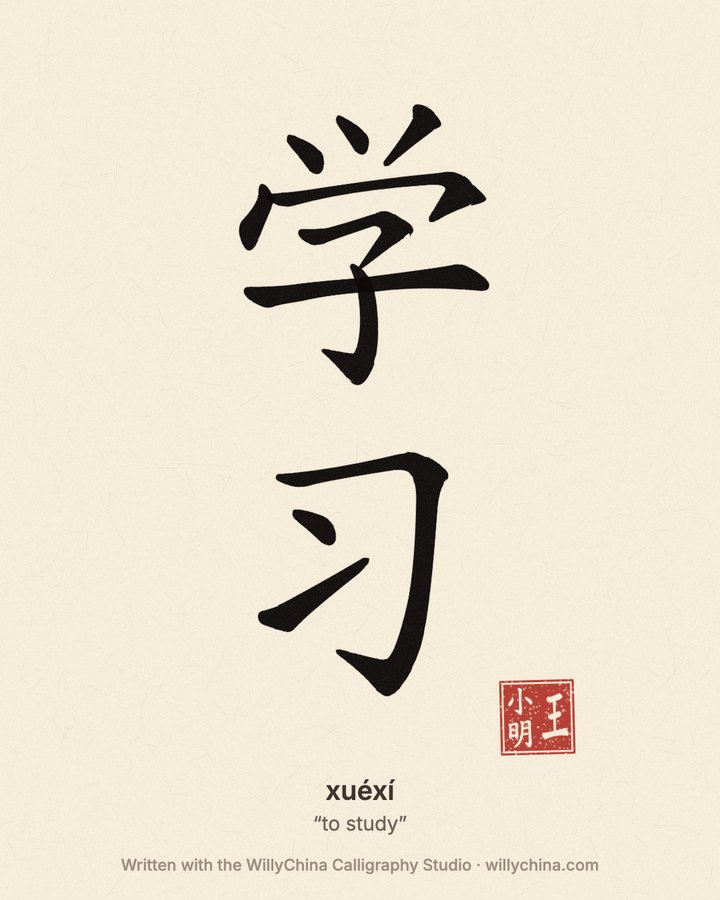
Tap Finish and your characters are laid out like a hanging scroll, with the pinyin and meaning underneath. Stamp your Chinese name as a red seal, then save the image or share a replay video of your brushwork.
A brush that behaves like one
Most writing tools draw a plain line. This one paints with ink: the brush presses, sweeps and lifts, and every model character is shaped in 楷书 (kǎishū), regular script, the style most learners of Chinese calligraphy begin with.
A brush that responds
Write slowly for a full, heavy stroke and flick to lift into a fine tail. With a stylus, the brush follows your pressure.
A model to trace
Write over a red model character. Master’s hand shapes each stroke like a calligrapher’s while keeping your path and pace, or switch it off.
A piece to keep
Finished words are laid out like a scroll. Add your Chinese name as a red seal, then share the image or a replay of your brushwork.
Land, travel, lift: one stroke, three moments
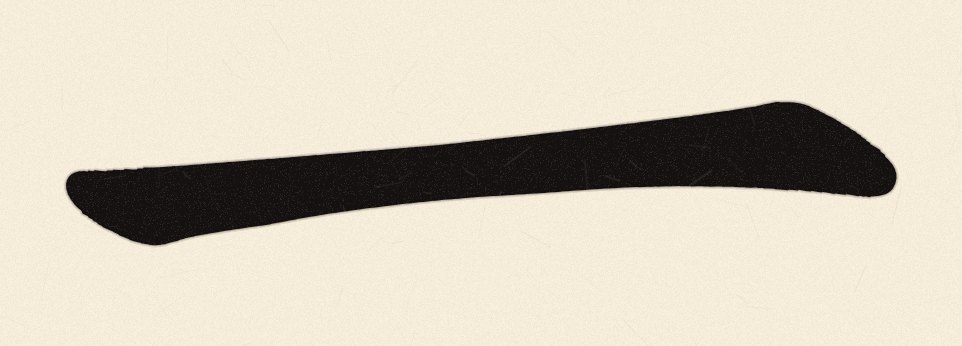
A 毛笔 (máobǐ), the soft writing brush of Chinese calligraphy, does not draw a line of one width. Look at a single stroke, 一 (yī), “one”, and you can see all three moments of the brush.
Land
Start slowly, or press firmly with a stylus. The brush settles on the paper and the head of the stroke takes its weight.
Travel
Move at an even pace. With a finger, moving faster makes the stroke thinner, so slow down where it should stay full.
Lift
Slow down and stop for a rounded end, as here, or keep moving as you lift for a tail that tapers away.
Tips for Chinese calligraphy on a phone or tablet
Rest the phone flat on a table so your hand is steady, and write with the pad of your finger rather than the tip of your nail. Write the same character several times, then turn the red model off and write it from memory. Use the large brush for single characters and the small brush for long names.
The eight strokes of Chinese calligraphy, in one character
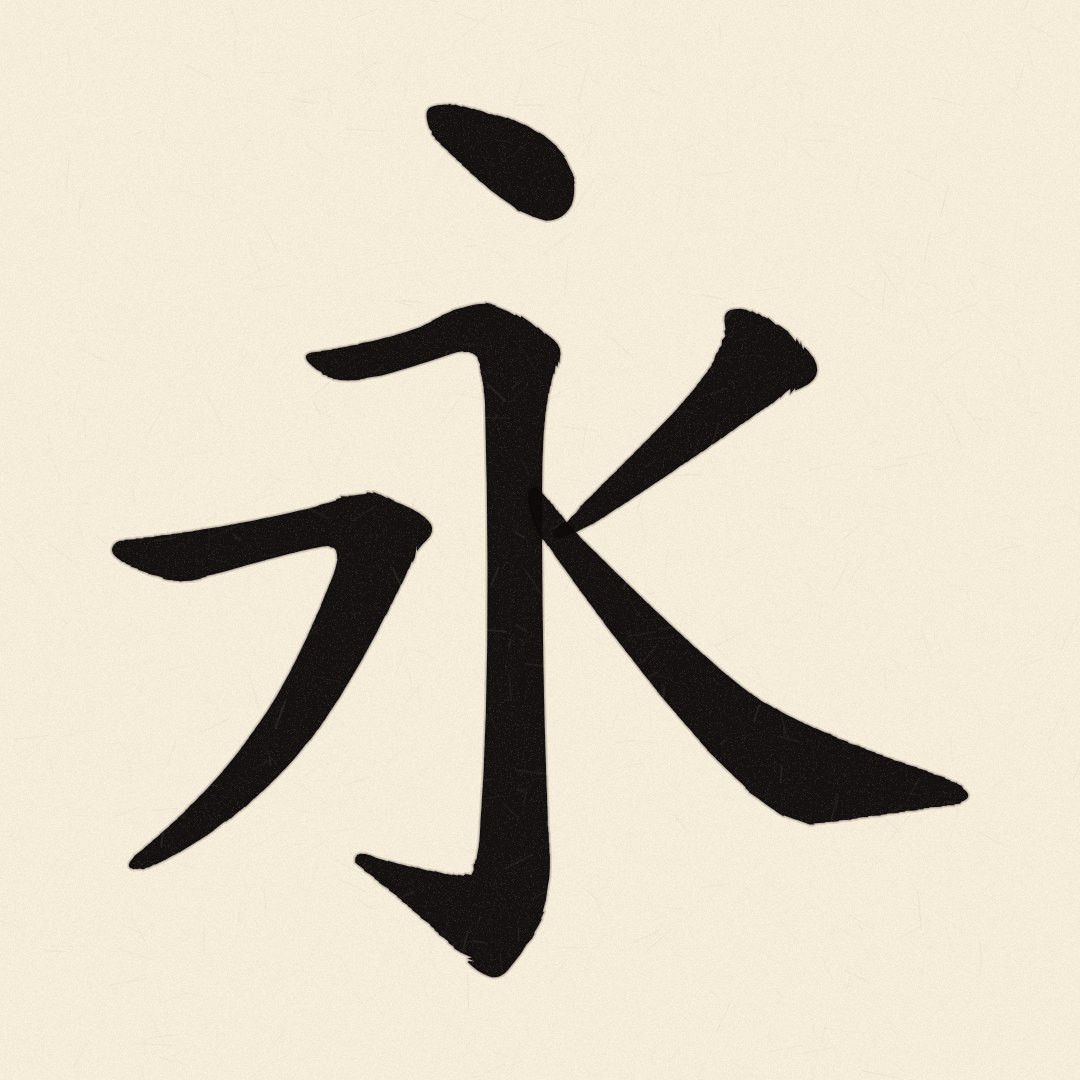
Calligraphers practise the eight most common strokes of regular script with one character, 永 (yǒng), “forever”, because all eight appear in it. The method is known as the Eight Principles of Yong, 永字八法 (yǒng zì bā fǎ). Each principle still carries its classical name from Tang-dynasty writings.
 Write 永 (yǒng) now
- 1
Dot
侧 (cè)
A short dot, pressed and lifted.
- 2
Horizontal
勒 (lè)
A level stroke, drawn to the right.
- 3
Vertical
努 (nǔ)
A straight stroke, drawn downward.
- 4
Hook
趯 (tì)
A sudden flick at a stroke’s end.
- 5
Rising
策 (cè)
A quick flick, up and to the right.
- 6
Long sweep
掠 (lüè)
A fast, tapering curve to the left.
- 7
Short left-falling
啄 (zhuó)
A short stroke, falling to the left.
- 8
Right-falling
磔 (zhé)
A pressed stroke, sweeping down right.
Write 永 (yǒng) a few times with Master’s hand on, then switch it off and compare. When the eight strokes feel natural, move on to a word you want to keep as a piece of Chinese calligraphy, such as 福 (fú), “good fortune”, or your own name.
The four treasures of Chinese calligraphy
On paper, Chinese calligraphy uses four tools, together called the Four Treasures of the Study, 文房四宝 (wénfáng sìbǎo). The name is thought to date from the Southern and Northern Dynasties (420–589).
Brush
The 毛笔 (máobǐ) is soft, so a stroke swells as you press and tapers as you lift. The studio’s brush copies that press and lift.
Ink
Ink comes as a solid stick, made mainly of soot and animal glue. It is ground with a little water to make ink of the strength you want.
Paper
宣纸 (xuānzhǐ), Xuan paper, is soft and fine-textured. It comes originally from Jing county, Xuancheng, in Anhui province.
Inkstone
The 砚 (yàn) is a stone mortar for grinding and holding ink. Some are made from clay, bronze, iron or porcelain instead.
How to use the calligraphy studio
Choose what to write
Type a character, a word or your Chinese name, or search in English or pinyin. Or tap one of the popular words.
Watch it written
Tap Show me and the character is written for you, stroke by stroke and in the right order, with the same brush.
Write over the model
Write each stroke over the red model. The studio tells you if a stroke is out of order or starts at the wrong end.
Seal and share
Tap Finish to see your Chinese calligraphy as one piece. Add a name seal, then share or save the image, or make a replay video of your brushwork.
FAQs
Keep practising
 liànzì, to practise writingStroke orderChinese Writing PracticeLearn the stroke order of every HSK character, then review the ones you forget.Open the trainer
 zìdiǎn, dictionaryLook it upChinese DictionaryMeanings, audio, example sentences and stroke order for every HSK word.Search the dictionary
 míngzi, nameYour nameChinese Name GeneratorFind a Chinese name that suits you, then write it and stamp it as your seal.Find your name
Free 30-minute intro call
Practise this with a native speaker
The studio gets your hand moving. Practising with a teacher who corrects your characters and your tones is what makes them stick. Tell us where you’re up to and we’ll suggest a starting point.
- One-to-one lessons online, built around your goals
- A real reply within 24 hours
- No obligation, no sales pitch
Thanks, that’s in. We’ll reply within 24 hours.