Mandarin suits a homeschool well. You choose the hours, the order and the pace, and you can teach it in short, regular bursts that a school timetable rarely allows. This homeschool Mandarin guide sets out how much time to plan by age, a sample ten-week term, milestones your child can show for their work, how to record it for your local rules, and where a teacher fits in.
More families are taking this path. In Victoria, home-schooled students registered with the VRQA rose from 6,405 in June 2020 to 11,691 in June 2025 (VRQA). In Queensland, active home education registrations more than doubled, from 5,008 in 2021 to 11,800 in 2025 (Queensland Department of Education). In the United States, about 3.4% of children aged 5 to 17 were homeschooled in 2022–23 (NCES), and in England about 126,000 children were in elective home education on census day in autumn 2025 (Department for Education).
If you are still weighing up whether Mandarin is worth it, start with why children should learn Mandarin. This guide is about the how.
Can you teach Mandarin if you don’t speak it?
Yes, as long as you think of yourself as the guide rather than the expert. Most homeschooling parents teach some subjects they never studied themselves. Mandarin works the same way, with two adjustments.
- Learn pinyin alongside your child. Pinyin is the official way of writing Mandarin sounds in the Latin alphabet. Once you can read it, you can follow any word list. Our free pinyin chart has every syllable with audio.
- Give your child a model voice. Mandarin is a tonal language: the same syllable said with a different pitch is a different word. Children need to hear the tones from a native speaker, through audio or a teacher, rather than from a parent guessing.
- Learn with them, out loud. Say the words together, play the games together and let your child correct you. Being the one who knows more is a strong motivator.
How much time to plan, by age
Little and often is the rule for homeschool Mandarin. Victoria’s education department recommends that schools teach a language for at least 150 minutes a week, “spread as evenly as possible across the week” (Victorian Department of Education). England’s schools inspectorate recommends the same pattern for remembering what is learnt: short periods of practice spread over a longer time (Ofsted).
For a sense of scale, the Australian Curriculum’s languages subjects were written assuming about 350 hours across Foundation to Year 6, roughly 50 hours a year. ACARA is clear that this was a design assumption, not a required time allocation (ACARA).
Here is the weekly rhythm we suggest. It is a starting point built on that “short and regular” principle, not a research finding, so adjust it to your child.
| Age | Short sessions at home | With a teacher (optional) |
|---|---|---|
| 5–7 | 4–5 sessions of 10–15 minutes: songs, games, flashcards | One 30-minute lesson a week |
| 8–10 | 4–5 sessions of 15–20 minutes: words, phrases, pinyin | One 30–50 minute lesson a week |
| 11 and up | 3–4 sessions of 20–30 minutes: reading, writing, speaking | One 50–60 minute lesson a week |
When to start: what the research says
“The younger the better” is only half true. Research on school pupils led by Carmen Muñoz at the University of Barcelona found that older classroom starters learn faster at first, and that an early start pays off only when it comes with enough exposure (Muñoz). For a homeschool, that is good news: you control the exposure.
Tones can be taught to children. In a 2018 study from Western Sydney University and the University of Kansas, listening training improved 6- and 8-year-olds’ ability to identify Mandarin tones, including children who had never heard a tonal language. The training worked best for the 8-year-olds (Kasisopa et al., 2018). A 2025 study of children in a Canadian Mandarin–English program found the third tone the hardest at every grade, and linked tone accuracy to how much Mandarin the children heard at home and at school (Lin, Pollock and Li, 2025).
So start homeschool Mandarin whenever you can keep it regular. A five-year-old with ten minutes a day and a native voice to copy is better placed than a ten-year-old with an hour a month.
A sample ten-week homeschool Mandarin term
Each week of this homeschool Mandarin term has one theme. Plan three short sessions at home to learn and practise the words, and one longer block, either a lesson or a listening session with audio, to put them together. Every word below is in everyday use.
| Week | Theme | Key words and phrases |
|---|---|---|
| 1 | Hello and numbers 1–5 | 你好 (nǐ hǎo), hello; 再见 (zàijiàn), goodbye; 谢谢 (xièxie), thank you; 一 (yī) to 五 (wǔ), one to five |
| 2 | Numbers 6–10 and age | 六 (liù) to 十 (shí), six to ten; 你几岁? (nǐ jǐ suì?), how old are you? |
| 3 | Pinyin and tones | A sounds week: mā, má, mǎ, mà, with a hand signal for each tone |
| 4 | My family | 爸爸 (bàba), dad; 妈妈 (māma), mum; 哥哥 (gēge) and 弟弟 (dìdi), older and younger brother; 姐姐 (jiějie) and 妹妹 (mèimei), older and younger sister |
| 5 | Review | Replay the games from weeks 1–4 |
| 6 | Colours | 红 (hóng), red; 黄 (huáng), yellow; 蓝 (lán), blue; 绿 (lǜ), green; 白 (bái), white; 黑 (hēi), black |
| 7 | Food and drink | 米饭 (mǐfàn), rice; 面条 (miàntiáo), noodles; 水 (shuǐ), water; 牛奶 (niúnǎi), milk; 苹果 (píngguǒ), apple |
| 8 | I like… | 我喜欢…… (wǒ xǐhuan…), I like…, with the foods and colours from weeks 6 and 7 |
| 9 | Review | Replay weeks 6–8 and record your child saying their favourite phrases |
| 10 | Show and tell | Your child says hello, their age, their family, and a colour and food they like |
For older children, add pinyin reading from week 3 and a few characters a week from week 4. The Chinese numbers 1–100 chart and the HSK 1 vocabulary list cover the numbers and many of the other words in this term.
Week 1 audio
These are the first eight words of the term. Tap each one to hear it said by a native Mandarin voice, then say it back together.
Milestones your child can show
Homeschooled children rarely get report cards, so milestones help them, and you, see how their homeschool Mandarin is going.
- YCT (Youth Chinese Test). The official Chinese test for primary and secondary school students learning Chinese as a second language. It has four written levels and two speaking levels, which are taken separately (Chinese Testing International).
- HSK. The main Chinese proficiency test, now organised into nine Levels in three stages (Chinese Testing International). Older learners usually move on to it. See HSK 3.0 explained for how the Levels work.
- A portfolio. A short recording each month, a character journal, or a video of the week 10 show and tell. It costs nothing and is the clearest evidence of progress you can keep.
Records and your local rules
Every home education system sets its own rules. These are the official starting points for recording your homeschool Mandarin work. Check them yourself before you rely on this summary.
- New South Wales. Home schooling is regulated by the NSW Department of Education. Languages is not required from Kindergarten to Year 6. In Years 7–10 it is one of four learning areas, and parents choose two of them (NSW Government).
- Victoria. Your learning plan for the VRQA needs to address eight learning areas, and Languages is one of them (VRQA). A homeschool Mandarin term like the one above is a natural fit.
- Queensland. You submit a summary of your child’s educational program with your application (Queensland Department of Education).
- England. The Department for Education’s guidance says home-educating parents do not have to keep a timetable or make detailed lesson plans in advance (GOV.UK).
- United States. Rules are set by each state, so start with your state’s department of education. The Home School Legal Defense Association, an advocacy group, keeps a summary of state laws (HSLDA).
Where one-to-one lessons fit
A parent can run the daily homeschool Mandarin practice. What a parent who doesn’t speak Mandarin cannot easily give is a native voice that listens back and corrects the tones. That is the job of a teacher.
- From age 5. WillyChina’s Mandarin lessons for kids are one-to-one and online, so there is no travel.
- A course that fits your homeschool year. Our Mandarin courses for kids run from age 5 to 14 and can follow your homeschool timetable.
- Free practice packs. Our free Week 1 and Week 2 packs with Hui Hui the red panda, for ages 5 to 10, add a few minutes of practice between lessons.
- From 30 minutes to 2 hours, set by your child’s age and focus. Parents can sit in on request.
- Times that suit homeschoolers. Lessons are available from 7am Thailand time, so families can book late-afternoon or evening lessons on the US West Coast, evening lessons on the US East Coast, daytime lessons in Australia and New Zealand, and morning lessons in the UK.
- Free 30-minute intro call before anything is booked. More detail for Australian families is in our parent’s guide to Mandarin for kids.
FAQs
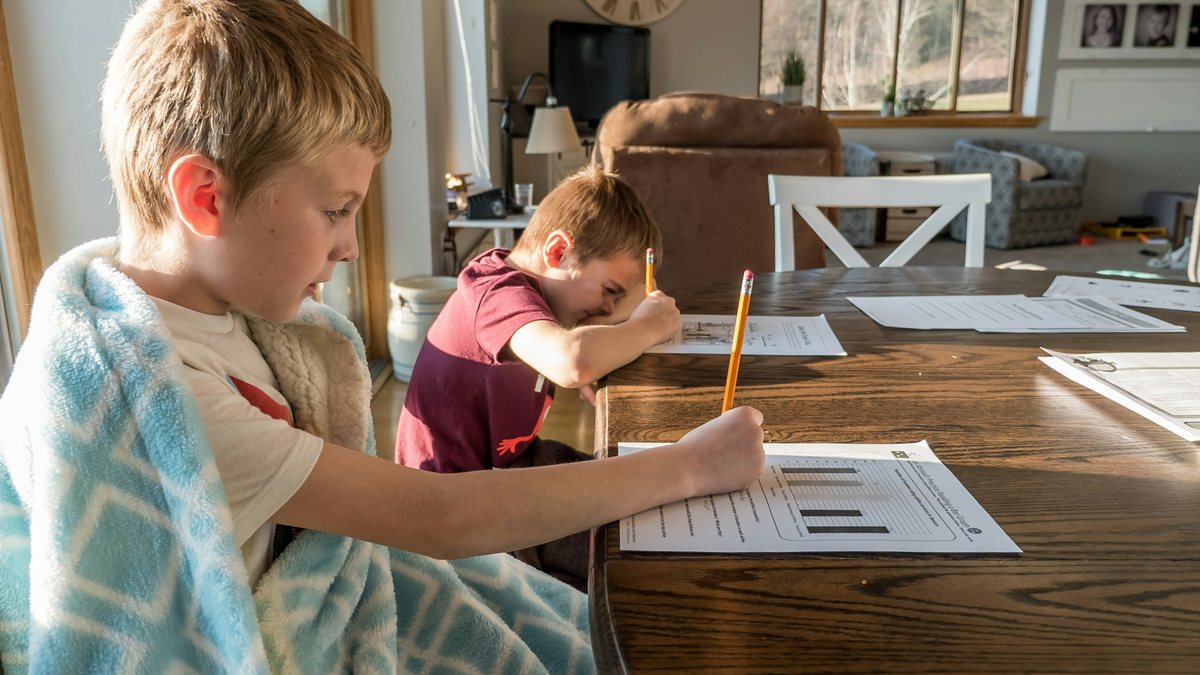
Hero image: photo by Jessica Lewis on Unsplash.
Explore more
- Why children should learn Mandarin
- Mandarin for kids in Australia: a parent’s guide
- HSK 1 complete pack — printable word lists and audio for the first level
- Can you really learn Mandarin online?
- Mandarin vs Cantonese