Home › Learn Chinese Anywhere › Australia › Mandarin for kids
A parent’s guide
Mandarin for Kids in Australia 澳大利亚孩子学中文 Àodàlìyà háizi xué Zhōngwén
What Australian schools actually teach, the Year 12 rules that catch out families who speak Chinese at home, and what the research really says about when to start.
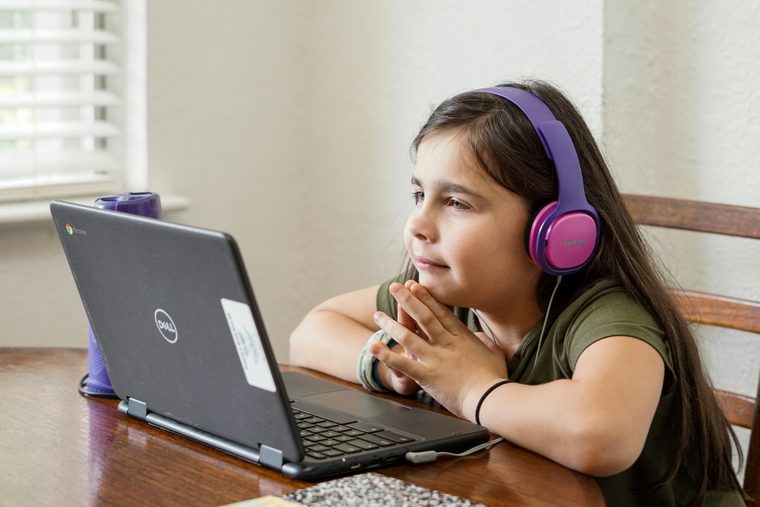
Mandarin for kids in Australia comes with a surprising statistic. In 2015, about 173,000 Australian school students were learning Chinese. By Year 12 only 4,149 were still studying it, and an estimated 400 of those came from homes where Chinese is not spoken.
That is not because children cannot learn it. It is because of how little time school gives it, who they end up competing with by Year 12, and rules most parents never hear about until their child is choosing senior subjects. This guide covers all three, state by state, along with the honest version of the research on when to start.
If you are still deciding whether Mandarin is worth it at all, start with why children should learn Mandarin. This page is the practical part: how it actually works in Australia.
At school
What your child will actually learn at school
The Australian Curriculum has three Chinese pathways, depending on a child’s relationship with the language: one for children learning it as a second language, one for children who use Chinese at home, and one for children who grew up with it as their first language. The first two can start at Foundation or at Year 7; the first-language pathway starts at Year 7. But the curriculum is clear on one point: schools choose the pathways they offer, and one class may hold children from all three.
Whether your child learns a language at all, and which one, depends on your state and on the school.
| State | What the rules require | Who picks the language |
|---|---|---|
| NSW | 100 hours of one language in a continuous 12 months between Years 7 and 10, preferably Years 7–8. Not mandatory in Kindergarten to Year 6. | The school |
| Victoria | Schools must provide a language program from Foundation to Year 10. The department recommends at least 150 minutes a week. | Not stated in the policy |
| Queensland | State schools: a language in at least one semester each year in Years 5 to 8; encouraged in Years 1–4; an elective in Year 9. | The school (it may offer more than one) |
| Western Australia | At minimum, a language every year from Year 3 to Year 8. Optional in Years 9 and 10. | The school |
| South Australia | No formal rule we could source. The department says most government schools teach a language from Reception to Year 8, optional from Year 9. | The school |
| ACT | Chinese is one of eight priority languages in public schools. We could not confirm the current required years. | The principal, with the school board |
For Tasmania and the Northern Territory we could not find a current official rule, so ask your school directly.
The real issue is time
The curriculum was designed around an indicative 350 hours of a language from Foundation to Year 6, which works out at about 65 minutes a week, and it says plainly that those hours are not a required allocation. In practice, a 2016 report found that a great many primary schools teach Chinese in one 30-minute period a week. When Victoria measured its government primary schools in 2003, the average language program ran 65 minutes a week, and only 4.1% met the 150 minutes the department recommends.
For comparison, the US Foreign Service Institute puts Mandarin in its hardest category for English speakers: about 2,200 class hours, for adults studying full time. Nobody expects a child to match that, but it explains why half an hour a week rarely produces a speaker.
The drop-off
Why most children stop before Year 12
A 2008 University of Melbourne report estimated that around 94% of students who start Chinese as a school subject drop it before Year 12, most of them before Year 10. Its follow-up for the Australia-China Relations Institute in 2016 found the number of students from non-Chinese backgrounds taking Year 12 Chinese had actually fallen since 2008.
The reasons it gave are the ones parents describe too. Classroom learners share senior classes with students who speak Chinese at home, who outperform them in assessment. The language takes far more hours than school provides. And once Chinese stops being compulsory, most children drop it: the 2016 report found some 4,067 students of Chinese in Year 7 in NSW government schools, half that number in Year 8, and 585 in Year 9.
Year 12 Chinese is still taken today, mostly by students with a Chinese background. In 2025 the four NSW HSC Chinese courses had 805 entries between them, and the four VCE Chinese studies had 2,388 Units 3 and 4 enrolments. Neither authority publishes how many of those students speak Chinese at home.
For heritage families
Year 12 Chinese: the rules for families who speak it at home
Every state except Queensland sorts senior Chinese students by background, so that a child who learnt Chinese only at school is not marked against one who grew up with it. The more of a child’s schooling and life has been in Chinese, the higher the course they must take. What counts is different in each state, and in two of them it includes the language your family speaks to your child.
| State | The Chinese courses | What can rule a child out |
|---|---|---|
| NSW (HSC) | Beginners, Continuers, Chinese in Context, Chinese and Literature | Beginners: anything beyond “little or no previous knowledge”. Continuers: more than one year of schooling taught in Chinese, or more than three years’ residence in the past ten in a Chinese-speaking country. In Context: schooling in Chinese beyond the year the child turns 10. Literature: no criteria. |
| Victoria (VCE) | Second Language, Second Language Advanced, Language Culture and Society, First Language | Second Language: 12 months or more of schooling in Chinese, or 3 years or more living in China, Taiwan, Hong Kong or Macau, holidays included. Second Language Advanced: more than 7 years of schooling in Chinese, or beyond the equivalent of Victorian Year 7. First Language: no restriction. |
| Western Australia (WACE) | Second Language, Background Language, First Language | Second Language needs all three: under a year of schooling in Chinese, under two years in Chinese-speaking places, and no use of Chinese outside class, family included. Malaysia, Singapore and Brunei count as Chinese-speaking. |
| South Australia (SACE) | Beginners, Continuers, Background Speakers | Beginners: being spoken to in Chinese by immediate family. Continuers: more than a year of schooling from age 5 in China, Hong Kong, Macao or Taiwan. Background Speakers: open to everyone. |
| Queensland (QCE) | Chinese, Chinese Extension | Nothing based on background. Queensland law does not allow syllabuses to be divided by background or heritage. |
Check this in Year 9 or 10, not Year 11. The course a child is allowed to take decides who they sit the exam against. In NSW, the principal decides eligibility on a form that includes a statutory declaration. In Victoria, the VCAA must approve every enrolment in Units 3 and 4 of a Second Language study, and time spent in China, Taiwan, Hong Kong or Macau on holidays counts towards residence. In Western Australia, a student applies to SCSA for permission to enrol while in Year 10, with supporting documents, by a deadline in the middle of that year.
In NSW, Cantonese speakers count as Mandarin speakers. In South Australia, “Chinese” includes Mandarin, Cantonese, Hokkien and other dialects. The rules are revised often, so read your state’s current version before choosing subjects.
University entry
Does Chinese help the ATAR?
In some states, yes, and the details matter.
- Victoria: to encourage languages, VTAC adds five to the scaled study score average of every language. That is not five points on the ATAR: the adjustment is about five for a study score near 30 and gets smaller further from it. Some university courses add their own points on top; Monash Arts, for example, gives 2 aggregate points per language study.
- Western Australia: TISC adds 10% of a student’s best language scaled score to the aggregate, even if the language is not in their best four. TISC notes that a proposed change has been postponed, so check the current rules.
- South Australia: SATAC universities add 2 points for passing an eligible Stage 2 language, 4 for two or more eligible subjects.
- NSW and Queensland: no system-wide bonus. Individual universities run their own: UNSW’s HSC Plus can add up to 3 points across eligible subjects, and the University of Queensland gives 2 adjustments for a C or better in Units 3 and 4 of an approved language.
Schemes change and differ by course, so check the university’s own adjustment page before counting on any of them.
Starting age
When should they start? What the research actually says
“The younger the better” is half right. The research is more useful than the slogan.
Starting young raises the ceiling, given enough exposure. A 2018 study of nearly 670,000 people found the ability to learn grammar is preserved almost to the age of 17, and that people who started anywhere in the first decade of life end up much the same. It studied English grammar, not Mandarin, and the authors note that accent may follow a different timetable.
Older children learn faster in a classroom. A long-running Barcelona project, which tested school pupils who started English at 8, 11, 14 and 18, found the older starters ahead at every test point, and the expected long-term advantage of starting young was not confirmed. Its explanation: the advantage of an early start needs massive exposure, not a few hours a week.
Tones can be learnt at any age. Babies from homes without a tonal language stop easily telling unfamiliar tones apart by about nine months, but training studies show children and adults can learn to hear Mandarin tones. A 2018 review from Western Sydney University notes that few studies compare children with adults on tones, and that school-aged children do not yet match adults in pitch perception.
The pattern in all of it is the same: what decides how far a child gets is hours, and real interaction, more than the age they start. Around Year 5 is a good point to start Mandarin for kids outside school. A ten-year-old learns quickly, can sit a focused lesson, and has years before senior subject choices.
At home
If your family already speaks Chinese
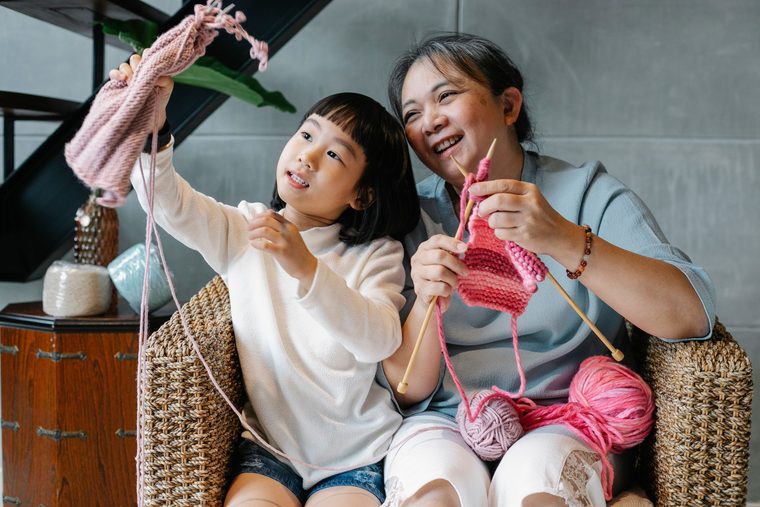
Mandarin is the most common language other than English in Australian homes: 685,274 people used it at the 2021 Census, and Cantonese another 295,281. Of the Australian-born people who speak a language other than English at home, almost half are children under 15.
But home languages fade fast. In the 1996 Census, 48.6% of the Australian-born children of China-born parents spoke only English at home, against 4.8% of their parents’ generation; for Hong Kong families it was 52.7% against 8.8%. A 2023 analysis of later census data still found the second generation of the China ancestry group shifting to English far more than the first.
If your child understands Chinese but answers in English, lessons can rebuild speaking, reading and writing on top of what they already have. Which language to keep is its own question, covered in Mandarin or Cantonese in Australia. For one family’s version of losing the language and finding it again, read Will’s own story.
One to one
How one-to-one Mandarin for kids fits around school
One-to-one lessons solve the two problems school cannot: time, and a class pitched at somebody else. WillyChina’s lessons for children start at Year 5, around age 10, and run online and live, so there is no travel after school.
- Length: lessons run from 50 minutes to 2 hours, set by the child’s age and focus.
- Parents: you can sit in on lessons; just ask.
- Built around your child: a beginner, a school learner who wants to keep up, or a child who understands Chinese at home and wants to read and write it.
- Starting: a free 30-minute intro call, with no obligation, to talk about where your child is and what they need.
Full course details and rates are on the Chinese courses page. For learning from anywhere in the country, see Mandarin lessons in Australia.
Questions
FAQs
What age should my child start learning Mandarin?
Earlier gives more years of learning, but the research finds older children learn faster in a classroom, and that how much exposure a child gets matters more than the age they start. Around Year 5, about age 10, is a good point to start one-to-one lessons.
Is learning a language compulsory in Australian schools?
It depends on the state. NSW requires 100 hours of one language in Years 7 to 10, Victoria requires schools to offer a language from Foundation to Year 10, Queensland state schools offer a language in Years 5 to 8, and WA requires one from Year 3 to Year 8. The school usually chooses which language, so it may not be Chinese.
Can my child take Year 12 Chinese if we speak Chinese at home?
Yes, but not every course. In WA, using Chinese with family rules a child out of Second Language, and in South Australia it rules them out of Beginners. In NSW and Victoria the tests are schooling and time lived in Chinese-speaking places. Queensland has no background rules. Check your state’s rules in Year 9 or 10.
Does studying Chinese help the ATAR?
In Victoria every language’s scaled average is lifted, in WA 10% of the best language score is added to the aggregate, and South Australian universities add 2 points for an eligible language. In NSW and Queensland it depends on the university.
Does WillyChina teach children?
Yes. WillyChina’s Mandarin for kids lessons start at Year 5, around age 10. They are online and one to one, from 50 minutes to 2 hours, and parents can sit in on request. Every family starts with a free 30-minute intro call.
Should my child learn Mandarin or Cantonese?
If they are learning to speak with family, the one the family speaks. Otherwise Mandarin, which overtook Cantonese in Australian homes between the 2006 and 2011 Census.
Sources. The curriculum pathways and indicative hours are from ACARA; state requirements from NESA, the Victorian Department of Education, the Queensland Department of Education, SCSA, the South Australian Department for Education and the ACT Government. Year 12 eligibility is from NESA, the VCAA, SCSA, the SACE Board and the QCAA.
ATAR adjustments are from VTAC, TISC, SATAC, Monash University, UNSW and UQ. Enrolment figures are from Jane Orton’s 2008 University of Melbourne report and her 2016 report for the Australia-China Relations Institute, NESA and the VCAA; the 2003 Victorian figures from Slaughter and Hajek (2007).
The research on age is Hartshorne, Tenenbaum and Pinker, Cognition (2018); Carmen Muñoz on the Barcelona Age Factor project; Mattock and colleagues, Cognition (2008); and Antoniou and Chin, Frontiers in Psychology (2018). Home language figures are from the ABS (2021 and 1996 Censuses) and Zhang, Tsung and Qi, Frontiers in Psychology (2023). The class-hours benchmark is the US Foreign Service Institute’s.
Photographs by Thomas Park and Alex Green.
Keep reading
More for parents and families
Why children should learn Mandarin
The case for starting a child on Mandarin, and what it opens up.
AustraliaMandarin lessons in Australia
One-to-one online lessons, in every state and on your timezone.
LanguageMandarin or Cantonese?
Which one Australia speaks, state by state, and which to learn.
ExamsHSK test centres in Australia
Where school students can sit the YCT, the HSK’s sister test.
Start learning
Give your child the hours school cannot
One-to-one Mandarin for kids from Year 5, online, with a teacher who grew up between both languages. Start with a free 30-minute intro call.
Book a free intro call