The Winter Solstice — the longest night, dumplings in the north, tangyuan in the south, and the year quietly turning back towards the light.
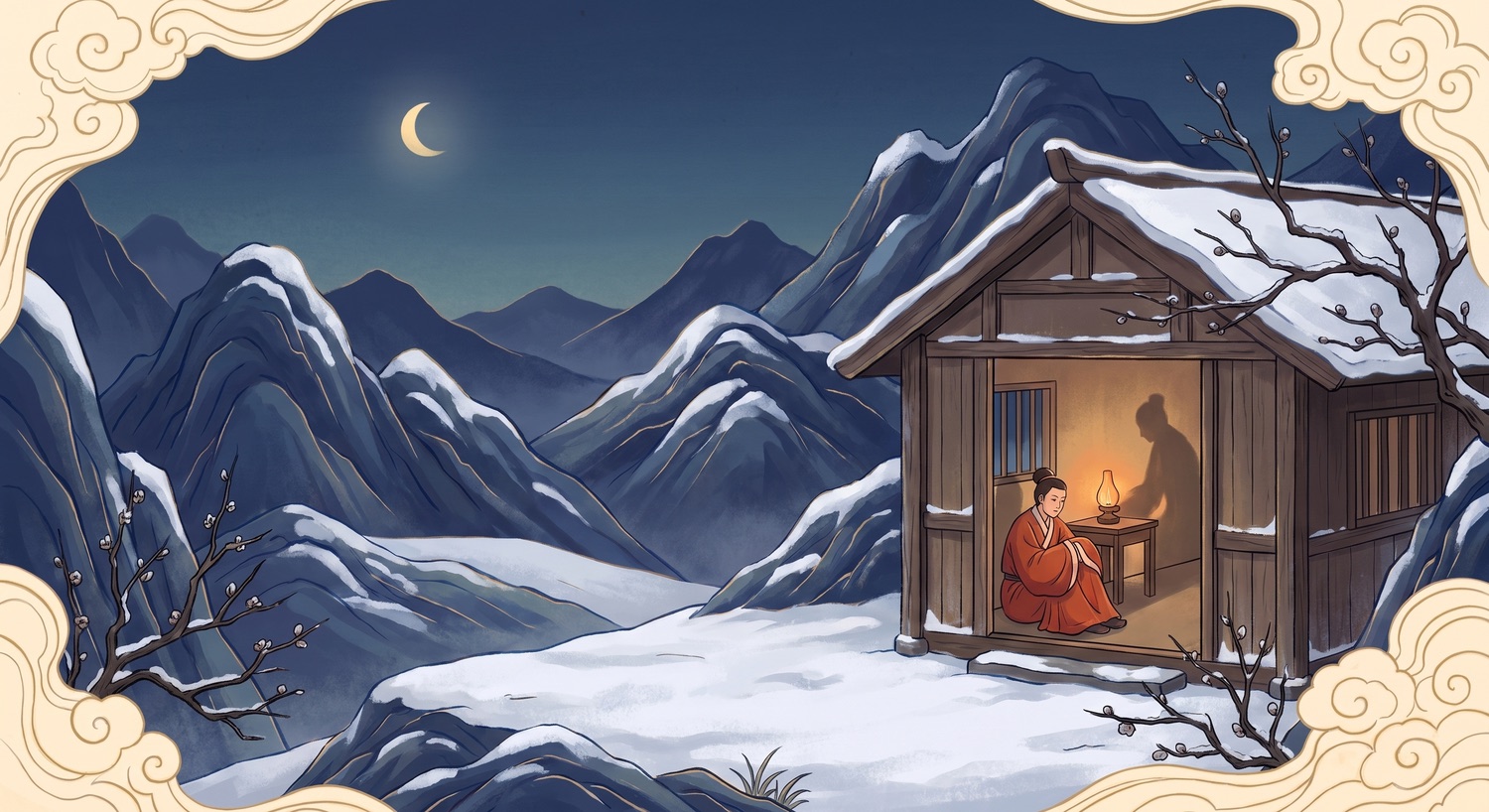
“Knees drawn up before the lamp, my shadow for company.” — Bai Juyi, written on this night
- When
- The winter solstice (21–22 Dec)
- In 2026
- Tuesday 22 December
- Type
- Solar term 节气 — fixed by the sun, not the moon
- Greeting
- 冬至快乐 (Dōngzhì kuàilè)
- Customs
- Dumplings north · tangyuan south · counting the nine nines · ancestor offerings
- Old saying
- 冬至大如年 — as big as New Year
The shortest day, and one of the oldest feasts
冬至 (Dōngzhì) is the winter solstice — the shortest day and longest night of the year, and one of the twenty-four solar terms that divide the Chinese agricultural year. In 2026 it falls on 22 December.
There is an old saying for it: 冬至大如年 — the solstice is as big as New Year. That is not flattery. Under the Zhou calendar the year genuinely began at the solstice month, and the Han court kept the day as an official holiday when offices closed and the emperor made offerings to heaven. A festival that once was the new year does not shrink quietly.
What is being celebrated is a turn, not an arrival. From this night the days lengthen again — 阳生, the yang principle reborn at the very bottom of the year. Chinese thought has always found that more interesting than midsummer.
The physician who fed a village its own ears
Ask why people eat dumplings at the solstice and you will be told about 张仲景 (Zhāng Zhòngjǐng), the Han-dynasty physician whose Treatise on Cold Damage Disorders is still studied.
The story goes that he was travelling home in deep winter when he saw villagers along the river with frostbitten, ulcerated ears. He had a shed put up, stewed mutton with warming herbs, chopped the mixture and wrapped it in dough folded into the shape of an ear — 娇耳 (jiāo’ěr), “tender ears” — and gave out a bowl to anyone who came, from the solstice until the eve of the new year. The frostbite healed.
The dumplings eaten on 冬至 are said to be his. It is a legend rather than a record — the physician is historical, the shed is folklore — but it has given northern China a line that mothers still use on children who won’t eat: 不吃饺子冻掉耳朵, skip the dumplings and your ears will freeze off.
“My shadow for company”
Mid-Autumn has its moon poems about reunion. The solstice has Bai Juyi (白居易), stuck at a post-house in Handan on the longest night of 804, writing about not being home at all:
邯郸驿里逢冬至,抱膝灯前影伴身。
想得家中夜深坐,还应说著远行人。
“At the Handan post-house the solstice finds me; / knees drawn up before the lamp, my shadow for company. / I picture them at home, sitting late into the night — / still talking, I should think, of the one who travelled far.”
— 白居易, Tang dynasty.A note on the text. The poem is short enough to quote whole, and worth quoting whole: the turn in the last two lines is that he stops picturing himself and starts picturing them picturing him. Two small textual points, since we quote from the source rather than from memory. Wikisource records a variant in the title — 邯郸冬至夜思家, with one tradition reading 至除 for 冬至. And the fourth line ends 说著 in the received text, which modern printings almost always normalise to 说着. That is an editorial tidy, not a simplification — both characters exist in simplified Chinese — so we have kept the older form.
One festival, two dinners
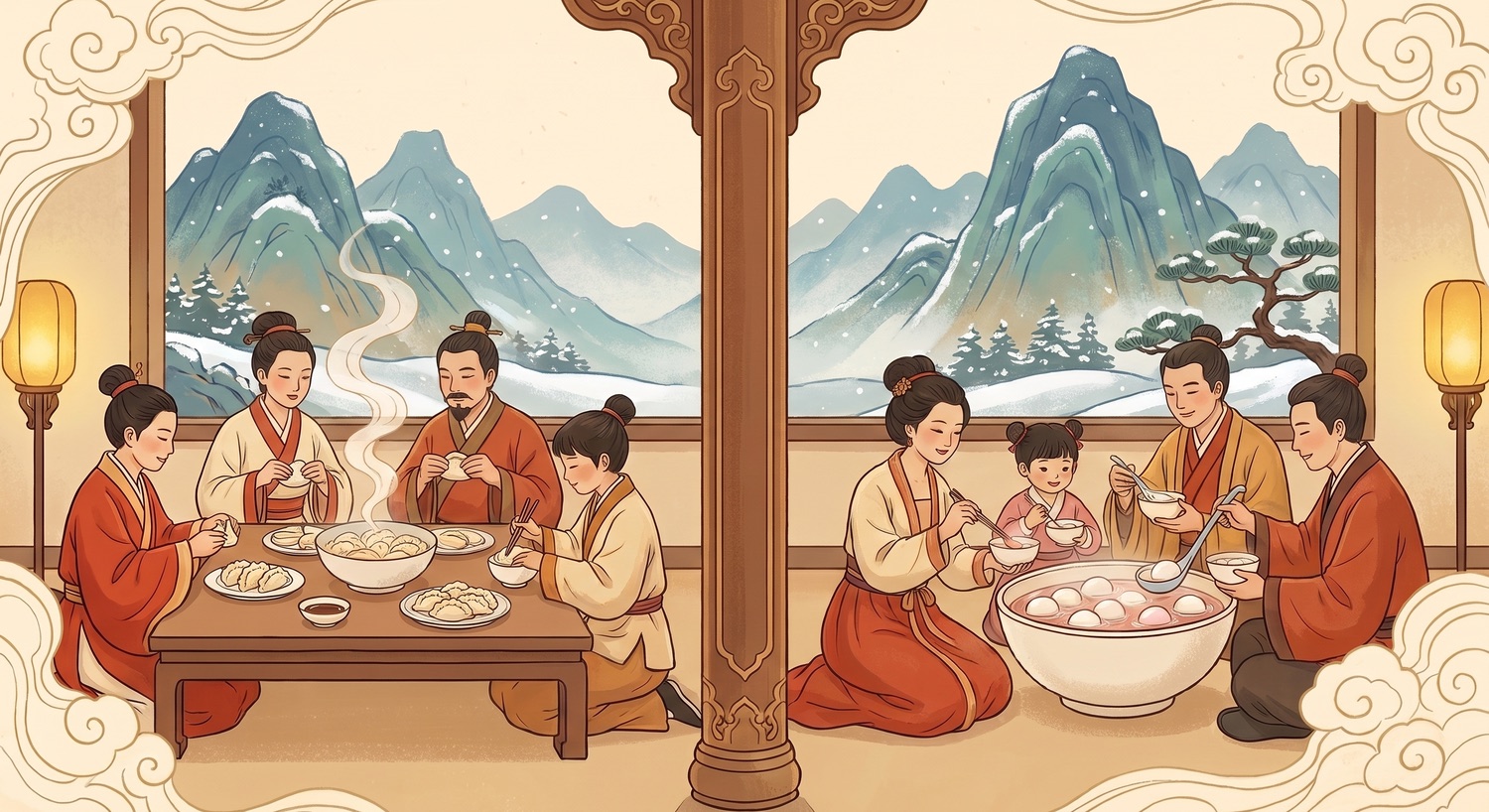
North: dumplings. 饺子 (jiǎozi), boiled, usually with vinegar, and often made by the whole family together. This is Zhang Zhongjing’s legacy, real or not.
South: tangyuan. 汤圆 (tāngyuán) — small glutinous rice balls in a sweet soup, sometimes plain, sometimes filled with black sesame or peanut. The roundness is the point: 团圆 (tuányuán), reunion, is one syllable away. Eating them is said to add a year to your age, which is a gentler way of saying the year has turned.
Counting the nine nines. From the solstice, the deep cold is counted in nine periods of nine days — 数九 (shǔ jiǔ) — eighty-one days to the far side of winter. There are rhymes for it, marking when the ice holds, when the willows green, when the swallows return.
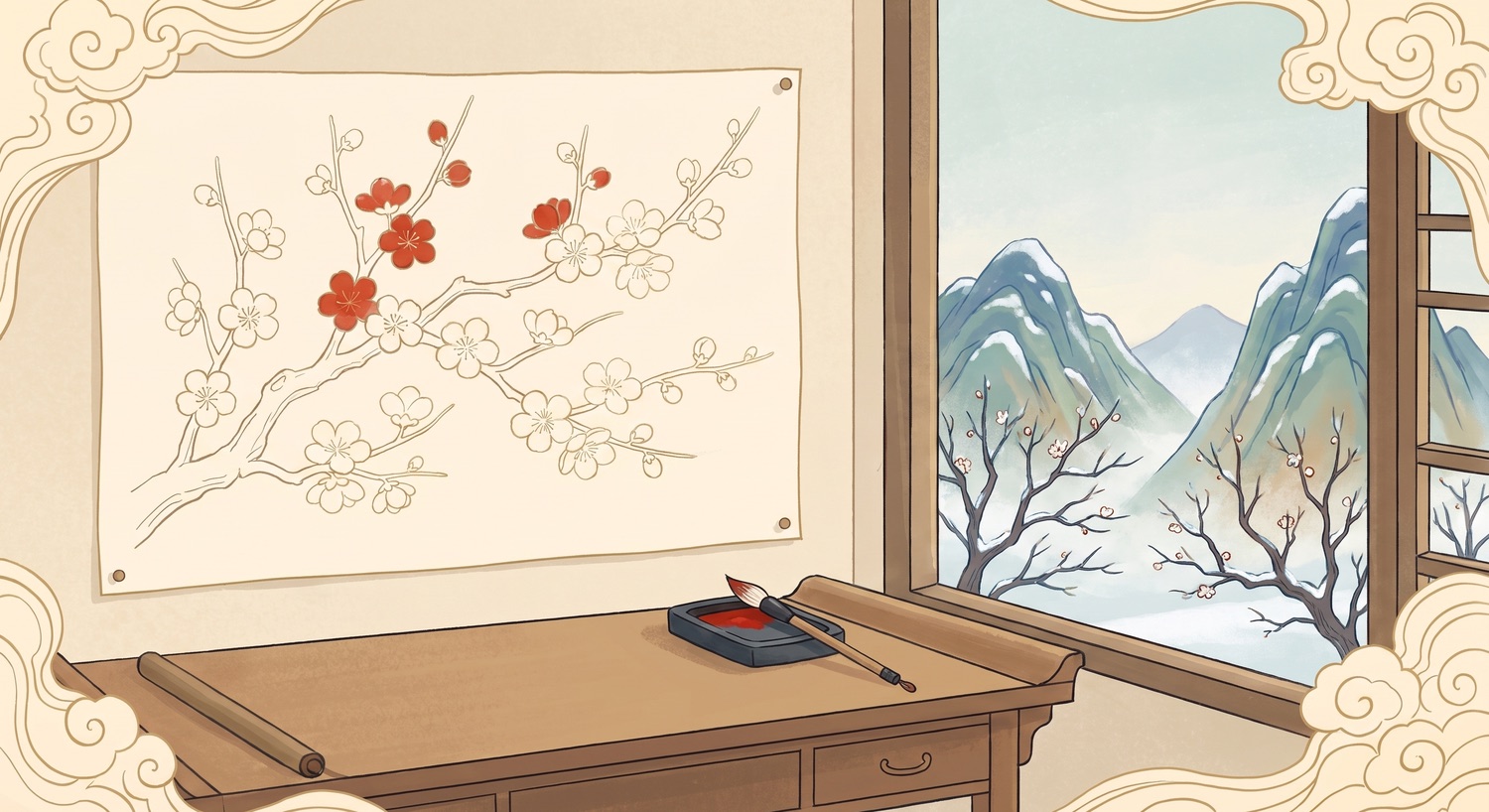
The cold-dispelling chart. The prettiest version of that count is the 九九消寒图 (jiǔ jiǔ xiāo hán tú): a plum branch drawn with eighty-one blank blossoms, one coloured in each day. When the last petal is filled, spring has arrived. A calendar you make rather than read.
Offerings. In many families the solstice is also a day for the ancestors — a table set, incense lit, the dead included in a meal about the year turning.
A working day that everyone still keeps
The solstice is not a public holiday on the mainland — offices open, school runs as usual. It is kept anyway, in the way that matters: people go home for dinner. Supermarkets stack tangyuan and dumpling wrappers by the door for the week beforehand, and the family group chat fills up with photographs of bowls.
For a learner it is a useful festival precisely because it is small. There is no set-piece spectacle to describe and no long greeting to memorise — just a meal, a saying about ears, and a north–south difference that people enjoy arguing about. It is the kind of thing that comes up naturally in conversation in December, and knowing it is a quick way to sound like someone who has actually been around Chinese families in winter.
Winter Solstice greetings & phrases
冬至快乐!
Dōngzhì kuàilè!
“Happy Winter Solstice!”
冬至安康。
Dōngzhì ānkāng.
“Peace and health at the solstice.” — warmer and a little more formal; good for older relatives.
今天冬至,你们吃饺子还是汤圆?
Jīntiān dōngzhì, nǐmen chī jiǎozi háishì tāngyuán?
“It’s the solstice today — are you having dumplings or tangyuan?”
不吃饺子冻掉耳朵!
Bù chī jiǎozi dòngdiào ěrduo!
“Don’t eat dumplings and your ears will freeze off!” — said to children, entirely in fun.
Common misunderstandings
- It is not a lunar-calendar festival. Unlike Mid-Autumn or Double Ninth, 冬至 is a solar term — fixed by the sun’s position, so it lands on 21 or 22 December every year rather than drifting.
- It is not the coldest day. It is the shortest. The cold keeps deepening for weeks afterwards, which is the whole reason for counting the nine nines.
- 汤圆 are not 元宵. They look alike, and both are eaten at the Lantern Festival — but 汤圆 are wrapped around their filling and 元宵 are rolled in dry flour, southern name and northern. Only 汤圆 belong to the solstice, and in Jiangnan they take a name of their own that night: 冬至团. Our tangyuan recipe takes the wrapped, southern route.
- Don’t promise anyone a day off. The mainland keeps it as a normal working day, however big the dinner.
Quick quiz
1. What does the saying 冬至大如年 mean?
2. Why are dumplings eaten in the north on this day?
FAQs
Say it in Mandarin
Learn the greetings, the stories and the language of the festivals — in 1-on-1 online lessons with a native speaker.
Book a Free Intro Call