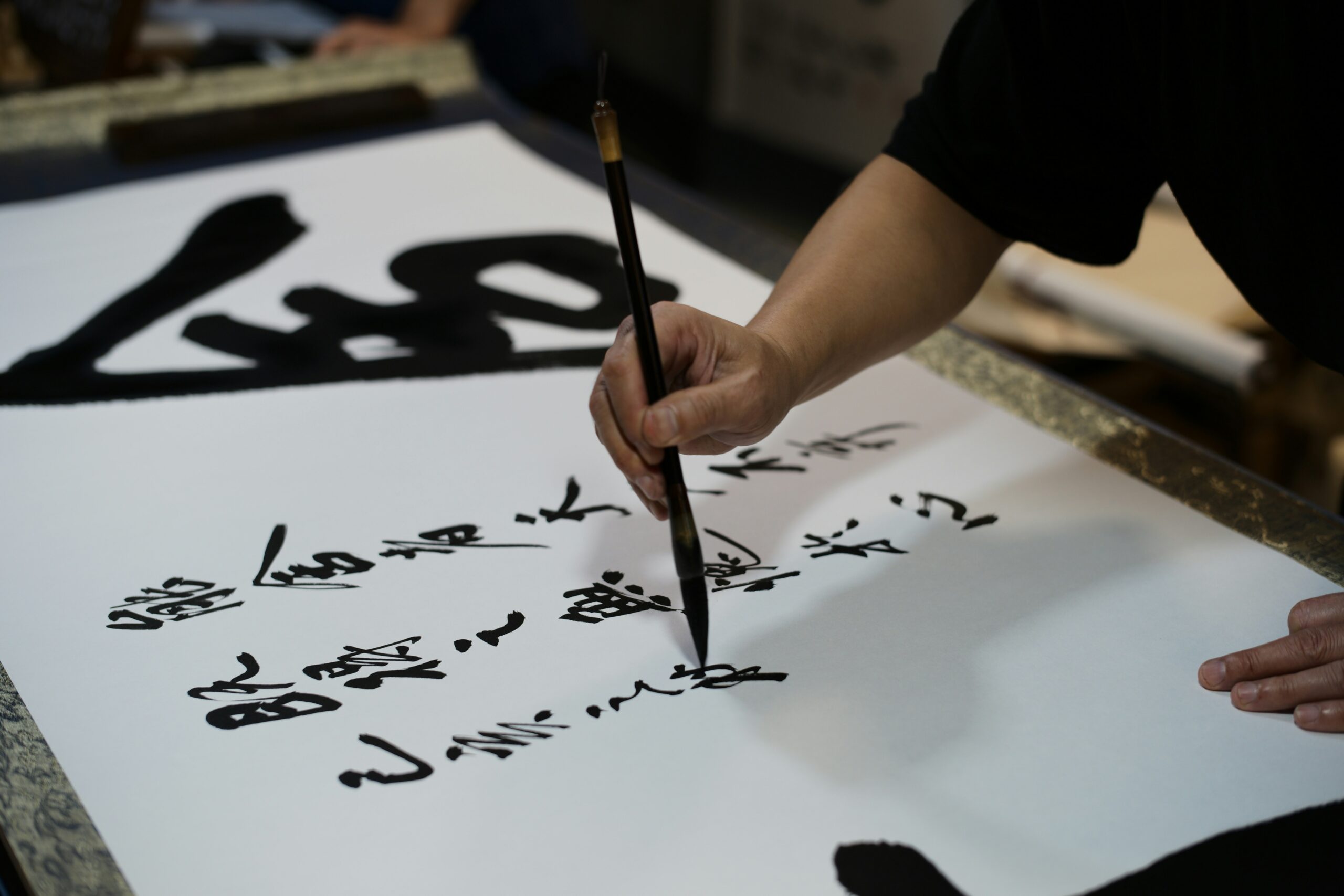
A Chinese name carries more than a Western one. Packed into just two or three characters is a family’s history, a set of hopes for the child, and a small poem of meaning — all chosen with real care.
From the reversed order to a surprisingly small pool of surnames and given names hand-picked for what they mean, Chinese names follow patterns that feel unfamiliar at first but quickly make beautiful sense.
This guide explains how Chinese names work — the order, the surnames, the meanings and the customs behind them — and shows how you can get an authentic Chinese name of your own.
See it done
Easier to understand with your own name in front of you.
Everything below explains how Chinese names are put together. Watching it happen to your own name makes it stick far faster than reading about it.
Make my Chinese name →Free · takes about thirty seconds
Surname First, Given Name Second
The single biggest difference is that the order is reversed. The surname (姓, xìng) comes first, and the given name (名, míng) comes second — the opposite of English.
Take the basketball star 姚明 (Yáo Míng). 姚 (Yáo) is the family name and 明 (Míng) is the given name — so “Yao Ming” really means “Ming, of the Yao family”. The same goes for a name like 王小明: Wang is the surname, Xiaoming the given name.
This reflects a deep cultural priority — family before individual. It’s also why Chinese speakers address people by surname plus title: a teacher named 王 is 王老师 (Wáng lǎoshī), “Teacher Wang”, never “Teacher Xiaoming”.
The Parts of a Chinese Name
A full Chinese name is almost always just two or three characters:
- One surname character — e.g. 李 (Lǐ), 王 (Wáng), 陈 (Chén). A small number of surnames have two characters, such as 欧阳 (Ōuyáng) or 司马 (Sīmǎ).
- A one- or two-character given name — e.g. 娜 (Nà) in 李娜, or 小明 (Xiǎomíng) in 王小明.
There’s no “middle name” in the Western sense. When a given name has two characters, the second one isn’t a middle name — the two simply work together as a single given name.
Why So Few Surnames?
Here’s a fact that surprises learners: a relatively tiny set of surnames is shared by enormous numbers of people. 王 (Wáng), 李 (Lǐ) and 张 (Zhāng) each belong to hundreds of millions of people, and roughly the top hundred surnames cover the vast majority of the population.
That’s exactly why ordinary people are affectionately called 老百姓 (lǎobǎixìng) — literally “the old hundred surnames”. There’s even a classic primer, the 百家姓 (Bǎijiāxìng, “Hundred Family Surnames”), that children once memorised. So if you meet several unrelated people all surnamed Wang, that’s completely normal.
Common Chinese Surnames (and What They Mean)
You’ll meet the same surnames again and again. Here are some of the most common, with the everyday meaning of the character — though as a surname each one simply functions as a family name:
- 王 (Wáng) — “king”
- 李 (Lǐ) — “plum”
- 张 (Zhāng) — “to draw (a bow)”
- 刘 (Liú) — an ancient clan name (the Han dynasty’s ruling house)
- 陈 (Chén) — “to arrange; to display”
- 杨 (Yáng) — “poplar tree”
- 黄 (Huáng) — “yellow”
- 赵 (Zhào) — an ancient state name
- 周 (Zhōu) — “cycle”; also the Zhou dynasty
- 吴 (Wú) — an ancient state name
Want the full picture? See our complete guide to the 100 most common Chinese surnames — ranked by population, with meanings, audio, and the famous two-character surnames like 司马 (Sīmǎ) and 欧阳 (Ōuyáng).
In practice the literal meaning is just history — nobody thinks “Mr King” when they meet a 王. We’ll cover the hundred most common surnames, with meanings and audio, in a dedicated guide.
Given Names — Chosen for Meaning
If the surname is shared, the given name is where individuality and intention live. Parents — often with grandparents’ input — choose characters for their meaning, their sound, and the wishes they carry. A name is, in a sense, a blessing.
Common building blocks include characters like 伟 (wěi, “great”), 强 (qiáng, “strong”), 杰 (jié, “outstanding”), 美 (měi, “beautiful”), 丽 (lì, “lovely”), 雅 (yǎ, “elegant”) and 欣 (xīn, “joyful”).
- Soft, graceful imagery — beauty, flowers, jade and grace (美, 丽, 婷, 雅, 欣) traditionally lean feminine.
- Strength and ambition — greatness, courage and brilliance (强, 伟, 军, 杰, 华) traditionally lean masculine.
- These are tendencies, not rules — many characters are unisex, and modern names are increasingly flexible.
Names may also nod to nature, the seasons, a birthplace or a family hope — so a given name often reads like a tiny, personal poem.
Looking for ideas? Browse our guides to Chinese names for girls and Chinese names for boys, grouped by theme with meanings and audio. You can also learn how to choose a Chinese name of your own, step by step.
A Quick Worked Example
Put it all together with a name like 林美华 (Lín Měihuá). 林 (Lín, “forest”) is the surname, so this person belongs to the Lin family. 美 (měi) means “beautiful” and 华 (huá) means “splendid; magnificent” (it’s also a literary word for China). Read as a whole, the given name 美华 wishes beauty and brilliance on the child — “beautiful and splendid, of the Lin family”. Two characters, a whole blessing.
Generation Names: The Shared Character
In many traditional families, one of the two given-name characters is a generation name (字辈, zìbèi) — shared by everyone of the same generation, including cousins. The sequence of characters is often drawn from a poem recorded in the family genealogy (家谱, jiāpǔ).
It means you can sometimes tell which generation a person belongs to just from their name. The custom is less rigid today, but it’s still alive in plenty of families and is a lovely window into how Chinese names connect the individual to a whole lineage.
Naming Customs — and a Little Superstition
Choosing a name is taken seriously, and tradition often plays a part:
- Naming taboo (避讳, bìhuì) — historically you avoided the characters in the names of emperors or your own elders, out of respect. Echoes remain: many families still won’t reuse an older relative’s given name.
- The five elements (五行, wǔxíng) — some parents consult the child’s birth chart and choose characters whose elements (wood, fire, earth, metal, water) “balance” it — a character with 水 (water) or 林 (wood), say.
- Lucky sounds, unlucky homophones — because so many words sound alike, parents check a name doesn’t accidentally echo something unfortunate, and favour characters that sound like good things.
- Stroke count and harmony — some even weigh how the characters look together and how many strokes they take, for visual balance and good fortune.
None of it is compulsory — but it’s why a Chinese name can feel so carefully made. It usually is.
The Other Names a Chinese Person Might Have
Beyond the official name, a person may go by several others:
- 小名 / 乳名 (xiǎomíng, “milk name”) — an affectionate childhood nickname, often a doubled character (明明, 丽丽) or 小 + a character (小宝). Used by family and close friends.
- 英文名 (English name) — many Chinese choose an English name for school, work or travel; it usually has no connection to their Chinese name.
- 字 (zì, courtesy name) — historically, adults took a courtesy name used by peers. It’s largely obsolete now, but you’ll meet it in history and period dramas.
How a Foreigner Gets a Chinese Name
If you’re learning Mandarin, having your own Chinese name is one of the small joys of the journey. There are two routes:
- Transliteration (sound-based). Your name is rendered into similar-sounding characters — e.g. Smith → 史密斯 (Shǐmìsī). It’s fine for paperwork, but it can sound foreign and carry no real meaning.
- A chosen, meaningful name. A native speaker picks a surname-like character close to your name’s sound, plus given-name characters that both sound right and carry good meaning — so the result reads like a genuine Chinese name. This is what most learners actually want.
A good Chinese name balances three things at once: it sounds natural, the characters carry positive meaning, and it doesn’t come out accidentally odd or comical. Striking that balance is genuinely hard without a native eye — a beautiful-looking character can be a strange choice for a name, and a clumsy transliteration can raise eyebrows.
Sound and Meaning: The Art of a Great Name
The best Chinese versions of foreign names are tiny works of art, because they capture sound and meaning at once. The classic example is Coca-Cola’s Chinese name, 可口可乐 (kěkǒu kělè) — it sounds like “Coca-Cola” and means, roughly, “tasty and joyful”. That double win is the gold standard.
Your own name can aim for the same effect. A thoughtful Chinese name echoes the sound of your real name while choosing characters that mean something warm — confident, bright, kind — and that sit together naturally. A blunt phonetic transliteration (the kind a dictionary or app produces) usually nails the sound but lands as meaningless, or faintly odd, to a native ear.
It’s also why two people with the “same” English name can end up with quite different Chinese names — one leaning closer to the sound, another to a particular meaning. There’s no single right answer; only names that feel more, or less, like you. Closing that gap, between “technically correct” and “a name a Chinese person would actually give”, is the whole art.
Get Your Own Chinese Name
You don’t have to guess — or risk an awkward result. Our free Chinese Name Generator creates a real, meaningful Chinese name for you in seconds, with the characters, pinyin and what each one means. And if you’d like it beautifully presented, you can turn it into a personalised name certificate to keep or give as a gift.
It’s the easy, authentic way to step into the world you’ve just read about — surname first, meaning and all. Generate your free Chinese name →
FAQs
Do Chinese names go surname first?
Yes — the family name (姓, xìng) comes first and the given name (名, míng) second. So in 王小明, Wang is the surname and Xiaoming is the given name.
How many characters are in a Chinese name?
Usually two or three: one surname character plus a one- or two-character given name. A handful of surnames (like 欧阳, Ōuyáng) have two characters.
Why do so many Chinese people share the same surname?
A surprisingly small pool of surnames covers most of the population — 王 (Wáng), 李 (Lǐ) and 张 (Zhāng) alone number in the hundreds of millions each. That’s why ordinary folk are nicknamed 老百姓, “the old hundred surnames”.
Do Chinese names have meanings?
Yes — given names are deliberately chosen for the meaning of their characters, expressing virtues, beauty, strength or the parents’ hopes for the child.
Can a foreigner have a Chinese name?
Absolutely. You can transliterate your name into similar-sounding characters, or — far better — have a meaningful Chinese name chosen that sounds natural and reads like a real name.
What’s the difference between a Chinese name and an “English name”?
Many Chinese people also adopt an English name for school, work or international life. It usually sits alongside their Chinese name and the two are often unrelated.
Further reading: the structure of Chinese given names (Wikipedia).
Hero image: Photo by Fenghua on Unsplash.