Diligent, dependable and patient: the second animal of the Chinese zodiac, and the sign of the year that begins on 31 January 2033.
- Recent Ox years
- 2009 · 2021 · 2033
- Next Ox year begins
- 31 January 2033
- Fixed element
- Earth (yin)
- Best matches
- Snake · Rooster · Rat
- Clashes with
- Goat
- The Ox’s hours
- 1 am – 3 am (丑时 chǒushí)
Are you an Ox?
The zodiac year doesn’t start on 1 January. It starts at Chinese New Year, which falls anywhere from 21 January to 20 February. So if you were born in January or February, your birth year alone can’t tell you your animal. Enter your full date of birth for the exact answer.
Every Year of the Ox, with exact dates
| Year | Chinese name | Element | Begins | Ends |
|---|---|---|---|---|
| 1925 | 乙丑 yǐchǒu | Wood Ox | 24 Jan 1925 | 12 Feb 1926 |
| 1937 | 丁丑 dīngchǒu | Fire Ox | 11 Feb 1937 | 30 Jan 1938 |
| 1949 | 己丑 jǐchǒu | Earth Ox | 29 Jan 1949 | 16 Feb 1950 |
| 1961 | 辛丑 xīnchǒu | Metal Ox | 15 Feb 1961 | 4 Feb 1962 |
| 1973 | 癸丑 guǐchǒu | Water Ox | 3 Feb 1973 | 22 Jan 1974 |
| 1985 | 乙丑 yǐchǒu | Wood Ox | 20 Feb 1985 | 8 Feb 1986 |
| 1997 | 丁丑 dīngchǒu | Fire Ox | 7 Feb 1997 | 27 Jan 1998 |
| 2009 | 己丑 jǐchǒu | Earth Ox | 26 Jan 2009 | 13 Feb 2010 |
| 2021 | 辛丑 xīnchǒu | Metal Ox | 12 Feb 2021 | 31 Jan 2022 |
| 2033 | 癸丑 guǐchǒu | Water Ox | 31 Jan 2033 | 18 Feb 2034 |
| 2045 | 乙丑 yǐchǒu | Wood Ox | 17 Feb 2045 | 5 Feb 2046 |
Dates follow the lunar calendar’s New Year, the convention used for the zodiac in everyday Chinese life. Some fortune-tellers instead start the year at 立春 (lìchūn, Start of Spring, around 4 February), so a few early-February birthdays get read differently. In 2033 the New Year comes first, on 31 January, and 立春 follows on 3 February.
How to write 牛, and what it really draws
牛 (niú) began, like 羊 (yáng, goat), as an animal’s head seen from the front. On the oldest oracle bones you can see two horns curving upwards, a pair of slanting ears and a line running down the face. The Shuowen Jiezi read the strokes differently, as horns, head, hump and tail, but many modern scholars prefer the head-on reading. One tip for learners: the vertical stroke of 牛 pokes up through the top, which is what separates it from 午 (wǔ, noon), the Horse’s branch.
4 strokes · the short left-falling stroke first, then two horizontals, then the long vertical straight through
3,000 years of 牛, in four steps
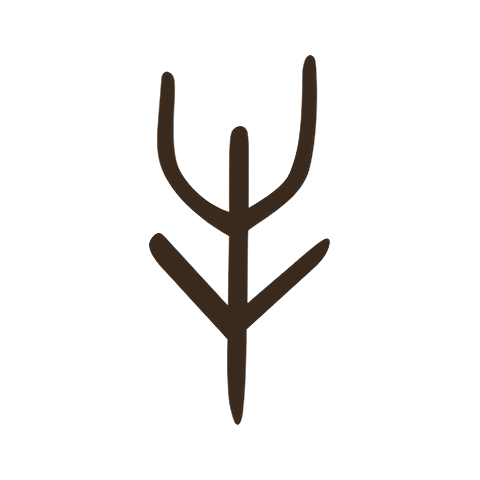 Oracle boneShang dynasty, c. 1250 BCE
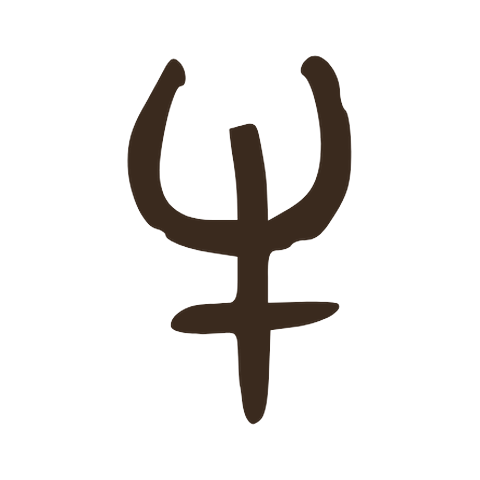 BronzeZhou dynasty, c. 1000 BCE
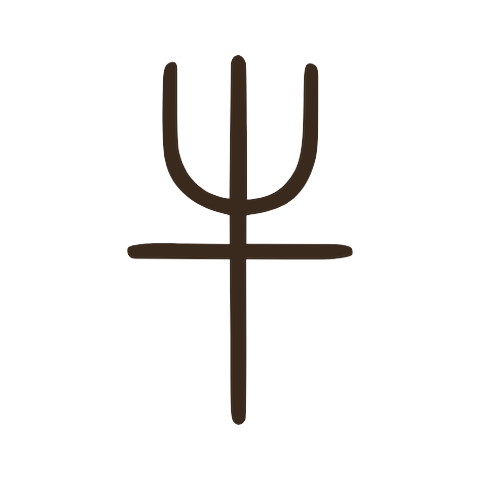 Small sealQin dynasty, 221 BCE
- 牛TodaySame in simplified and traditional
Ancient forms: public-domain drawings from the Ancient Chinese Characters project on Wikimedia Commons.
Six characters built from 牛
The ox ploughed the fields, carried the loads and went to the altar as the grandest sacrifice, so 牛 turns up in words for work, wealth and things in general. Unlike 羊, it almost always brings meaning rather than sound. On the left it squeezes into 牜, with the last stroke tilted upwards. Tap the speaker to hear each one.
Want the system behind cards like these? Read how Chinese characters actually work and the stroke order rules, then practise 牛 on the free writing practice board.
Ox, cow, bull or buffalo?
In Chinese, 牛 on its own covers all of them: oxen, cows, bulls, buffaloes, even yaks. English has to choose, and “Ox”, the working animal, became the usual name for the sign. When Chinese speakers need to be precise, they add a word in front. In Vietnam, which shares the zodiac, the sign is simply the water buffalo.
黄牛
huángniú
Cattle. Literally “yellow 牛“, the everyday ox of Chinese farms. In slang, also a ticket scalper.
水牛
shuǐniú
Water buffalo. Literally “water 牛“, the rice-paddy worker of the south.
牦牛
máoniú
Yak, the long-haired 牛 of the Tibetan Plateau.
The word stretches further still: a snail is 蜗牛 wōniú and a rhinoceros is 犀牛 xīniú. In everyday speech, 牛 has also become praise. Say 你真牛 (nǐ zhēn niú) and you mean “you’re amazing”, while 吹牛 (chuīniú, literally “blow the ox”) means to brag.
The Ox personality
Zodiac personalities are folk tradition, not science, and Chinese people treat them much the way others treat star signs: half seriously, often with a smile. Still, the character traditionally given to people born in the Year of the Ox is remarkably consistent across centuries of almanacs. It’s the hardest worker of the twelve.
Hard-working
qínláo. Steady effort, day after day. Chinese even calls a tireless, uncomplaining worker a 老黄牛 lǎo huángniú, “old yellow ox”.
Dependable
kěkào. If an Ox says it will be done, it will be done. Friends and employers lean on that.
Patient
nàixīn. Oxen are happy to plough the long furrow, and they rarely rush a decision.
Honest
chéngshí. Plain-spoken and straightforward, with little time for flattery or games.
And the other side
Stubborn
gùzhí. Once an Ox has made up its mind, moving it is like moving an ox.
Conservative
bǎoshǒu. Tried and tested methods feel safer to an Ox than new ideas.
Reserved
nèixiàng. Oxen keep their feelings to themselves, so others can mistake quiet for coldness.
A stickler
ài jiàozhēn. Oxen take rules and details seriously, sometimes more seriously than the situation needs.
Lucky things, by tradition
Almanacs disagree sharply about the Ox’s lucky charms, and we’d rather show you that than pretend otherwise. Here is what the major sources share, and where they split.
| Lucky | What the sources say | Agreement |
|---|---|---|
| Numbers | 1 in every list we checked, joined by 4 in some and 9 in others | Mostly |
| Flowers | Tulip and peach blossom, with evergreens added in some lists | Agreed |
| Colours | White, yellow and green in some lists; red, blue and purple in others, which name white and green as unlucky | Disputed |
| Numbers to avoid | 5 and 6 in some lists, 3 and 4 in others | Disputed |
Which Ox are you? The five elements
Every animal returns once every 12 years, but it pairs with each of the five elements only once every 60. So a 1973 Ox and a 2033 Ox share both animal and element: both are Water Oxen.
乙丑 yǐchǒu · 1925 · 1985 · 2045
The Wood Ox is said to be the most open-minded Ox: confident, fair and more willing than most to try a new way. Its traditional caution is a quick temper when it feels slighted.
丁丑 dīngchǒu · 1937 · 1997
The Fire Ox is said to be the most forceful Ox: energetic, ambitious and a natural leader. It gets things done fast, but it can push others as hard as it pushes itself.
己丑 jǐchǒu · 1949 · 2009
Earth is the Ox’s own fixed element, so the Earth Ox is the most Ox-like of all: patient, practical and utterly reliable. It’s said to build slowly but build to last.
辛丑 xīnchǒu · 1961 · 2021
The Metal Ox is said to be the most determined Ox, with iron willpower and very firm principles. Its challenge is learning when to bend.
癸丑 guǐchǒu · 1973 · 2033
The Water Ox is said to be the most flexible Ox: calmer, more sociable and better at listening than its cousins. It combines the Ox’s patience with a gift for working with others. 2033 is a Water Ox year.
Ox compatibility
Zodiac compatibility isn’t a list of opinions. It’s geometry. Place the twelve animals around a circle, and the classic matches form fixed shapes: triangles of allies, pairs of secret friends, and opposites that clash. Here is the Ox’s position.
- Best: Snake 蛇 and Rooster 鸡The Three Harmonies (三合 sānhé), the green triangle. These three share a love of order, effort and a plan carried through, and are traditionally the happiest pairing for friendship, business or marriage.
- Secret friend: Rat 鼠The Six Harmonies (六合 liùhé), the gold line. The quick-witted Rat and the steady Ox are the classic partnership, the same pair that crossed the river together in the Great Race.
- Clash: Goat 羊The Six Conflicts (六冲 liùchōng), straight across the circle. The practical Ox and the dreamy Goat sit opposite each other on the wheel and see the world in very different ways.
- Friction: Horse 马The Six Harms (六害 liùhài), the dashed line. The restless Horse and the patient Ox move at different speeds, a mismatch that needs patience on both sides.
See the other pairings from each side: the Snake, the Rooster, the Rat and the Goat.
The Ox in Chinese culture
对牛弹琴 Playing music to an ox
duì niú tán qín. “Play the qin to an ox.” In a story told in the Lihuo lun, traditionally attributed to the Han-dynasty writer Mou Rong, the musician Gongming Yi played a refined tune to an ox, which went on grazing. Only when he imitated buzzing insects and a calling calf did it prick up its ears. Today it means talking over your audience’s head. One of the best-known Chinese idioms.
庖丁解牛 Cook Ding carves an ox
páo dīng jiě niú. In the Zhuangzi, Cook Ding carves oxen so skilfully that after nineteen years his blade is as sharp as new, because he follows the natural gaps between the joints instead of hacking. It’s still the phrase for effortless mastery that comes from long practice. Notice the 解: knife, horn and ox, the character acting out the story.
牛郎织女 The Cowherd and the Weaver Girl
Niúláng Zhīnǚ. In one of China’s best-loved legends, a cowherd and a heavenly weaver fall in love and are separated by the Milky Way, meeting once a year on a bridge of magpies. In many tellings it’s the cowherd’s old ox that helps bring them together. Their meeting is celebrated at Qixi, the seventh day of the seventh lunar month. Read more about the festivals in our Chinese culture guide.
鞭春牛 Whipping the spring ox
biān chūn niú. For centuries, officials and villagers marked 立春 (lìchūn, Start of Spring) by striking a clay ox with ceremonial whips to wake the farming year. The custom is also called 打春 dǎchūn, “beating spring”. In some places the ox was filled with grain, and people took a handful home after it broke open, as a wish for a good harvest.
Famous people born in the Year of the Ox
Oxen are said to succeed through patience and sheer hard work, and plenty of long, steady careers fit the description. Here are nine people born in the Year of the Ox, from five different element years.
- Liang Sicheng 梁思成Architect and architectural historian, ChinaBorn 20 Apr 1901 · Metal Ox
- Walt DisneyAnimator and film producer, United StatesBorn 5 Dec 1901 · Metal Ox
- Paul NewmanActor, United StatesBorn 26 Jan 1925 · Wood Ox
- Anthony HopkinsActor, WalesBorn 31 Dec 1937 · Fire Ox
- Meryl StreepActor, United StatesBorn 22 Jun 1949 · Earth Ox
- Jacky Cheung 张学友Singer and actor, Hong KongBorn 10 Jul 1961 · Metal Ox
- Andy Lau 刘德华Actor and singer, Hong KongBorn 27 Sep 1961 · Metal Ox
- Li Bingbing 李冰冰Actor, ChinaBorn 27 Feb 1973 · Water Ox
- Keira KnightleyActor, United KingdomBorn 26 Mar 1985 · Wood Ox
We checked each full date of birth against the exact Chinese New Year date of that year, so January and early-February birthdays are placed in the right sign.
The Year of the Water Ox, 2033
The Water Ox year, 癸丑年 (guǐchǒu nián), runs from 31 January 2033 to 18 February 2034. Water is said to soften the Ox’s stubborn streak into patience and good judgement, so tradition reads 2033 as a year for steady work, saving and long-term plans. For the festival itself, the fifteen days and the greetings, see our guide to the Spring Festival.
běnmìngnián, “your own zodiac year”. If you were born in an Ox year (2021, 2009, 1997, 1985, 1973…), 2033 is your 本命年. Tradition says it’s a year to be careful, so many people wear something red all year round, often red socks, a red string bracelet or red underwear, which shops sell in a rush before every New Year.
Talk about your sign in Mandarin
Asking someone’s zodiac animal is one of the most natural small-talk questions in Chinese, and a polite way to guess an age without asking. Here is the whole conversation.
我属牛
wǒ shǔ niú
“I’m an Ox,” literally “I belong to the ox”.
你属什么?
nǐ shǔ shénme?
“What’s your zodiac sign?”
你也属牛吗?
nǐ yě shǔ niú ma?
“Are you an Ox too?”
今年是我的本命年。
jīnnián shì wǒ de běnmìngnián.
“This year is my zodiac year.”
Common misunderstandings
- “I was born in early February 1985, so I’m an Ox.” Not quite: the Ox year only began on 20 February 1985, so you’re a Wood Rat. Check any date with the tool above.
- “The Ox is the Chinese version of Taurus.” The bull of Western astrology is a sun sign set by your birth month. The Chinese Ox is set by your birth year, and the two systems have nothing to do with each other.
- “Cow, bull and buffalo are different signs.” There’s only one, 牛. Ox, cow, bull and buffalo are all translations of the same character.
- “Calling someone 牛 is an insult.” Quite the opposite. In everyday Chinese, 很牛 (hěn niú) means impressive or brilliant, so being called 牛 is a compliment.
Quick quiz
1. What does the character 牛 originally picture?
2. Which sign is the Ox’s Six Harmonies partner, its traditional best match?
3. If a friend says 你真牛 (nǐ zhēn niú), what do they mean?
FAQs
The Year of the Ox comes round every 12 years: 1925, 1937, 1949, 1961, 1973, 1985, 1997, 2009, 2021 and 2033. Each one starts at Chinese New Year rather than on 1 January. The next begins on 31 January 2033 and runs to 18 February 2034.
Yes. 2033 is a Water Ox year (癸丑 guǐchǒu). It begins on 31 January 2033. Anyone born on 1 to 30 January 2033 is still a Rat, the sign of the year before.
All three are translations of the same sign. The Chinese character 牛 (niú) covers oxen, cows, bulls and buffaloes, and Chinese adds a word to be specific (水牛 for water buffalo, 奶牛 for dairy cow). “Ox” is the usual English choice, while Vietnam’s zodiac uses the water buffalo.
Traditionally the Snake and the Rooster, which form the Three Harmonies (三合) with the Ox, and the Rat, its Six Harmonies (六合) partner. The Goat is the Ox’s clash sign, sitting directly opposite on the zodiac wheel.
The sources we checked all include 1 as a lucky number, with 4 or 9 added depending on the source, and tulips and peach blossom as the Ox’s flowers. The colours split sharply: some lists give white, yellow and green, while others give red, blue and purple and call white and green unlucky. These are folk associations, so treat them as tradition rather than rules.
The Ox’s fixed element is Earth, and it’s a yin sign. Each Ox year also carries a rotating element (Wood, Fire, Earth, Metal or Water), set by the year’s heavenly stem. 2033 is Water, 2021 was Metal and 2009 was Earth.
In the legend of the Great Race, the Jade Emperor ranked the animals by the order they crossed a great river. The strong, steady Ox was leading, but the Rat had hitched a ride on its back and leapt ashore just before it, so the Ox came second. Read the whole story on our Chinese zodiac guide.
Say 我属牛 (wǒ shǔ niú), literally “I belong to the ox”. To ask someone else, say 你属什么? (nǐ shǔ shénme?), “What’s your sign?”. It’s a polite, roundabout way to guess someone’s age, since the answer narrows it to every 12 years.
Say “我属牛” like a native
The zodiac is one of the easiest conversations to start in Mandarin. Learn the words, the tones and the stories behind them in 1-on-1 online lessons with a native speaker.
Book a Free Intro Call