Yunnan: Complete Guide to 25 Cultures & 5 Cities
A brief history of Yunnan
Yunnan sits in China’s far southwest — a high plateau of mountains, lakes and tropical valleys that for most of Chinese history operated as a frontier rather than a fully integrated province. According to the Wikipedia history of Yunnan and the Encyclopaedia Britannica overview, the region’s first sophisticated culture was the bronze-age Dian Kingdom (c. 4th century BCE), whose tombs at Lake Dian near present-day Kunming yielded astonishing bronze drum-tops and figurines that look nothing like central-plains Chinese bronzes — closer in style to Southeast Asia.
The Han dynasty nominally absorbed the region in 109 BCE, but real Chinese imperial control was always thin. From the 8th to the 13th century, Yunnan was its own state — first the Nanzhao Kingdom (738–902 CE, Bai- and Yi-led), then the Dali Kingdom (937–1253 CE). Both were powerful Buddhist civilisations that traded with India, Burma and Tang China and ruled from the shores of Erhai Lake.
Yunnan has been a frontier for so long that frontier became its identity — twenty-five ethnic minorities, three mighty rivers, two ancient kingdoms, and a quiet refusal to be just one thing.
The Mongol Yuan dynasty finally conquered Dali in 1253, and from the Ming onwards Yunnan was incorporated into the empire, with major Han migration and the rise of the Hui (Chinese Muslim) communities — including the family of the explorer Zheng He. The Qing handled it as a frontier province with light-touch rule; the Republican era saw Yunnan governed largely by warlords like Long Yun, who kept the province independent enough to host the wartime Southwest Associated University (西南联大) when northern campuses fled the Japanese invasion.
The modern chapter began in 1949 with full integration into the People’s Republic. Today Yunnan is one of China’s top tourism provinces, the country’s biggest tobacco and Pu’er tea producer, and the host of the UN’s COP15 biodiversity summit in 2021 — a fitting venue, as Yunnan alone contains more species than the whole of Europe. For wider context on where Yunnan sits in Chinese geography, see our guide to China’s provinces.
Yunnan dialects and Standard Mandarin
Yunnan Mandarin — Yunnanhua — is part of the Southwestern Mandarin family, the same broad group that includes Sichuanese and Guizhouhua. A Standard Mandarin speaker and a Yunnan speaker can hold a conversation without much friction, with the usual regional accent differences and a sprinkling of local vocabulary.
What makes Yunnanhua distinctive is its melody. The tones land softer than in northern Mandarin, with a noticeable rising-falling cadence that Yunnan locals call “singing” the language. The Kunming dialect in particular is famous for its sentence-final particles — 撒 (sǎ) at the end of a question, 嘎 (gá) for emphasis, 呢 (ne) softening almost everything — that give Yunnan speech its warm, unhurried feel.
Beyond Mandarin, Yunnan is one of the most linguistically diverse provinces on Earth. Twenty-five of China’s 55 officially recognised ethnic minorities are based here, including the Yi, Bai, Hani, Dai, Naxi, Miao, Lisu, Hui and Tibetans. Each has its own language — Bai (Sino-Tibetan), Naxi (with the unique Dongba pictographic script), Dai (Tai-Kadai family, related to Thai), and so on. In their home districts these are everyday spoken languages, often alongside Mandarin.
The practical good news for learners: Standard Mandarin is universal in Yunnan. All education is Mandarin-medium, all signage is Mandarin, and almost everyone you’ll meet under 50 speaks fluent Putonghua. Hearing Mandarin in a Bai village, a Tibetan monastery and a Dai market in the same week is one of the best ways to train your ear in regional Mandarin variation. For the wider picture, see our guide to languages and dialects in China.
Six Yunnan words worth knowing
Yunnan speaks an easygoing branch of Southwestern Mandarin (云南话), and the province is home to more ethnic-minority languages than anywhere else in China. The local Mandarin around Kunming is relaxed and playful, peppered with words like 板扎 and 克. Standard Mandarin is universal; tap 🔊 for the Standard Mandarin reading of the characters.
Phrases worth knowing
Six phrases for the noodle bowl, the old towns and the mountains of Yunnan. Tap 🔊 for native audio. (For the distinctive local dialect words, see the section above.)
Yunnan cuisine: rice noodles, wild mushrooms and Pu’er tea
Yunnan food is one of China’s most distinctive and least exported regional cuisines. With Yunnan’s biodiversity, ethnic plurality and tropical-to-alpine geography, the food draws from sources you don’t find in any other Chinese kitchen — wild forest mushrooms, edible flowers, mint, lemongrass, fermented bean curd, river fish, and rice noodles so central to local life that Kunming eats them three times a day. For a wider lens see our regional Chinese cuisine guide.
Crossing-the-bridge noodles
过桥米线 · Guò qiáo mǐxiànYunnan’s signature dish — a bowl of scalding-hot chicken broth with a film of oil that traps heat, served beside raw paper-thin meat, vegetables, eggs and rice noodles you add yourself. The broth cooks everything at the table. Named for a Qing-dynasty scholar’s wife who carried hot broth across a bridge to keep his lunch warm.
Wild-mushroom hot pot
野生菌火锅 · Yěshēng jūn huǒguōYunnan is the wild-mushroom capital of China — matsutake (松茸), morels, porcini, chicken-fork mushrooms (鸡枞), milk caps and more, all foraged from the forests of the Hengduan mountains in summer. Hot pot here features dozens of varieties in a clear broth that lets each one shine.
Steam pot chicken
汽锅鸡 · Qìguō jīChicken slow-cooked inside a unique ceramic pot from Jianshui — steam rises through a central chimney, condenses, and gradually fills the pot with the most concentrated chicken broth in Chinese cuisine. Cooked with goji berries, ginger and yams. A Yunnan banquet centrepiece.
Xuanwei ham
宣威火腿 · Xuānwēi huǒtuǐOne of China’s three great cured hams — air-dried in the high cool climate of northeast Yunnan for at least nine months, often years. Compared by some to Spanish jamón. Eaten thinly sliced, steamed in honey, or as the secret ingredient in countless Yunnan dishes.
Notable cities of Yunnan
Yunnan is geographically vast — the elevation drops from over 6,000 m on the Tibetan border to below 80 m on the Mekong, and the climate runs from alpine to tropical inside a single province. Five distinct cities frame the province’s character, from the Spring City capital to the Tibetan-edge sacred peaks and the Dai tropical south:
Kunming昆明
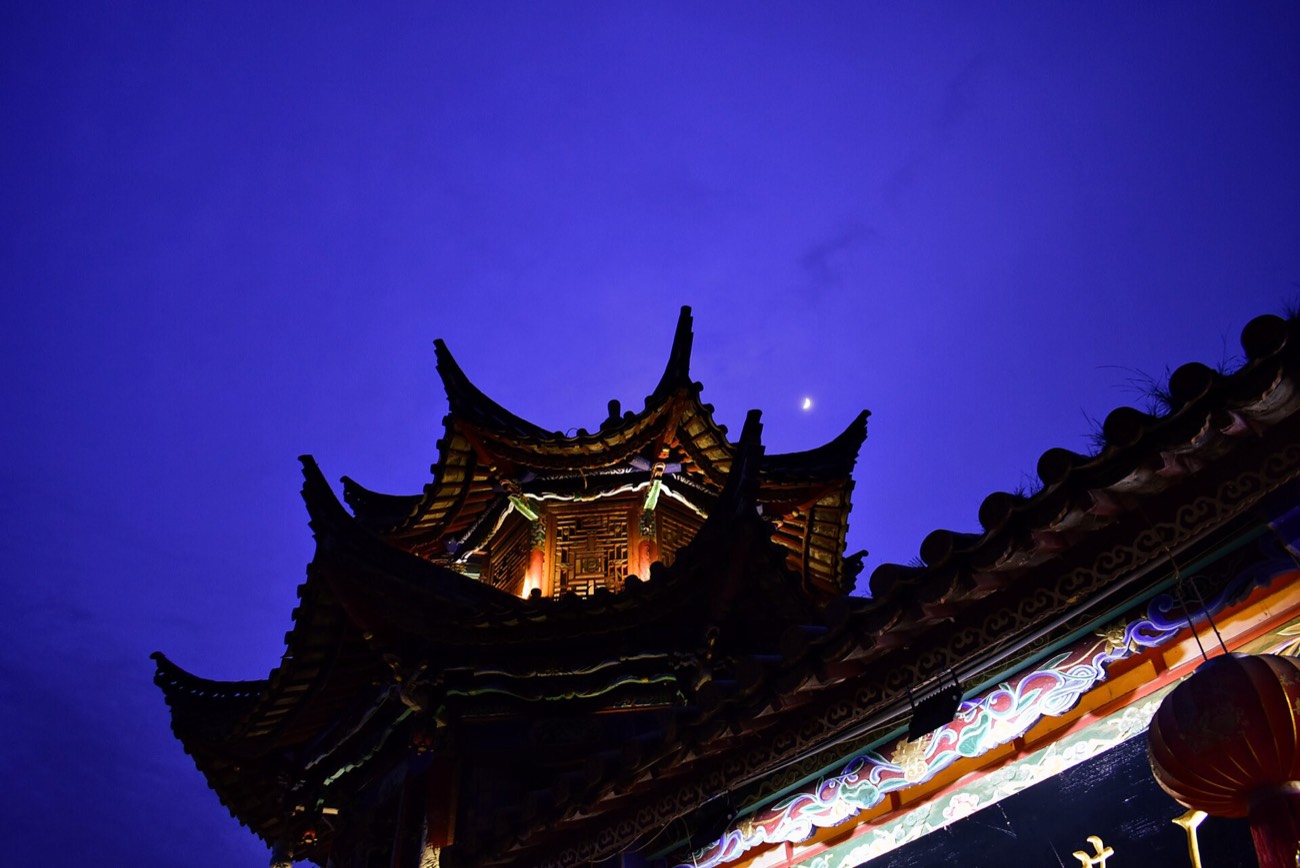
Kunming is known across China as Chūnchéng (春城, Spring City) for its near-perfect year-round climate — mild winters, cool summers, blue skies. The city sits at 1,890 m on the Yunnan plateau, surrounded by lakes and mountains, with the seasonal pink-and-purple bloom of the jacaranda trees turning the streets violet every April.
Kunming is the gateway to almost everything Yunnan is famous for — the UNESCO Stone Forest is 90 minutes east, the Dianchi Lake wetlands ring the city’s south, and direct trains and flights spread out to Lijiang, Dali, Shangri-La and Xishuangbanna. Don’t miss the Yunnan Provincial Museum’s Dian Kingdom bronzes.
Deep-dive guide coming soon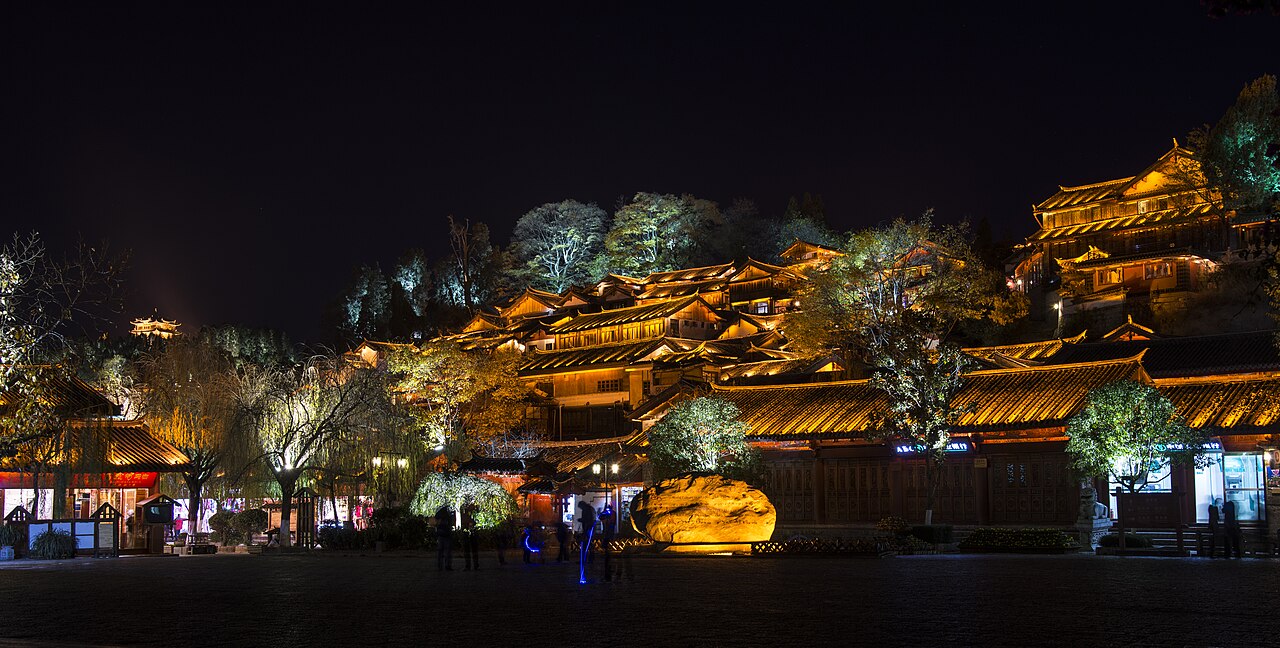
Lijiang丽江
The 800-year-old Lijiang Old Town is a UNESCO World Heritage maze of cobbled lanes, stone bridges, willow-lined canals and tile-roofed Naxi courtyard houses, all framed by the snow-capped Jade Dragon Snow Mountain.
Deep-dive guide coming soon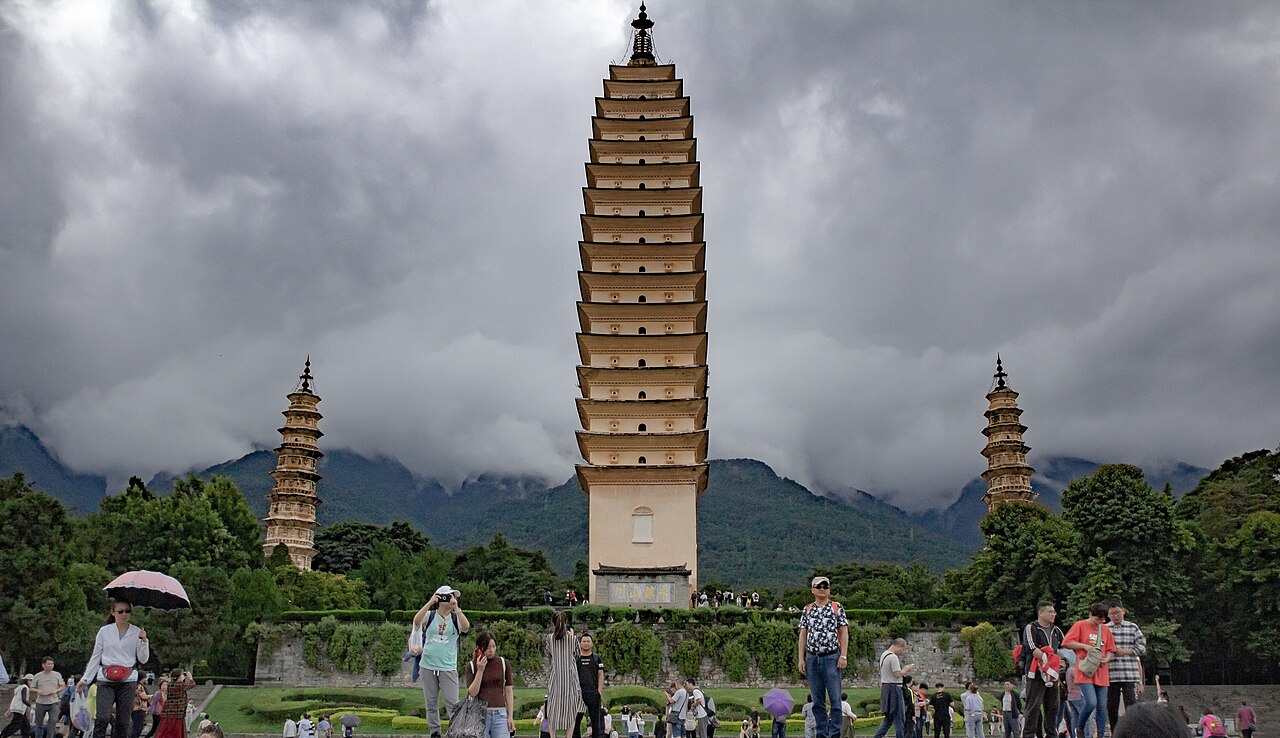
Dali大理
The walled Dali Ancient City sits between the Cangshan mountains and 250-km² Erhai Lake. Once the capital of the Nanzhao and Dali kingdoms, today it’s the centre of Bai-minority culture and the site of the iconic Tang-dynasty Three Pagodas.
Deep-dive guide coming soon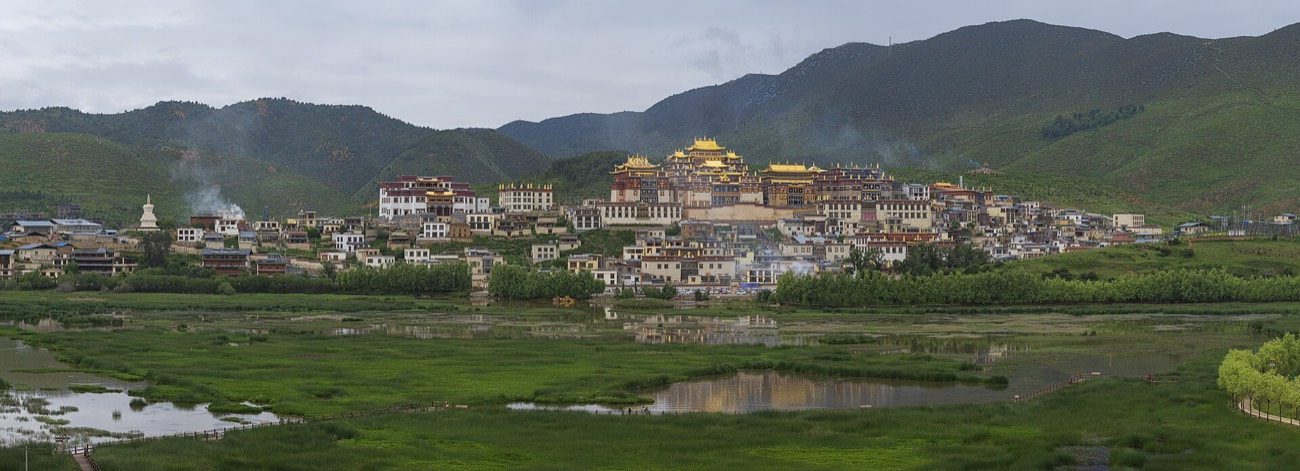
Shangri-La香格里拉
At 3,200 m elevation on the Tibetan plateau’s southeastern edge, Shangri-La (formerly Zhongdian) is a Tibetan town with prayer-flag-strung streets and the magnificent Songzanlin Monastery — often called the “Little Potala Palace of Yunnan”.
Deep-dive guide coming soon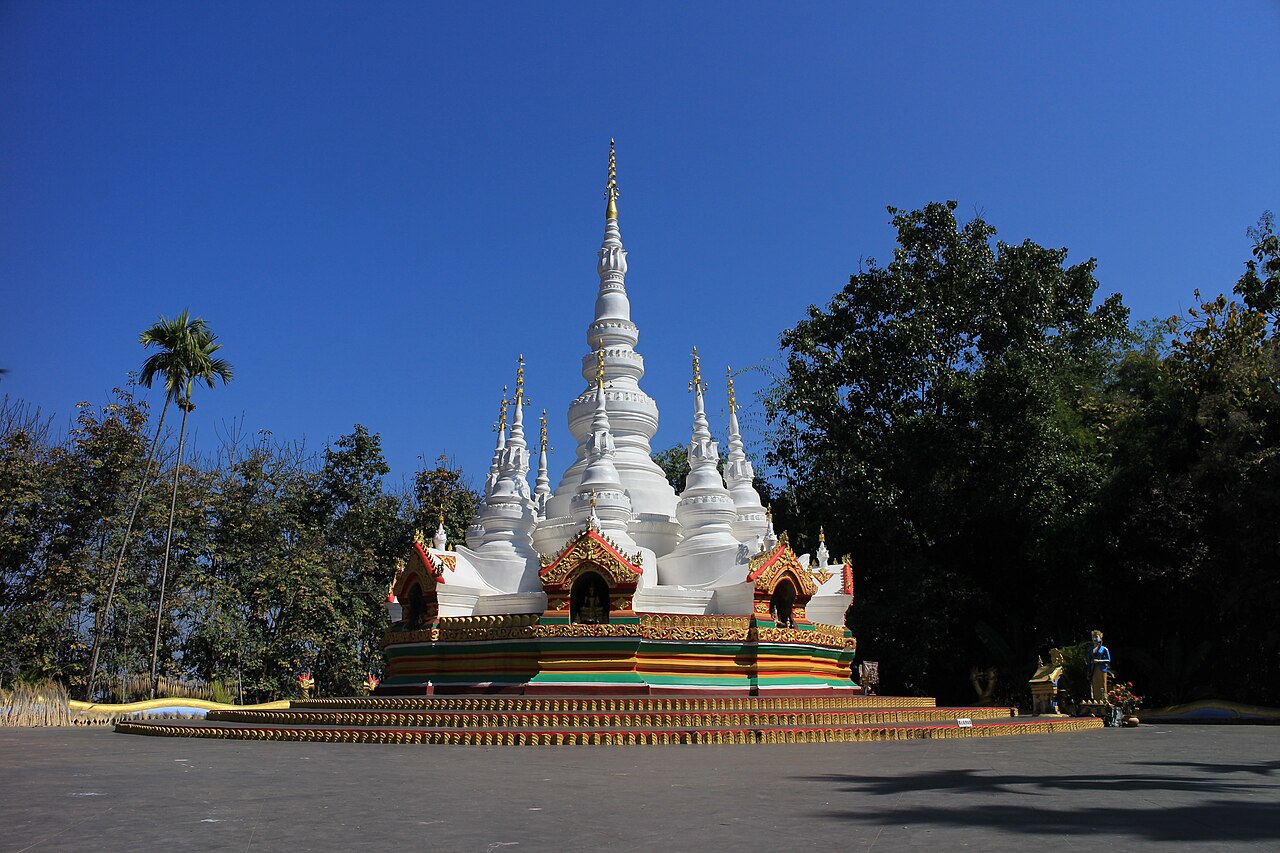
Xishuangbanna西双版纳
Yunnan’s tropical southwest on the Burmese and Lao borders. The Dai minority practise Theravada Buddhism in gilded stupa temples, and the Mekong flows through Jinghong, the capital. The Pu’er tea trade originated here.
Deep-dive guide coming soonIconic attractions across the province
Yunnan packs two UNESCO World Heritage sites plus some of China’s most dramatic natural scenery into one province. Five landmarks worth planning your trip around:
Stone Forest 石林
UNESCO World Heritage (part of South China Karst) — a 270-million-year-old karst landscape of grey limestone pillars 90 minutes east of Kunming. The Yi minority who live around it call it the “world’s first wonder”, and consider it the birthplace of their mythological heroine Ashima. Best visited early morning before the tour buses arrive.
Jade Dragon Snow Mountain 玉龙雪山
The 5,596 m sacred mountain that towers over Lijiang. Thirteen peaks, glaciers and a year-round snowcap visible from the Old Town. A cable car climbs to over 4,500 m, where the open-air Impression Lijiang show — choreographed by Zhang Yimou — runs against the snow-peak backdrop.
Three Pagodas of Chongsheng Temple 崇圣寺三塔
Dali’s most recognisable landmark — three Tang-dynasty stone pagodas (the tallest is 69 m, from c. 824 CE) that have survived a millennium and multiple earthquakes. Backed by the Cangshan mountains and reflected in a lake at the temple’s lower garden.
Tiger Leaping Gorge 虎跳峡
One of the deepest river canyons in the world — the Jinsha River (upper Yangtze) drops through a 16-km gorge between the 5,596 m Jade Dragon and 5,396 m Haba Snow Mountain. The classic two-day high trail along the gorge between Lijiang and Shangri-La is one of the great Chinese treks.
Yuanyang Rice Terraces 元阳梯田
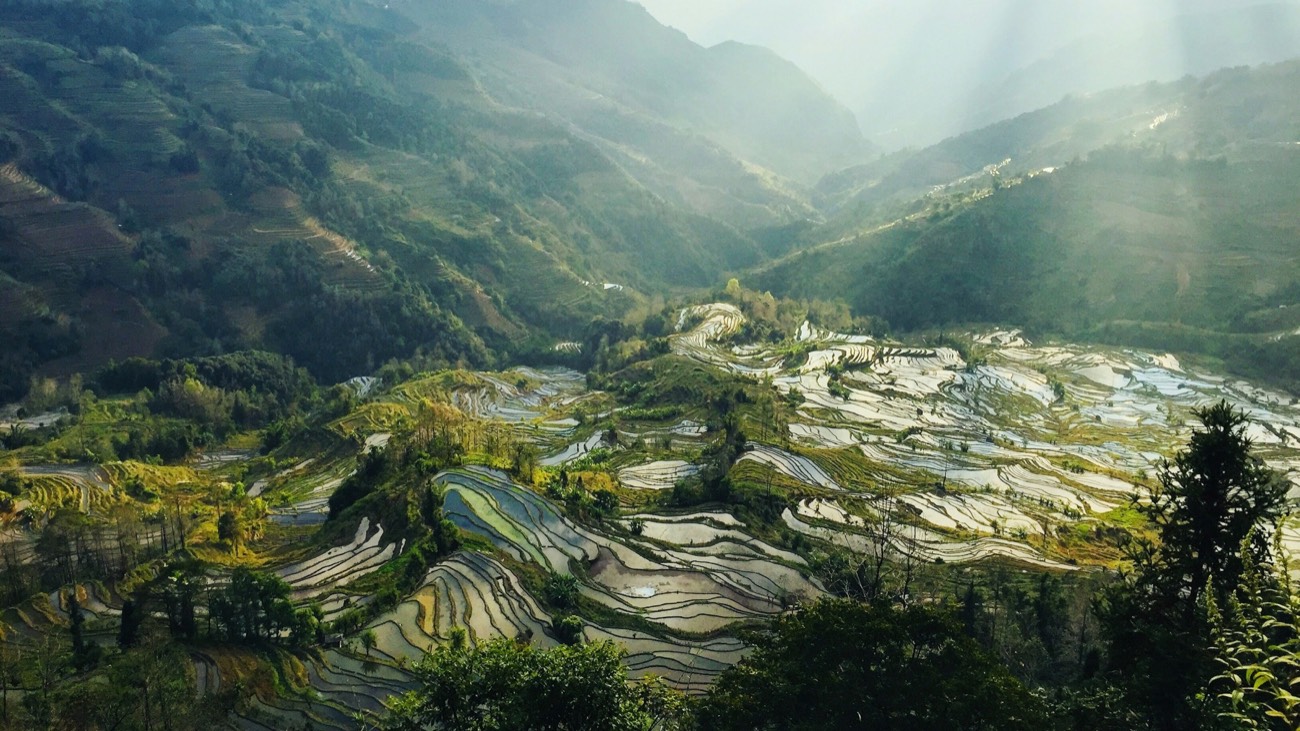
UNESCO World Heritage — 1,300 years of Hani-minority farming have carved 16,000 hectares of rice terraces into the Ailao mountains of southern Yunnan. At sunrise the flooded paddies turn into a giant mirror of pink and gold. Best between November and April when the terraces are flooded.
Lugu Lake 泸沽湖
A serene high-altitude lake on the Yunnan–Sichuan border, home to the Mosuo people and their famous matrilineal society. Wooden boats, quiet islands and grandmother-led households make it one of the province’s most singular places.
Famous Yunnanese figures
Six figures born in Yunnan whose work shaped modern China — across 600 years of exploration, politics, poetry and dance.
Zheng He (郑和)
Born Ma He in Kunming to a Hui Muslim family. The Ming dynasty’s greatest naval commander — led seven voyages between 1405 and 1433 with fleets of up to 300 ships, reaching East Africa decades before Vasco da Gama. The Zheng He statue at the Kunming lakeside park honours his birthplace.
Cai E (蔡锷)
The Yunnan Army general who, in December 1915, launched the National Protection War against Yuan Shikai’s attempt to declare himself emperor — a campaign that collapsed Yuan’s regime within months and saved China’s nascent Republic.
Wen Yiduo (闻一多)
One of modern China’s greatest poets and a literature professor at the wartime Southwest Associated University in Kunming. A vocal democracy activist, he was assassinated in Kunming in 1946 — a moment that radicalised many Chinese intellectuals.
Long Yun (龙云)
The Yi-minority general who governed Yunnan from 1927 to 1945, keeping the province semi-autonomous through the Republican era. His tolerance of intellectuals fleeing Japan allowed Southwest Associated University to thrive in Kunming during WWII.
Yang Liping (杨丽萍)
Born to a Bai-minority family in Dali. Renowned as the “Spirit of the Peacock” for her transcendent peacock dance — first performed in 1986 and now one of the most recognisable images of contemporary Chinese dance. Founder of the Dynamic Yunnan stage show.
Nie Er (聂耳)
Born in Kunming. Composer of the March of the Volunteers (义勇军进行曲), which became the national anthem of the People’s Republic of China in 1949. A pioneer of modern Chinese music; died at just 23 in Japan.
Yunnan’s modern economy & global role
Yunnan is the southwest gateway between China and Southeast Asia — sharing borders with Myanmar, Laos and Vietnam, and serving as the terminus of the China-Laos Railway that opened in 2021. The economy mixes tea, tobacco, hydropower and a booming tourism sector that has reshaped the cities of Lijiang, Dali and Shangri-La over the past two decades.
Pu’er — the world’s most-traded fermented tea
Yunnan is the original home of Pu’er tea, named after the southern Yunnan town of Pu’er. Centuries-old tea trees still grow in Xishuangbanna and Lincang; aged Pu’er cakes can fetch tens of thousands of dollars in collectors’ markets.
China’s biggest tobacco producer
Hongta and Hongyun brand cigarettes are made in Yunnan, and the province grows roughly one third of China’s tobacco crop. Tobacco tax was historically a fifth of Yunnan’s provincial revenue — a controversial dependency the province is gradually diversifying away from.
The headwaters province
Three of Asia’s great rivers — the Yangtze (Jinsha), Mekong (Lancang) and Salween (Nu) — all run through Yunnan. The province hosts massive dams including the world’s eleventh-largest, Xiluodu, and is China’s biggest hydropower exporter to the eastern coast.
One of China’s top travel provinces
Yunnan attracts over 800 million domestic visitor-trips per year — driven by Lijiang, Dali, Shangri-La, Xishuangbanna and the Stone Forest. The China-Laos Railway opened Kunming–Vientiane direct rail and is expected to push international tourism numbers steadily higher.
Why Yunnan matters for Mandarin learners
The most multilingual province in China — and a gentle place to listen
Kunming has, over the past decade, become a favourite mainland Chinese city for English-speaking learners on a budget. The pace is markedly slower than Beijing or Shanghai, rent is a fraction of either city, the climate is the best in China, and the city has a long tradition of welcoming outsiders thanks to its border-province geography.
For Mandarin learners, Yunnanhua is one of the gentlest regional accents to start training your ear on — it’s Southwestern Mandarin, so you’ll still understand the great majority of conversations on your first day. The remaining gap is local vocabulary and the lovely melodic intonation. The bonus, unique to Yunnan, is the surrounding ethnic-minority languages — you can spend a morning hearing Mandarin in a Kunming café and an afternoon hearing Bai or Naxi in a Dali market, all in the same trip. For the bigger picture of getting started, see our guide to learning Mandarin as an adult, and for the full landscape of Chinese languages our guide to languages and dialects in China.
Visiting Yunnan — practical notes
Best time
March–June and September–November — mild weather, clearest skies. Kunming is comfortable year-round. For Yuanyang’s flooded terraces, aim for November–April. Avoid heavy monsoon (July–August) in the tropical south.
Getting around
Kunming is the rail and air hub; high-speed trains reach Dali and Lijiang in a few hours. Shangri-La needs a flight or a long mountain drive. The China-Laos Railway connects Kunming to Vientiane via Pu’er and Xishuangbanna.
Altitude
Shangri-La sits at 3,200 m — mild altitude effects are common. Acclimatise in Lijiang (2,400 m) for a day first if you can. Carry water and skip alcohol on the first night.
Visa
240-hour transit visa-free entry for many nationalities (as of 2026). Kunming is one of the transit cities, and Xishuangbanna runs visa-on-arrival for a few neighbouring countries.
Language
Standard Mandarin universal across Yunnan, including ethnic-minority areas. English is patchy outside the tourist core of Lijiang and Dali. A few key phrases in Mandarin go a long way.
Costs
One of mainland China’s cheaper provinces for travellers — meals from ¥20, basic guesthouses from ¥150, even Shangri-La hotels are affordable. Lijiang’s old town is the priciest part.
Useful Mandarin phrases — tap to hear
- 你好 (nǐhǎo)Hello
- 谢谢 (xièxie)Thank you
- 多少钱? (duōshao qián?)How much?
- 我要这个 (wǒ yào zhège)I want this
For a fuller traveller’s phrase set, see our essential Mandarin phrases for travelling to China.
Test your Yunnan knowledge
1. Yunnanhua is part of which Chinese language family?
2. How many of China’s 55 ethnic minorities call Yunnan home?
3. Yunnan’s signature dish is:
4. Yunnan’s famous aged, fermented tea, pressed into cakes, is:
Frequently asked questions
Start your Mandarin journey
Want to learn the Standard Mandarin spoken across Yunnan and the rest of China? Online 1-on-1 lessons with a native speaker.