A Guide to Tibet (西藏): Lhasa, the Himalaya & Tibetan Culture
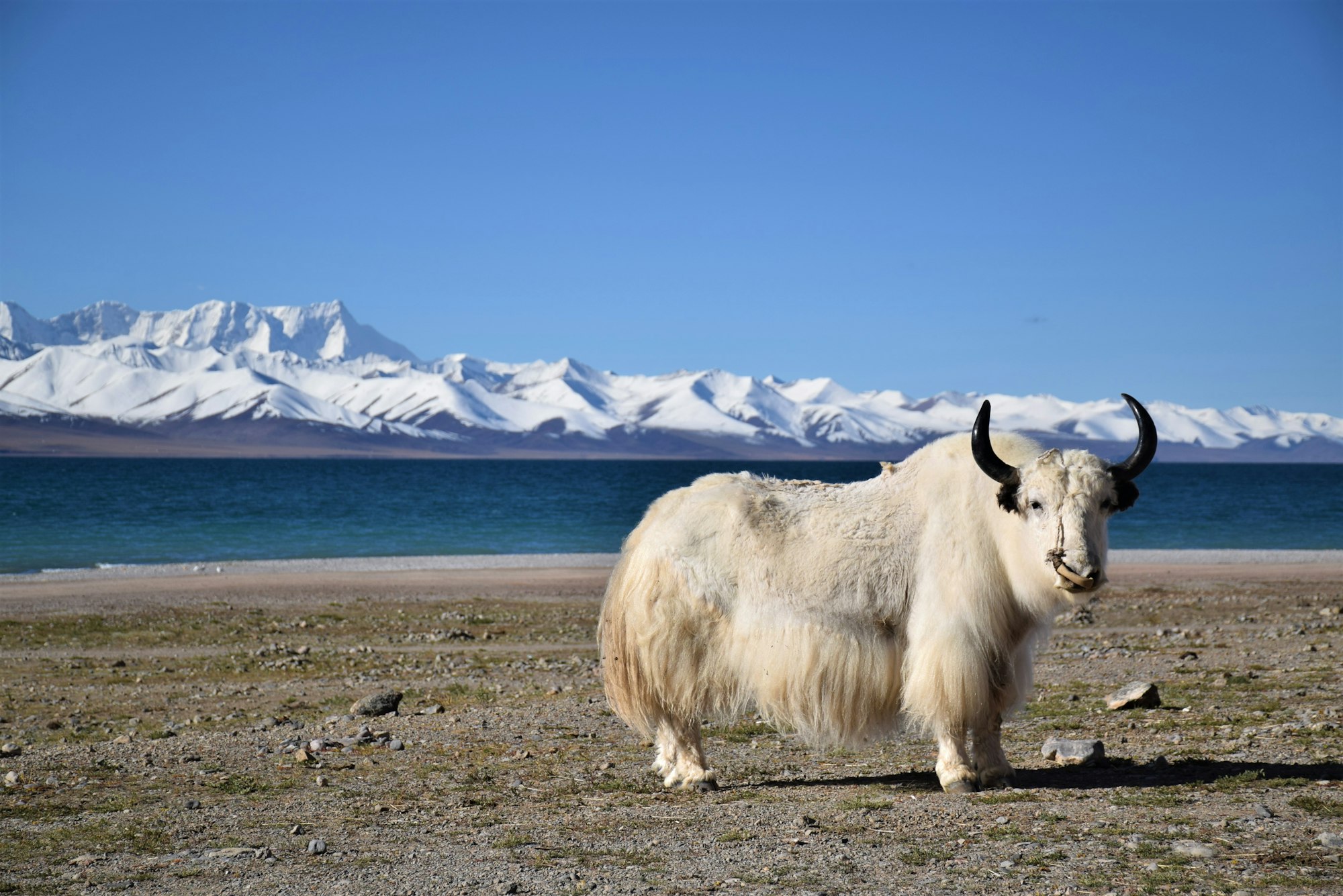
High above the rest of China, on the vast tableland between the Himalaya and the Kunlun, lies Tibet (西藏 Xīzàng) — the “Roof of the World”. It is a land of thin bright air and enormous horizons: snow giants on every skyline, turquoise lakes, golden monastery roofs and the gilded bulk of the Potala Palace rising over Lhasa. For many travellers it is the great bucket-list journey in China.
For Mandarin learners, Tibet is a journey where the language is genuinely useful: standard Mandarin is widely spoken across the plateau and is the practical lingua franca for transport, hotels and markets, while Tibetan — a language with its own ancient script — adds a fascinating second layer. This guide covers the culture and history, the language, the food, four places worth your time, and what to know before you go — from altitude to the high passes.
A brief history of Tibet
Tibetan civilisation was cradled in the Yarlung valley, south-east of Lhasa, where legend places the first kings. In the 7th century the warrior-king Songtsen Gampo united the surrounding chiefdoms into the Tibetan Empire, moved his court to Lhasa, and built the first temple on the site of the Jokhang. His marriages — to Princess Wencheng of Tang China and to a Nepalese princess — brought Buddhist images, artisans and learning onto the plateau.
It was in this era that the minister Thonmi Sambhota devised the Tibetan script, modelled on an Indian alphabet, giving Tibet a written language for the first time. Over the following centuries Buddhism took deep root, blending with older beliefs and flowering into the distinctive schools and monastic traditions of Tibetan Buddhism — and into a golden age of temple-building, painting and scholarship.
By the medieval period the great monasteries — Sera, Drepung, Ganden, Tashilhunpo — had become powerful centres of art and learning, drawing pilgrims from across the Himalaya. In the 1640s the Potala Palace was rebuilt on a monumental scale on Lhasa’s Marpo Ri hill, becoming one of the wonders of Asian architecture. That deep heritage of devotion, scholarship and craftsmanship is what gives Tibet its extraordinary cultural character today.
The Tibetan language
Tibetan is not a dialect of Chinese but a language in its own right — the leading member of the Tibetic branch of the wider Sino-Tibetan family, and a cousin of Burmese rather than of Mandarin. It is written in a graceful alphabetic script devised in the 7th century, read across temple walls, prayer flags and the carved mani stones piled along mountain paths.
Spoken Tibetan varies across the plateau, with the Lhasa dialect serving as the prestige standard, while Classical Tibetan remains the language of the Buddhist scriptures — one of the great religious literatures of the world. The honorific system is elaborate, and the sounds, including a set of tones in the central dialects, are quite unlike Mandarin.
For visitors and learners the practical picture is reassuring: standard Mandarin is widely spoken across Tibet — in schools, on the railway, in hotels, shops and tour offices — and is the everyday language travellers will use. Learning to read even a few Tibetan letters, and to say a warm tashi delek, is a lovely way to honour where you are.
Six Tibetan words worth knowing
Tibetan is a language in its own right, not a dialect of Chinese, and it sits at the heart of daily life and Buddhism across Xizang. Standard Mandarin is widely understood in Lhasa and most towns, so you’ll get by, but a few words of Tibetan are always warmly received. Tap 🔊 for the Standard Mandarin reading of the transliteration characters — a Tibetan speaker pronounces these quite differently.
Phrases worth knowing in Tibet
Six phrases for the plateau — mostly Mandarin, with the one Tibetan greeting every visitor should know. Tap 🔊 for native audio.
Food for the high plateau
Tibetan food is shaped by altitude, cold and the animals that thrive up high. With little that will grow at 4,000 metres beyond hardy barley, the cuisine leans on barley, the yak and tea — simple, warming and wonderfully suited to its environment.
At its centre are two things every traveller meets on day one: tsampa, the roasted-barley staple, and butter tea, salty and rich, which does more to fend off the cold and the altitude than any guidebook tip. Around them sit hearty yak dishes, momo dumplings, noodle soups and thick plateau yoghurt. Eat warm, drink often, and go gently.
Say the menu
Tap 🔊 to hear each dish in Mandarin:
Notable cities of Tibet
Tibet’s towns string along the high valleys, each with its own monasteries and mountain backdrop — from the capital to the gateway to Everest and the green gorges of the east. Five very different places worth your time:
Lhasa拉萨
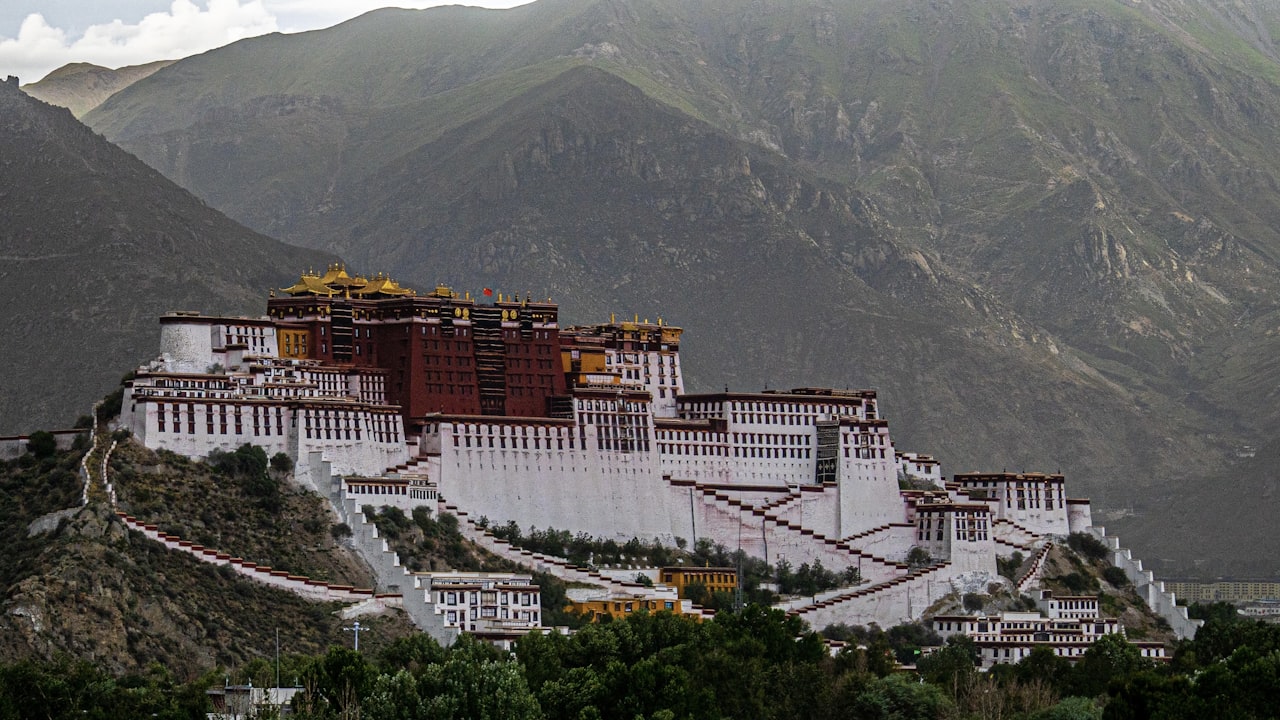
Lhasa, the “place of the gods”, is the heart of Tibet and almost everyone’s first stop. Above the city rises the Potala Palace, thirteen storeys of white and ochre against the sky — a UNESCO World Heritage masterpiece. Below it, the golden-roofed Jokhang Temple is Tibet’s most sacred shrine, circled day and night by pilgrims walking the Barkhor.
On the city’s edge stand the great monastic universities of Sera and Drepung, where you can still watch monks debating in the courtyards. At 3,650 metres, Lhasa is also where you acclimatise — take the first days slowly, and let the city’s extraordinary atmosphere sink in.
Deep-dive guide coming soon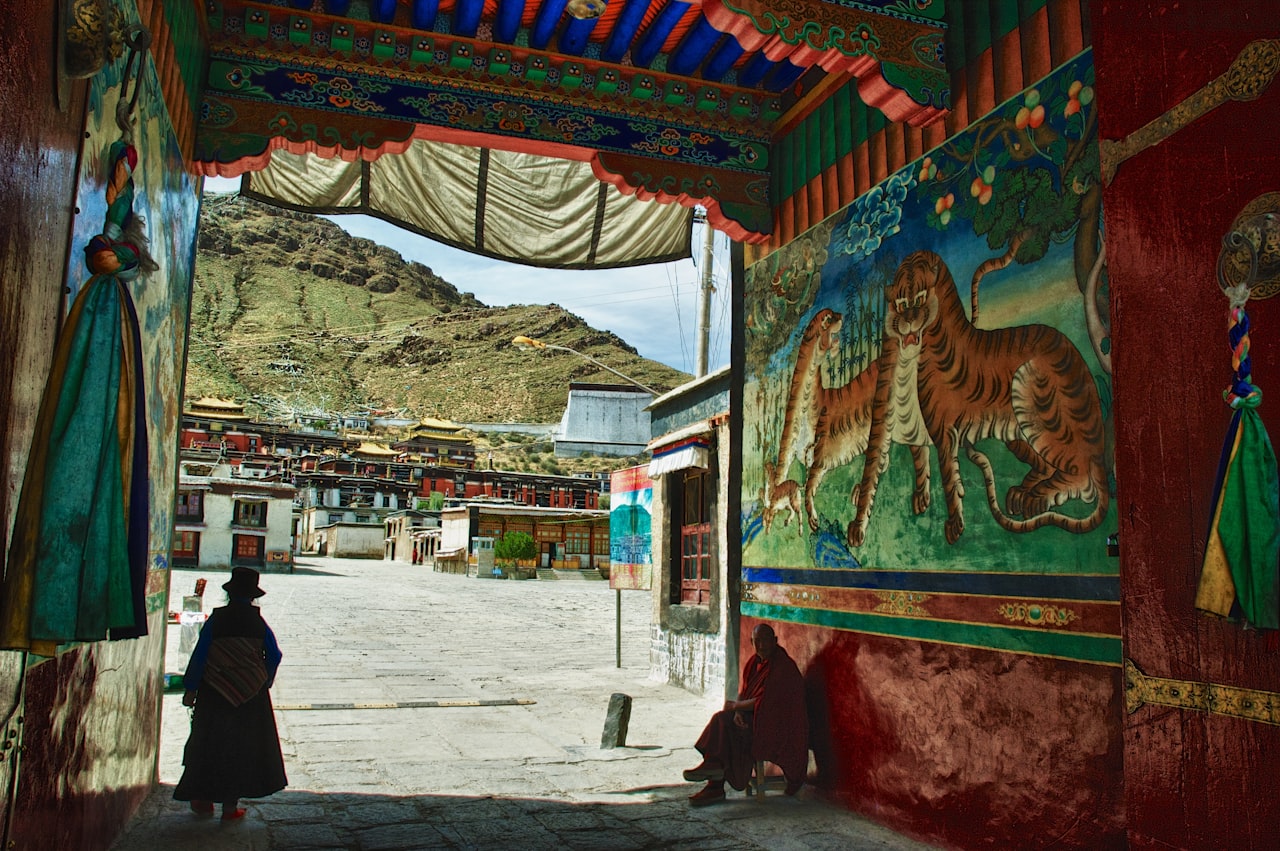
Shigatse日喀则
Tibet’s second city sits where the roads west and south converge. Its glory is Tashilhunpo Monastery, founded in 1447 — a hillside city of whitewashed halls and golden roofs, home to a giant gilded Maitreya Buddha nearly 27 metres tall, one of the largest in the world.
Shigatse is also the gateway to the high south-west and the Tibetan approach to Mount Everest (Qomolangma). Many overland journeys to the world’s highest base camp begin here, climbing over passes strung with prayer flags toward the great peaks.
Deep-dive guide coming soon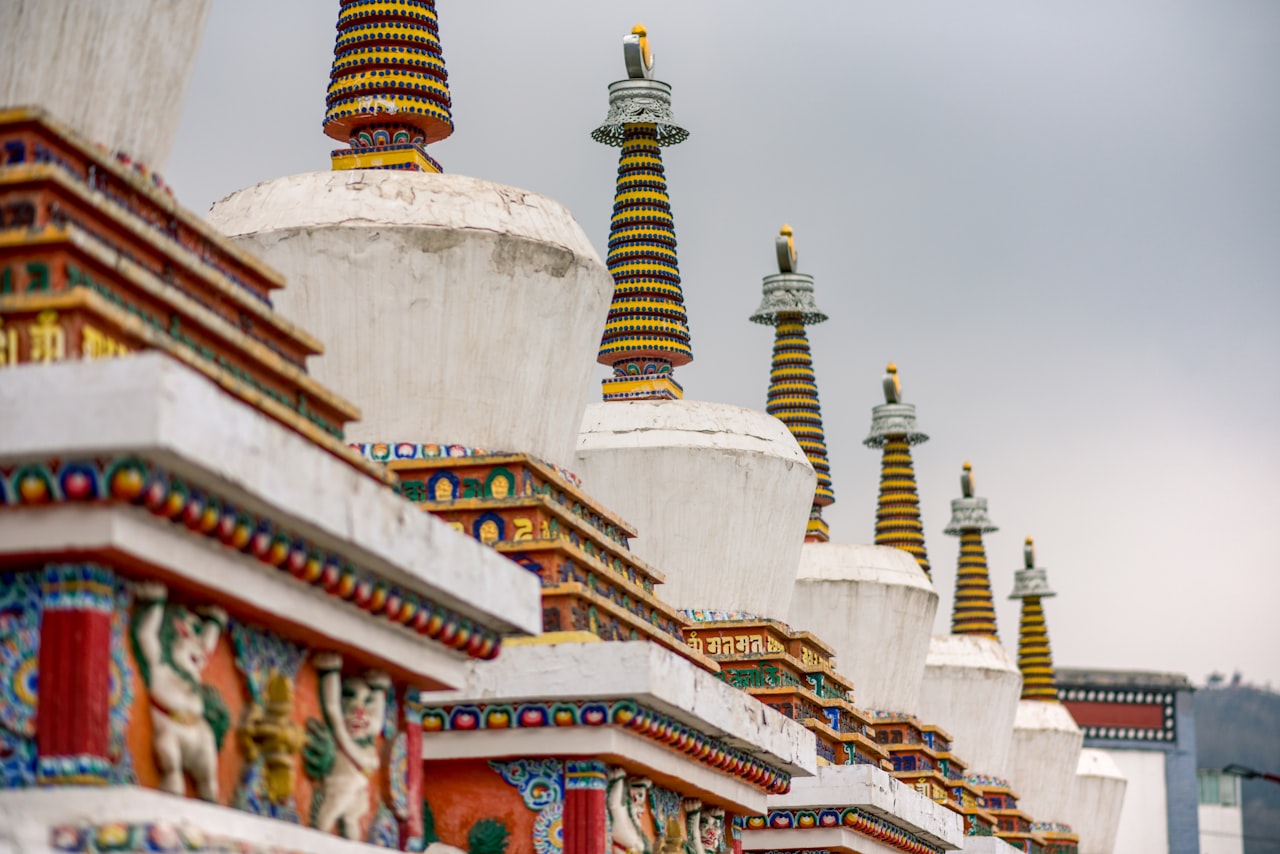
Gyantse江孜
Gyantse is one of the best places to feel old Tibet. Its centrepiece is the Gyantse Kumbum at Pelkor Chode Monastery — a soaring tiered stupa of golden domes housing scores of chapels and thousands of murals, the finest surviving example of its kind.
Above the town broods the old hilltop dzong (fortress), and the surrounding Nyang valley is a patchwork of barley fields and farming villages. Smaller and slower than Lhasa, Gyantse rewards an unhurried wander.
Deep-dive guide coming soon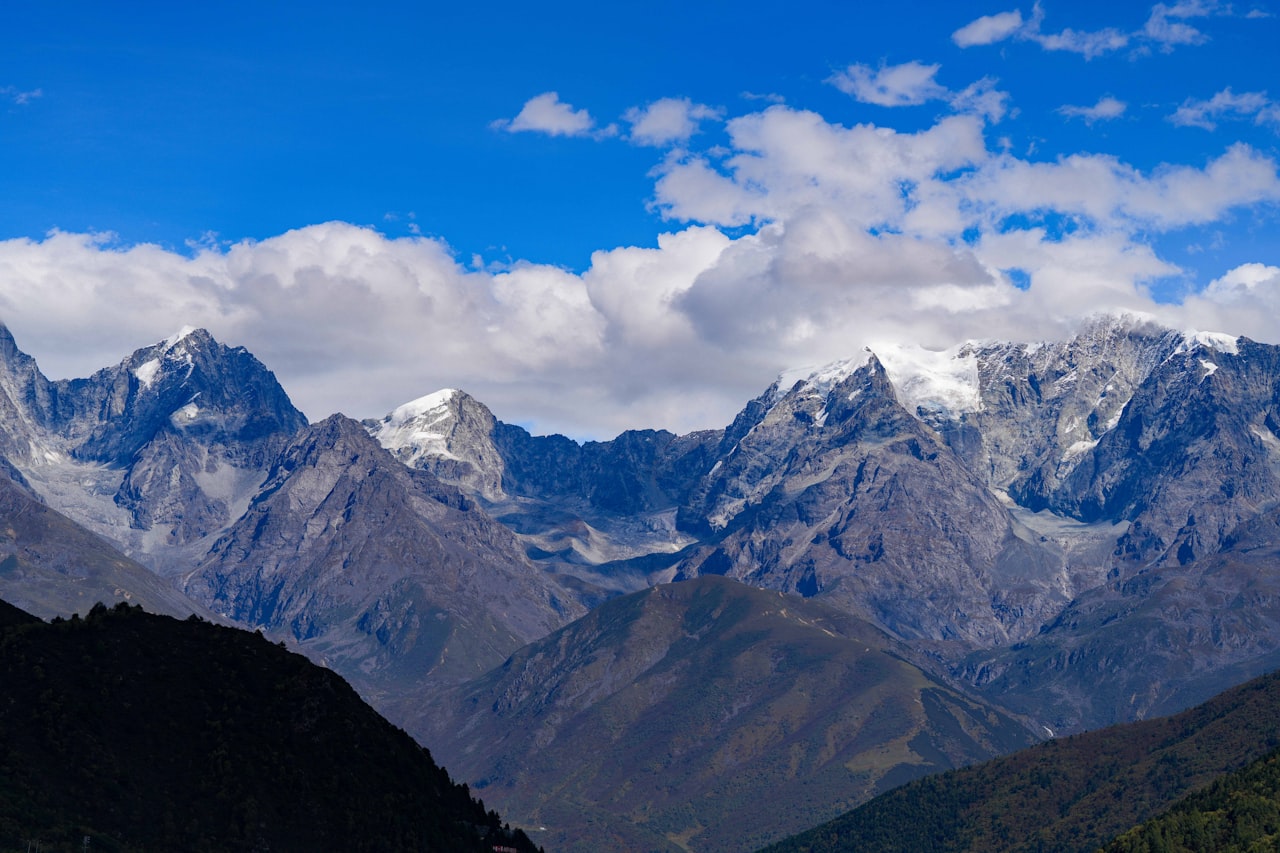
Nyingchi林芝
East of Lhasa, Nyingchi sits much lower — around 3,000 metres — in a green world of forests, rivers and gorges that earns it the nickname “the Switzerland of Tibet”. In spring the valleys foam with wild peach blossom beneath the snow peaks; the gentler altitude makes it a kind first taste of the plateau.
This is the country of the Yarlung Tsangpo Grand Canyon — one of the deepest gorges on Earth — and the great pyramid of Namcha Barwa. Lakes like Basum Tso and the dramatic river bends make Nyingchi the scenic, outdoorsy side of Tibet.
Deep-dive guide coming soon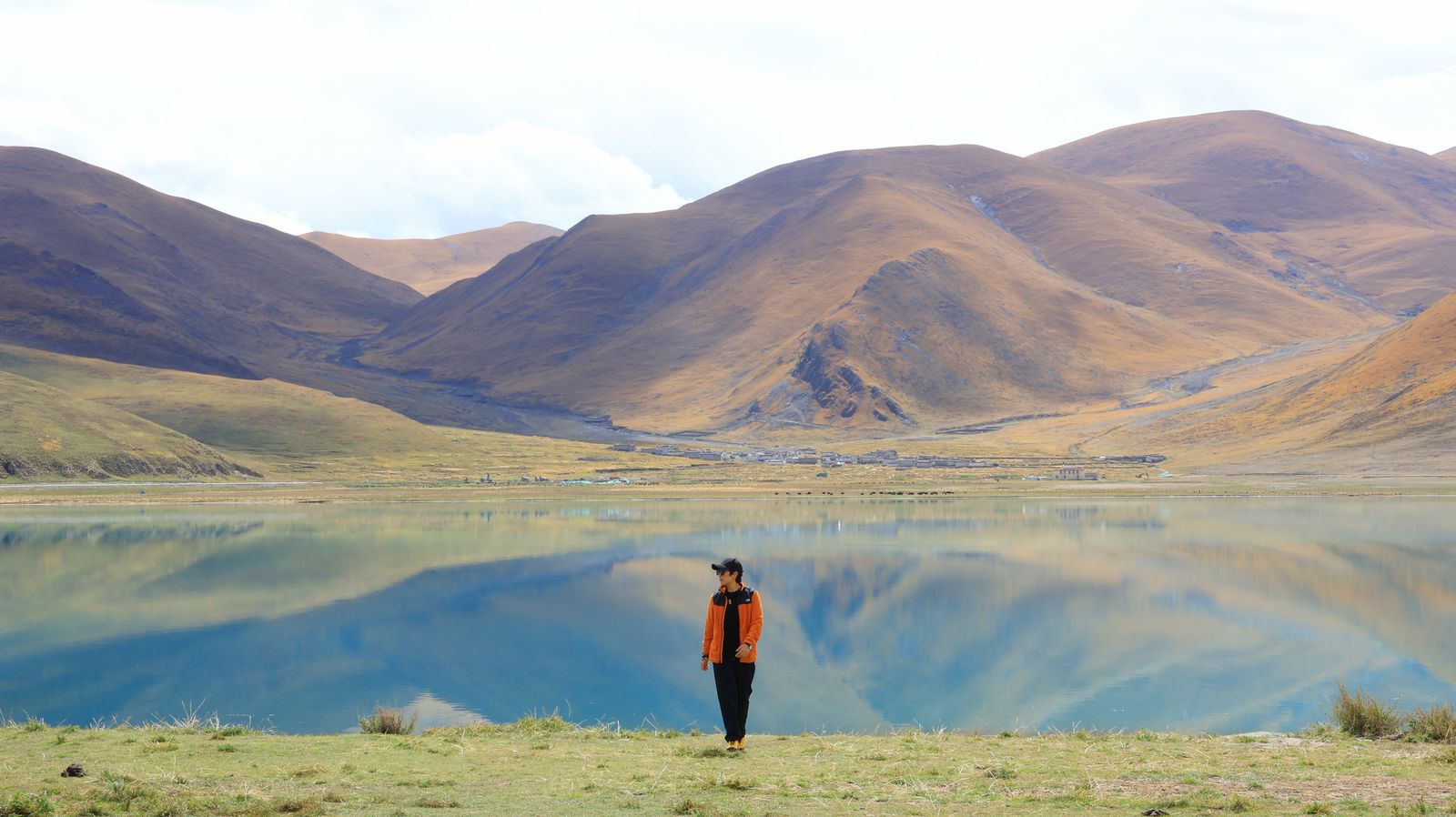
Shannan山南
South-east of Lhasa along the Yarlung Tsangpo, Shannan (Tsetang) is revered as the cradle of Tibetan civilisation — home to Yumbulagang, said to be Tibet’s first palace, and Samye, its first Buddhist monastery.
Beyond the monasteries lie some of the plateau’s most serene landscapes: still turquoise lakes, golden autumn barley and bare ochre hills mirrored in glassy water.
Deep-dive guide coming soonIconic attractions across Tibet
Six Tibetan landmarks worth building a journey around — from the UNESCO-listed Potala to the highest mountain on Earth:
The Potala Palace 布达拉宫
The image of Tibet: a thirteen-storey palace of over a thousand rooms climbing Lhasa’s Marpo Ri hill, rebuilt on a monumental scale in the 1640s. A UNESCO World Heritage Site and a masterpiece of Tibetan architecture, art and engineering.
Jokhang Temple & the Barkhor 大昭寺
Tibet’s most sacred temple, founded in the 7th century and the spiritual centre of Lhasa. Around it runs the Barkhor pilgrimage circuit, where the devout walk clockwise amid incense, prayer wheels and market stalls — the most atmospheric place in the city.
Mount Everest / Qomolangma 珠穆朗玛峰
The highest mountain on Earth, approached from the north through Tibet. The high base camp offers one of the planet’s great views — the sheer north face of Qomolangma rising above a windswept, prayer-flag-strewn plain.
Namtso Lake 纳木错
One of the highest large lakes in the world, at over 4,700 metres — a vast sheet of electric blue ringed by snow peaks and grazing yaks. A sacred lake and an unforgettable day or overnight trip from Lhasa.
Yarlung Tsangpo Grand Canyon 雅鲁藏布大峡谷
In Nyingchi, the river has carved one of the deepest canyons on Earth, curving around the great peak of Namcha Barwa. Forested, misty and far greener than the high plateau — Tibet at its most dramatic.
Mount Kailash 冈仁波齐
A pyramid-shaped peak in far western Tibet held sacred by four religions — Buddhists, Hindus, Jains and Bön. Pilgrims walk the 52-kilometre kora around its base; not one has ever climbed it, and by custom no one ever will.
Famous figures of Tibet
Tibet’s story is told through its kings, scholars and poet-saints — the figures who built its civilisation and its great spiritual culture:
Songtsen Gampo (松赞干布)
The 7th-century king who united the Tibetan Empire, moved the capital to Lhasa and built the first temple on the site of the Jokhang. Tibetan tradition reveres him as the founder of the civilisation.
Princess Wencheng (文成公主)
Sent from the Tang court to marry Songtsen Gampo, she is remembered across Tibet for bringing Buddhist images, craftsmen and learning — a beloved symbol of cultural exchange.
Thonmi Sambhota (吞弥·桑布扎)
The minister credited with creating the Tibetan alphabet, modelled on an Indian script — the foundation of all written Tibetan literature and scripture.
Milarepa (米拉日巴)
Tibet’s best-loved yogi and poet, whose songs of enlightenment are still sung today. His life story, from sorcerer to sage, is one of the great tales of Tibetan Buddhism.
Je Tsongkhapa (宗喀巴)
The great scholar-monk who founded the Gelug school and Ganden Monastery, reshaping Tibetan Buddhist learning and monastic discipline for centuries to come.
Padmasambhava (莲花生)
Revered as Guru Rinpoche, the “Lotus-Born”, this 8th-century master helped establish Buddhism across Tibet and founded Samye, its first great monastery — one of the most beloved figures in Tibetan tradition.
Tibet’s economy & way of life
Life on the plateau is shaped above all by altitude. Where little will grow and the air is thin, the economy rests on hardy barley, the all-providing yak, and — increasingly — on travellers drawn by one of the most extraordinary landscapes and cultures on Earth.
The journey of a lifetime
Tourism is central to Tibet’s modern economy. The plateau’s monasteries, sacred lakes and the draw of Everest bring travellers from across China and the world — supporting guides, guesthouses and craftspeople across the region.
Barley and the yak
High-altitude agriculture and pastoralism remain the backbone of rural life: hardy highland barley (qingke), and herds of yak and dri that provide milk, butter, meat, wool and transport — a way of life little changed in centuries.
Access & tradition
The Qinghai–Tibet Railway — the highest railway on Earth — transformed access to the plateau and is an engineering marvel in its own right. Alongside it, traditional crafts endure: thangka painting, carpet-weaving and fine metalwork.
Sun, water and wind
The plateau’s thin air and fierce sunlight give Tibet some of the world’s best solar potential, while its great rivers hold vast hydropower — clean energy is now one of the region’s fastest-growing industries alongside tourism and herding.
Why Tibet matters for Mandarin learners
Mandarin is your practical travel language here. Across Tibet, standard Mandarin is the shared tongue of transport, hotels, restaurants and tour offices — so the Mandarin you’ve studied does real, daily work on what is, for many, the trip of a lifetime.
It’s a window onto another language entirely. Seeing Tibetan’s elegant script on temple walls and prayer flags — a language with its own ancient writing system — is a vivid reminder of how much linguistic richness sits within China’s borders.
The vocabulary of travel comes alive. Altitude, mountains, monasteries, tickets, weather, “go slowly” — the practical, high-frequency Mandarin you most need is in constant use, and a plateau journey is a memorable place to cement it.
Cultural respect goes a long way. Pairing your Mandarin with a few words of Tibetan — a warm tashi delek — and an understanding of monastery etiquette makes for a richer, more welcome visit.
Visiting Tibet — practical notes
Permits: In addition to a Chinese visa, foreign visitors need a Tibet Travel Permit, which is arranged for you by a registered tour operator as part of a guided trip — you cannot currently travel independently. A good agency handles the paperwork and itinerary; plan a few weeks ahead.
Getting there: Lhasa Gonggar Airport has flights from many Chinese cities. The most memorable arrival, though, is the Qinghai–Tibet Railway from Xining — the highest railway in the world, crossing passes above 5,000 metres with oxygen piped into the carriages.
Altitude is the big one: Lhasa sits at 3,650m and many sites are far higher. Acclimatise slowly — rest on arrival, drink plenty of water, avoid alcohol the first days, and ask your guide about altitude medication. Take it gently and the plateau is wonderful; rush it and you’ll feel it.
When to come: Late April to October is the main season, with warm days and clearer skies. Spring (March–April) brings the famous peach blossom to Nyingchi; autumn offers crisp air and big views. Winters are cold and many high routes close.
A week in Tibet: Three nights in Lhasa to acclimatise and see the Potala, Jokhang and the great monasteries; then overland via Gyantse and Shigatse (with Yamdrok and Karola passes en route), with an optional push to Everest base camp — or swap the west for greener Nyingchi if altitude is a concern.