Home › Festivals & Culture › Chinese New Year 2027
Chinese New Year 2027
In 2027 it falls on Saturday 6 February, and opens the year of the Fire Goat.
- When
- First day of the first lunar month (21 Jan – 20 Feb)
- In 2027
- Saturday 6 February
- Type
- Lunisolar 农历 — set by the moon, anchored to the sun
- Zodiac year
- 丁未 (Dīng-wèi) — the Fire Goat
- Greeting
- 新年快乐 (Xīnnián kuàilè)
- Runs for
- Fifteen days · Eve 5 Feb → Lantern Festival 20 Feb
When Chinese New Year 2027 falls, and why it moves
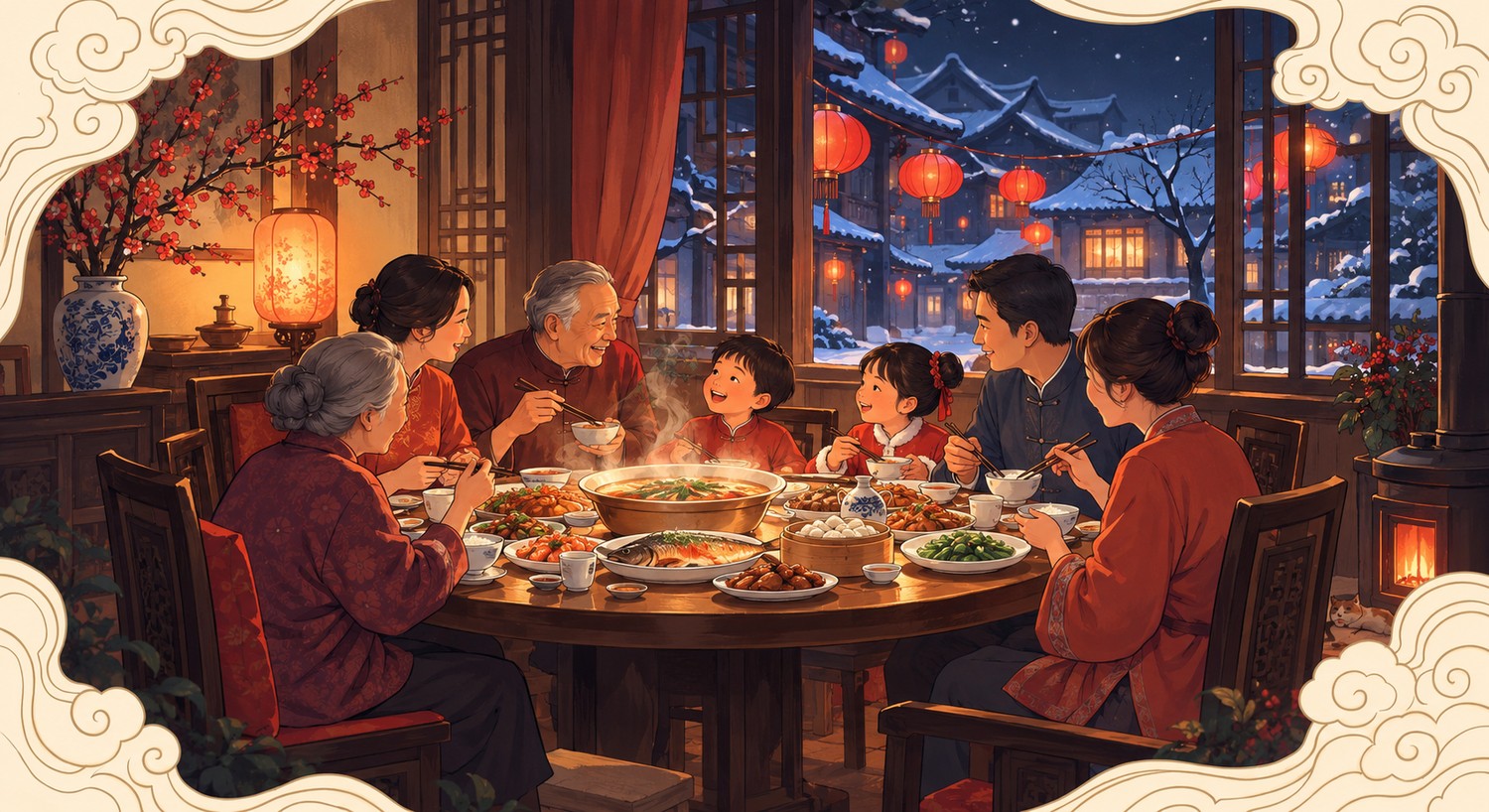
Chinese New Year 2027 is Saturday 6 February. The evening before — Friday 5 February — is 除夕 (chúxī), New Year’s Eve, and the reunion dinner that most people travel furthest of all to reach. The season runs fifteen days and closes with the Lantern Festival on Saturday 20 February.
The date moves because the calendar is lunisolar. A lunar month is the gap between one new moon and the next, about 29.5 days, so twelve of them come up roughly eleven days short of a solar year. Rather than let the new year drift through the seasons, the calendar adds a leap month every two or three years and pins the new year to the new moon falling between 21 January and 20 February. 2027 has no leap month.
The two-day gap almost nobody mentions
立春 (Lìchūn), “spring commences”, is the solar term that opens the agricultural year. In 2027 it falls on Thursday 4 February — two days before the lunar new year. So for forty-eight hours the solar year has turned and the lunar year has not.
It matters for exactly one question: a baby born on 4 or 5 February 2027 is still a 马 (mǎ), a Horse, by the lunar reckoning, but already a Goat by the solar one. Chinese astrology generally uses Lìchūn. Everyday conversation uses the lunar new year. Neither is wrong; they are answering different questions.
The fifteen days, and what happens in them
Only the first few days are public holidays, but the shape of the fortnight is old and still broadly followed. Not every family keeps every day — these are the ones that still have a recognisable character.
| Date | Day | What happens |
|---|---|---|
| Fri 5 FebNew Year’s Eve | 除夕 (chúxī) | The reunion dinner. The one meal of the year people travel furthest for. |
| Sat 6 FebDay 1 | 初一 (chūyī) | Visiting the oldest relatives first. Red packets to children. Traditionally no sweeping — you would be sweeping the luck out. |
| Sun 7 FebDay 2 | 初二 (chū’èr) | Married daughters return to their own parents, often the first visit of the year. |
| Mon 8 FebDay 3 | 赤口 (chìkǒu) | A day arguments are said to start easily, so many families stay in rather than visit. |
| Wed 10 FebDay 5 | 破五 (pòwǔ) | The day the new-year restrictions lift. Shops reopen and the God of Wealth is welcomed. |
| Fri 12 FebDay 7 | 人日 (rénrì) | “Everybody’s birthday” — in the old reckoning, everyone turns a year older together. |
| Sat 20 FebDay 15 | 元宵节 (yuánxiāojié) | The Lantern Festival closes the season, with tangyuan and lanterns after dark. |

What a Fire Goat year is
2027 is 丁未 (Dīng-wèi) — the Fire Goat. The animal is the part everyone knows, but it is only half of the name. The Chinese calendar pairs ten heavenly stems, which carry the five elements, with twelve earthly branches, which carry the animals. The pair advances together, so the same animal comes back every twelve years but the same animal-and-element combination only returns every sixty.
The last Goat year was 2015, a Wood Goat. The last Fire Goat year was 1967, and the next will be 2087.
Goat years: 1943 · 1955 · 1967 · 1979 · 1991 · 2003 · 2015 · 2027.
If you were born in one of those years, 2027 is your 本命年 (běnmìngnián) — your own zodiac year, which comes round every twelve. Tradition holds that it needs shoring up rather than celebrating, and the usual remedy is something red, worn close, and received as a gift rather than bought for yourself.
Find your own zodiac animal · check how two signs sit together
Five greetings, and when to use which
Tone matters more than vocabulary here. The safest opening with anyone older than you is health, not money.
The all-purpose one. Safe with anybody.
Heard everywhere at new year; in Cantonese, gung hei fat choi.
Year-specific — it only works in 2027.
What you say to older relatives, before anything about money.
Slightly formal, good in a card or a message.
More in the full guide to saying happy new year in Chinese.
新年快乐!
Xīnnián kuàilè!
“Happy New Year!”
What people actually do
The house is cleaned before the new year and not during it; the sweeping would take the luck with it. Debts are settled before the eve. Red is everywhere, on doors and envelopes and clothing, and the character 福 (fú), fortune, is often hung upside down — 倒 (dào), upside down, sounds like 到 (dào), has arrived.
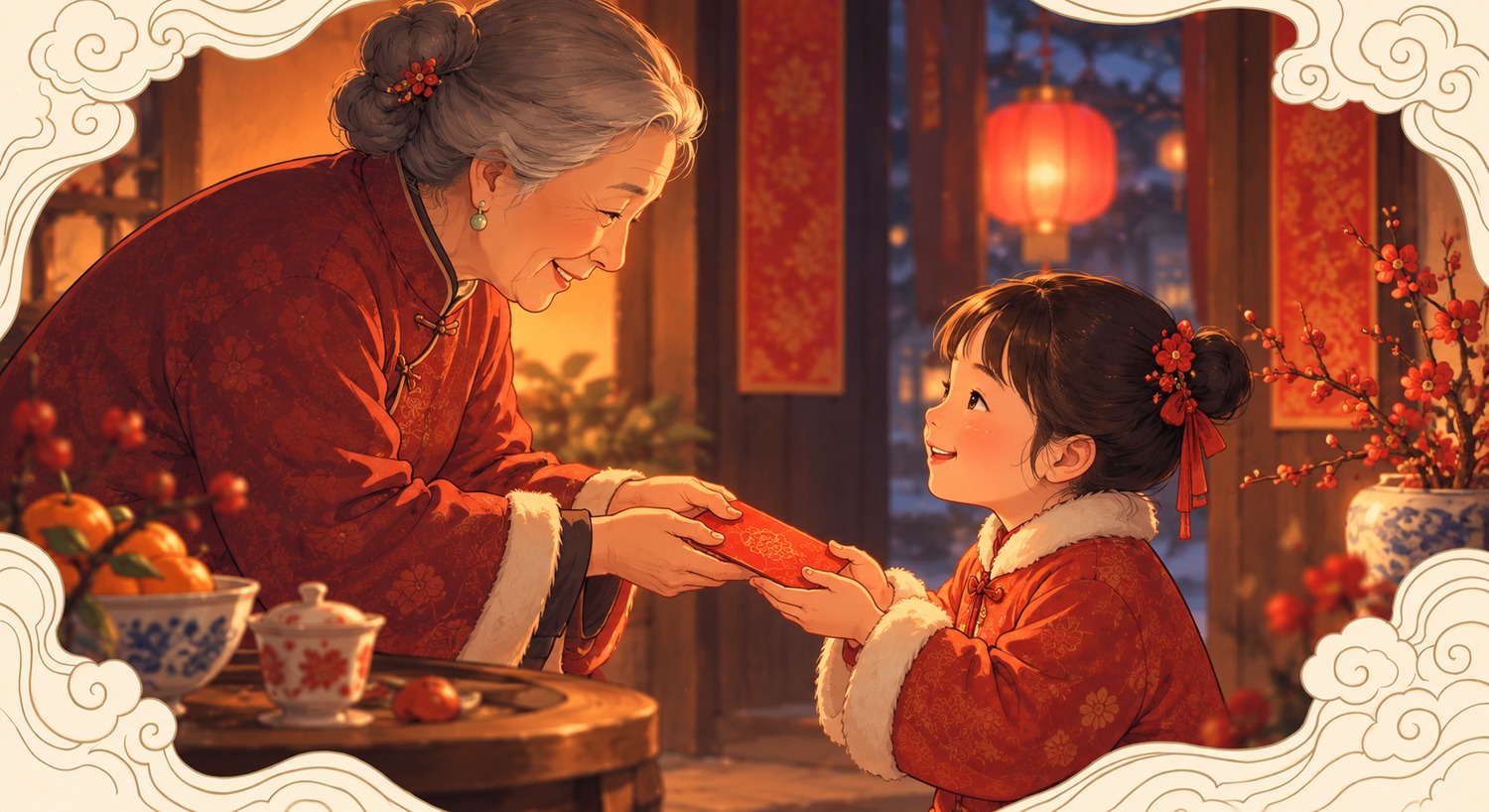
Red packets — 红包 (hóngbāo) — go from the married to the unmarried and from the older to the younger, given with both hands and not opened in front of the giver. The amount matters less than the number: eight is good, four is avoided.
The origins, the Nian legend and the full set of customs are covered on the Spring Festival guide, which stays the same from year to year. This page is only the part that changes.
Four things people get wrong
- It is not “Chinese New Year’s Day” and then back to work. The festival runs fifteen days to the Lantern Festival. Public holidays are shorter, but the season is not.
- The date is not random. It is the new moon falling between 21 January and 20 February — a window, not a lottery. 2027 lands near the middle of it.
- The year is not just “the Goat”. It is the Fire Goat, 丁未. The animal repeats every twelve years; the animal-and-element pairing only every sixty.
- Your own zodiac year is not considered lucky. 本命年 (běnmìngnián) is traditionally the year that needs shoring up — which is why the red is a gift, not a purchase.
Quick quiz
1. What date is Chinese New Year 2027?
2. Which animal and element is 2027?
3. A baby born on 5 February 2027 is…
FAQs
Saturday 6 February 2027. The celebrations begin the evening before, on Friday 5 February, with the reunion dinner, and run for fifteen days until the Lantern Festival on Saturday 20 February.
The Goat (羊, yáng). In full it is a Fire Goat year — 丁未 (Dīng-wèi) in the sixty-year cycle that pairs ten heavenly stems with twelve branches. The same animal returns every twelve years, but the same animal-and-element pairing only comes round every sixty. Meet all twelve animals in our Chinese zodiac guide.
The festival follows a lunisolar calendar. A lunar month runs from one new moon to the next, about 29.5 days, so twelve of them fall short of a solar year by roughly eleven days. Chinese New Year lands on the new moon that falls between 21 January and 20 February, which is why it drifts within that window rather than sitting on a fixed date.
It depends which boundary you use, and this is where most sources quietly disagree. By the lunar calendar the Goat year starts on 6 February, so a baby born on the 5th is still a Horse. By the solar term 立春 (Lìchūn), which falls on 4 February 2027, the Goat year has already begun. Chinese astrology generally uses Lìchūn; everyday conversation uses the lunar new year.
1943, 1955, 1967, 1979, 1991, 2003, 2015 and 2027. Anyone born in one of those years turns a multiple of twelve in 2027 — a 本命年 (běnmìngnián), your own zodiac year, which is traditionally thought to need a little extra luck. Red underwear is the usual remedy, and it is given as a gift rather than bought for yourself.
Fifteen days, from the first day of the first lunar month to the Lantern Festival. Public holidays are shorter — mainland China typically gives around a week — but the season itself runs the full fifteen days.
Learning Mandarin before Chinese New Year 2027?
A thirty-minute intro call, online, with a native teacher — we work out where you are and what a realistic first term looks like.
Book a free intro call
Will · born in China, raised in Sydney · 10+ years teaching
Will is the founder of WillyChina and a native Mandarin speaker. Every culture guide is written from authoritative sources and reviewed by native speakers. Dates on this page are taken from the Hong Kong Observatory’s published Gregorian–Lunar conversion table for 2027.
Related reading
- The Spring Festival — origins, the Nian legend and the full customs
- Chinese New Year in Australia — where every Australian city celebrates, and the 2027 dates
- Chinese zodiac calculator — your animal, element and birth-year pairing
- Zodiac compatibility — how two signs are said to sit together
- Happy New Year in Chinese — the greetings in full, with audio
- Festivals & Culture — the rest of the year’s calendar