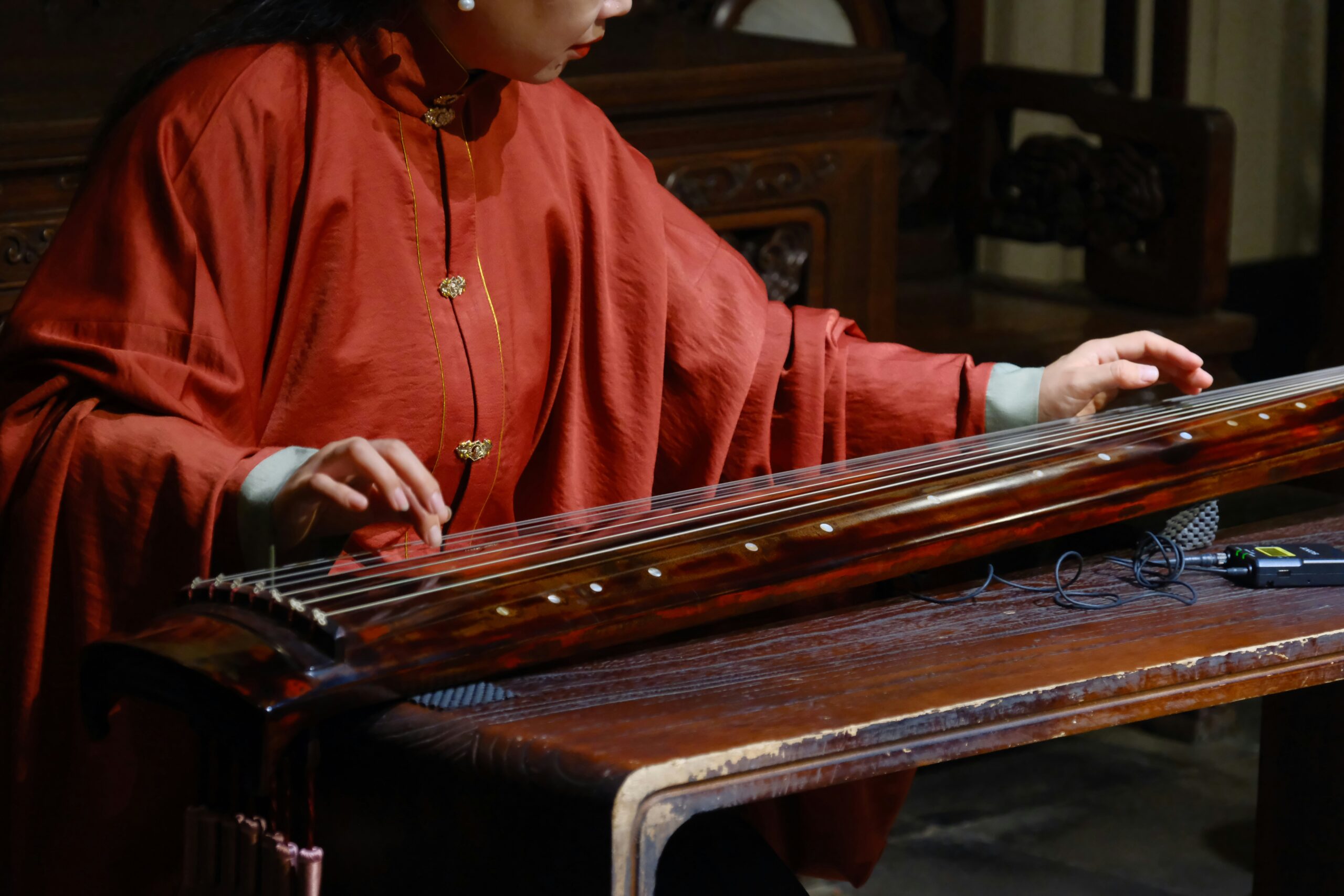
China’s musical tradition is one of the oldest on earth — instruments have been found at archaeological sites dating back over 8,000 years. Yet these sounds are still very much alive today: in concert halls in Shanghai, in television dramas watched by hundreds of millions, and in the busking spots of every major Chinese city.
Understanding traditional Chinese instruments gives you a window into Chinese aesthetics, philosophy, and history that no textbook can fully replicate. For anyone learning Mandarin or exploring Chinese culture, recognising these sounds and the stories behind them adds an entirely new dimension to the language.
String Instruments (弦乐器)
Guzheng — The Queen of Chinese Instruments
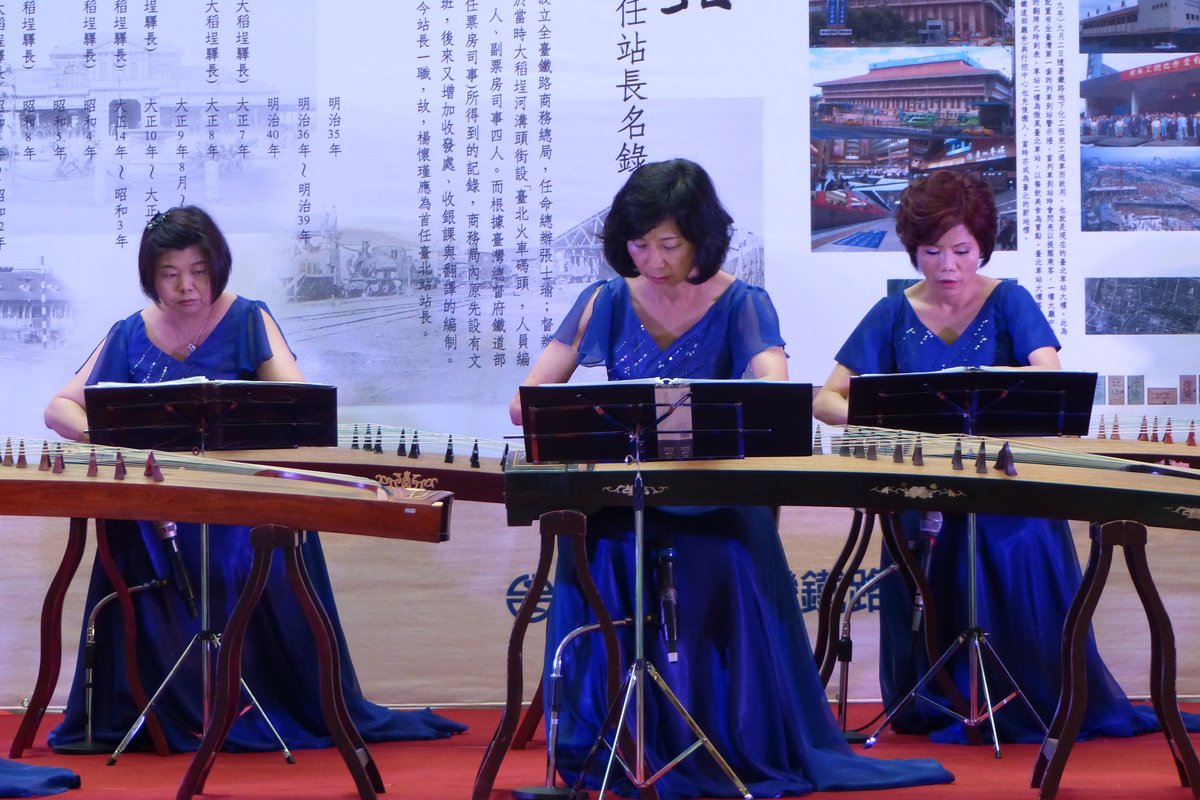
If you’ve heard sweeping, cascading notes in a Chinese film score or period drama, you’ve almost certainly heard the guzheng. Stretched horizontally across a wooden resonator, its 21 to 26 strings produce one of the most expressive sounds in all of Chinese music — capable of painting a rainstorm, a flowing river, or a moment of quiet grief.
The guzheng has been played for over 2,500 years, and today it’s the most widely studied traditional Chinese instrument, with an estimated 10 million students in China alone. Its modern popularity is partly due to its visual drama — the full-length instrument, played with the right hand plucking and the left hand bending strings for vibrato and pitch variation, makes for a striking performance.
The character 筝 (zhēng) is the instrument’s name in isolation; 古 (gǔ) means “ancient,” distinguishing it from other zither variants.
Erhu — The Chinese Violin
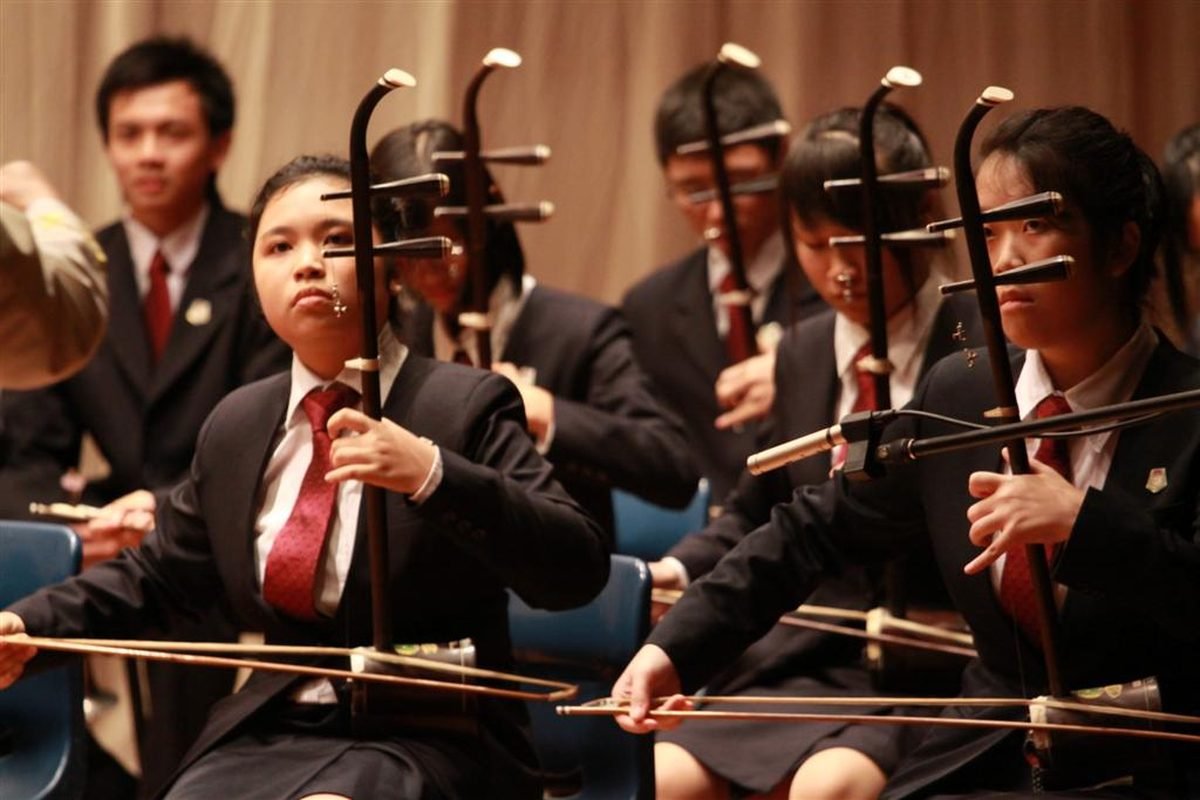
The erhu is perhaps the most emotionally immediate of all Chinese instruments. Its two silk (now typically steel) strings are played with a horsehair bow threaded permanently between them — the player cannot lift the bow off the strings the way a violinist can. This constraint produces an almost vocal, breath-like quality that is instantly recognisable.
Where the violin carries four strings and is tucked under the chin, the erhu sits vertically in the player’s lap, its resonator box covered with python skin. That skin membrane is central to the erhu’s distinctive warm, slightly nasal timbre.
The name breaks down neatly: 二 (èr) means “two,” referring to the two strings, and 胡 (hú) refers historically to the northern nomadic peoples from whom the instrument originated. Today the erhu appears in everything from solo concert performances to popular film scores — and its mournful sound has become synonymous with longing and loss in Chinese cultural expression.
Pipa — The Teardrop Lute
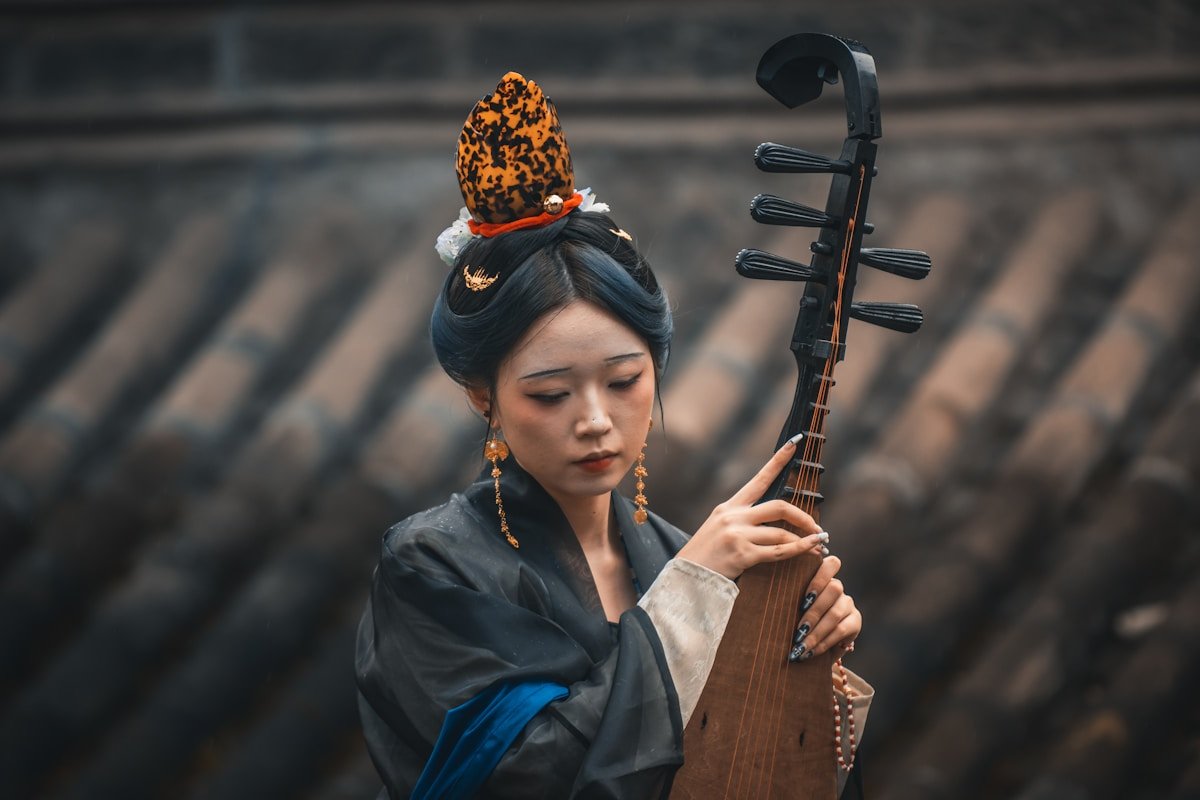
The pipa arrived in China from Persia via the Silk Road before the Han dynasty, and was so thoroughly absorbed into Chinese musical culture that it is now considered quintessentially Chinese. Its pear-shaped body, held vertically against the chest, bears 12 to 26 frets and four strings plucked with the fingernails — traditionally real nails, now typically artificial ones for durability.
The pipa’s range is extraordinary. It can produce thunderous battle music (the famous piece 《十面埋伏》— “Ambush from Ten Sides” — depicts an ancient military battle entirely through pipa), gentle lyrical passages, or rapid-fire technical runs that rival anything in the Western classical tradition.
The name 琵琶 (pípá) is onomatopoeic: 琵 (pí) represents the outward stroke and 琶 (pá) the inward return — the sound of the plucking motion itself.
Guqin — The Scholar’s Instrument
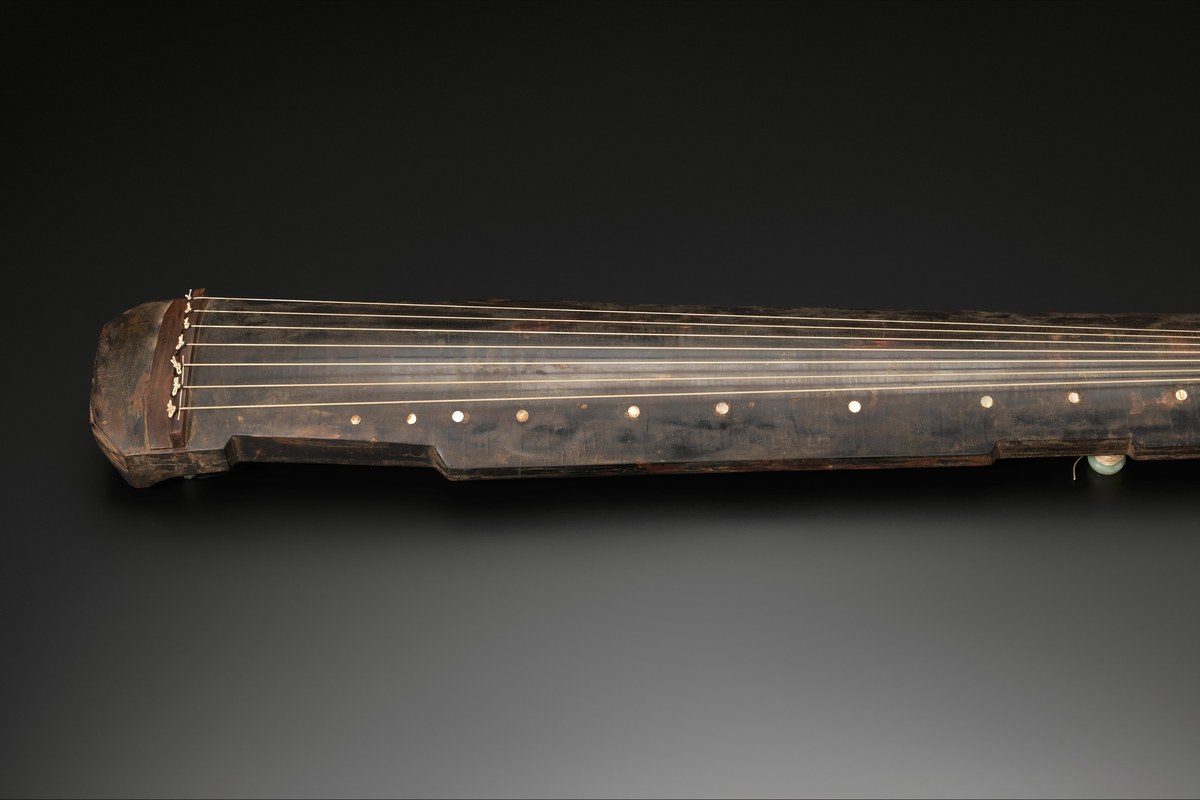
Of all the instruments in this guide, the guqin carries the greatest cultural weight. For over three thousand years, it was considered the instrument of the educated gentleman — Confucius himself reportedly played it. UNESCO recognised its cultural significance by adding guqin music to the Intangible Cultural Heritage of Humanity list in 2003.
Unlike the bright, projecting sound of the guzheng, the guqin is intimate and understated. Its seven silk strings (now sometimes nylon-wrapped metal) produce harmonics, stopped notes, and open tones across a remarkably quiet, contemplative register. You need to sit close to hear it properly — which is entirely the point. The guqin was never designed for concert halls; it was designed for a single listener, or for the player alone.
The guqin has its own written notation system, used for over a thousand years, and thousands of historical compositions survive in printed collections called 琴谱 (qínpǔ). Learning the guqin is considered a lifelong practice, not a performance skill — a distinction that reveals much about how Chinese culture values music itself.
Wind Instruments (管乐器)
Dizi — The Bamboo Flute
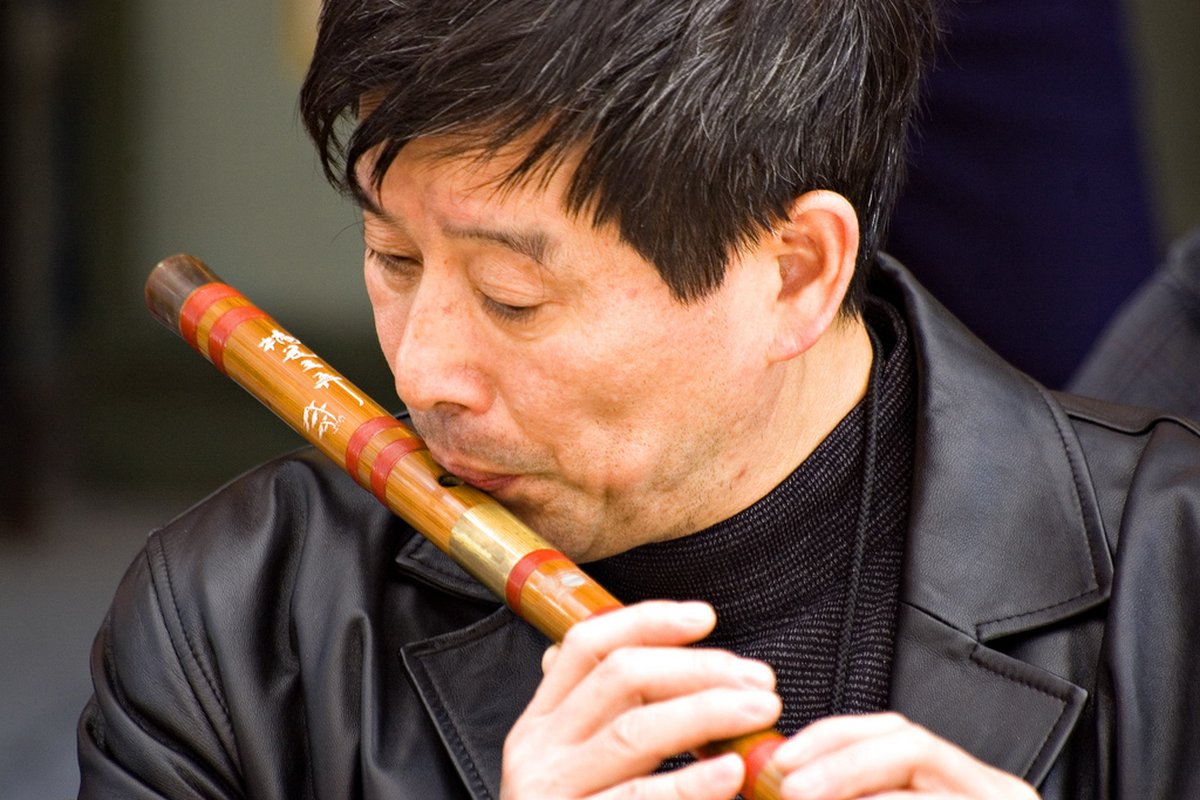
The dizi is one of the oldest instruments in human history — bone flutes found in Henan Province date back over 7,000 years. The modern dizi is made from bamboo and held horizontally, like a Western concert flute, but it has a distinctive feature that sets it apart: the 膜孔 (mókǒng), a membrane hole covered with a thin reed membrane that gives the dizi its bright, buzzy, slightly reedy tone.
The dizi is arguably the most accessible traditional Chinese instrument for beginners, and it appears constantly in Chinese folk music, opera, and film scores. Its piercing, open sound is instantly evocative of the Chinese countryside.
Two main varieties exist: the 曲笛 (qǔdí), lower-pitched and used in southern Chinese opera, and the 梆笛 (bāngdí), higher and brighter, associated with northern folk traditions.
Xiao — The Vertical Flute
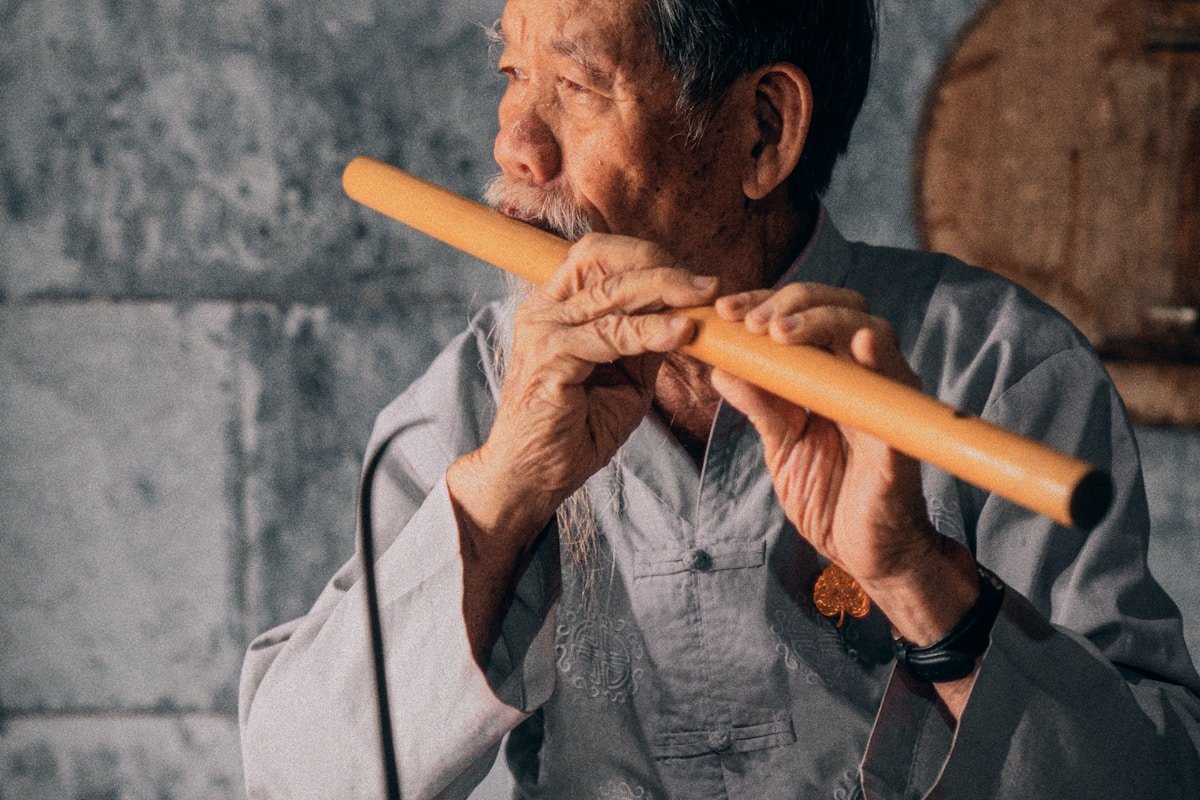
Where the dizi is bright and energetic, the xiao is its contemplative counterpart. Played vertically by blowing across a notch at the top, the xiao produces a breathy, melancholy tone that has been associated with solitude and poetic reflection for centuries. It features prominently in classical Chinese poetry — the sound of a distant xiao on a moonlit night is a recurring image in Tang dynasty verse.
The xiao requires significant breath control to produce a clear tone, and mastering its dynamic range — from barely-there whispers to full, resonant calls — takes considerable practice. It is an instrument that rewards patience.
Sheng — The Mouth Organ
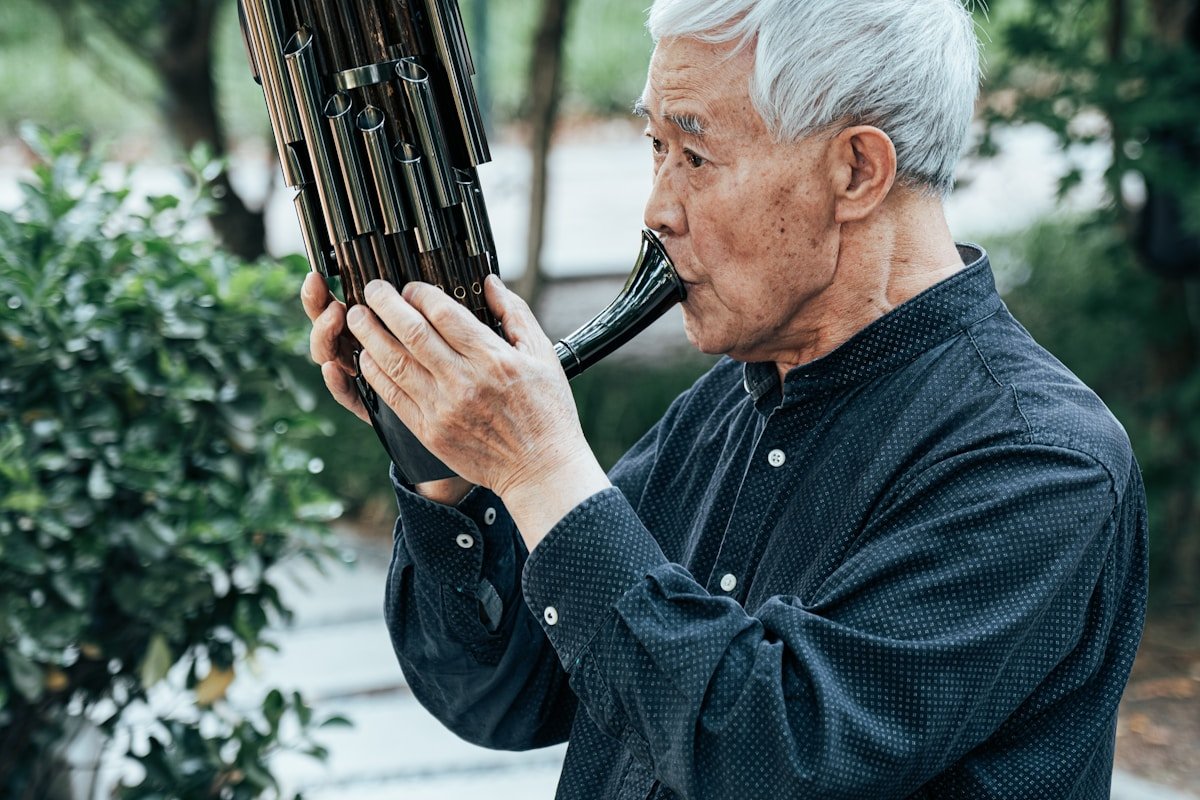
The sheng is unlike anything in the Western classical tradition. A cluster of bamboo pipes of varying lengths are arranged in a circle and inserted into a wind chamber held in both hands — the player blows and draws air while covering holes on individual pipes to produce notes. Crucially, the sheng can produce chords, making it one of the very few traditional Chinese instruments capable of harmony.
The sheng is the direct ancestor of the Western harmonica and accordion — European instrument makers studied the sheng’s free-reed mechanism after Chinese instruments reached Europe in the 18th century and used it as the basis for their own designs. A Chinese invention now played in blues bars worldwide.
In traditional ensembles, the sheng holds a central role, bridging melody and texture, and its warm chord voicings provide a harmonic foundation that other Chinese instruments typically cannot.
Why These Instruments Matter for Mandarin Learners
Understanding traditional Chinese instruments isn’t just an exercise in music appreciation — it opens up language, culture, and history in ways that make Mandarin learning richer and more meaningful.
The names of these instruments are themselves vocabulary: 古 (gǔ, ancient), 琴 (qín, stringed instrument), 笛 (dí, flute), 胡 (hú, foreign/northern) — all characters that appear widely in everyday Chinese. Knowing that 二胡 literally means “two-stringed northern instrument” transforms an unfamiliar word into a logical, memorable concept.
More broadly, Chinese music theory and aesthetics are deeply embedded in the language. Expressions like 余音绕梁 (yúyīn rào liáng — “lingering notes wind around the rafters,” meaning something is unforgettable) or 高山流水 (gāoshān liúshuǐ — “high mountains and flowing water,” referring to a profound connection between people) originate in musical contexts and are still used in everyday speech.
At WillyChina, Will weaves cultural context like this into lessons from the start — because the language and the culture are inseparable. If you’d like to explore more about why learning Chinese is worth the investment, or you’re ready to begin with structured lessons, the Basics course is the place to start.
Learn Mandarin with someone who lives the culture
Will is a native Mandarin and English speaker with extensive experience teaching students from all over the world. Book a free 30-minute intro call to see if it’s the right fit.
Book Your Free Call →Frequently Asked Questions
What are the most famous traditional Chinese instruments?
The most iconic are the guzheng, erhu, pipa, guqin, dizi, xiao, sheng, and yangqin. Each has a distinct sound and a history stretching back thousands of years, and each plays a different role in Chinese musical culture.
What is the most popular traditional Chinese instrument?
The guzheng is the most widely studied today — around 10 million students in China. The erhu is arguably the most instantly recognisable internationally, thanks to its haunting, voice-like tone in film and TV scores.
What is the difference between guzheng and guqin?
Both are plucked zithers, but they differ greatly. The guzheng has 21–26 strings and a bright, resonant sound suited to solo and ensemble performance. The guqin has 7 strings and a much softer, more intimate tone — historically the instrument of scholars, and a UNESCO Intangible Cultural Heritage since 2003.
Are traditional Chinese instruments hard to learn?
It varies. The dizi and guzheng are popular starting points. The erhu is technically demanding due to its fretless design and bowing technique. The guqin is considered a lifelong practice. All reward consistent study — much like Mandarin itself.
What is the sheng’s connection to Western instruments?
The sheng’s free-reed mechanism, which allows both inhaling and exhaling to produce notes, directly inspired the harmonica and accordion after European instrument makers encountered it in the 18th century. It’s a remarkable example of Chinese technology shaping global musical culture.