Chinese Dumplings — pork & napa cabbage, from scratch, the way they’re made at home
“Fold a little luck into every pleat.”
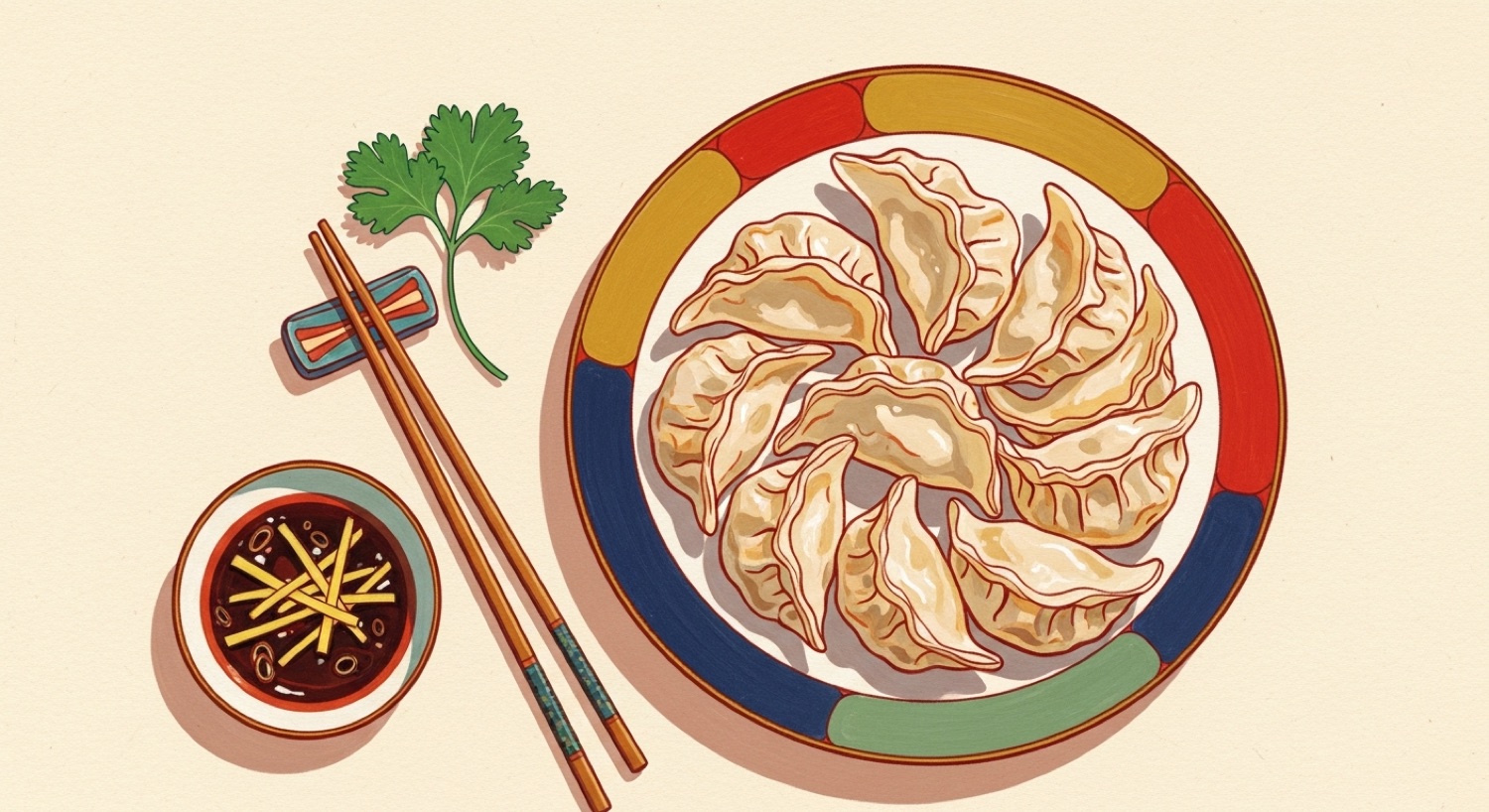
The dish that means home
If one food sums up northern China, it’s jiǎozi (饺子) — plump crescent dumplings, boiled until they float, dunked in black vinegar. They’re everyday comfort food, but they’re also the heart of Spring Festival: their shape echoes the old gold ingots, so a plate of dumplings is a wish for wealth in the year ahead, and families fold them together late on New Year’s Eve to eat at the stroke of midnight.
Made from scratch they’re not hard — just a few techniques worth getting right, which we’ll walk through below. And because this is WillyChina, you’ll also learn to say it all: the dish, the ingredients, and the words you’ll want at the table.
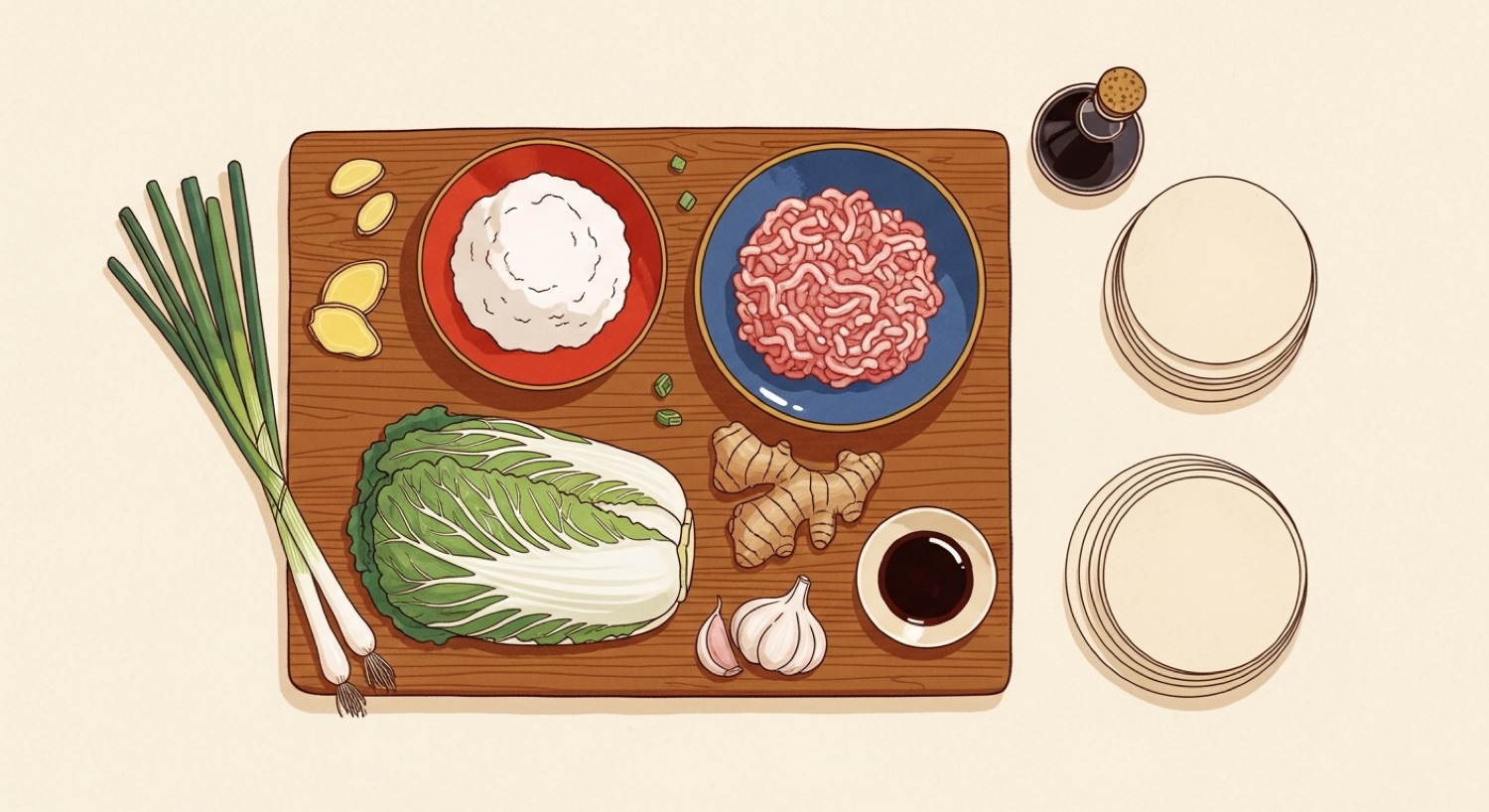
Pork & Cabbage Dumplings
For the dough (or use ~40 shop-bought wrappers)
- 300 g plain (all-purpose) flour — 面粉
- 150 ml water, room temperature
For the filling
- 400 g ground pork — 猪肉
- 300 g napa cabbage, finely chopped — 白菜
- 3 spring onions, finely sliced — 葱
- 1 tbsp grated ginger — 姜
- 2 cloves garlic, minced
- 2 tbsp light soy sauce — 酱油
- 1 tbsp Shaoxing wine (optional)
- 1 tbsp sesame oil — 香油
- ½ tsp white pepper · ¾ tsp salt
To serve
- Chinese black vinegar (Chinkiang), soy sauce, chilli oil & ginger slivers
Method
- Make the dough. Mix the flour and water, then knead 8–10 minutes into a smooth, springy dough. Cover and rest 30 minutes. (Skip if using shop-bought wrappers.)
- Draw out the cabbage. Toss the chopped cabbage with ¼ tsp of the salt, leave 10 minutes, then squeeze out as much water as you can with your hands. This one step is what keeps the filling from going soggy.
- Make the filling. Combine the pork, squeezed cabbage, spring onion, ginger, garlic, soy, wine, sesame oil, pepper and remaining salt. Stir hard in one direction for a minute or two, until it turns sticky and paste-like — that’s what makes the filling juicy and springy.
- Roll the wrappers. Divide the dough, roll into ropes and cut into ~40 pieces. Roll each into a thin round about 7 cm across, leaving the centre slightly thicker than the edge.
- Fold. Put a heaped teaspoon of filling in the centre, fold into a half-moon, and pinch a row of pleats along the top edge to seal (see below). Keep the finished dumplings under a cloth so they don’t dry out.
- Boil them. Bring a big pot of water to a rolling boil, slide in the dumplings and stir gently so they don’t stick. When it returns to the boil, pour in a splash of cold water; repeat this three times — the classic 三次点水 (“three cold-water splashes”). They’re ready when they float and look puffed, about 6–8 minutes. Lift out and serve hot with the dipping sauce.
Per serving (approx., 4 servings): 390 kcal · 23 g protein · 21 g fat · 31 g carbs. A rough estimate for guidance only.
How to fold a dumpling
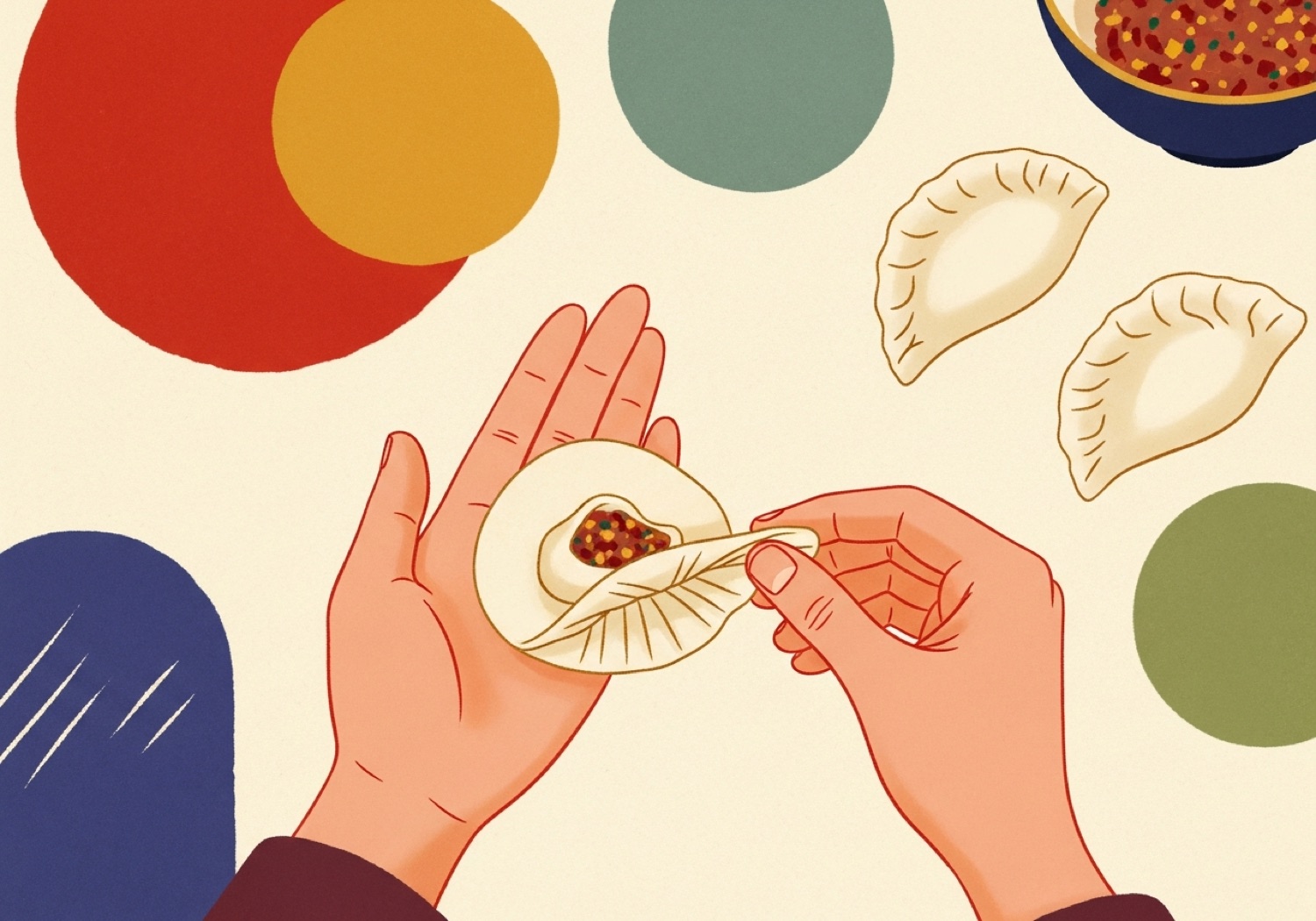
Cup a wrapper in one hand and add a heaped teaspoon of filling — resist overfilling. Fold it into a half-moon and pinch the middle to seal. Then work outward from the centre, folding a series of small pleats on the near edge and pressing each against the flat far edge. Five or six pleats a side is plenty. Don’t worry if the first few are wobbly — even a plain sealed crescent tastes exactly the same.
Say it in Chinese
The dish, the key ingredients and the one word you’ll need at the table — tap to hear each.
Tips & variations
- Boiled, steamed or fried. Boiled (水饺 shuǐjiǎo) is the classic. Steam them (蒸饺) for 10 minutes, or pan-fry into crisp-bottomed potstickers (锅贴 guōtiē).
- Change the filling. Pork & chive, prawn, or an all-veg mix of cabbage, mushroom, egg and vermicelli all work beautifully.
- Freeze a batch. Freeze uncooked dumplings on a tray, then bag them up — boil straight from frozen, adding a minute or two.
- The dipping sauce. Two parts black vinegar to one part soy, a few drops of chilli oil and some fine ginger — the vinegar is the point.
FAQs
Learn to order it — and cook it — in Mandarin
Food is the tastiest way into a language. Practise real Mandarin, dishes and all, in 1-on-1 online lessons with a native speaker.
Book a Free Intro Call