A Guide to Chongqing (重庆): China’s Mountain City on the Yangtze
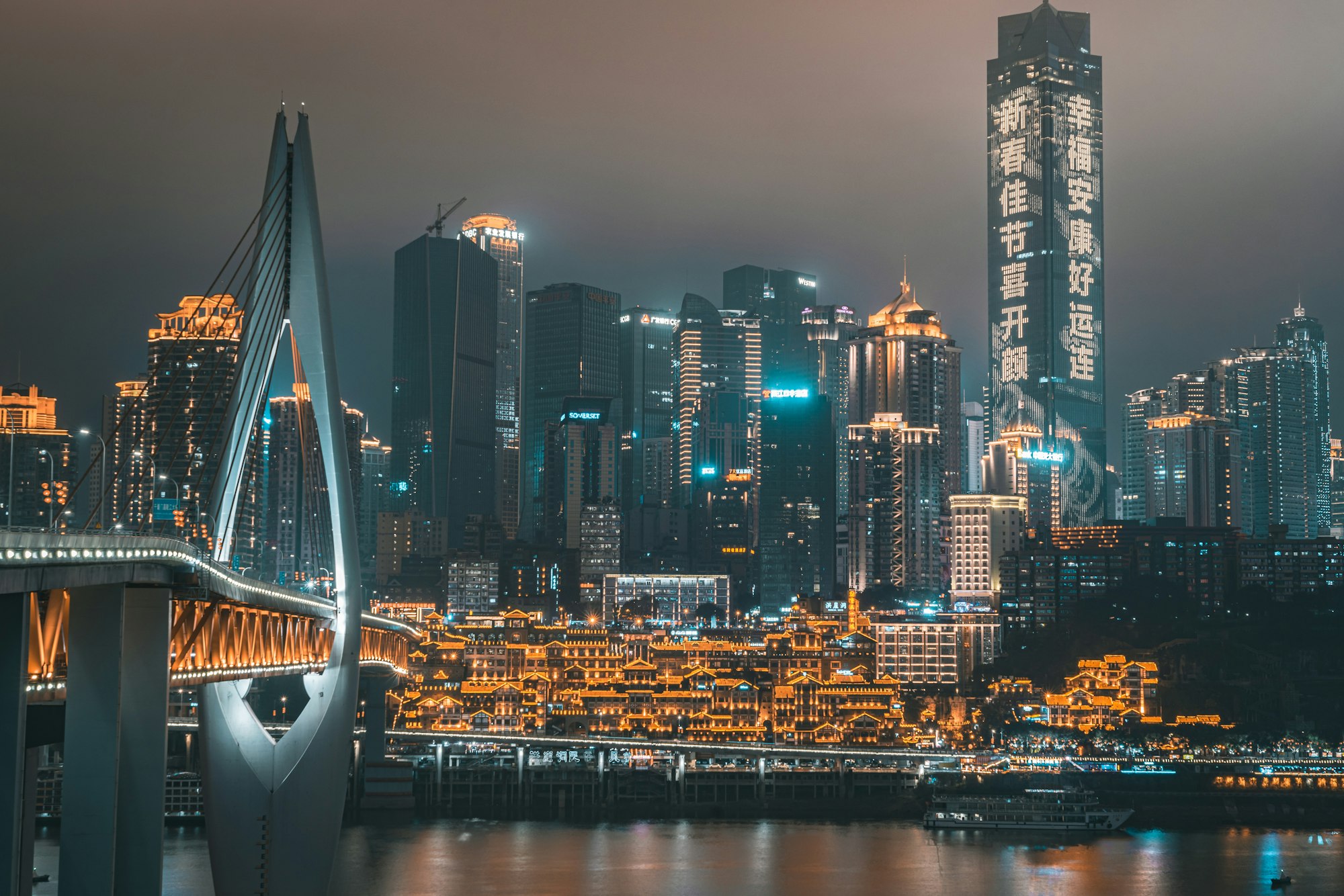
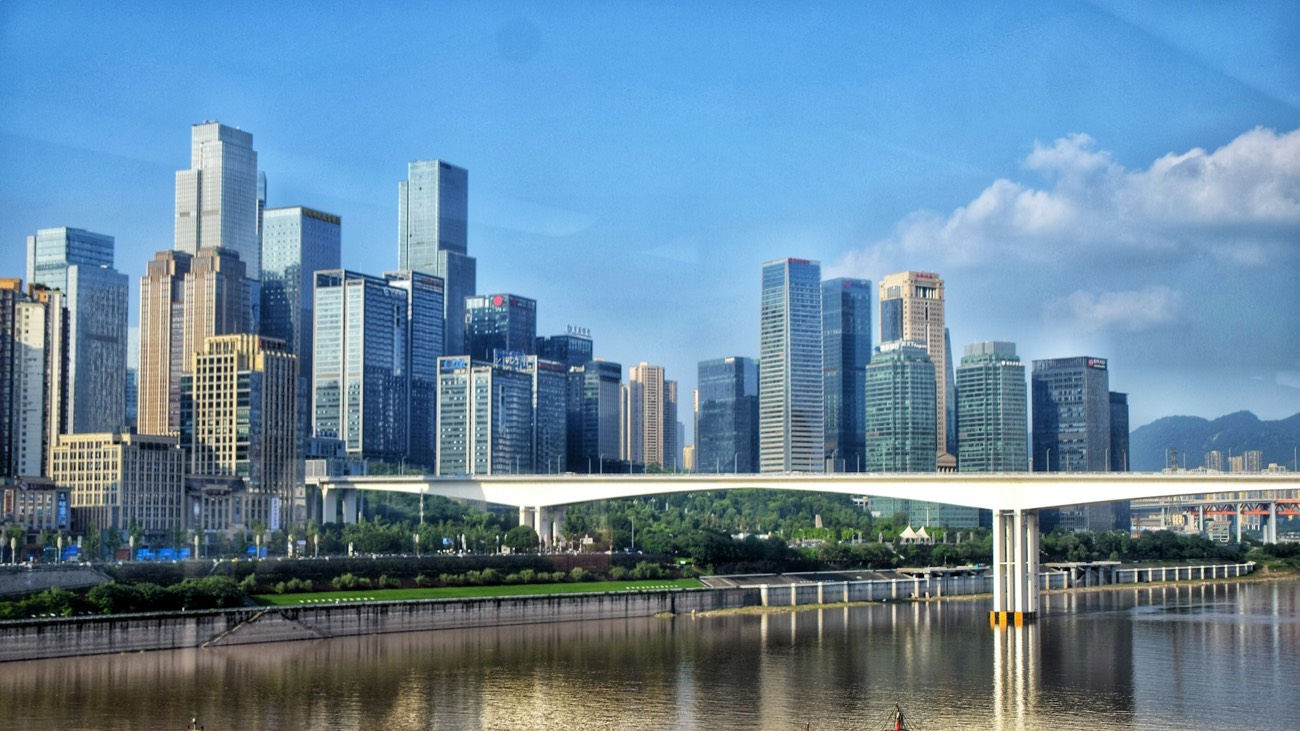
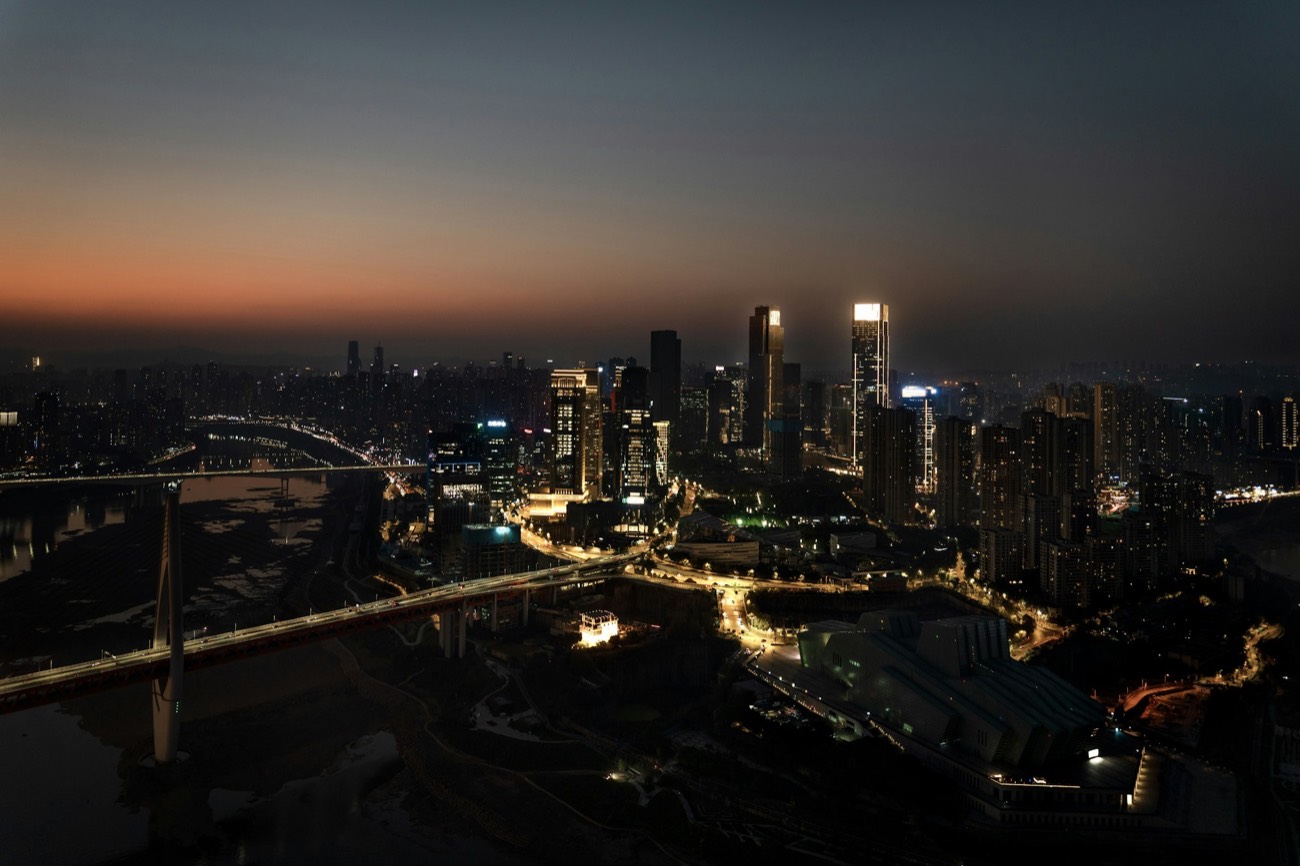
In the hills of south-west China, where the green Jialing River pours into the mighty Yangtze, rises Chongqing (重庆 Chóngqìng) — a directly-governed municipality of more than 30 million people and one of the most dramatic cityscapes on the planet. Built in tiers across steep ridges and river bluffs, it has earned its nickname the “Mountain City” (山城): a place where roads climb over rooftops, monorails thread through apartment towers, and neon high-rises stack up the hillsides above the water.
For Mandarin learners, Chongqing is a thrilling place to use the language. The local dialect — a branch of Southwestern Mandarin — gives the city its quick, salty character, but Standard Mandarin (Pǔtōnghuà) is understood everywhere, so the Chinese you’ve studied works from the moment you arrive. This guide covers Chongqing’s history, its famously fiery food, the dialect, the headline sights, the people and the economy, and what to know before you go.
A brief history of Chongqing
Chongqing’s story begins at the water. More than two thousand years ago this river junction was the heart of the ancient Ba kingdom (巴国), whose boatmen and salt traders worked the gorges of the upper Yangtze. The city took its present name — Chongqing, meaning “repeated good fortune” or “double celebration” — in 1189, when a Southern Song prince was made a prince and then crowned emperor in quick succession, a doubly auspicious turn of events.
For centuries Chongqing was the great trans-shipment port of the upper Yangtze, where the goods of landlocked Sichuan met the river boats heading downstream to the sea. It opened formally to foreign trade as a treaty port in 1891, drawing merchants and missionaries up the river through the Three Gorges.
Its most dramatic chapter came during the War of Resistance against Japan (1937–45), when Chongqing served as the provisional wartime capital of China. Shielded by its mountains and famous fog, the city endured years of heavy bombing yet became the nerve-centre of national resistance — a history still felt in the air-raid tunnels that honeycomb its hills, many now reborn as shops and hotpot halls. In 1997 Chongqing was separated from Sichuan and raised to a municipality directly under the central government — the fourth and by far the largest — to drive the development of China’s vast interior and the Three Gorges region.
The Chongqing dialect and Standard Mandarin
Chongqing’s everyday speech belongs to the Chengdu–Chongqing dialect, the most widely spoken branch of Southwestern Mandarin — a family with well over a hundred million speakers across Sichuan, Chongqing and the neighbouring provinces. To a Mandarin learner it sounds like Mandarin with the corners knocked off: a different tonal melody, softer distinctions between certain sounds, and a vivid stock of local slang.
It is a dialect with real personality — quick, blunt, warm and famously good-humoured. The Chongqing way of speaking is bound up with the city’s spicy, sociable character, and a single local word can carry a whole mood: bāshì (巴适), the great Sichuan–Chongqing term for “perfect” or “just lovely”, is the highest praise you can give a meal.
For visitors and learners the practical picture is simple: Standard Mandarin (Pǔtōnghuà) is taught in every school and understood by everyone, and is the language of transport, hotels, restaurants and business. Your textbook Mandarin will carry you through Chongqing with ease — and catching a few dialect words along the way is a bonus that locals warmly appreciate.
Six Chongqing words worth knowing
Chongqing speaks a punchy form of Southwestern Mandarin (西南官话), close kin to Sichuanese but carrying its own steep-city swagger — quick, loud and full of cheek, crowned by the famous 雄起 cheer. Don’t stress about mastering it: Standard Mandarin is understood everywhere, and a single phrase earns a grin. Tap 🔊 for the Standard Mandarin reading of the characters.
Phrases worth knowing in Chongqing
Six phrases for the Mountain City — Standard Mandarin you’ll actually use, with one bit of local flavour. Tap 🔊 for native audio.
Chongqing food: hotpot and the art of málà
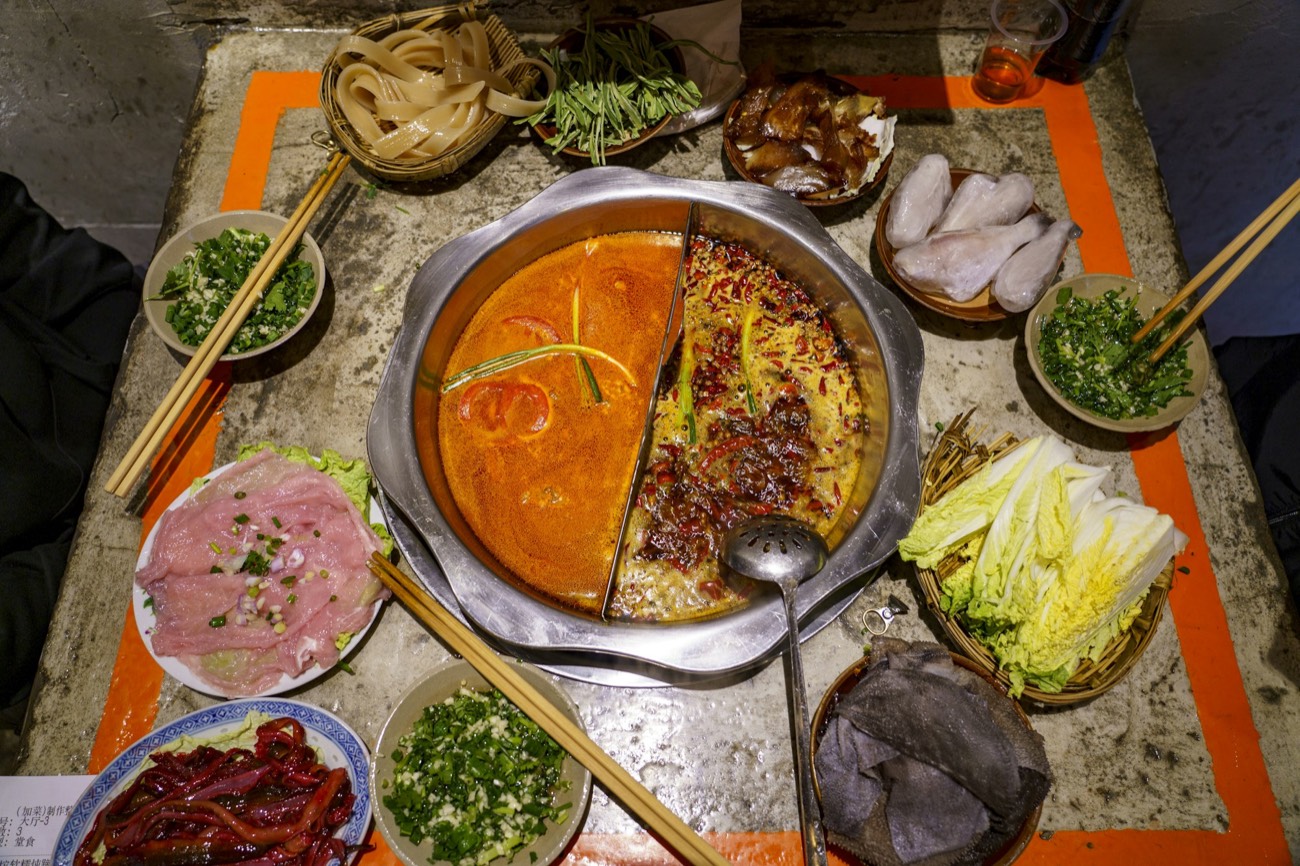
Chongqing is one of China’s great food cities, and its reputation rests on one fiery institution: hotpot. This is the home of málà (麻辣) — the tongue-tingling marriage of dried chilli and numbing Sichuan pepper — and locals gather year-round around bubbling, blood-red cauldrons of spiced oil, cooking tripe, beef and vegetables at the table.
Beyond the pot, the city runs on cheap, brilliant street food: bowls of fierce Chongqing xiaomian noodles for breakfast, cool “saliva chicken” under chilli oil, and skewers by the river. Come with an appetite and a tolerance for spice — and don’t be shy about asking for it milder.
Say the menu
Tap 🔊 to hear each dish in Mandarin:
Iconic attractions in and around Chongqing
Six Chongqing landmarks worth building a trip around — from a neon cliff-side wonder to UNESCO karst and ancient rock carvings:
Hongya Cave 洪崖洞
An eleven-storey warren of traditional stilt-houses (吊脚楼) tumbling down a cliff beside the Jialing River, lit gold at night until it looks like a scene from Spirited Away. It is Chongqing’s most photographed sight — best seen after dark from the opposite bank.
The Yangtze Cableway 长江索道
A cable car strung 1,166m across the Yangtze between Yuzhong and Nan’an. Once everyday transport, it is now the city’s most exhilarating ride — a slow glide high above the brown river, the bridges and the stacked towers.
Ciqikou Old Town 磁器口古镇
A restored Ming- and Qing-era port town of cobbled lanes, teahouses and snack stalls above the Jialing — a glimpse of “old Chongqing” before the skyscrapers, and the place to try the city’s street snacks.
Wulong Karst 武隆喀斯特
Southeast of the city, a dramatic landscape of gorges and caverns where the Three Natural Bridges — colossal stone arches — span a green canyon. It is inscribed on the South China Karst UNESCO World Heritage Site.
Dazu Rock Carvings 大足石刻
West of the city, thousands of Buddhist, Taoist and Confucian cliff sculptures carved between the 9th and 13th centuries — among the finest religious art in China, and a UNESCO World Heritage Site.
The Three Gorges 长江三峡
Chongqing is the gateway to the Yangtze’s greatest spectacle: downstream lie the Qutang, Wu and Xiling gorges, where sheer cliffs press the river into a ribbon. Multi-day cruises set off from the city’s docks toward the Three Gorges Dam.
Famous people from Chongqing
From a record-breaking concert pianist to a wartime shipping hero, Chongqing has sent some remarkable figures out into China and the world:
Li Yundi (李云迪)
Born in Chongqing, he won the International Chopin Piano Competition in 2000 at just eighteen — its youngest and first Chinese winner — and became one of the world’s best-known classical pianists.
Xiao Zhan (肖战)
A Chongqing native who rose to become one of China’s most popular actors and pop idols, with an enormous following across Asia and a string of hit television series.
Lu Zuofu (卢作孚)
The Chongqing-born shipping magnate and reformer whose Minsheng company organised the heroic wartime evacuation of people and factories up the Yangtze through the gorges — a defining act of national resolve.
Zou Rong (邹容)
Born near Chongqing, the young author of The Revolutionary Army, a famous and fiery early call for a modern Chinese republic that stirred a generation of reformers.
Chongqing’s modern economy
Chongqing is the economic engine of China’s interior — a manufacturing powerhouse and inland river port that has urbanised at breathtaking speed. Its economy rests on heavy industry, advanced electronics and its role as the country’s great logistics gateway to the west.
Cars & motorcycles
Chongqing is one of China’s largest vehicle-making bases, home to major car and motorcycle marques and thousands of parts suppliers. Together with neighbouring Sichuan it builds a sizeable share of the nation’s vehicles.
The world’s laptop workshop
The Chengdu–Chongqing region is one of the planet’s biggest electronics clusters, turning out a huge share of the world’s laptops along with a torrent of smartphones and tablets every year.
Gateway to the west
As the upstream hub of the Yangtze and a launch point for China–Europe freight trains and the New International Land–Sea Trade Corridor, Chongqing anchors the Chengdu–Chongqing Economic Circle — designated China’s “fourth growth pole”.
The Yuxinou freight line
Chongqing launched the first China–Europe freight railway, the Yuxinou line running all the way to Duisburg in Germany — turning this inland megacity into a dry port at the heart of Belt-and-Road logistics.
Why Chongqing matters for Mandarin learners
Mandarin is your everyday language here. Across Chongqing, Standard Mandarin is the shared tongue of transport, hotels, restaurants and business — so the Mandarin you’ve studied does real, daily work in one of China’s most exciting cities.
It’s a living lesson in dialects. Hearing the Chengdu–Chongqing branch of Southwestern Mandarin alongside the standard language is a vivid reminder of how varied spoken Chinese really is — and how much character a regional accent carries.
The vocabulary of food and travel comes alive. Spice levels, noodles, directions, rivers, cable cars, prices — the high-frequency Mandarin you most need is in constant use, and a city this dramatic is a memorable place to cement it.
It shows you another face of China. Beyond Beijing and Shanghai, Chongqing reveals the sheer scale and energy of the interior — a side of the country many visitors never see, and all the more rewarding for it.
Visiting Chongqing — practical notes
Getting there: Jiangbei International Airport links Chongqing to cities across China and beyond, and the city is a major high-speed rail hub. It is also the classic starting point for Yangtze River cruises heading downstream through the Three Gorges.
Getting around: the metro is excellent and gloriously vertical — the Line 2 monorail famously runs straight through a residential tower at Liziba. Ride the Yangtze cable car and the river ferries too; they double as sightseeing.
When to come: spring and autumn are the most comfortable seasons. Summers are intensely hot and humid — Chongqing is one of China’s “furnace cities” — while winters are mild but often grey and foggy.
Eat the city: a hotpot dinner is essential, ideally with locals, and a bowl of xiaomian is the perfect start to a day. Ask for wēi là (mild) if you’re new to the heat.
A few days in Chongqing: the riverfront and Hongya Cave by night; Ciqikou old town and the cable car by day; and a day trip out to Wulong’s karst bridges or the Dazu rock carvings — after which many travellers board a downstream cruise through the Three Gorges.
Test your Chongqing knowledge
1. Chongqing is best known as China’s:
2. Chongqing sits where the Jialing River meets the:
3. Chongqing’s defining style of cooking is:
4. During the war of 1937–45, Chongqing served as China’s:
5. In 1997 Chongqing became a:
6. Chongqing’s steep, hilly, fog-wrapped terrain earns it which nickname?
Frequently asked questions
Start your Mandarin journey
Want to learn the Standard Mandarin spoken across Chongqing and the rest of China? Online 1-on-1 lessons with a native speaker.