A Guide to Guangxi (广西): Guilin’s Karst, the Li River & Yangshuo
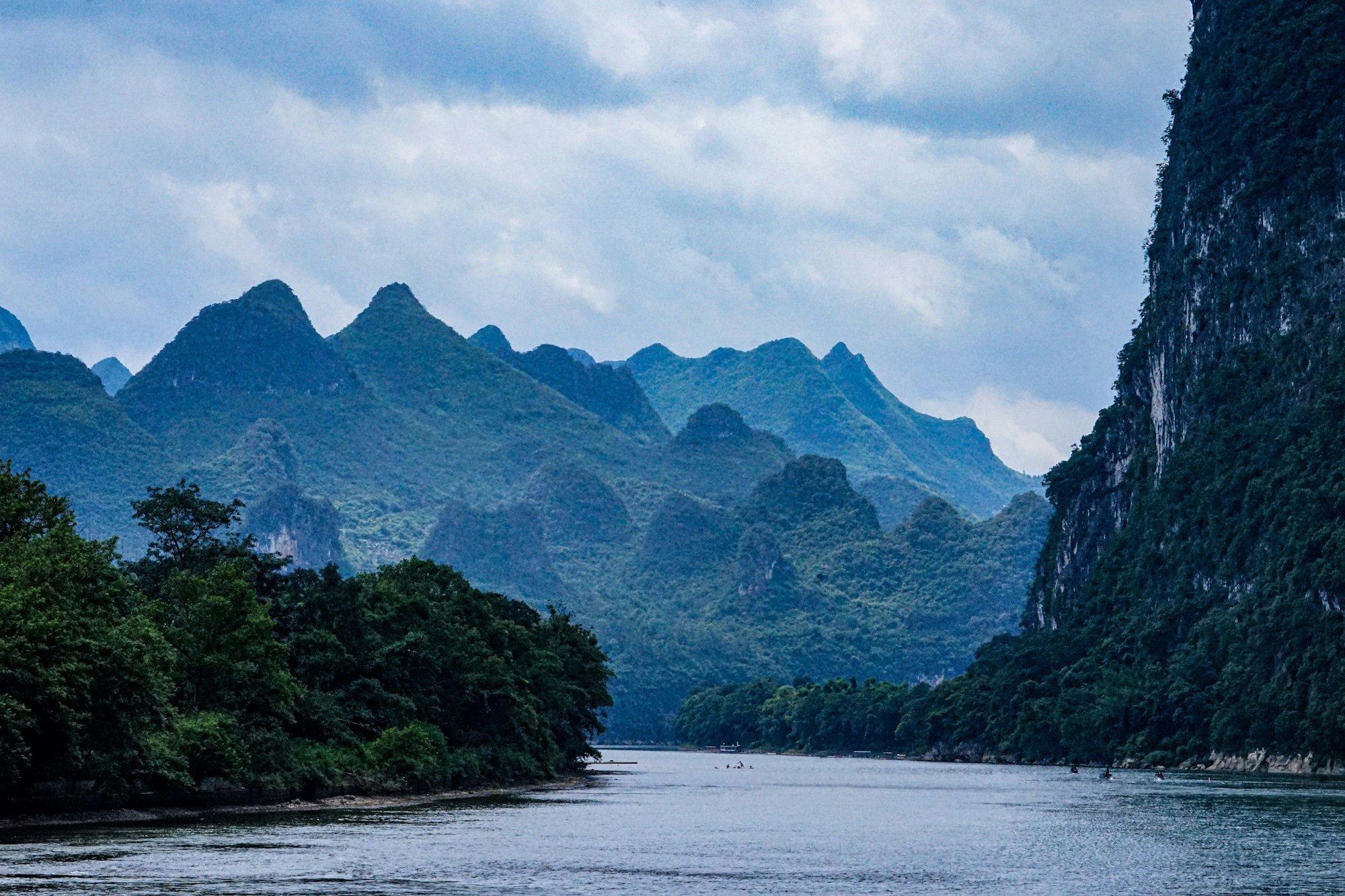
Tucked into China’s subtropical south-west, against the border with Vietnam, Guangxi (广西 Guǎngxī) is the home of the scenery that, for many people, simply is China: jade-green rivers winding between thousands of sheer limestone peaks. It is officially the Guangxi Zhuang Autonomous Region — the homeland of the Zhuang, the country’s largest ethnic minority — and one of its most culturally and linguistically layered corners.
For Mandarin learners, Guangxi is a gentle, rewarding place to use the language. Yangshuo, just downriver from Guilin, has drawn foreign learners for decades with its mix of unforgettable scenery, a relaxed café culture and dedicated immersion schools. This guide covers the history, the language landscape, the food, four places worth your time, and why a region of karst peaks and river towns is one of the most enjoyable in China to practise what you’ve learnt.
A brief history of Guangxi
Guangxi was the southern frontier of the early Chinese world. When the First Emperor’s armies pushed into the deep south in 214 BC, his engineers cut the Lingqu Canal (灵渠) near Xing’an — an astonishing piece of engineering that linked the Yangtze and Pearl river systems and let Qin grain barges supply the conquest. It still flows today, and is recognised as a World Heritage irrigation structure.
For most of imperial history the region was known as part of Lingnan (“south of the ranges”), with Guilin as its administrative seat — a city whose name, “cassia forest”, has meant scholarly refinement for over a thousand years. The land was always the heartland of the Zhuang, whose ancestors left the haunting cliff paintings of Huashan (花山岩画) along the Zuo River more than two thousand years ago — now a UNESCO World Heritage Site.
Guangxi has a striking habit of shaping the rest of China from its margins. The Taiping Rebellion, the bloodiest civil war of the nineteenth century, began here in 1851 with the Jintian Uprising. In the Republican era the Guangxi Clique — Li Zongren and Bai Chongxi — became one of the most powerful military factions in the country. In 1958 the region was reorganised as the Guangxi Zhuang Autonomous Region, recognising the Zhuang majority that gives it its formal name.
A crossroads of languages
Few places in China are as linguistically rich as Guangxi. Its formal name honours the Zhuang language (壮语), a Tai-Kadai language — related to Thai and Lao, not to Chinese — spoken by millions and written today in a romanised script (and historically in Sawndip, a system of Zhuang-made characters). Road signs across the region carry Zhuang alongside Chinese.
The Chinese spoken here splits by area. The north, including Guilin and Liuzhou, speaks Southwestern Mandarin (the Guiliu dialect) — close enough to standard Putonghua that learners follow it easily. The east and much of the south, including the capital Nanning and the river port of Wuzhou, has long been Cantonese-speaking (Yue), part of the same world as Guangdong and Hong Kong. On top of that sit Pinghua (平话) and pockets of Hakka. It is normal for a single Guangxi family to switch between three or four ways of speaking.
For visitors and learners the practical picture is simple: Standard Mandarin is universal — taught in every school, spoken on every screen, understood everywhere — and the northern accent around Guilin and Yangshuo is among the easier ones to follow. But Guangxi also offers a rare bonus: if you have any interest in Cantonese or in China’s minority languages, nowhere lets you hear them rub shoulders quite like this.
Six Guangxi words worth knowing
Guangxi is the homeland of the Zhuang, China’s largest ethnic minority, and its spoken life is wonderfully layered: the Zhuang language (壮语) alongside Yue/Cantonese, Pinghua and Southwestern Mandarin, all alive in the food, festivals and street talk. Standard Mandarin is understood everywhere, so a few local words go a long way. Tap 🔊 for the Standard Mandarin reading of the characters.
Phrases worth knowing in Guangxi
Six Mandarin phrases that earn their keep on the river, in the noodle shops and on the karst trails. Tap 🔊 for native audio.
Guangxi’s table: noodles, sour and spice
Guangxi is noodle country. Its cooking sits at a delicious crossroads — the rice-noodle culture of the south, the sourness and fermentation of the south-west, and the seafood of the Beibu Gulf coast — bound together by fresh chilli, pickled vegetables and a love of the wok’s edge.
Above all, this is the land of the rice noodle. Nearly every city has its own bowl: Guilin’s braised-meat mǐfěn, Nanning’s tangy lǎoyǒufěn, and — most notorious of all — Liuzhou’s luósīfěn, whose fermented aroma has made it one of China’s most talked-about foods. Come hungry and follow the queues.
Say the menu
Tap 🔊 to hear each dish in Mandarin:
Notable cities of Guangxi
Guangxi’s highlights run from the famous karst country of the north to the Vietnamese border and the southern coast. Five very different places worth your time:
Guilin桂林
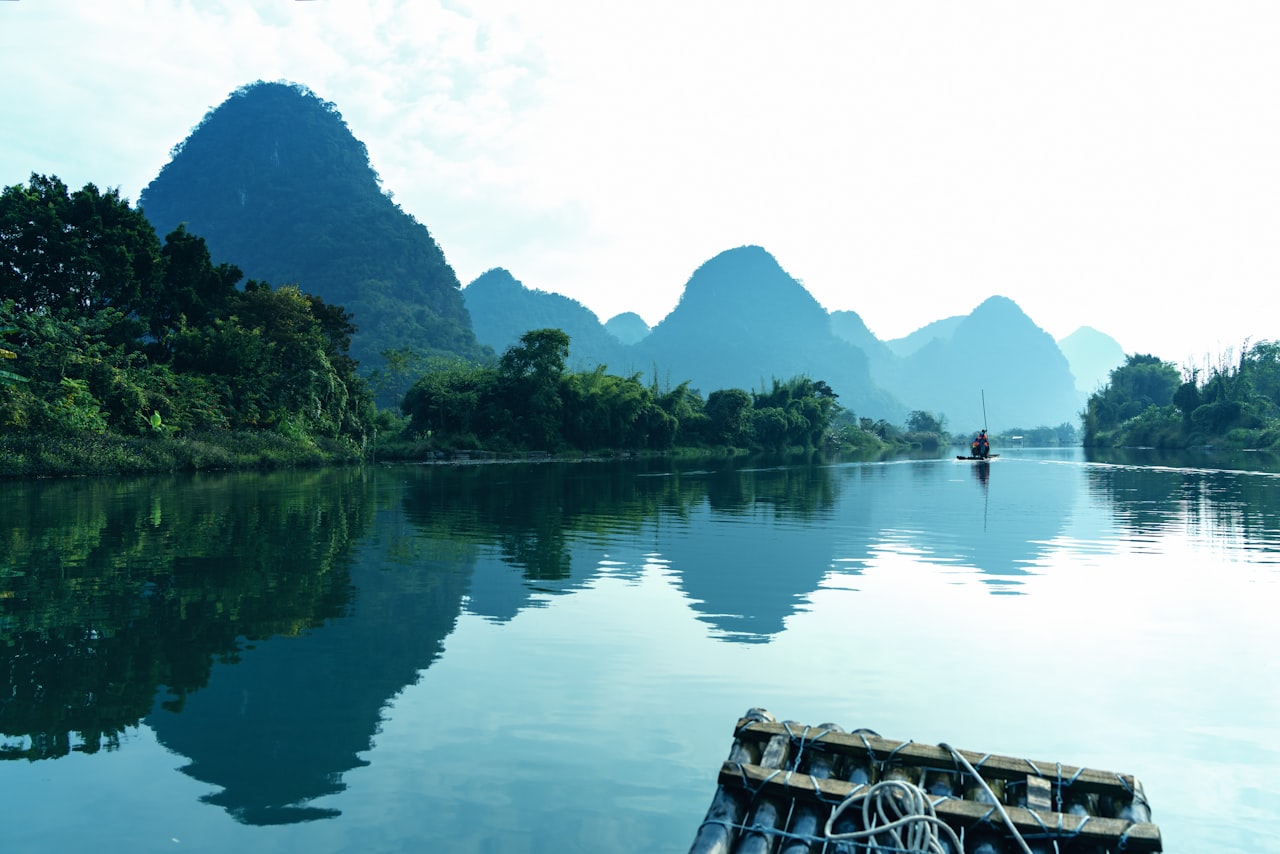
Guilin has been a byword for natural beauty in China for over a thousand years. The city sits among its own karst peaks — Elephant Trunk Hill on the river, the coloured caverns of Reed Flute Cave, and the floodlit Sun and Moon pagodas of the Two Rivers and Four Lakes. It is also the gateway to the Longji rice terraces a few hours north.
Most travellers come for the Li River cruise downstream to Yangshuo — the very stretch of peaks printed on the 20-yuan note. For learners, Guilin’s clear northern-Mandarin accent makes it an easy, friendly place to practise.
Deep-dive guide coming soon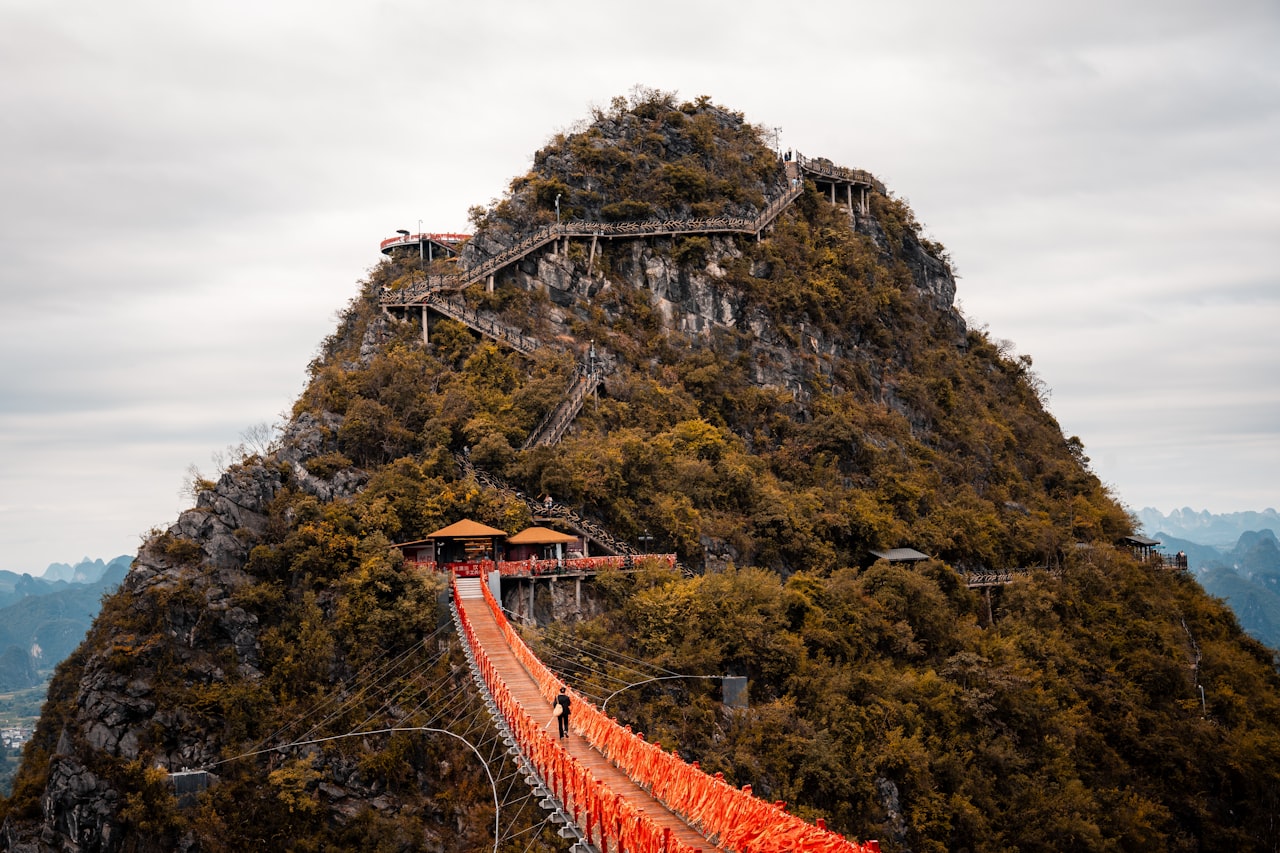
Yangshuo阳朔
Yangshuo is the small town the Li River cruise delivers you to — and many people never leave. Bamboo rafts drift the Yulong River beneath the peaks, cyclists thread the rice paddies, and climbers come from around the world for the limestone. In the evenings, Zhang Yimou’s vast outdoor light show Impression Liu Sanjie plays on the river itself.
For decades Yangshuo’s West Street has been a hub for foreigners learning Mandarin — cafés, language schools and a relaxed pace make it one of China’s most enjoyable places to study and speak.
Deep-dive guide coming soon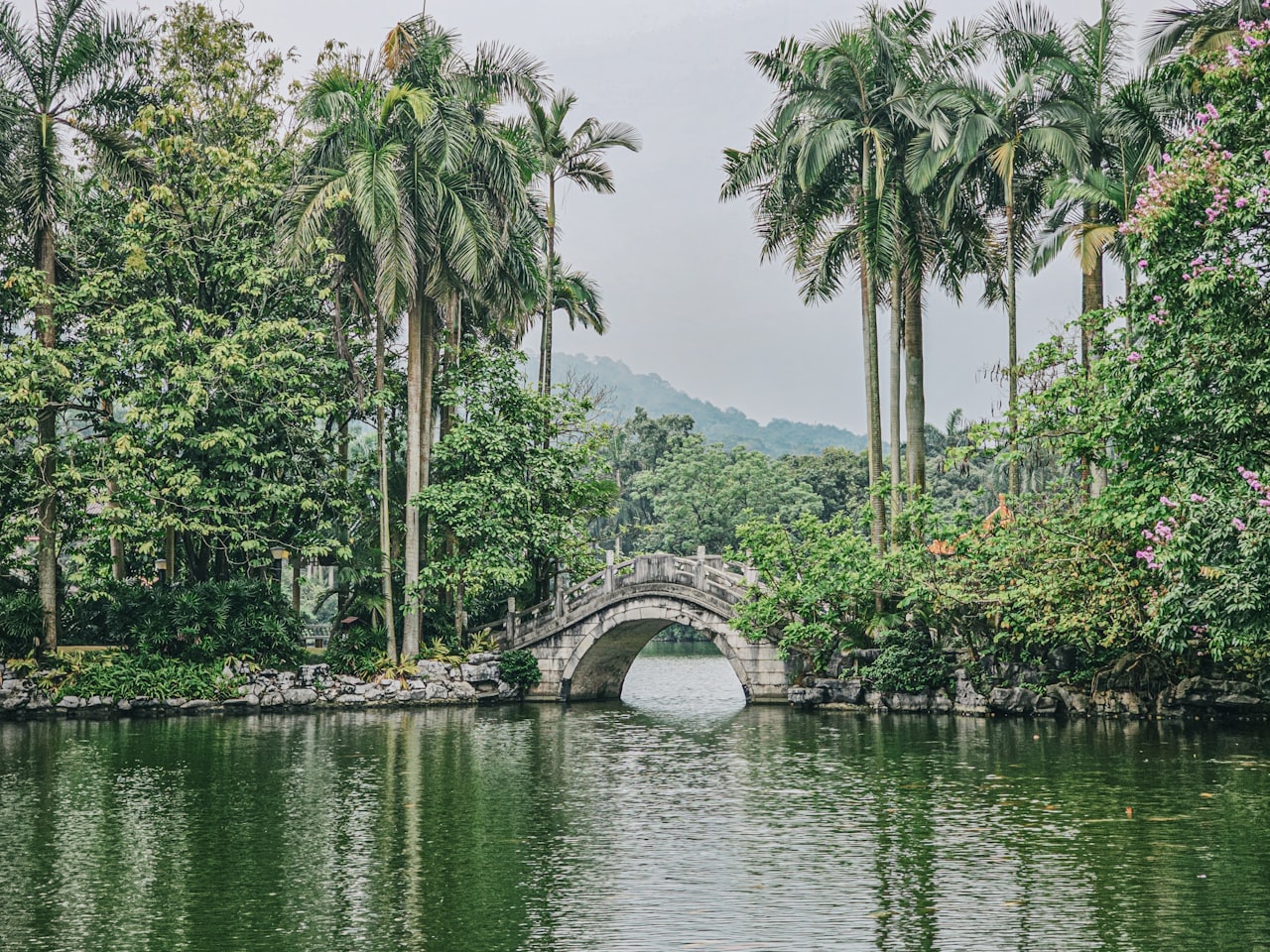
Nanning南宁
Nanning, the capital, is the “Green City” — subtropical, tree-lined and built along the Yong River. Long a Cantonese-speaking city, it is now the host of the annual China–ASEAN Expo, which has made it the country’s diplomatic and trade gateway to South-East Asia.
It is also the jumping-off point for one of Guangxi’s great sights: the thundering Detian Transnational Waterfall on the Vietnamese border, the largest of its kind in Asia. Try a bowl of Nanning’s tangy old-friend noodles while you’re here.
Deep-dive guide coming soon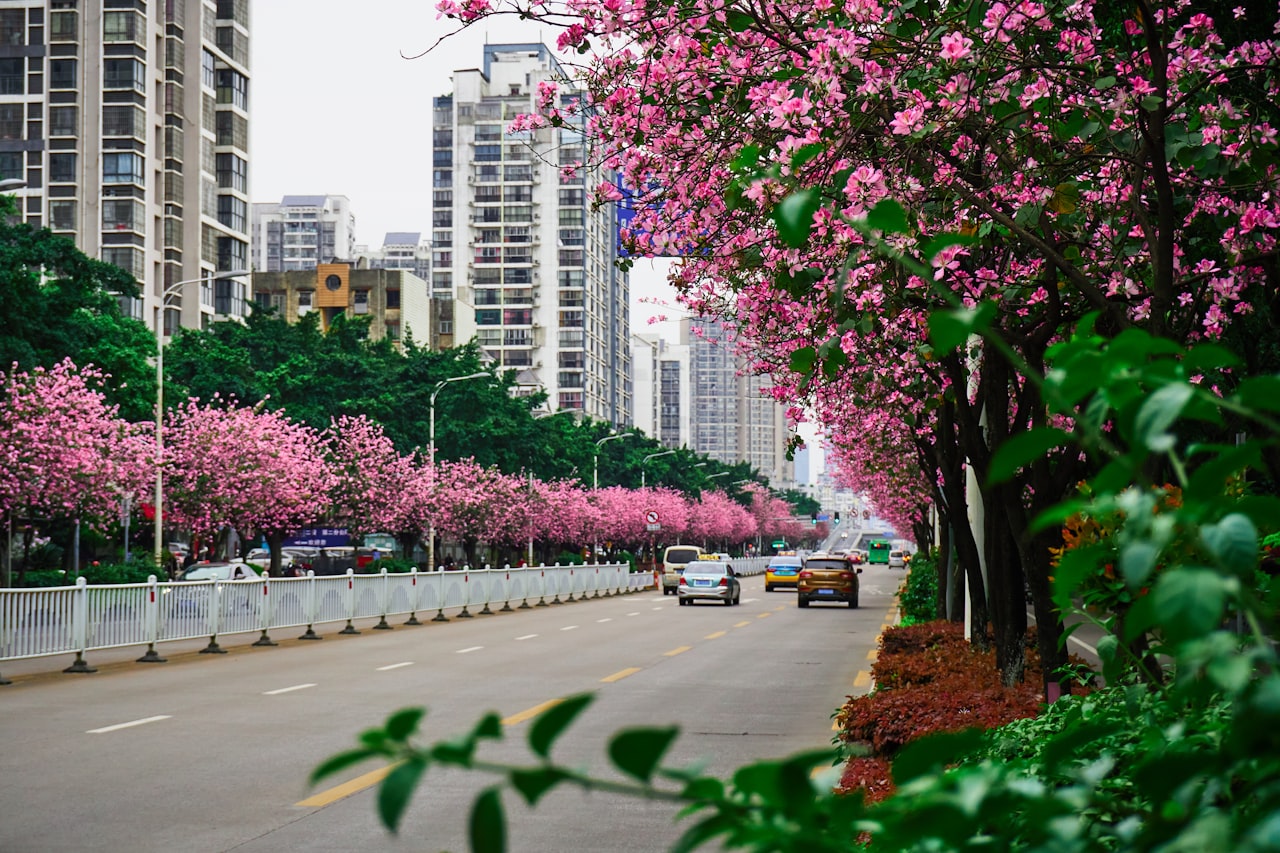
Liuzhou柳州
Liuzhou is Guangxi’s industrial heart, wrapped in a dramatic loop of the jade-green Liujiang River. It is a city of contrasts: heavy industry — this is the home of the SAIC-GM-Wuling joint venture and the runaway-hit Wuling Hongguang Mini EV — set against riverside parks, the old Confucius Temple and a spring bloom of blossom that earns it the nickname “city of flowers”.
Above all, Liuzhou is the birthplace of luosifen (螺蛳粉), the pungent river-snail noodle that became one of China’s most famous snacks. North of the city the prefecture climbs into the misty hills of Sanjiang, home to the Dong people and their celebrated wind-and-rain bridges.
Deep-dive guide coming soon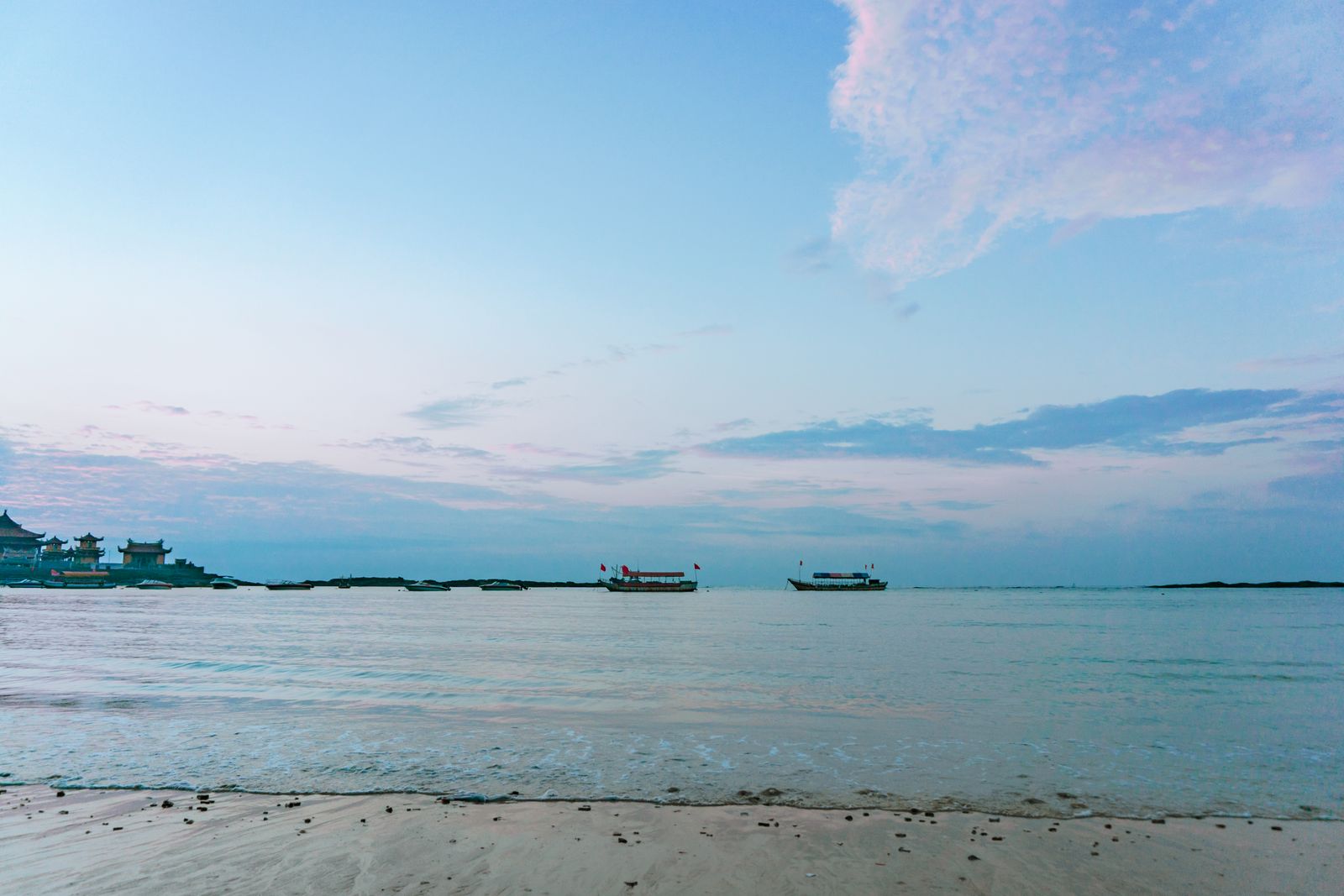
Beihai北海
Guangxi’s seaside city trades the province’s famous karst for soft sand and warm gulf water. Silver Beach runs for kilometres of fine pale sand, while a 19th-century arcaded old town recalls Beihai’s days as a treaty port.
From its docks, ferries cross to the volcanic island of Weizhou, and the surrounding waters supply the pearls and seafood the city is known for.
Deep-dive guide coming soonIconic attractions across Guangxi
Six Guangxi landmarks worth building a trip around — from the world’s most famous karst river to a UNESCO rock-art cliff:
The Li River 漓江
The 83-kilometre stretch from Guilin to Yangshuo is the classic China landscape — mist, bamboo and hundreds of karst peaks reflected in green water. The view near Xingping is the one on the 20-yuan note. Cruise it by boat, or drift a quieter section by bamboo raft.
Longji Rice Terraces 龙脊梯田
The “Dragon’s Backbone” terraces near Longsheng climb the hills in shimmering curved tiers, carved over centuries by Zhuang and Yao farmers. Stunning at planting time (flooded, mirror-like) and harvest (gold).
Detian Transnational Waterfall 德天瀑布
Straddling the China–Vietnam border south-west of Nanning, Detian is the largest transnational waterfall in Asia — a broad, tiered curtain of water in lush karst country, with a border marker you can walk right up to.
Huashan Rock Art 花山岩画
A UNESCO World Heritage Site on the cliffs above the Zuo River: more than 1,900 ochre figures painted by the ancestors of the Zhuang over two millennia ago — one of the great rock-art galleries of the world.
Chengyang Wind-and-Rain Bridge 程阳风雨桥
In Sanjiang, in Liuzhou’s far north, the Dong people raise covered bridges and drum towers entirely without nails. The Chengyang bridge of 1912 is the masterpiece — a roofed, pavilioned span over the river, ringed by working Dong villages. A beautiful and still-living tradition.
Weizhou Island 涠洲岛
China’s largest and youngest volcanic island, rising from the Beibu Gulf off Beihai. Crescent volcanic cliffs, a century-old Catholic church and quiet fishing villages make it a slower, sea-washed counterpoint to Guangxi’s famous karst.
Famous figures of Guangxi
A region of generals, athletes and folk heroes whose stories run from Republican battlefields to the Olympic stage:
Li Zongren (李宗仁)
Born near Guilin, the leader of the Guangxi Clique commanded the great Chinese victory at Tai’erzhuang in 1938 and later served as Vice-President and acting President of the Republic of China.
Bai Chongxi (白崇禧)
Also from Guilin, “the Little Zhuge” was one of modern China’s most respected military strategists and a leading Hui Muslim figure of the Republican era.
Li Ning (李宁)
The “Prince of Gymnasts” from Liuzhou won three golds at the 1984 Olympics, lit the cauldron at Beijing 2008, and founded the Li-Ning sportswear brand.
Liu Sanjie (刘三姐)
The beloved folk heroine of Zhuang legend, a peasant singer whose wit and voice defeated the powerful. She is the spirit of Guangxi’s song-festival culture — and of Yangshuo’s nightly river show.
Wei Baqun (韦拔群)
A Zhuang leader of the peasant movement in Donglan and a founder of the Right River revolutionary base, remembered as a pioneering organiser among Guangxi’s rural poor.
Shi Tao (石涛)
Born in Guangxi to a branch of the fallen Ming royal house, Shi Tao became a monk and one of the most original painters in Chinese history — his free, expressive landscapes still influence Chinese art today.
Guangxi’s modern economy & global role
Guangxi’s economy is shaped by its geography: a long border with Vietnam, a coastline on the Beibu Gulf, and the most spectacular scenery in southern China. That makes it at once a trade gateway, a tourism powerhouse and a farming and industrial base.
Gateway to ASEAN
Guangxi is China’s land-and-sea bridge to South-East Asia. Nanning hosts the annual China–ASEAN Expo, the Beibu Gulf ports of Qinzhou, Beihai and Fangchenggang handle booming maritime trade, and busy land crossings link the region to Vietnam.
The karst economy
The Guilin–Yangshuo landscape is one of China’s top destinations, drawing tens of millions of visitors a year. Tourism — cruises, climbing, rafting, rural homestays — underpins the whole northern economy.
Sugar, metals & cars
Guangxi grows the majority of China’s sugarcane and is a leading producer of sugar. Liuzhou is a major industrial city — home of the SAIC-GM-Wuling joint venture and the runaway-hit Wuling Hongguang Mini EV — alongside aluminium and manganese mining.
The health-and-longevity draw
Bama county is one of the world’s famed ‘longevity villages’, and Guangxi has built a wellness-tourism economy around its clean rivers, mountain air and unhurried pace — drawing health-seeking visitors from across China.
Why Guangxi matters for Mandarin learners
Yangshuo is a genuine immersion destination. Few small towns anywhere have hosted as many foreign Mandarin learners. Between the language schools, the cafés of West Street and a steady flow of travellers happy to chat, you can study in the morning and practise on a bamboo raft in the afternoon — all wrapped in unforgettable scenery.
The northern accent is learner-friendly. Guilin and Yangshuo speak a clear Southwestern Mandarin that is easy to follow once you tune in — a confidence-building place to make the jump from the classroom to real conversation.
It is a living lesson in China’s diversity. Hearing Mandarin, Zhuang and Cantonese in a single market is a vivid reminder that “Chinese” is a family of languages. If you also dabble in Cantonese, Nanning and Wuzhou give you a low-pressure place to hear it.
Tourism Mandarin gets daily use. Tickets, boats, bikes, homestays, bargaining at the night market — the practical, high-frequency Mandarin you most need is in constant use all around you, which is exactly how it sticks.
Visiting Guangxi — practical notes
Getting there: Guilin Liangjiang International Airport is the usual gateway for the karst country, with a high-speed rail station linking Guilin to Guangzhou (around 2.5 hours) and beyond. Nanning is the regional rail and air hub for the south, and Liuzhou sits on the fast line midway between Guilin and Nanning.
Getting around: The Guilin–Yangshuo corridor is easy — cruise boats, frequent buses and a short high-speed hop connect them. Bicycles and bamboo rafts are the best way to explore Yangshuo’s countryside. Longji, Detian and the Dong villages of Sanjiang are day trips or overnighters from Guilin, Nanning and Liuzhou respectively.
When to come: April to October brings the lushest, greenest karst, though summer is hot and humid with afternoon showers. The rice terraces are at their best when flooded (May–June) or golden (September–October). Winters are mild but the peaks can be misty — atmospheric, if less postcard-blue.
Language in practice: Standard Mandarin is understood everywhere; the Guilin accent is gentle. In tourist Yangshuo, English is common; elsewhere a few words of Mandarin go a long way and are warmly received.
One week in Guangxi: Two nights in Guilin (Li River cruise, Reed Flute Cave, a Longji day trip), three nights in Yangshuo (Yulong River, cycling, West Street, the light show), then head south down the rail line for a night in Liuzhou (the Liujiang riverside and a bowl of luosifen) and a night in Nanning for the capital’s food and a Detian Falls day trip.