A Guide to Zhejiang (浙江): West Lake, Water Towns & China’s Digital Coast
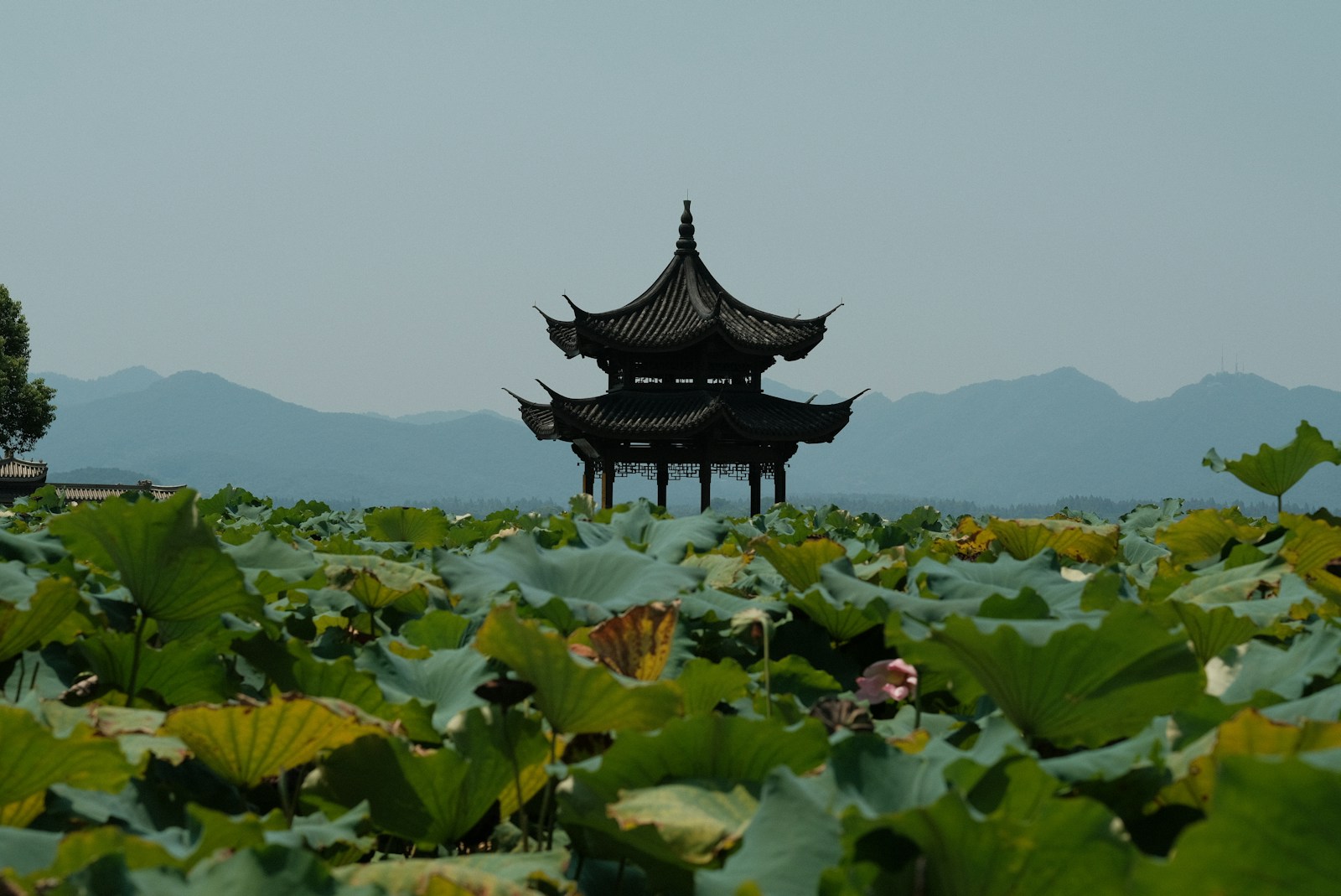
If Guangdong is China’s factory and Beijing its politics, Zhejiang (浙江 Zhèjiāng) is its garden — and, increasingly, its app store. The province south of Shanghai packs postcard China (West Lake, misty tea hills, stone-bridged canal towns) and frontier China (Alibaba’s campus, the planet’s busiest cargo port) into an area smaller than Victoria.
For Mandarin learners, Zhejiang is the China of your textbook’s daydreams: 江南 (Jiāngnán), the storied “south of the river” landscape that a thousand years of poets wrote home about. This guide covers the history, the language situation, the food, four cities worth your time, and what it all means for your Mandarin.
A brief history of Zhejiang
Few places on earth have been continuously sophisticated for as long as northern Zhejiang. At Hemudu, near Ningbo, people were cultivating rice and building timber stilt houses around 7,000 years ago. At Liangzhu, outside Hangzhou, a city-building, jade-carving civilisation flourished 5,000 years ago — its ruins were UNESCO-listed in 2019 as some of the earliest evidence of urban civilisation in East Asia.
In the classical era this was the kingdom of Yue, whose king Goujian — of “sleeping on firewood and tasting gall” fame (卧薪尝胆) — gave Chinese its most famous parable of patient revenge. The province’s golden age came when the Song court fled south and made Hangzhou (then Lin’an) the imperial capital in 1138. For a century and a half it was likely the largest, richest city in the world — Marco Polo, arriving after its peak, still called it “beyond dispute the finest and noblest in the world”.
Ningbo became one of China’s first treaty ports in 1842, seeding a merchant diaspora whose descendants shaped banking and shipping across East Asia. That commercial instinct never left: after 1978, Zhejiang’s farmers and tinkerers built China’s most vigorous private economy from the ground up.
Wu dialects and Standard Mandarin
Zhejiang is the heartland of Wu Chinese (吴语) — the language family that also includes Shanghainese, with tens of millions of speakers across the lower Yangtze. Wu keeps voiced consonants that Mandarin lost centuries ago and runs on a completely different tone system: a Mandarin speaker overhearing two Shaoxing grandmothers will catch almost nothing.
Hangzhou’s own dialect is a curiosity: when the Song court moved in with its northern officials in the 1130s, their speech soaked into the local Wu — so Hangzhou-hua is famously the most Mandarin-flavoured Wu dialect, right down to its northern-style 儿 endings. At the other extreme, Wenzhounese in the province’s south is so distinct that even neighbouring Wu speakers find it impenetrable.
For visitors and learners, none of this is an obstacle: Standard Mandarin is universal in Zhejiang — in shops, trains, hotels and classrooms. Young urbanites increasingly speak Mandarin first, with the local dialect as the language of grandparents and street markets.
Six Zhejiang words worth knowing
Zhejiang sits at the heart of Wu Chinese (吴语), one of China’s richest dialect families, and the speech changes dramatically city to city. Hangzhou’s dialect carries an unusual heavy ‘儿’ ending (a Song-court northern legacy), Ningbo gave the region 阿拉 (‘we’) that Shanghai later made famous, and Wenzhounese is so impenetrable it was once used as a wartime code. Standard Mandarin is understood everywhere; tap 🔊 for the Standard Mandarin reading of each character.
Phrases worth knowing in Zhejiang
Six Mandarin phrases that earn their keep around West Lake, the tea hills and the water towns. Tap 🔊 to hear native-style audio.
Zhejiang cuisine: lake fish, yellow wine and the scholar’s pork
Zhejiang cuisine (浙菜) is one of China’s Eight Great Cuisines — light, seasonal, faintly sweet, and obsessed with freshness. Where Sichuan shouts, Zhejiang murmurs.
The signature dish carries a poet’s name: dongpo pork (东坡肉), a glossy, slow-braised square of belly attributed to Su Dongpo, the Song-dynasty writer who governed Hangzhou and reportedly cooked it for the workers dredging West Lake. Around the lake you’ll also meet West Lake vinegar fish (西湖醋鱼) and Longjing shrimp (龙井虾仁) — river prawns stir-fried with the lake’s own Dragon Well tea leaves.
Shaoxing contributes the country’s most famous yellow rice wine (绍兴黄酒) — drunk warm, and the base of every “drunken” (醉) dish in eastern China — while Jinhua’s dry-cured ham (金华火腿) seasons soups across the country. On the coast, Ningbo answers with pristine seafood and its beloved black-sesame tangyuan (宁波汤圆).
Say the menu
Tap 🔊 to hear each dish the way you’ll order it:
Notable cities of Zhejiang
Zhejiang’s cities cluster along the Hangzhou Bay rim and the old canal routes — close together, fast to travel between, and each with a sharply different personality:
Hangzhou杭州
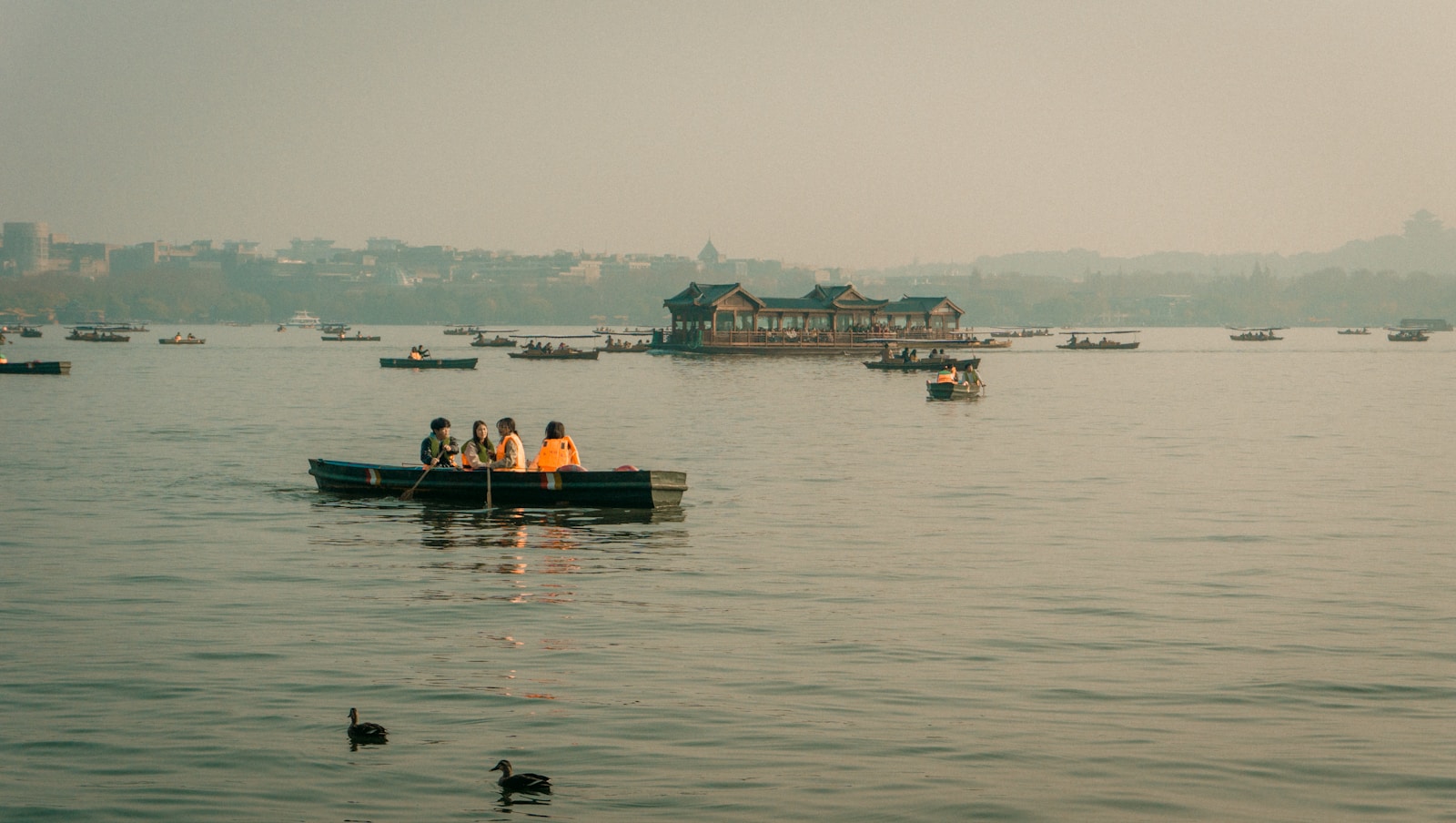
Hangzhou holds two Chinas in one frame: morning mist over West Lake’s causeways, and the headquarters of Alibaba twenty minutes away. The former Southern Song capital wears its history lightly — temple bells at Lingyin, tea terraces at Longjing village — while running one of the world’s great digital economies, right down to street vendors who haven’t touched cash in years.
It is, by most polls, the Chinese city the Chinese themselves most want to live in. Spend a day circling the lake on foot or by boat, then an evening in the restored Qinghefang quarter.
Deep-dive guide coming soon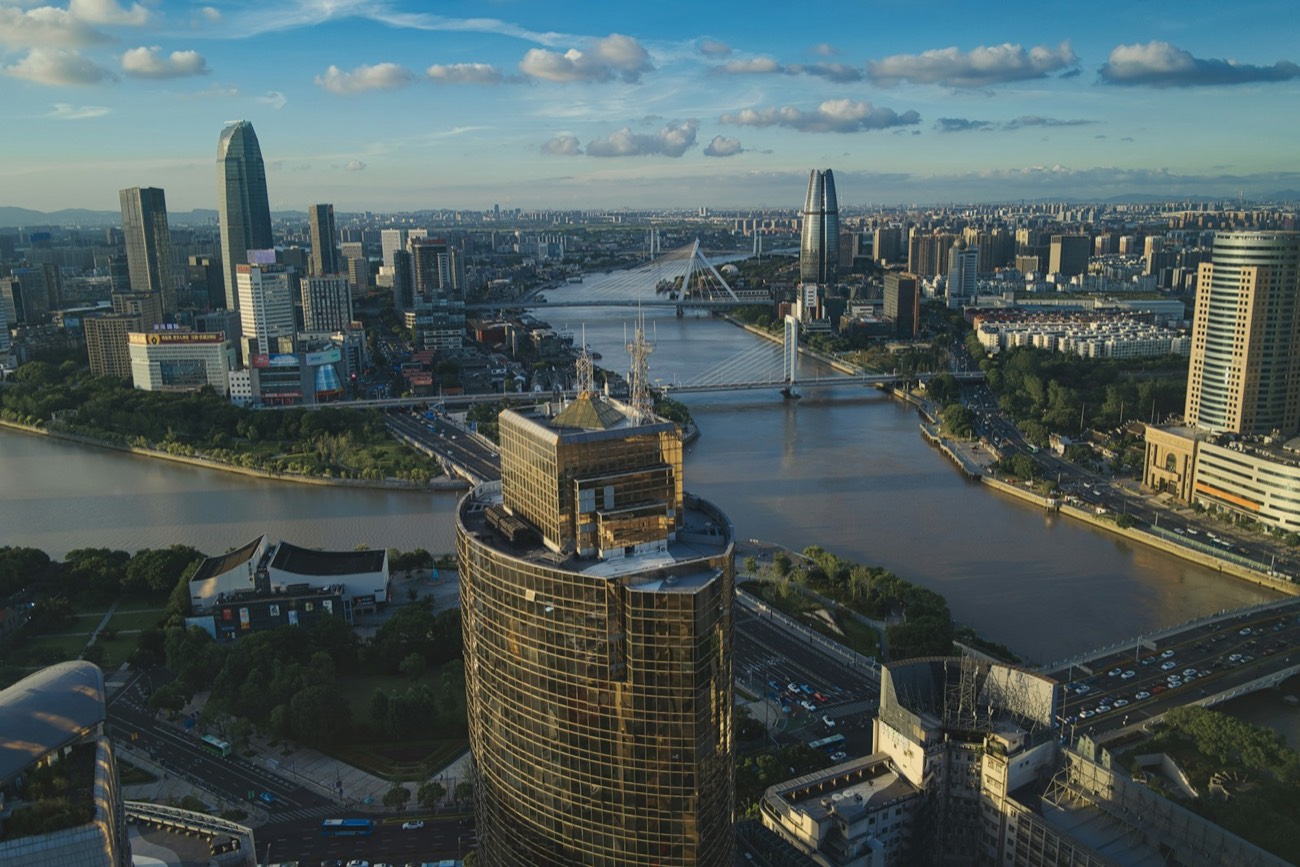
Ningbo宁波
Ningbo has been trading across the East China Sea since the Tang dynasty, and it never stopped: the combined Ningbo–Zhoushan port now moves more cargo tonnage than any other on earth. In the old town, the Tianyi Pavilion — China’s oldest surviving private library, founded in 1561 — keeps the city’s bookish, mercantile soul on display.
The Ningbo merchant clans bankrolled much of old Shanghai, and the dialect, food and shrewdness travelled with them. Try the seafood, and leave room for tangyuan.
Deep-dive guide coming soon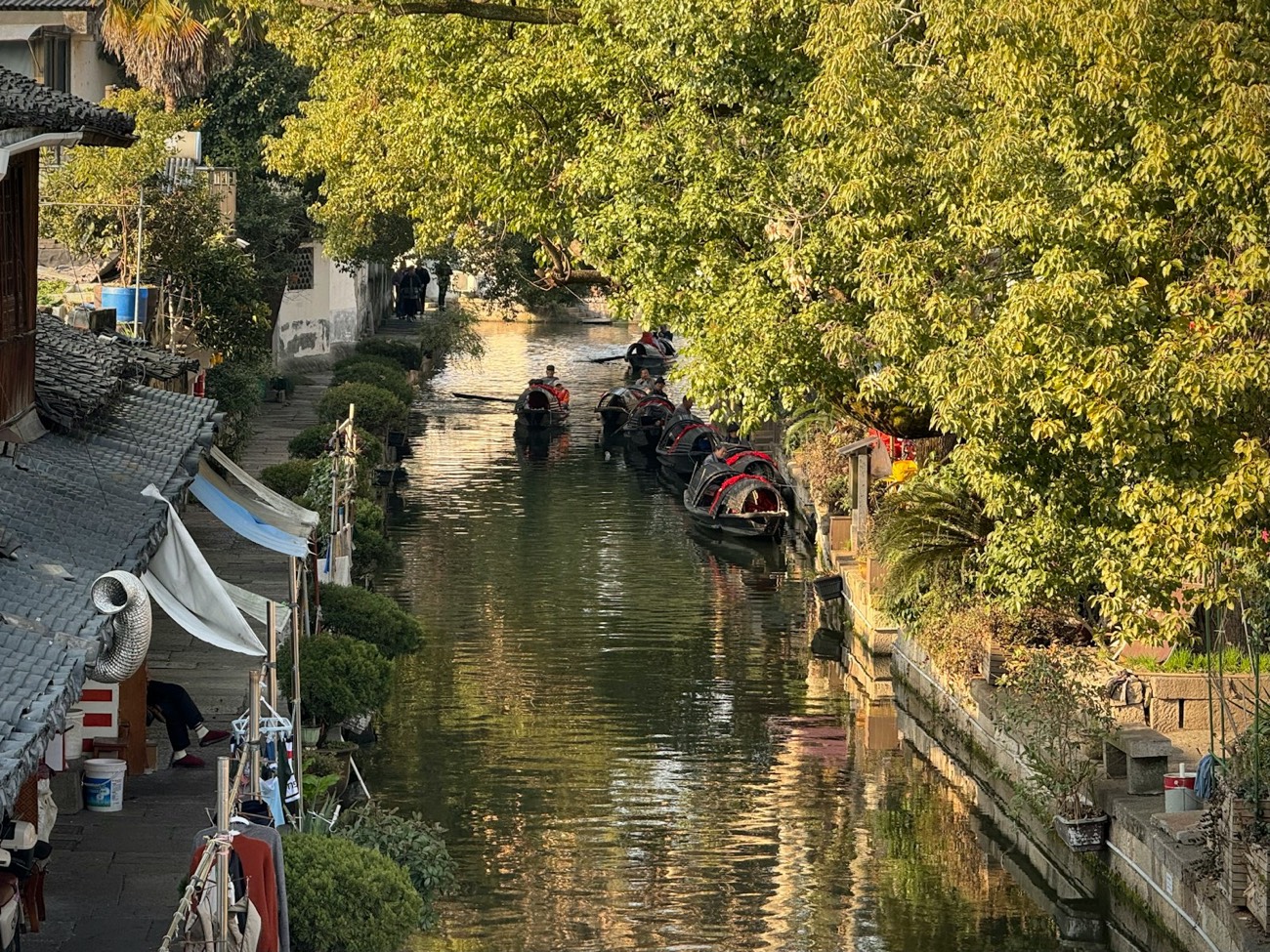
Shaoxing绍兴
Shaoxing is what Jiangnan looked like before the skylines arrived: black-awning boats poling under stone bridges, wine jars stacked by the water, and the childhood lanes of Lu Xun, modern China’s greatest writer, preserved nearly intact. In 353 AD the calligrapher Wang Xizhi gathered friends at the Orchid Pavilion here and produced the most celebrated piece of handwriting in Chinese history.
It’s an easy, atmospheric day from Hangzhou — but stay a night: the old town empties beautifully after the tour groups leave, and the yellow wine tastes better by the canal.
Deep-dive guide coming soon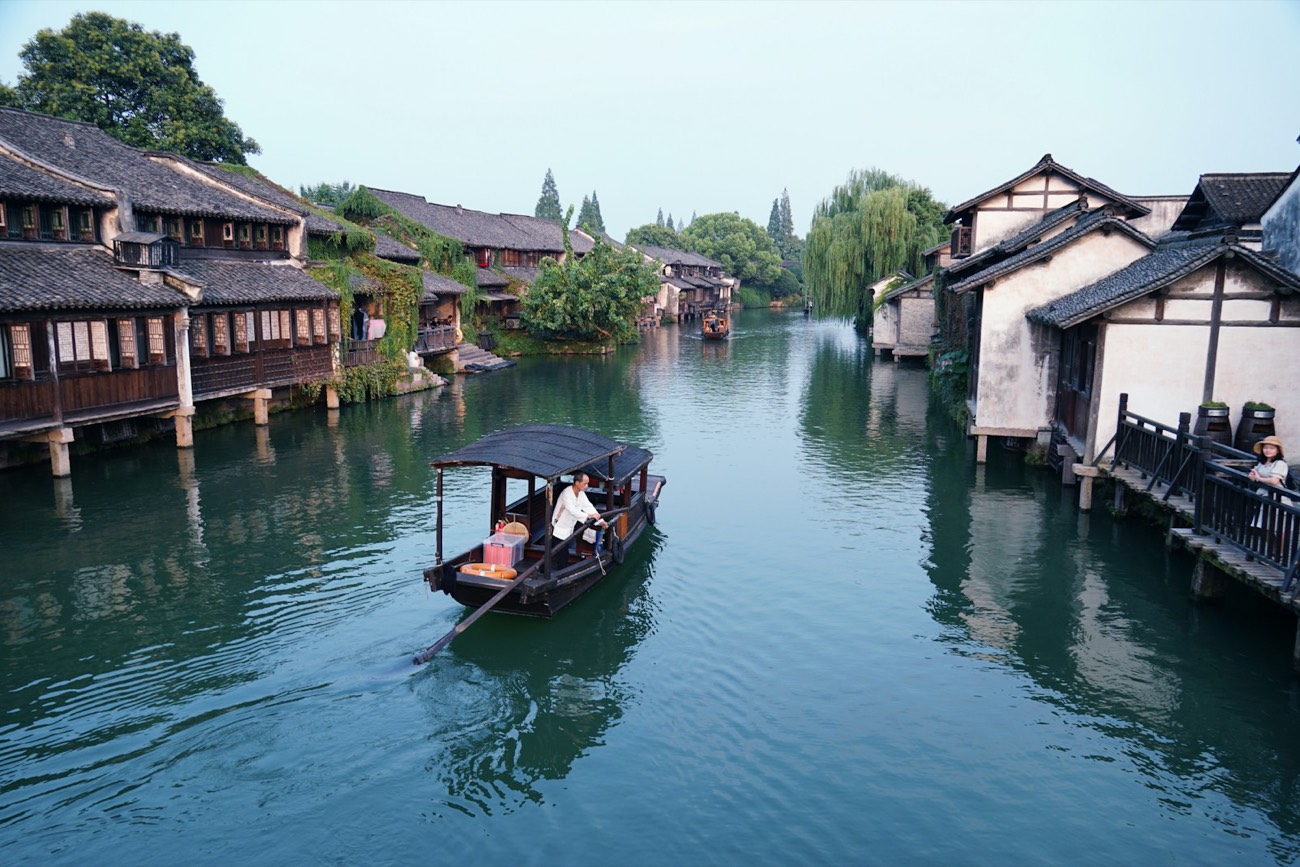
Wuzhen乌镇
Wuzhen is the postcard: 1,300 years old, threaded with canals, its wooden houses leaning over green water on stone stilts. The western quarter (Xizha) is the showpiece — car-free, beautifully restored, and at its best after dark when the lanterns come on and day-trippers head home.
In a very Zhejiang twist, this medieval canal town also hosts the World Internet Conference every year — fibre optics under flagstones. Stay overnight inside the scenic zone if you can; mornings on the empty canals are the reward.
Deep-dive guide coming soon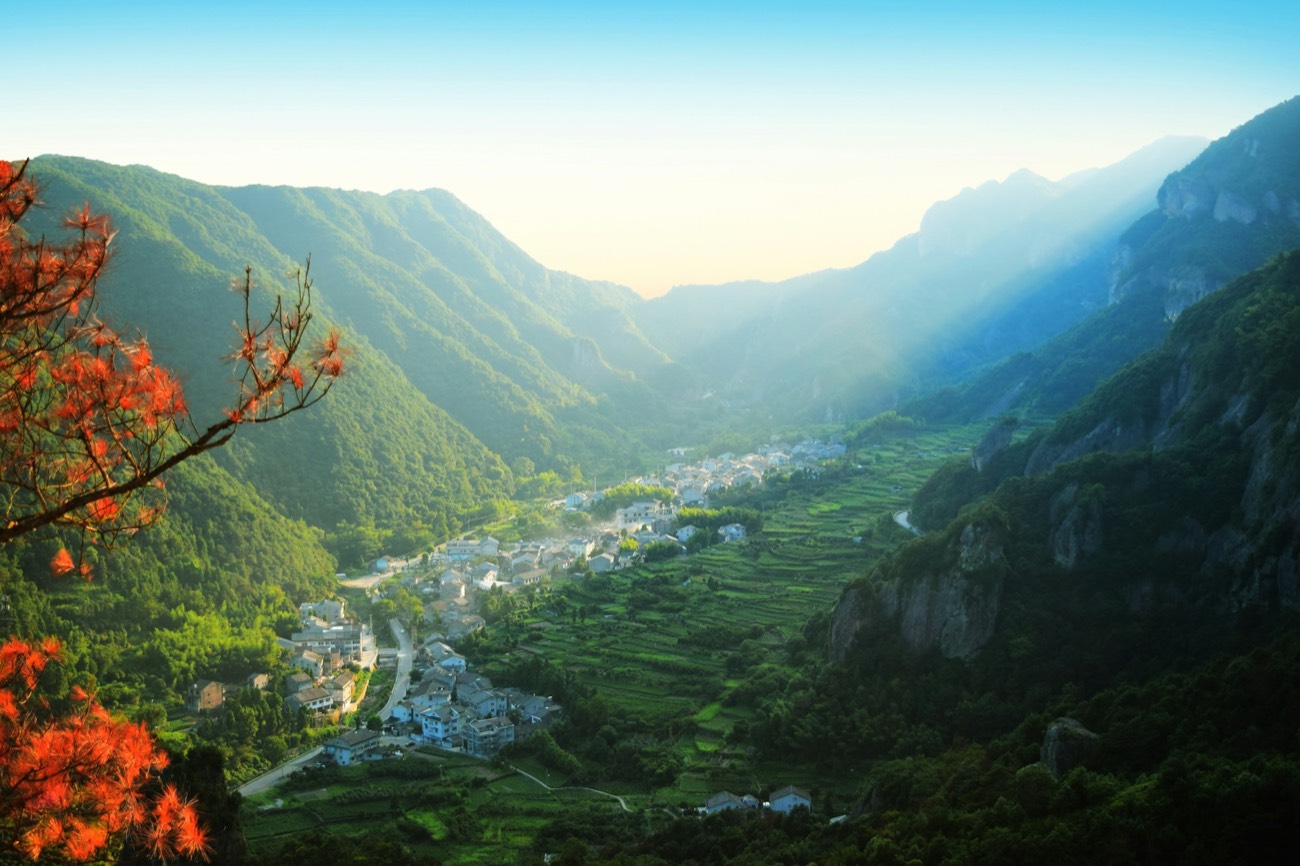
Wenzhou温州
A self-made merchant city on Zhejiang’s southern coast, Wenzhou is famed for the entrepreneurial ‘Wenzhou model’ and a diaspora that runs businesses from Milan to Madrid — and for a dialect so distinctive it is nearly a language of its own.
Behind the city rise the cliffs, waterfalls and pinnacles of the Yandang Mountains, one of eastern China’s most dramatic ranges and a UNESCO Global Geopark.
Deep-dive guide coming soonIconic attractions across the province
Six Zhejiang landmarks worth building a trip around — including all three of the province’s UNESCO World Heritage listings:
West Lake 西湖
UNESCO-listed in 2011 not for nature alone but as a designed cultural landscape — a thousand years of causeways, pagodas and gardens arranged like a scroll painting. Walk the Su Causeway at dawn, take a boat to the islets, and finish with tea in Longjing village in the hills behind. Entry to the lake itself is free.
The Grand Canal 大运河
The southern terminus of the 1,800-kilometre imperial canal (UNESCO 2014) is in Hangzhou, and unlike most heritage sites it is still working — barges rumble under the 17th-century Gongchen Bridge daily. The canal-side museums and restored warehouse quarter make this the most underrated half-day in the city.
Putuoshan 普陀山
One of Chinese Buddhism’s four sacred mountains — an island off Zhoushan dedicated to Guanyin, the bodhisattva of compassion. Temples, fishing-village lanes, beaches and the 33-metre seaside Guanyin statue; reach it by fast ferry and stay a night for the dawn chanting.
Qiandao Lake 千岛湖
“Thousand Island Lake” — actually 1,078 islands — created in 1959 when a valley was dammed; two intact ancient towns still stand on the lakebed, making it a legendary (advanced) dive site. Above water it’s the province’s clean-air escape: cycling, hiking and some of the country’s best freshwater fish banquets.
Liangzhu Archaeological Ruins 良渚古城遗址
The 5,000-year-old city outside Hangzhou that pushed back the timeline of Chinese civilisation — vast earthworks, sophisticated water engineering and the finest neolithic jades ever found (UNESCO 2019). The site museum is world-class and almost always quiet.
Wuzhen Water Town 乌镇
A beautifully restored canal town of black-tiled roofs, stone arch bridges and night-lit waterways, and host of the annual World Internet Conference. With neighbouring Xitang, it’s the postcard image of watery Jiangnan.
Famous figures of Zhejiang
Six people from this one province whose work shaped Chinese letters, art, politics and the modern internet.
Lu Xun (鲁迅)
Born in Shaoxing, Lu Xun invented the modern Chinese short story and turned the language itself into a scalpel. The True Story of Ah Q and Diary of a Madman are still the books every Chinese student reads — and his Shaoxing family compound is the province’s great literary pilgrimage.
Jin Yong (金庸)
Born Louis Cha in Haining, Jiaxing. His fifteen martial-arts epics — The Legend of the Condor Heroes above all — sold over 100 million copies and built the imaginative universe behind half of Chinese film and television.
Jack Ma (马云)
The Hangzhou English teacher who founded Alibaba in his lakeside apartment in 1999 and turned his hometown into China’s e-commerce capital. Whatever the company’s fortunes, the city’s digital economy is his monument.
Wang Xizhi (王羲之)
The most revered calligrapher in Chinese history spent his later years in Shaoxing, where his Preface to the Orchid Pavilion Gathering — dashed off, legend says, while pleasantly drunk — became the most imitated piece of writing in the civilisation’s history.
Lin Huiyin (林徽因)
Born in Hangzhou, Lin was modern China’s first female architect — co-surveyor of the country’s ancient buildings, co-designer of the national emblem, and a poet whose salon defined 1930s intellectual Beijing.
Chiang Kai-shek (蒋介石)
Born in Xikou, a riverside town outside Ningbo, Chiang led the Republic of China through war and civil war before retreating to Taiwan in 1949. His preserved family homes in Xikou are now a popular, soberly presented historical site.
Zhejiang’s modern economy & global role
Zhejiang runs on private enterprise like nowhere else in China — the province of ten thousand family firms that grew into a digital superpower. Hangzhou anchors it: Alibaba, Ant Group and NetEase made the city China’s e-commerce and mobile-payments capital, and its streets were functionally cashless years before the rest of the world noticed.
The hardware side is just as outsized. Ningbo–Zhoushan is the busiest port on earth by cargo tonnage; Yiwu, inland, operates the world’s largest small-commodities market — if a plastic toy, umbrella or Christmas decoration exists, somebody in Yiwu wholesales it. And the Wenzhou merchant diaspora seeded Chinese business communities from Madrid to São Paulo.
The result: a province of 66 million with an economy larger than most G20 countries’, routinely used by Beijing as the pilot zone for new economic policy.
Hangzhou’s digital empire
Home to Alibaba, Ant Group and NetEase, Hangzhou turned Zhejiang into China’s e-commerce and mobile-payments heartland — cashless years before the rest of the world caught up.
Yiwu small commodities
Inland Yiwu runs the planet’s largest wholesale market for small goods — if a toy, umbrella or Christmas bauble exists, somebody in Yiwu sells it by the container-load.
Ningbo–Zhoushan
Ningbo–Zhoushan handles more cargo tonnage than any other port in the world, the deep-water gateway through which much of eastern China trades.
The Wenzhou model
Zhejiang runs on private enterprise like nowhere else, and the Wenzhou merchant diaspora has seeded Chinese business communities from Madrid to São Paulo.
Why Zhejiang matters for Mandarin learners
It’s the China your textbook promised. 江南 Jiangnan — the bridges, tea hills and lake pavilions — is the imagery half of Chinese poetry leans on. Visiting with even basic Mandarin turns scenery into stories.
Mandarin works everywhere, and locals are patient. Because Wu dialects differ so much from Mandarin, Zhejiang people grow up bilingual and switch graciously for outsiders — a far gentler speaking environment than learners fear.
It’s where opportunity speaks Mandarin. Hangzhou’s tech scene actively recruits internationally; Yiwu’s market floors run on traders’ Mandarin from every continent. For career-minded learners, this coast is the use-case.
Wherever you’re starting from, our guide to the HSK levels maps the road, and the free Mandarin level test finds your current rung in ten minutes.
Visiting Zhejiang — practical notes
Getting there is absurdly easy: high-speed trains run from Shanghai to Hangzhou in about 45 minutes, with Shaoxing and Ningbo on the same line minutes beyond. Hangzhou’s Xiaoshan airport has direct international connections, including Australia in peak seasons.
When to come: April–May and October–November are the postcard windows — osmanthus season around West Lake in autumn is the local favourite. Summers are hot, humid and occasionally brushed by coastal typhoons; winters are grey but uncrowded.
Sequencing a week: three days Hangzhou (lake, canal quarter, Longjing hills, Liangzhu), a day-and-night in Wuzhen, a day in Shaoxing, then either Ningbo + Putuoshan for temples and sea air, or Qiandao Lake for the mountains. West Lake itself is free; book Wuzhen accommodation inside the western zone ahead of weekends.
Test your Zhejiang knowledge
1. Which city served as the Southern Song dynasty’s imperial capital?
2. The 5,000-year-old UNESCO site outside Hangzhou is called:
3. Ningbo–Zhoushan port leads the world in:
4. Lu Xun, father of modern Chinese literature, grew up in:
5. Longjing (Dragon Well) is a famous Zhejiang:
6. The world’s largest small-commodities wholesale market is in which Zhejiang city?
Frequently asked questions
Start your Mandarin journey
Want to learn the Standard Mandarin spoken across Zhejiang and the rest of China? Online 1-on-1 lessons with a native speaker.