Every name below is a real Chinese given name, written in characters, with pinyin, its literal meaning and native audio. 150 for girls, 150 for boys, grouped by theme.
Includes 124 surnames and a pronunciation guide. Tell us where to send it and it’s yours.
The full Chinese names list
Tap ▶ on any name to hear it spoken by a native speaker. Filter by girls, boys or theme, or search by character, pinyin or meaning.
Showing all 300 names
雪Xuěsnow — purity and quiet beauty
梅Méiplum blossom — resilience in winter
兰Lánorchid — refinement and grace
莲Liánlotus — purity rising from the mud
晓彤Xiǎotóngdawn glow — the red of early morning
紫萱Zǐxuānpurple day-lily — the flower said to dispel worry
若兰Ruòlánlike an orchid — graceful and pure
秋月Qiūyuèautumn moon — serene and clear
晴Qíngclear, fine weather — bright skies
露Lùdew — fresh and delicate
芳Fāngfragrant — sweet-smelling, like a flower in bloom
菲Fēilush and fragrant — rich, growing greenery
荷Hélotus — summer's flower, serene on the water
竹Zhúbamboo — upright, supple and evergreen
云Yúncloud — free and unhurried
星Xīngstar — bright and far-reaching
月Yuèmoon — calm, clear and constant
霞Xiárosy clouds — the colour of sunrise and sunset
虹Hóngrainbow — brightness after rain
柳Liǔwillow — slender and graceful in the wind
蕊Ruǐstamen — the delicate heart of a flower
冰Bīngice — clear, cool and unclouded
春燕Chūnyànspring swallow — the bird that brings the season
冬梅Dōngméiwinter plum — blossom that opens in the cold
夏雨Xiàyǔsummer rain — warm and life-giving
雨薇Yǔwēirain on the rose — fresh and tender
小雨Xiǎoyǔlight rain — gentle and quiet
青云Qīngyúnblue clouds — high aspiration and a rising path
芸Yúnrue — a fragrant herb once used to protect books
晨露Chénlùmorning dew — fresh at the start of the day
美丽Měilìbeautiful and lovely
雅婷Yǎtíngelegant and graceful
婉清Wǎnqīnggentle and pure
语嫣Yǔyāncharming speech and a captivating smile
丽华Lìhuálovely and resplendent
婷婷Tíngtínggraceful and slender — doubled for affection
玉Yùjade — precious, pure and beautiful
婉Wǎngentle, graceful and tactful
美琳Měilínbeautiful as a gem
颖Yǐngclever and gifted
婧Jìngslender and talented — a literary word of praise
娟Juāngraceful and beautiful — delicately lovely
妍Yánbeautiful — classically pretty
媛Yuána beautiful, accomplished woman
琳Lína gem — brilliant and flawless
瑶Yáoprecious jade — rare and treasured
珍Zhēnprecious — a treasure, held dear
珠Zhūpearl — round, luminous and rare
琪Qífine jade — lustrous and prized
莹Yínglustrous — clear and jade-bright
秀Xiùelegant — refined and outstanding
倩Qiànpretty — charming and winsome
婵Chángraceful — from 婵娟 (chánjuān), beauty and the moon
丽娜Lìnàlovely — 娜 (nà), a favoured sound in women's names
玉婷Yùtíngjade and grace — precious and poised
雅琴Yǎqínelegant as the qin, the classical zither
静姝Jìngshūquiet and lovely — a phrase from the Book of Songs
嫣然Yānrána captivating smile
月婵Yuèchánthe moon's grace
欣妍Xīnyánglad and beautiful
慧敏Huìmǐnwise and quick-minded
静怡Jìngyícalm and contented
思颖Sīyǐngthoughtful and bright
淑芬Shūfēnvirtuous and fragrant
慧Huìwisdom and intelligence
静Jìngserene, quiet and composed
婉如Wǎnrúgentle and gracious in manner
晓慧Xiǎohuìunderstanding and wise
贤Xiánvirtuous and worthy
婉莹Wǎnyínggentle and lustrous, like jade
淑Shūvirtuous — kind and well-mannered
雅Yǎelegant — refined in taste and bearing
文Wéncultured — literate, civil and learned
敏Mǐnquick — nimble in mind and response
仪Yíbearing — dignified manner and decorum
柔Róugentle — soft in manner, supple in strength
惠Huìkind — generous and gracious
懿Yìadmirable virtue — a classical word of high praise
兰心Lánxīnan orchid heart — pure and refined within
慧兰Huìlánwise as the orchid
淑慧Shūhuìvirtuous and wise
思敏Sīmǐnthoughtful and quick-witted
文慧Wénhuìcultured and wise
明慧Mínghuìbright and wise
静娴Jìngxiáncalm and refined
婉宁Wǎnnínggentle and serene
雅文Yǎwénelegant and cultured
淑仪Shūyívirtuous in bearing
知雅Zhīyǎknowing and elegant
文君Wénjūncultured and noble — after the poet Zhuo Wenjun
欣怡Xīnyíhappy and harmonious
嘉欣Jiāxīnfine and joyful
乐Lèjoy and happiness
欢欢Huānhuānjoyful — doubled for affection
嘉怡Jiāyíblessed with happiness and ease
怡Yíhappy, harmonious and at ease
悦Yuèdelight, pleasure and gladness
佳Jiāfine, good and auspicious
福Fúgood fortune and blessing
乐怡Lèyíjoyful and content
喜Xǐjoy — happiness and celebration
安Ānpeace — safe, settled and calm
宁Níngserene — peaceful and untroubled
瑞Ruìauspicious — a good omen
祥Xiángauspicious — propitious and favourable
恩Ēngrace — kindness received and given
欣Xīnglad — cheerful and willing
吉Jílucky — auspicious and fortunate
和Héharmony — peace between people
康Kāngwellbeing — health and ease
悦心Yuèxīna glad heart
心怡Xīnyía contented heart
乐欣Lèxīnjoyful and glad
嘉宁Jiāníngfine and peaceful
瑞雪Ruìxuěauspicious snow — snow that promises a harvest
如意Rúyìas one wishes — everything going well
安然Ānránat peace — calm and untroubled
欣然Xīnrángladly — with willing pleasure
宁静Níngjìngtranquil — quiet and still
安宁Ānníngpeace and quiet
诗涵Shīhánpoetry and poise — inner depth
梦琪Mèngqídream and fine jade
若曦Ruòxīlike the first light of dawn
雪儿Xuě'érlittle snow — a tender, lyrical name
诗雅Shīyǎpoetic and elegant
梦瑶Mèngyáodream of rare jade
诗琪Shīqípoetry and jade — refined and graceful
艺涵Yìhánartistic poise and depth of character
梦Mèngdream — imagination and aspiration
诗Shīpoetry — classical elegance and refinement
书Shūbooks — reading, writing and scholarship
墨Mòink — the scholar's art of brush and page
琴Qínthe qin — the classical zither of the scholar
韵Yùnrhyme — cadence, resonance and charm
画Huàpainting — the brush turned to image
词Cílyric verse — the sung poetry of the Song dynasty
雅诗Yǎshīelegant verse
书瑶Shūyáobooks and jade
墨涵Mòhánink and depth — learning held within
墨兰Mòlánink orchid — a classic subject of brush painting
诗云Shīyúnpoetry and clouds
婉诗Wǎnshīgentle verse
韵涵Yùnháncharm and depth
书琴Shūqínbooks and the zither — the scholar's two companions
梦涵Mènghándream and depth
若雪Ruòxuělike snow — clear and quiet
清瑶Qīngyáoclear as jade
诗韵Shīyùnthe cadence of verse
婉韵Wǎnyùngentle cadence — soft and musical
梦琳Mènglíndream and gemstone
伟Wěigreat and grand
强Qiángstrong and powerful
勇Yǒngbrave and courageous
志强Zhìqiángstrong-willed and determined
嘉豪Jiāháofine and heroic
子豪Zǐháoof heroic bearing
国强Guóqiánga strong nation
建军Jiànjūnto build the army
震宇Zhènyǔto shake the universe — awe-inspiring
鹏飞Péngfēithe giant Peng bird soaring in flight
毅Yìfirm and resolute; staunch
刚Gānghard and unbending
磊Lěiopen and honest — solid as a pile of stones
威Wēipower, might and prestige
骏Jùna spirited horse
豪Háogrand and heroic
志刚Zhìgānga will of iron
建强Jiànqiángto build strength
伟豪Wěiháogreat and heroic
剑锋Jiànfēngthe edge of the sword
英杰Yīngjiéan outstanding hero
鹏举Péngjǔthe Peng bird taking flight — after Yue Fei
大伟Dàwěigreat and mighty
志勇Zhìyǒngresolute and brave
力行Lìxíngto put it into practice with all one's strength
坚Jiānfirm, solid, unwavering
伟杰Wěijiégreat and outstanding
勇刚Yǒnggāngbrave and unyielding
雄飞Xióngfēito soar in full power
浩强Hàoqiángvast and strong
俊杰Jùnjiéan outstanding talent, a hero
宇航Yǔhángto voyage the cosmos
鹏程Péngchénga great future ahead
一鸣Yìmíngto astonish the world with one cry
嘉俊Jiājùnfine and talented
立成Lìchéngto establish and achieve
致远Zhìyuǎnto aspire to far horizons
杰Jiéoutstanding and exceptional
俊Jùnhandsome and talented
嘉乐Jiālèfine and joyful
峰Fēnga mountain summit; the highest point
帆Fāna sail — set for open water
翔Xiángto soar, to glide
超Chāoto surpass, to go beyond
凯Kǎithe music of triumph
振华Zhènhuáto rouse and bring splendour
凌云Língyúnto rise above the clouds — high aspiration
超群Chāoqúnhead and shoulders above the crowd
建华Jiànhuáto build something splendid
立业Lìyèto establish a career of one's own
腾飞Téngfēito take off and soar
志伟Zhìwěigreat in ambition
高翔Gāoxiángto fly high
俊驰Jùnchía fine horse at full gallop
志鹏Zhìpéngambition the size of the Peng bird
逸飞Yìfēito fly free and unhindered
成龙Chénglóngto become a dragon — the hope a child rises high
凯旋Kǎixuánto return in triumph
宏图Hóngtúa grand design, a great plan
世豪Shìháoa hero of his age
浩然Hàorána vast and upright spirit
正豪Zhèngháoupright and heroic
德明Démíngbright in virtue
嘉诚Jiāchéngfine and sincere
天佑Tiānyòublessed by Heaven
信Xìntrustworthy and faithful
仁杰Rénjiébenevolent and outstanding
子谦Zǐqiānmodest and humble
明德Míngdéillustrious virtue
嘉宝Jiābǎoa fine, cherished treasure
诚Chéngsincere and true
谦Qiānmodest
义Yìjustice and righteousness
礼Lǐcourtesy and propriety
忠Zhōngloyal and faithful
守正Shǒuzhèngto hold to what is right
崇德Chóngdéto hold virtue in high esteem
怀仁Huáirénto carry kindness in one's heart
立诚Lìchéngto stand on sincerity
修远Xiūyuǎnlong is the road ahead — after the poet Qu Yuan
秉义Bǐngyìto hold fast to what is right
正阳Zhèngyángupright and full of sun
至善Zhìshànthe highest good
敬轩Jìngxuānrespectful and dignified
子敬Zǐjìngone who holds others in respect
德昌Déchāngvirtue in flourish
守信Shǒuxìnto keep one's word
明诚Míngchéngclear-sighted and sincere
清和Qīnghéclear and even-tempered
厚德Hòudédeep and generous virtue
文博Wénbócultured and broadly learned
睿Ruìwise and perceptive
子轩Zǐxuānrefined and dignified
明轩Míngxuānbright and dignified
睿哲Ruìzhéwise and sagacious
嘉文Jiāwénfine and cultured
文轩Wénxuāncultured and dignified
智Zhìwisdom and intellect
博文Bówénlearning worn lightly
思源Sīyuánmindful of one's roots
哲Zhéwise; a sage
弘毅Hóngyìbig enough for what is asked, and steady under it
博Bówide-ranging and well-read
睿轩Ruìxuānastute and dignified
文昊Wénhàolearning as wide as the sky
思远Sīyuǎnto think far ahead
知行Zhīxíngto know and to act as one
明哲Míngzhéclear-sighted and wise
修文Xiūwénto cultivate learning
子墨Zǐmòof ink and letters
翰文Hànwénthe writing brush and the written word
书豪Shūháolearned and heroic
志学Zhìxuéset upon learning — as Confucius was at fifteen
承文Chéngwénto carry the cultured tradition forward
思齐Sīqíto meet someone worthy and aspire to match them
启明Qǐmíngthe morning star; to open the mind
思聪Sīcōngto listen keenly and hear clearly
通达Tōngdáof thorough and penetrating understanding
文渊Wényuāndeep waters of learning
明理Mínglǐto understand the reason in things
浩宇Hàoyǔthe vast universe
子涵Zǐhánall-embracing and magnanimous
雨泽Yǔzérain and nourishing grace
宇辰Yǔchénthe cosmos and the stars
辰Chéna celestial body; time
宇轩Yǔxuānthe lofty expanse of the cosmos
沐阳Mùyángbathed in sunshine
晨曦Chénxīthe first light of dawn
泽宇Zéyǔgrace as vast as the universe
皓轩Hàoxuānbright and lofty
海Hǎithe sea
川Chuāna river running through open country
松Sōngthe pine — green through winter
岩Yánrock and cliff
旭Xùthe rising sun at dawn
昊Hàothe vast sky
岳Yuèa high mountain, the tallest of a ridge
森Sēndensely wooded; a forest
朗Lǎngclear and bright
霖Línlong-falling rain
瀚Hànvast as the ocean
星辰Xīngchénthe stars
云帆Yúnfānsails like clouds — set for the open sea
海涛Hǎitāothe great waves of the sea
松柏Sōngbǎipine and cypress — evergreen, enduring
天宇Tiānyǔthe heavens
青山Qīngshāngreen mountains
雨辰Yǔchénrain and starlight
晨阳Chényángthe morning sun
长风Chángfēngthe long wind — the one that carries you far
How Chinese names are built
Surname first, given name second. Every name in the Chinese names list above is a given name — pair it with a surname to make a full name.
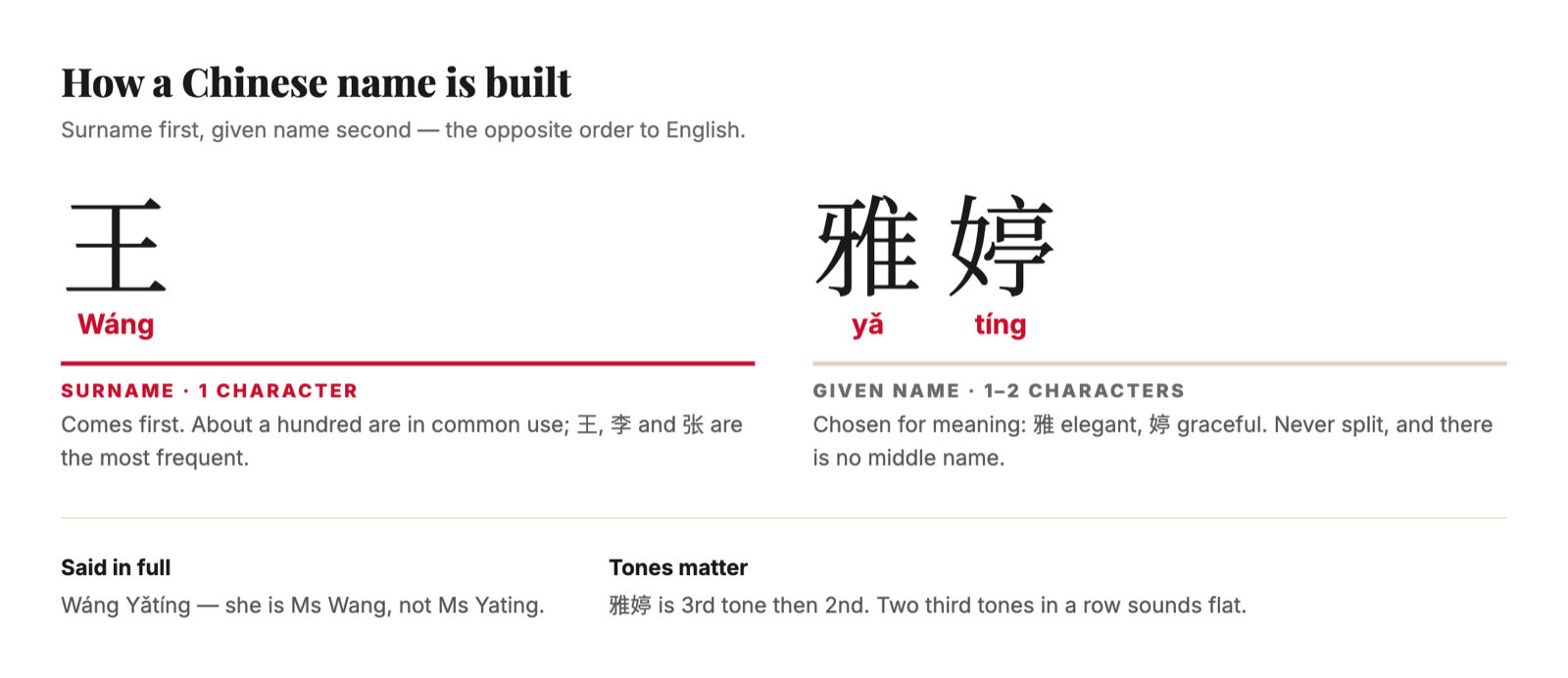
A Chinese name runs surname first, given name second. 王雅婷 is the surname 王 (Wáng) followed by the given name 雅婷 (Yǎtíng) — the opposite order to English, and the reason a Chinese person introduced as “Wang Yating” is Ms Wang, not Ms Yating.
Given names are one or two characters, and each character is chosen for what it means. There is no fixed pool of names the way English has Sarah or David: parents pick characters whose meanings suit the child they hope for. That is why every entry in the list above carries a meaning — the meaning is the point, not a footnote.
Two-character names are the most common today. 雅 (yǎ, elegant) plus 婷 (tíng, graceful) gives 雅婷. Pairing works on sound as much as sense: characters that share a tone can sound flat together, which is why 雅婷 (3rd then 2nd tone) sits more comfortably than two third tones in a row.
Girls’ names and boys’ names
The split in this list follows convention rather than rule. Girls’ names lean towards nature, beauty, grace and poetry — 雪 (xuě, snow), 兰 (lán, orchid), 诗 (shī, poetry). Boys’ names lean towards strength, ambition, virtue and vision — 伟 (wěi, great), 强 (qiáng, strong), 志 (zhì, ambition). Plenty of characters are used for either, and modern parents increasingly ignore the convention altogether.
Surnames
The convention is old and well documented: the structure of Chinese given names has stayed surname-first for well over two thousand years, and our free Chinese dictionary is a good place to check the meaning of any character you are considering.
There are only about a hundred surnames in common use, and the three most frequent — 王 (Wáng), 李 (Lǐ) and 张 (Zhāng) — account for a very large share of the population between them. The PDF includes 124 of them with pronunciation. If you want the detail, our guide to the 100 most common Chinese surnames covers where they came from.
Choosing a name for yourself
If you are picking a Chinese name for your own use, three things matter more than the meaning you like best.
It has to sound like a name. A beautiful meaning assembled from characters nobody uses in names reads as odd — the equivalent of calling yourself Moonbeam Justice in English. Every name in this list is one that Chinese people actually use.
It should sit near your own name in sound. Most people choose characters that echo their English name, which makes it easier for you to answer to and easier for others to connect the two.
Say it out loud before you commit. Tones change everything, and a name that reads well can be awkward to say. That is what the audio on each card is for. If you want help, our free Chinese name generator builds a full name around your own, and the guide to choosing a Chinese name walks through it properly.
And if the characters themselves are new to you, the character worksheet generator will print a tracing sheet for any name on this page, so you can learn to write it by hand.
Not sure the name you picked sounds right?
A name can read beautifully and still land awkwardly out loud. Thirty minutes with a native speaker will tell you how yours sounds to a Chinese ear — and fix your tones while we are at it.
Yes. Every given name in the list is in genuine use in mainland China, and each is written with the characters a Chinese person would use. The meanings given are the literal meanings of those characters.
Is the PDF free?
Yes. All 300 given names, 124 surnames and a pronunciation guide, free. Tell us where to send it and the download starts straight away.
Can I use a girls’ name if I am male, or the other way round?
Some characters are strongly associated with one gender and would read oddly on the other, but many are neutral. If you are unsure, pick from the section that matches and you will be safe.
How do I say the tone marks?
Tap ▶ on any card to hear the name spoken. If you want the system explained, our Mandarin tones cheatsheet covers all four tones with audio.
Do Chinese names have middle names?
No. A Chinese name is a surname of one character (occasionally two) followed by a given name of one or two characters. There is no middle name, and the given name is not split.
Can you help me choose one?
Yes — that is what the name generator is for, and if you would like a person rather than a tool, get in touch.
Free PDF
Where should I send it?
Tell us a little about you and the PDF is yours — it lands in your inbox straight away.
All fields are required. I’ll send new resources now and then, the odd note on learning Mandarin properly, and occasionally news about my workbooks. Unsubscribe any time. Privacy policy
Sent. Check your inbox — your download is starting now.
You’ve got the list. The Chinese Naming Kit goes further — a 12-page guide to choosing a name, 100 given names and 124 surnames with meanings, and 444 audio files at natural and slow speed.