Sentence #13519103 from Tatoeba · converted to simplified characters
How 现象 is built
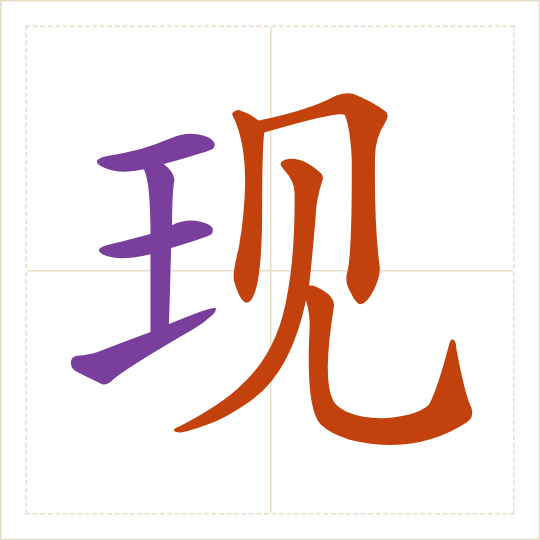
Each colour is one part of the character. Parts repeat across thousands of characters, so learning them makes new words easier. See all 214 in our radicals chart.
现xiànto appear
王king · wáng
见to see · jiàn
Memory aid王 here is jade 玉, and 见 gives the sound (it was once also read xiàn, “to appear”). Picture jade catching the eye: to appear, now.
象xiàngelephant
⺈knife form of 刀 · dāo
口mouth · kǒu
豕pig · shǐMeaning part
How to write 现象
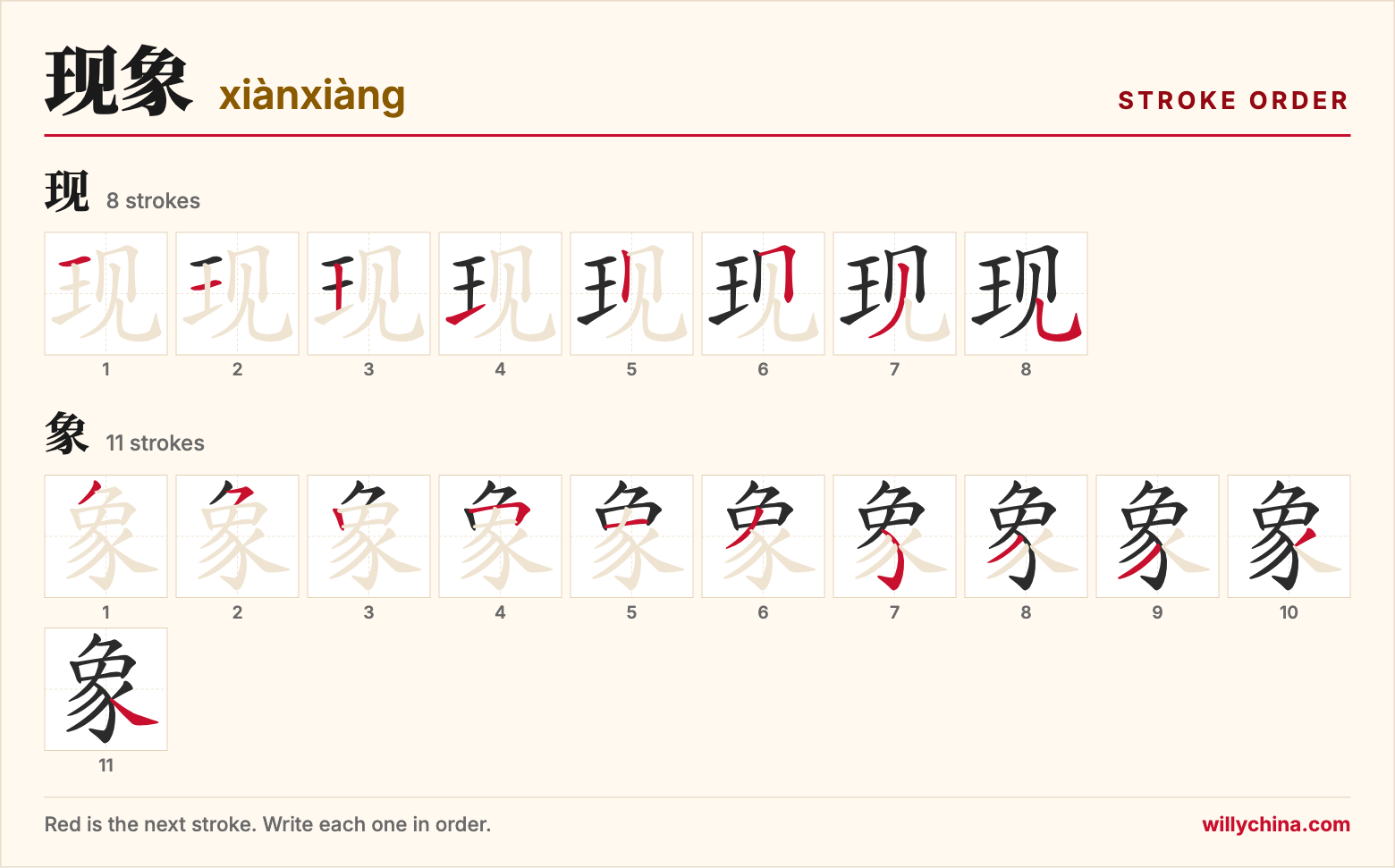
现 8 strokes · 象 11 strokes
Watch the order, then press Try writing it and draw each stroke in the grid. Each stroke is checked as you go.
Stroke order chart for 现象 (xiànxiàng). Red marks the next stroke, so you can copy it onto paper one step at a time.
现象 (xiànxiàng) means “phenomenon” or “appearance”. It is an HSK 5 word.
Say it xiànxiàng: xiàn with a 4th tone, then xiàng with a 4th tone. Press Listen at the top of this page to hear it, or Slowly to hear each tone clearly.
In Traditional characters, used in Taiwan and Hong Kong, 现象 is written 現象. The pronunciation is the same.
Use 个 (gè) or 种 (zhǒng). For example, one phenomenon is 一个现象 (yí ge xiànxiàng).
Add a Chinese (Simplified) pinyin keyboard to your phone or computer, type xianxiang with no tone marks or spaces, then choose 现象 from the suggestions. Typing xianxiang into this dictionary’s search box finds it too.
现象 is an HSK 5 word in the HSK 2.0 word lists.
Turn words into conversations
A dictionary gives you the words. A native teacher shows you how to use them. Start with a free 30-minute intro call.
Sources: meaning and pinyin checked by a native Mandarin teacher against the official HSK lists. Extra meanings from CC-CEDICT (CC BY-SA 4.0). Example sentences from Tatoeba (CC BY 2.0 FR). Character parts and stroke order from Make Me a Hanzi.
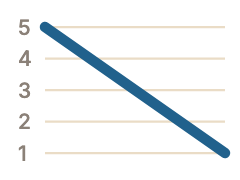 现xiàn4th tone, falling