HSK 6 · Adjectives
生疏 shēngshū “unfamiliar” in Chinese
Same in Traditional
What 生疏 means
- unfamiliar
- out of practice
- rusty
- strange
- not accustomed
How to say 生疏
 生shēng1st tone, high and level
- 疏shū1st tone, high and level
生疏 in a sentence
How 生疏 is built
Each colour is one part of the character. Parts repeat across thousands of characters, so learning them makes new words easier. See all 214 in our radicals chart.
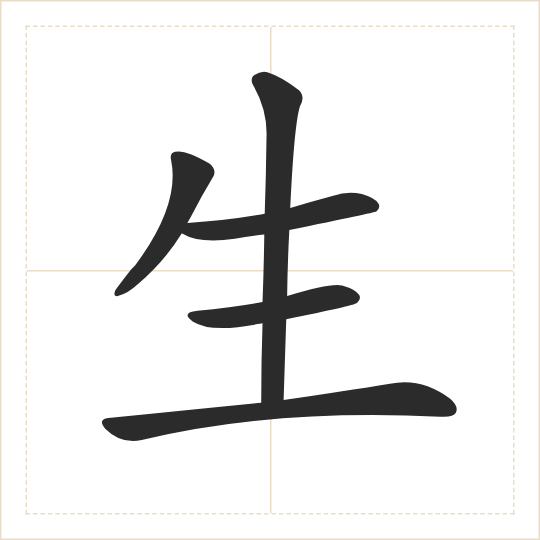
生shēngto grow; to give birth; to produce
生 is a single shape of 5 strokes. Learn it whole, then watch its stroke order below.
Memory aidA shoot growing up out of the soil 土: to grow, to be born.
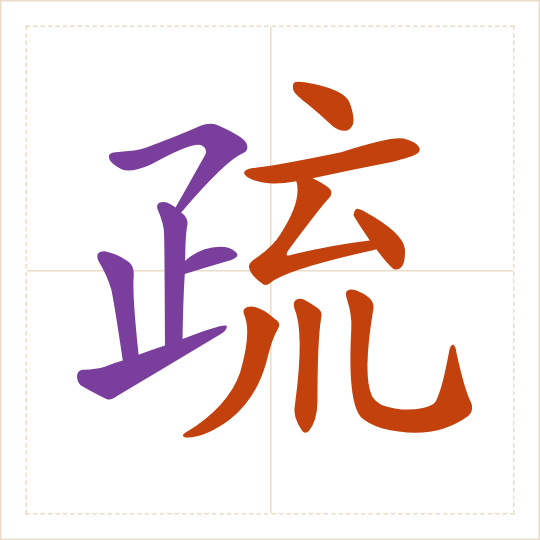
疏shūto dredge
- 疋roll of cloth · pǐ
- 㐬pennant
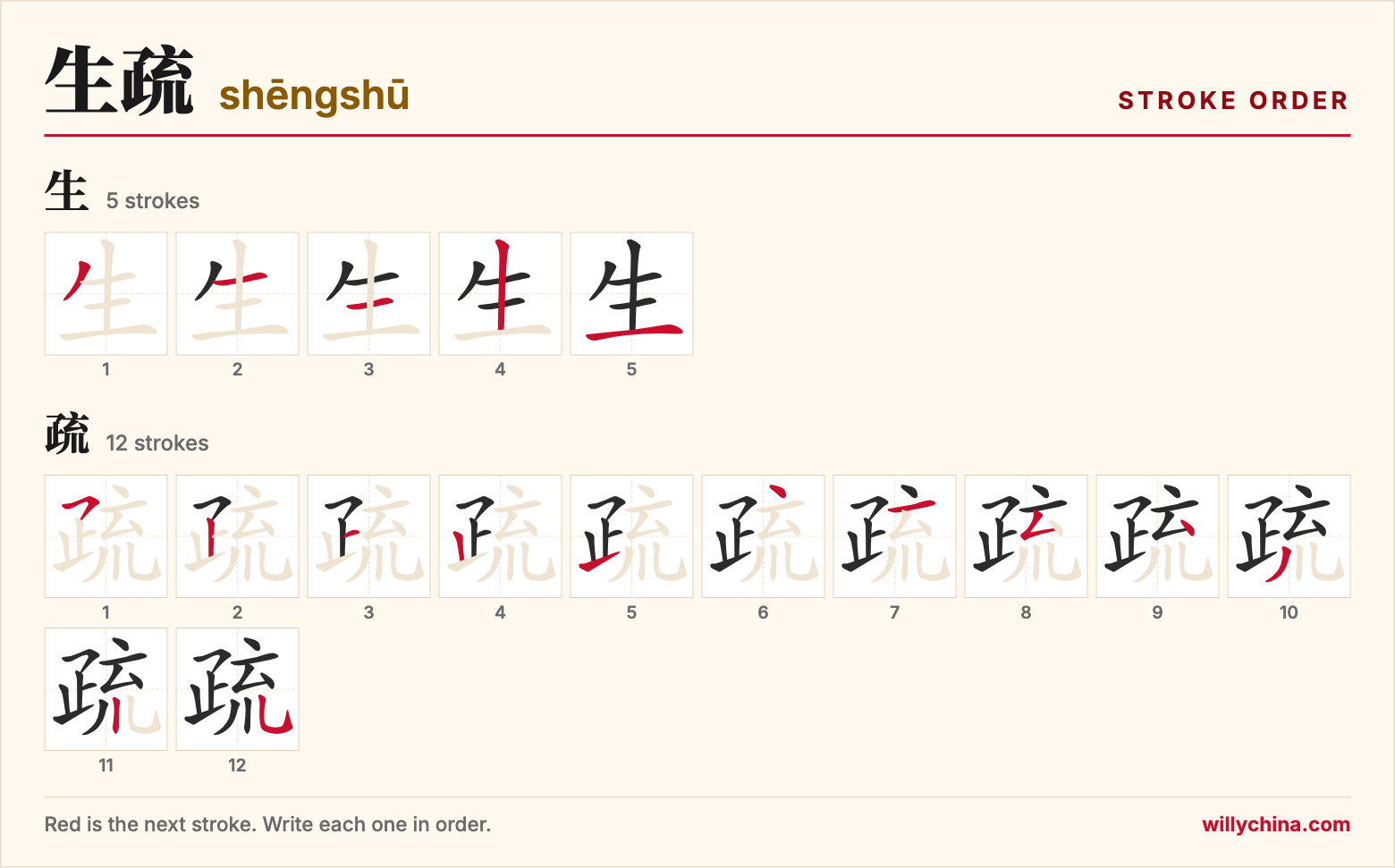
How to write 生疏
生 5 strokes · 疏 12 strokes
Watch the order, then press Try writing it and draw each stroke in the grid. Each stroke is checked as you go.
Words related to 生疏
Words with 生
医生yīshēng · doctor学生xuésheng · student先生xiānsheng · mr大学生dàxuéshēng · university student小学生xiǎoxuéshēng · primary school student中学生zhōngxuéshēng · middle-school student生日shēngrì · birthday生病shēngbìng · to get sick生气shēngqì · angry女生nǚshēng · female student
Words with 疏
More words: Adjectives
FAQs
生疏 (shēngshū) means “unfamiliar” or “out of practice”. It is an HSK 6 word.
Say it shēngshū: shēng with a 1st tone, then shū with a 1st tone. Press Listen at the top of this page to hear it, or Slowly to hear each tone clearly.
Yes. 生疏 is written the same way in Simplified and Traditional characters.
Add a Chinese (Simplified) pinyin keyboard to your phone or computer, type shengshu with no tone marks or spaces, then choose 生疏 from the suggestions. Typing shengshu into this dictionary’s search box finds it too.
生疏 is an HSK 6 word in the HSK 2.0 word lists.
Sources: meaning and pinyin checked by a native Mandarin teacher against the official HSK lists. Extra meanings from CC-CEDICT (CC BY-SA 4.0). Example sentences written by WillyChina. Character parts and stroke order from Make Me a Hanzi.