HSK 4 · Adjectives
流行 liúxíng “popular” in Chinese
Same in Traditional
What 流行 means
- popular
- fashionable
- to spread (of a trend or illness)
- (of a contagious disease etc) to spread
- to propagate
More meanings from CC-CEDICT
- (of a style of clothing, song etc) popular
How to say 流行
 流liú2nd tone, rising
- 行xíng2nd tone, rising
流行 in a sentence
How 流行 is built
Each colour is one part of the character. Parts repeat across thousands of characters, so learning them makes new words easier. See all 214 in our radicals chart.
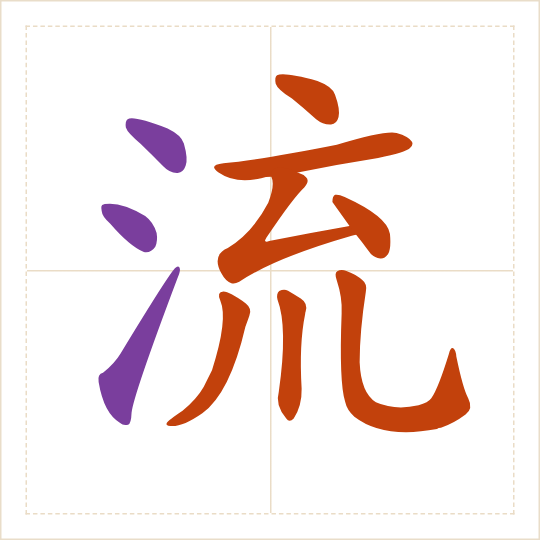
流liúto flow
- 氵water form of 水 · shuǐMeaning part
- 㐬pennantSound part
氵 hints at the meaning (water); 㐬 () hints at the sound. Compare it with liú.
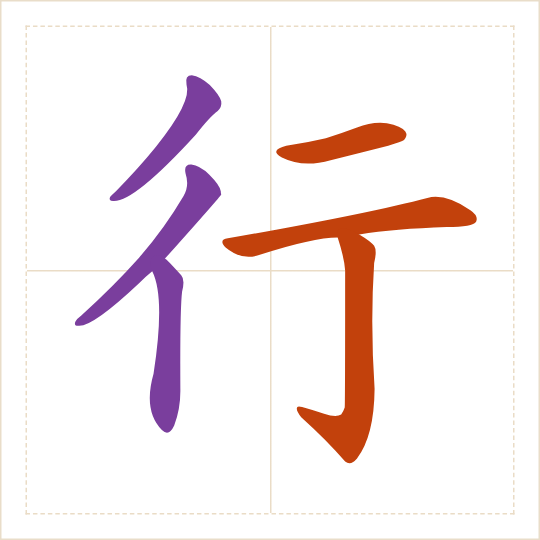
行xíngto walk; to go; to travel
- 彳step · chì
- 亍to take small steps · chù
Memory aidDrawn from a crossroads: to walk, to go. It also means a row or line (háng).
How to write 流行
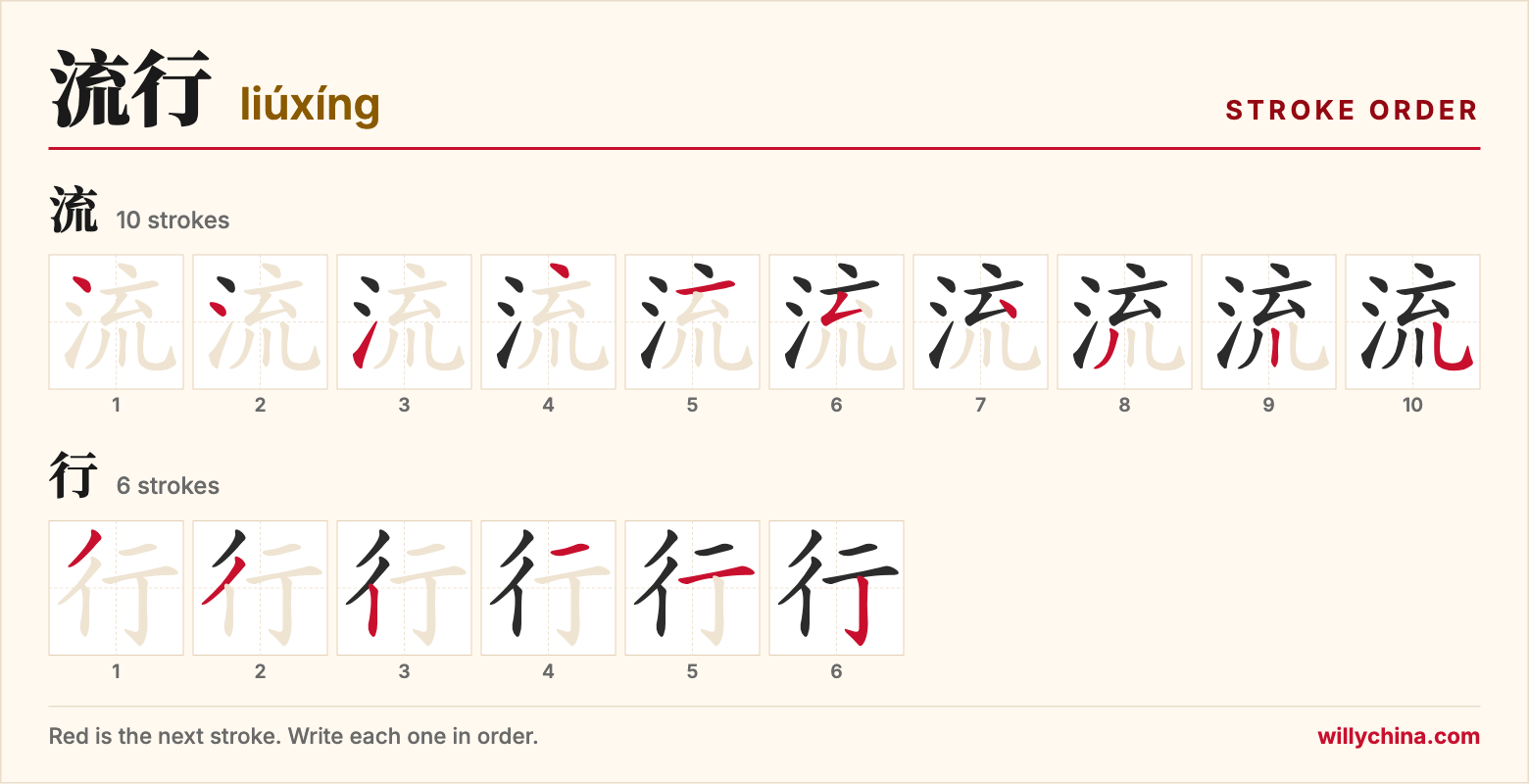
流 10 strokes · 行 6 strokes
Watch the order, then press Try writing it and draw each stroke in the grid. Each stroke is checked as you go.
Words related to 流行
Words with 流
交流jiāoliú · to exchange流利liúlì · fluent流泪liúlèi · to shed tears流传liúchuán · to spread轮流lúnliú · to alternate流露liúlù · to reveal流浪liúlàng · to wander一流yìliú · first-class流通liútōng · to circulate潮流cháoliú · trend
Words with 行
银行yínháng · bank不行bùxíng · won’t do行李xíngli · luggage行李箱xínglǐxiāng · trunk自行车zìxíngchē · bike银行卡yínhángkǎ · bank card行xíng · OK进行jìnxíng · to advance举行jǔxíng · to hold (a meeting旅行lǚxíng · to travel
More words: Adjectives
FAQs
流行 (liúxíng) means “popular” or “fashionable”. It is an HSK 4 word.
Say it liúxíng: liú with a 2nd tone, then xíng with a 2nd tone. Press Listen at the top of this page to hear it, or Slowly to hear each tone clearly.
Yes. 流行 is written the same way in Simplified and Traditional characters.
Add a Chinese (Simplified) pinyin keyboard to your phone or computer, type liuxing with no tone marks or spaces, then choose 流行 from the suggestions. Typing liuxing into this dictionary’s search box finds it too.
流行 is an HSK 4 word in the HSK 2.0 word lists.
Sources: meaning and pinyin checked by a native Mandarin teacher against the official HSK lists. Extra meanings from CC-CEDICT (CC BY-SA 4.0). Example sentences from Tatoeba (CC BY 2.0 FR). Character parts and stroke order from Make Me a Hanzi.