I can’t write traditional characters, but I can read them.
Sentence #1834265 from Tatoeba · translation adapted
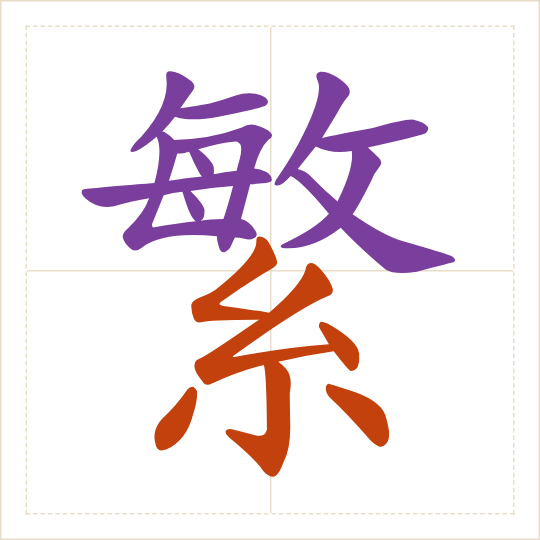
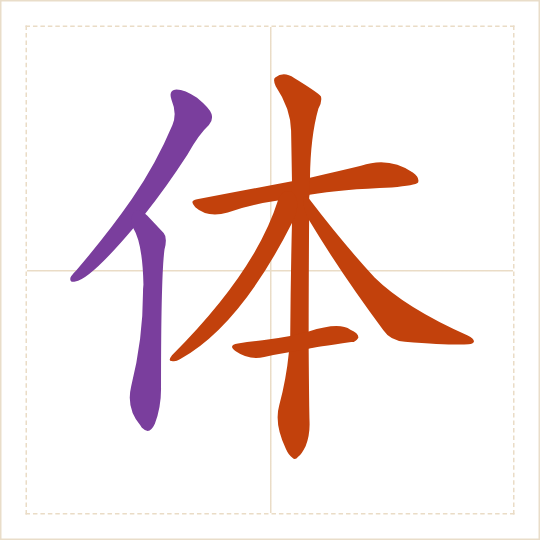
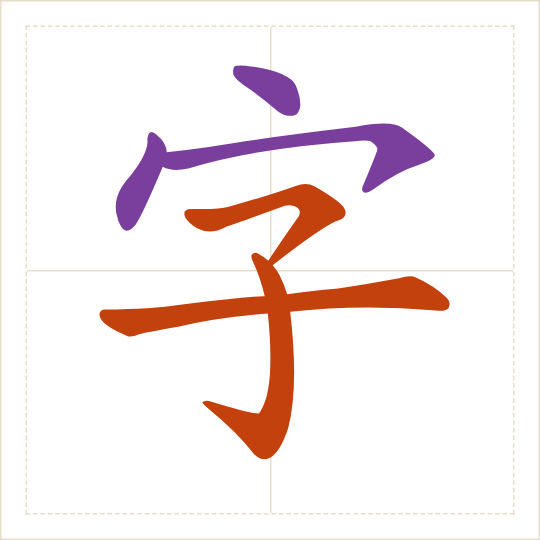
How 繁体字 is built
Each colour is one part of the character. Parts repeat across thousands of characters, so learning them makes new words easier. See all 214 in our radicals chart.
繁fáncomplicated
敏fast · mǐnSound part
糸silk · mìMeaning part
糸 hints at the meaning (silk); 敏 (mǐn) hints at the sound. Compare it with fán.
体tǐbody
亻person form of 人 · rén
本root · běn
Memory aidA person 亻 and a root 本: the body.
字zìletter
宀roof · mián
子child · zǐ
Memory aidA child 子 under a roof 宀, learning to write: a written character.
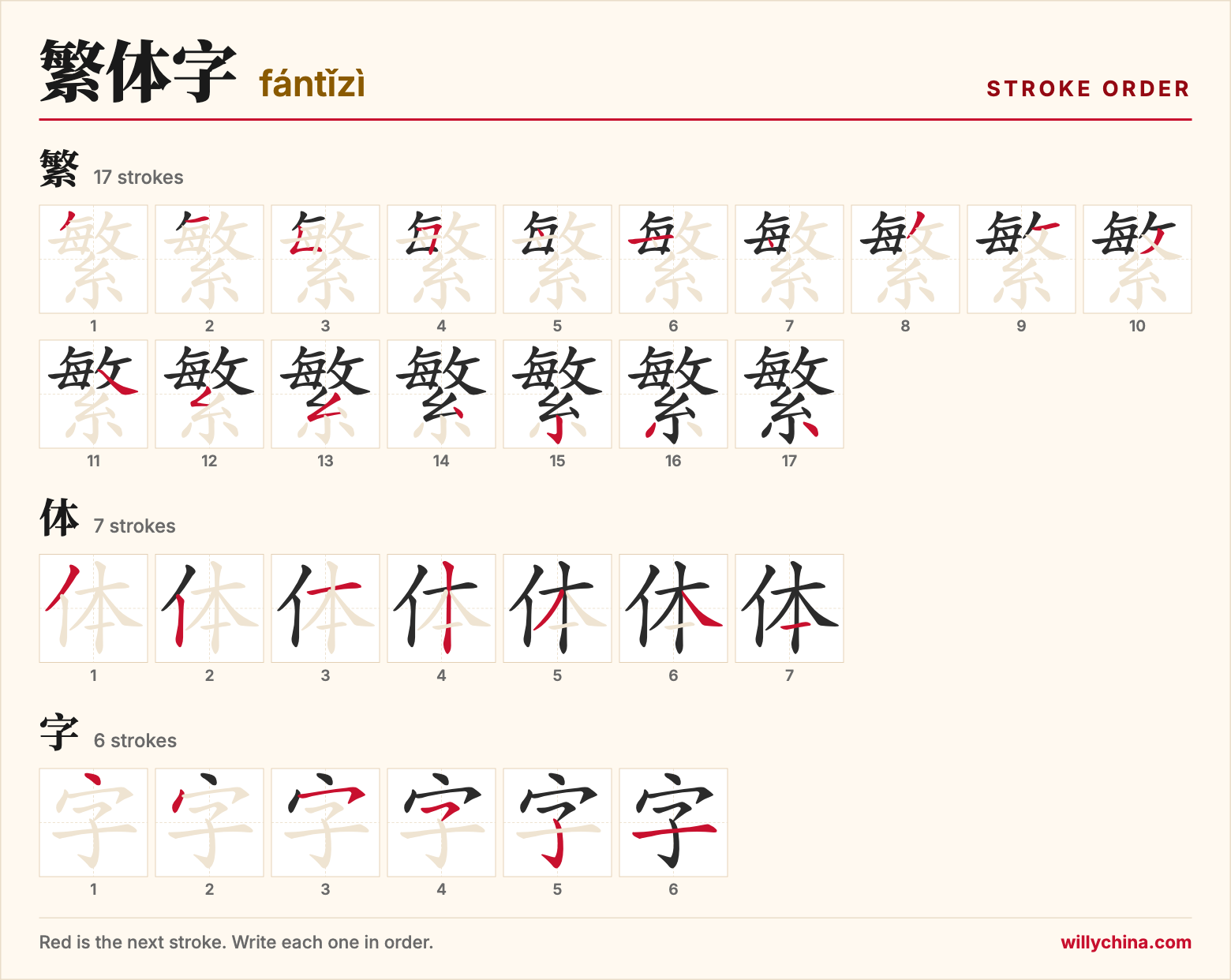
How to write 繁体字
繁 17 strokes · 体 7 strokes · 字 6 strokes
Watch the order, then press Try writing it and draw each stroke in the grid. Each stroke is checked as you go.
Stroke order chart for 繁体字 (fántǐzì). Red marks the next stroke, so you can copy it onto paper one step at a time.
繁体字 (fántǐzì) means “traditional Chinese character”. It is an HSK 6 word.
Say it fántǐzì: fán with a 2nd tone, then tǐ with a 3rd tone, then zì with a 4th tone. Press Listen at the top of this page to hear it, or Slowly to hear each tone clearly.
In Traditional characters, used in Taiwan and Hong Kong, 繁体字 is written 繁體字. The pronunciation is the same.
Add a Chinese (Simplified) pinyin keyboard to your phone or computer, type fantizi with no tone marks or spaces, then choose 繁体字 from the suggestions. Typing fantizi into this dictionary’s search box finds it too.
繁体字 is an HSK 6 word in the HSK 2.0 word lists.
Turn words into conversations
A dictionary gives you the words. A native teacher shows you how to use them. Start with a free 30-minute intro call.
Sources: meaning and pinyin checked by a native Mandarin teacher against the official HSK lists. Extra meanings from CC-CEDICT (CC BY-SA 4.0). Example sentences from Tatoeba (CC BY 2.0 FR). Character parts and stroke order from Make Me a Hanzi.
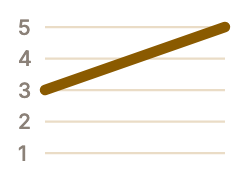 繁fán2nd tone, rising
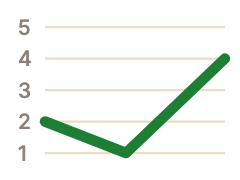 体tǐ3rd tone, dipping
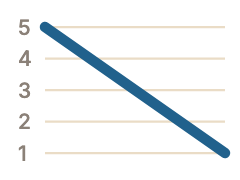 字zì4th tone, falling