HSK 2 · Adjectives
错 cuò “wrong” in Chinese
Traditional 錯
What 错 means
- wrong
- mistake
- bad
- interlocking
- complex
More meanings from CC-CEDICT
- to grind
How to say 错
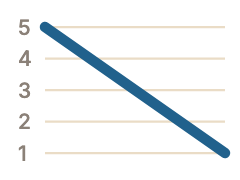 错cuò4th tone, falling
错 in a sentence
How 错 is built
Each colour is one part of the character. Parts repeat across thousands of characters, so learning them makes new words easier. See all 214 in our radicals chart.
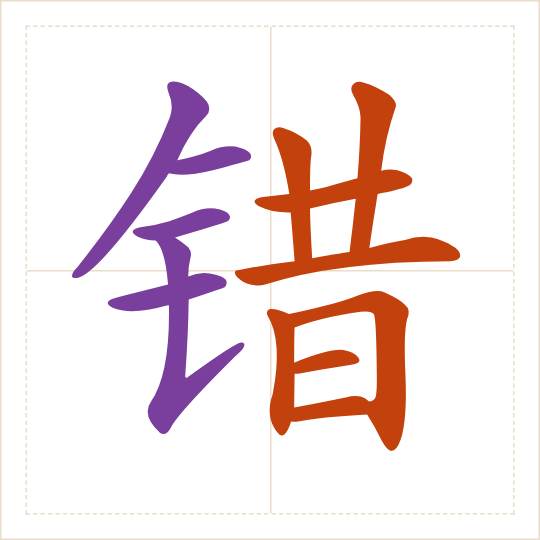
错cuòmistake
- 钅gold form of 金 · jīn
- 昔past · xī
How to write 错
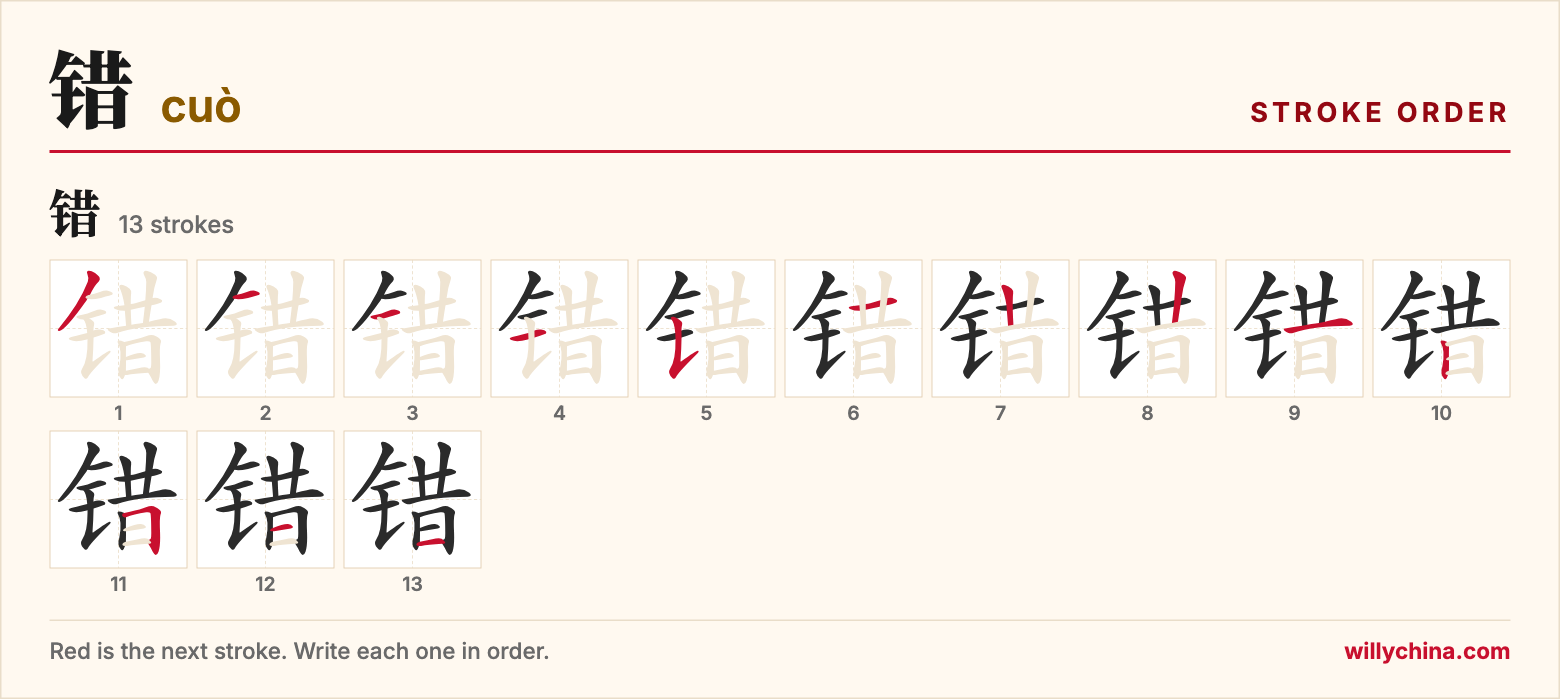
错 13 strokes
Watch the order, then press Try writing it and draw each stroke in the grid. Each stroke is checked as you go.
Words related to 错
Words with 错
More words: Adjectives
FAQs
错 (cuò) means “wrong” or “mistake”. It is an HSK 2 word, so it is one of the words learners meet early.
Say it cuò: cuò with a 4th tone. Press Listen at the top of this page to hear it, or Slowly to hear each tone clearly.
In Traditional characters, used in Taiwan and Hong Kong, 错 is written 錯. The pronunciation is the same.
Add a Chinese (Simplified) pinyin keyboard to your phone or computer, type cuo with no tone marks or spaces, then choose 错 from the suggestions. Typing cuo into this dictionary’s search box finds it too.
错 is an HSK 2 word in the HSK 2.0 word lists.
Sources: meaning and pinyin checked by a native Mandarin teacher against the official HSK lists. Extra meanings from CC-CEDICT (CC BY-SA 4.0). Example sentences from Tatoeba (CC BY 2.0 FR). Character parts and stroke order from Make Me a Hanzi.