Mandarin for travelling in China
Most guides tell you where to go. This one is for the thirty seconds when someone is waiting for an answer and nothing you learned from an app comes out.
The part nobody prepares you for
China is unusually easy to travel in and unusually hard to improvise in. The infrastructure is superb and almost none of it is in English. Signage in the big cities is bilingual — a national standard has fixed the English on some 3,500 public-service signs since December 2017 — but the person in front of you is not.
You do not need a year of study. You need about forty sentences, and you need them in the order you will meet them — which is what these guides are.
Forty is not a round number picked for effect. Paying, eating, getting around, a hotel desk, a pharmacy and the handful of things you say when something has gone wrong account for very nearly every exchange a visitor actually has, and each of those situations runs on four or five sentences plus the replies that come back. The rest of the language — the part that genuinely takes years — is for conversation, and conversation is not what is being asked of you at a ticket window.
The one you will need in the first hour
Paying for things
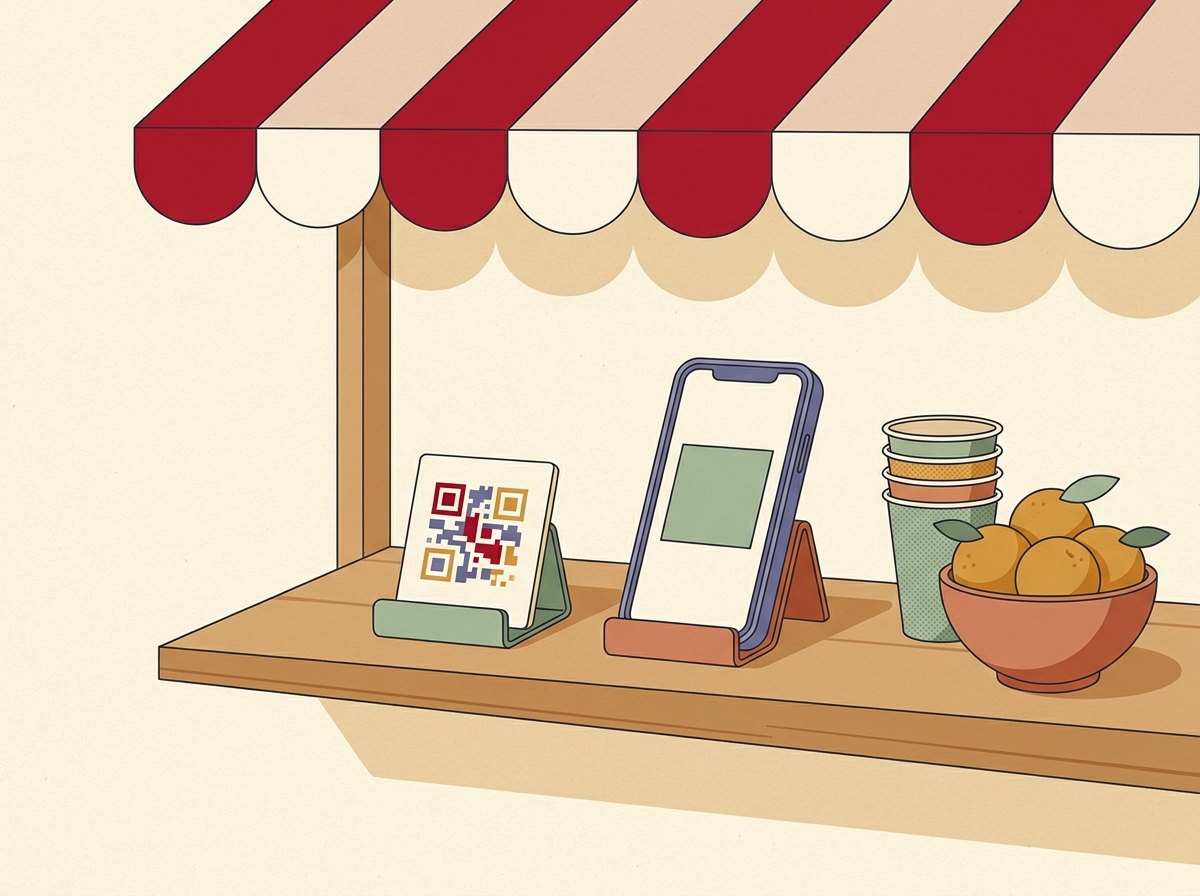
Cash is nearly gone and the apps are only half the problem. There are two different QR codes pointing in opposite directions, and getting them the wrong way round is what leaves you standing at a counter holding up a phone at someone holding up a phone back.
- Set both apps up before you fly, with a foreign card
- 付款码 versus 收款码 — which code is yours, which is theirs
- Ten phrases with audio, from asking to fixing a failed payment
Most visitors no longer need a visa
This is the biggest change for visitors in a decade, and a great deal of the advice online has not caught up with it. If you hold an ordinary passport from one of the fifty countries on China’s unilateral visa-exemption list — Australia, New Zealand, the United Kingdom and most of Europe among them — you can enter for up to thirty days without applying for anything. No visa, no forms, no fee. Tourism, business, visiting family or friends, or simply passing through all qualify, and the thirty days are counted from midnight on the day after you land rather than from the moment you arrive.
There is a second route if your country is not on that list. A 240-hour visa-free transit covers nationals of fifty-seven countries for ten days, through sixty-five ports of entry across twenty-four provinces and regions. It is built for people continuing to a third country, so it asks for an onward ticket with a confirmed seat and date — you cannot fly in and out again on it.
Both of these are policy rather than law, and policy moves. The figures here were checked against the National Immigration Administration in September 2026. Check them yourself before you book: an article is a snapshot, and this one is no exception.
What a first trip to China actually looks like
Nearly everyone lands in Beijing or Shanghai, and nearly everyone underestimates the distances. China is about the size of the continental United States, and the gap between those two cities is roughly New York to Chicago.
What makes that manageable is the rail. High-speed trains link the major cities fast enough that flying stops being worth the airport for anything under about five hours of track, they leave from stations that work like airports, and they run to the minute. Beijing to Shanghai is a little over four hours. Carry your passport to the barrier — on a visa-free entry it is your ticket.
Inside a city the metro is the quickest thing going and the signage is bilingual. Taxis and ride-hailing cost a fraction of what they do in Sydney or London, and the driver will want the destination in characters rather than in pinyin or English. That is the first moment one of these guides earns its place, and it usually happens within an hour of landing.
Two weeks covers two or three cities properly. Ten days covers two. The most common mistake on a first trip is a list of six.
What you will actually be saying
Not textbook Mandarin — the lines that get you through a transaction. Each character is coloured by its tone, so you can see the shape of a syllable before you say it: red is flat and high, amber rises, green dips and comes back up, blue falls sharply, grey has no shape at all.

What you will hear back
Every guide in this section gives you the sentence to say and then the answers you are likely to get back, because the second half is where most travellers come unstuck. These six turn up in all ten situations, so they are worth knowing before any of the rest.
The short list worth doing at home
None of this takes long, and every one of them is harder to do once you have landed.
Set up both payment apps at home
Alipay and WeChat Pay take foreign cards and neither needs a Chinese bank account. Verification wants a passport photo and a working phone number. Both are far easier on your own wi-fi than in an arrivals hall.
Sort your connectivity before you land
An eSIM bought before departure is working the moment the doors open. Landing first and solving it afterwards costs you an afternoon. It is a ten-minute job at home.
Save the address in characters
A screenshot of your accommodation is enough. Handing a driver the characters settles in seconds what pinyin and English can spend five minutes failing to. Do it for the return trip as well.
Check the hotel takes foreign guests
Chinese hotels must register every guest with the police, and the desk does it by scanning your passport at check-in. Smaller places outside the tourist areas are sometimes not set up for a foreign one. Confirm it when you book.
Know the 24-hour registration rule
Staying with friends or in a private rental puts the registration on you rather than a front desk. The National Immigration Administration requires it within twenty-four hours of check-in. It is done at the local police station.
Download your maps for offline use
Coverage across the country is excellent, so this is not about coverage. It is about not standing in a station concourse waiting for a map to load. Pin the places you already know you are going.
One situation at a time, in the order they arrive
Ten situations, in the order a trip hands them to you — which is not the order a textbook would choose. Payment comes first because it happens within an hour of landing and then twenty times a day. Bargaining comes late because you can have an excellent trip without ever doing it once.
Take one at a time, and take it close to when you will need it. The taxi guide is worth reading the night before you need a taxi, not three weeks out alongside nine others you have no use for yet. Each one is deliberately short.
And read the replies, not just the questions. Most people arrive able to ask and unable to understand the answer, which in practice is the same as not being able to ask.
Ten situations, in the order you meet them
Each guide takes one situation: what is happening, the handful of sentences that handle it, and what you will hear back. One is finished. The rest are being written in this order.
- 01付款fùkuǎnPaying for thingsTwo QR codes pointing opposite ways, and the sentences that fix it.Read
- 02到达dàodáLanding and getting outImmigration, the SIM counter, the right train
- 03交通jiāotōngTaxis and the metroShowing an address, stopping a scenic detour
- 04入住rùzhùChecking into a hotelPassport, deposit, the breakfast question
- 05标识biāozhìSigns you will readExit, entrance, push, pull, no entry
- 06忌口jìkǒuAllergies and dietary needsSaying it so it is believed
- 07讨价tǎojiàBargainingWhere it is expected and where it is rude
- 08药店yàodiànPharmacies and emergenciesDescribing a symptom, the numbers to know
- 09礼节lǐjiéNot causing offenceSeating, toasting, paying the bill
- 10网络wǎngluòStaying connectedeSIM or local SIM, and what to install first
FAQs
Three weeks out and starting from nothing?
The Traveller course covers Mandarin for travelling in China in the order you meet it, one-to-one, paced to your trip.
See the Traveller course