HSK 6 · Verbs
丧失 sàngshī “to lose” in Chinese
Traditional 喪失
What 丧失 means
- to lose
- to forfeit
How to say 丧失
 丧sàng4th tone, falling
 失shī1st tone, high and level
丧失 in a sentence
How 丧失 is built
Each colour is one part of the character. Parts repeat across thousands of characters, so learning them makes new words easier. See all 214 in our radicals chart.
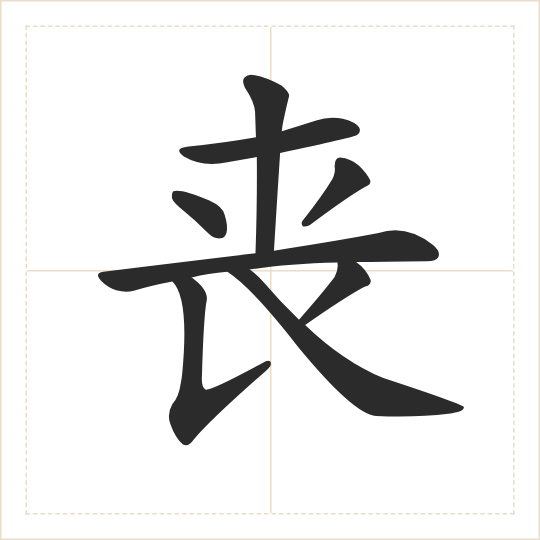
丧sàngto lose sth abstract but important
丧 is a single shape of 8 strokes. Learn it whole, then watch its stroke order below.
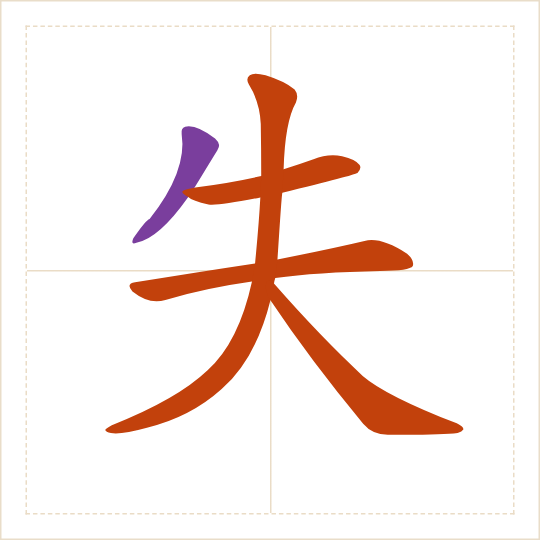
失shīto lose
- 丿slash · piě
- 夫man · fū
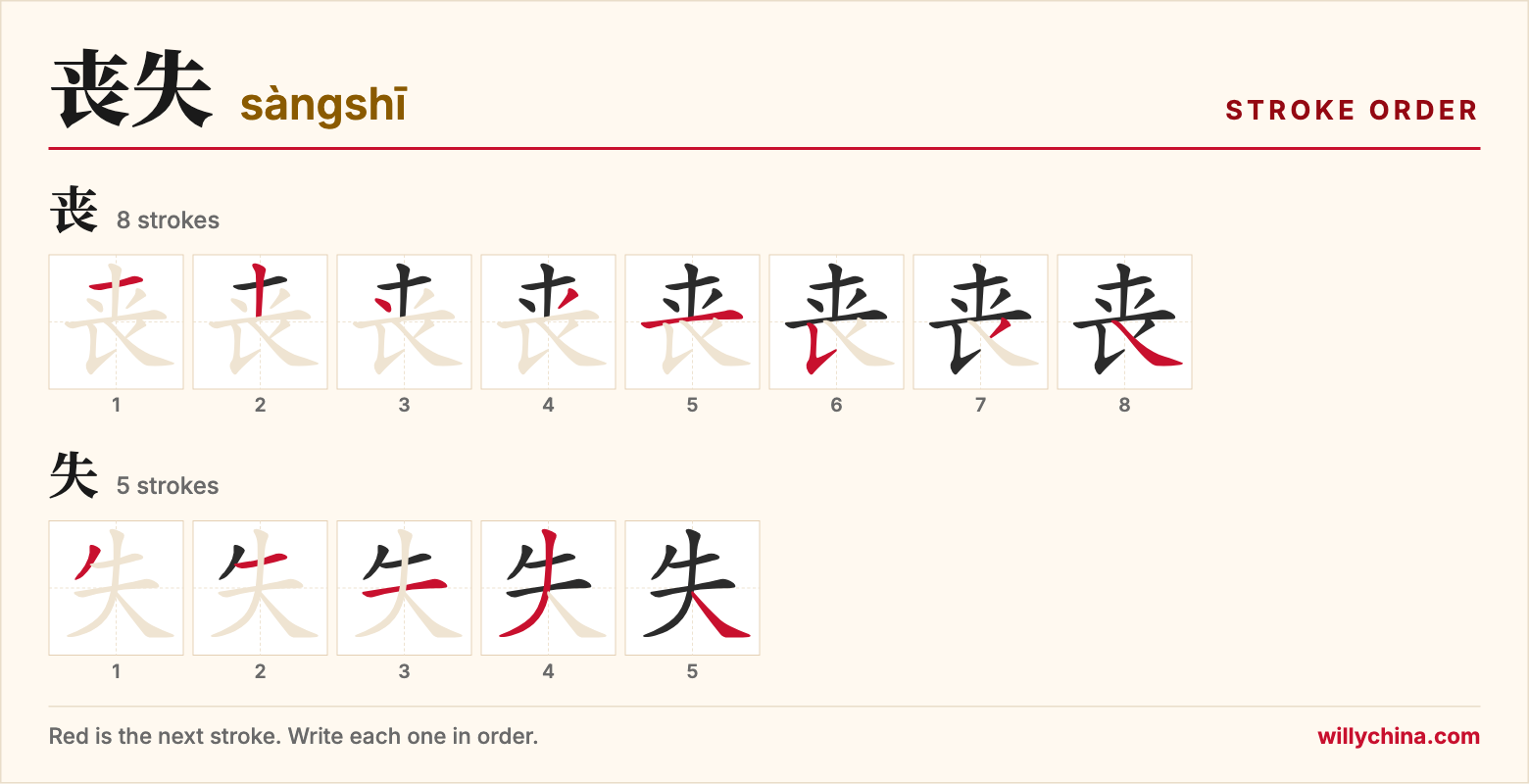
How to write 丧失
丧 8 strokes · 失 5 strokes
Watch the order, then press Try writing it and draw each stroke in the grid. Each stroke is checked as you go.
Words related to 丧失
Words with 丧
Words with 失
失败shībài · to fail失望shīwàng · disappointed失眠shīmián · to suffer from insomnia失去shīqù · to lose消失xiāoshī · to disappear失业shīyè · unemployment损失sǔnshī · loss遗失yíshī · to lose (something)失踪shīzōng · to go missing失事shīshì · (of a plane or ship) to crash
More words: Common Verbs
FAQs
丧失 (sàngshī) means “to lose” or “to forfeit”. It is an HSK 6 word.
Say it sàngshī: sàng with a 4th tone, then shī with a 1st tone. Press Listen at the top of this page to hear it, or Slowly to hear each tone clearly.
In Traditional characters, used in Taiwan and Hong Kong, 丧失 is written 喪失. The pronunciation is the same.
Add a Chinese (Simplified) pinyin keyboard to your phone or computer, type sangshi with no tone marks or spaces, then choose 丧失 from the suggestions. Typing sangshi into this dictionary’s search box finds it too.
丧失 is an HSK 6 word in the HSK 2.0 word lists.
Sources: meaning and pinyin checked by a native Mandarin teacher against the official HSK lists. Extra meanings from CC-CEDICT (CC BY-SA 4.0). Example sentences from Tatoeba (CC BY 2.0 FR). Character parts and stroke order from Make Me a Hanzi.