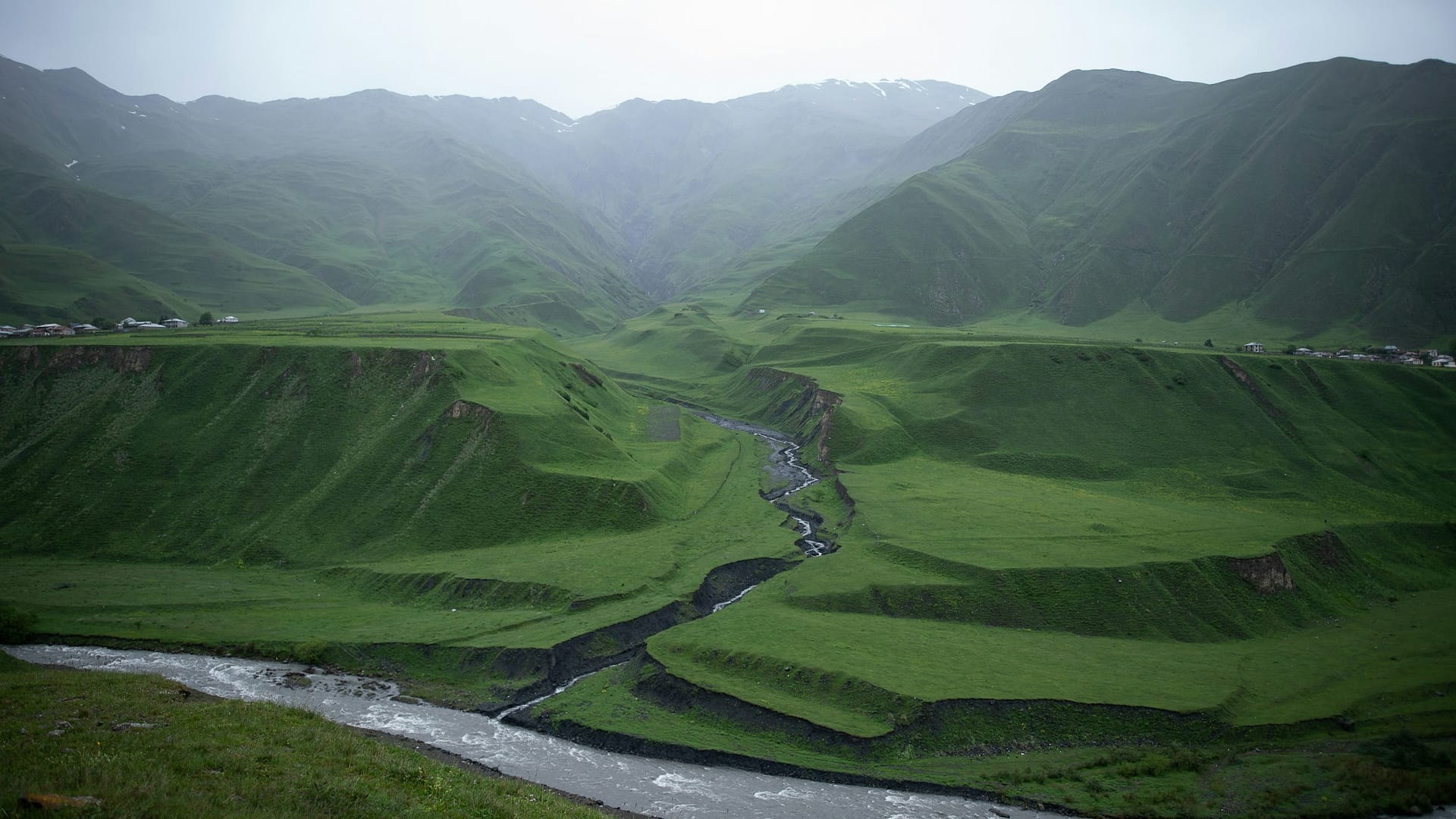
A brief history of Fujian
Fujian’s history is shaped by its geography: a long coast on the East China Sea, with the Wuyi and Daiyun mountain ranges walling it off from the rest of China to the west. According to the Wikipedia history of Fujian, the region was originally settled by the Minyue people — a Baiyue ethnic group distinct from the Han Chinese of the central plains. The Han expansion came in waves from the 3rd–4th centuries CE onward, and each migration brought a different vintage of Chinese pronunciation. That’s why the Min dialects retain features of Old Chinese that Mandarin lost.
The defining historical moment came during the Song and Yuan dynasties, when Quanzhou emerged as the world’s busiest international port — known as Zayton in medieval Arabic and European sources. Marco Polo passed through. Ibn Battuta wrote about it. Persian, Arab, Indian and Southeast Asian merchants lived and traded there. UNESCO inscribed Quanzhou as a World Heritage Site in 2021 as “Emporium of the World in Song-Yuan China”.
Fujian is the part of China most of the world has met without realising it — the overseas diaspora’s roots, the Maritime Silk Road’s origin, and the oolong tea in your cup.
When the Ming dynasty turned inward in the mid-15th century, Fujianese seafaring went underground — then overseas. From the Ming and Qing onwards, Fujianese were among the largest groups of Chinese emigrants to Southeast Asia, the Americas and Australia. The Hokkien-speaking diaspora in Singapore, Malaysia, Indonesia, the Philippines and Taiwan all trace their roots primarily to Fujian. Many early Chinese communities in Sydney, San Francisco and Honolulu were founded by Fujianese migrants.
In the modern era, Fujian’s history takes another turn through 1949 — the ROC government’s retreat to Taiwan put Fujian directly across a 180km strait from a separately governed Chinese-speaking jurisdiction. The 1980 designation of Xiamen as a Special Economic Zone leveraged Fujian’s overseas-Chinese diaspora and Taiwanese business networks to make its coast one of the fastest-growing export economies in the world. For wider context, see our guide to China’s provinces.
Hokkien (Min) and Standard Mandarin
Unlike Sichuanese (Southwestern Mandarin, mutually intelligible with Standard Mandarin), Hokkien is a separate branch of Chinese — NOT mutually intelligible with Mandarin. A Hokkien speaker and a Standard Mandarin speaker without shared training cannot have a conversation in their own languages. They are sister languages, like French and Romanian, sharing common ancestors but diverged long enough that they’re functionally separate today.
Min split from Old Chinese earlier than Mandarin did, and retained sound features that Mandarin lost — including extra tonal categories, final consonants like -p, -t and -k, and distinct vocabulary. If you’ve spent time in Taiwan, Singapore, Malaysia, Indonesia, the Philippines or in older overseas Chinese communities anywhere in the world, you’ve heard Min. Taiwanese Hokkien (台语, Táiyú) is essentially Min carried across the strait by Fujianese migrants centuries ago.
The practical good news for learners: Standard Mandarin is universal in Fujian. All education is Mandarin-medium, all signage is Mandarin, and most working-age locals switch between Mandarin and Hokkien (or Fuzhounese, the distinct Min variety in the provincial capital) fluidly. A Mandarin learner travelling Fujian has no functional language problem — but the soundscape is unmistakably its own.
For the wider picture of how Hokkien fits among Chinese languages, see our guide to languages and dialects in China.
Quirky Hokkien phrases worth knowing
Six classic Hokkien phrases. Because Hokkien isn’t Mandarin, the audio playback uses the Mandarin reading of the characters — a real Fujian or Taiwan speaker would pronounce these very differently in spoken Hokkien (we include the Hokkien romanisation as a reference).
The traditional Hokkien greeting — used the way English uses “How are you?”. The expected answer is yes, even if you haven’t. You’ll hear it across Fujian, Taiwan, and Hokkien-speaking diaspora communities worldwide.
Literally “good to eat”. You’ll hear this constantly at Fujianese restaurants. The Mandarin equivalent is 好吃 (hǎo chī).
A reassurance phrase used everywhere in Fujian and Taiwan. Mandarin equivalent is 没关系 (méi guānxi) — but bô-iàu-kín has more warmth, slightly stronger meaning.
Same characters as Mandarin 多谢 (duō xiè), but pronounced very differently. A formal, respectful thank-you used across Hokkien-speaking communities.
A common Hokkien phrase that has made its way into Taiwanese pop culture — you’ll hear it in Mandopop songs that lean into Taiwanese identity. The cultural texture this word carries doesn’t translate cleanly.
A formal or plural “hello” — used when greeting a group or addressing someone respectfully. The character 恁 (lín) is the formal/plural “you” in Hokkien.
Fujianese cuisine: seafood, oolong and Buddha-jumps-over-the-wall
Fujianese cuisine (Mǐn cài 闽菜) is one of the eight great Chinese culinary traditions. Compared to the spicy provinces, Fujianese food is subtle — leaning on broth, freshness, seafood, sweet-savoury combinations and umami depth. The defining technique is the long-simmered stock. For a wider lens see our regional Chinese cuisine guide.
Buddha Jumps Over the Wall
佛跳墙 · Fó tiào qiángA legendary banquet soup containing up to thirty ingredients — abalone, sea cucumber, fish maw, scallops, ham, chicken, pigeon eggs — layered into a clay jar and steamed for hours. So aromatic that the legend says a Buddhist monk leapt over the temple wall to taste it. Served to visiting heads of state.
Oyster omelette
蚵仔煎 · ô-á-chianFresh oysters in a starchy egg pancake, finished with sweet chilli sauce. The dish you’ll find on every street in Xiamen, and a Taiwanese night-market staple. The single most quintessential Hokkien street snack.
Fuzhou fish balls
福州鱼丸 · Fúzhōu yú wánFuzhou’s signature dish — a delicate fish-paste shell stuffed with minced pork, served in clear soup. Different from the smaller, denser fish balls in Cantonese hot pot. A symbol of Fuzhou identity that overseas Fuzhounese still seek out abroad.
Sa cha noodles
沙茶面 · Shāchá miànXiamen’s iconic noodle soup made with a uniquely Fujianese savoury paste — dried shrimp, peanuts, garlic, chilli and spice — built over generations of Southeast Asian trade contact. The dish that anchors Xiamen breakfast culture.
Notable cities of Fujian
Fujian’s cities are coastal, individually distinct, and historically wealthy in their own ways. Each has its own dialect of Min, its own cuisine emphasis, and its own personality. Five cities frame the province:

Fuzhou福州
Fuzhou is the political, administrative and educational centre of the province on the Min River estuary. The local language is Fuzhounese — a distinct Min variety from the Hokkien spoken further south. Famous for its food (lychee pork, fish balls, peanut soup) and its Sanfang Qixiang (三坊七巷, “Three Lanes and Seven Alleys”) — one of the best-preserved Ming-Qing old-city quarters in China, long associated with reformist Chinese intellectuals.
Lin Zexu, Yan Fu, Bing Xin and many other modernising figures of late-Qing and Republican China lived in or are tied to Fuzhou. Walking Sanfang Qixiang today is walking through that intellectual history.
Deep-dive guide coming soon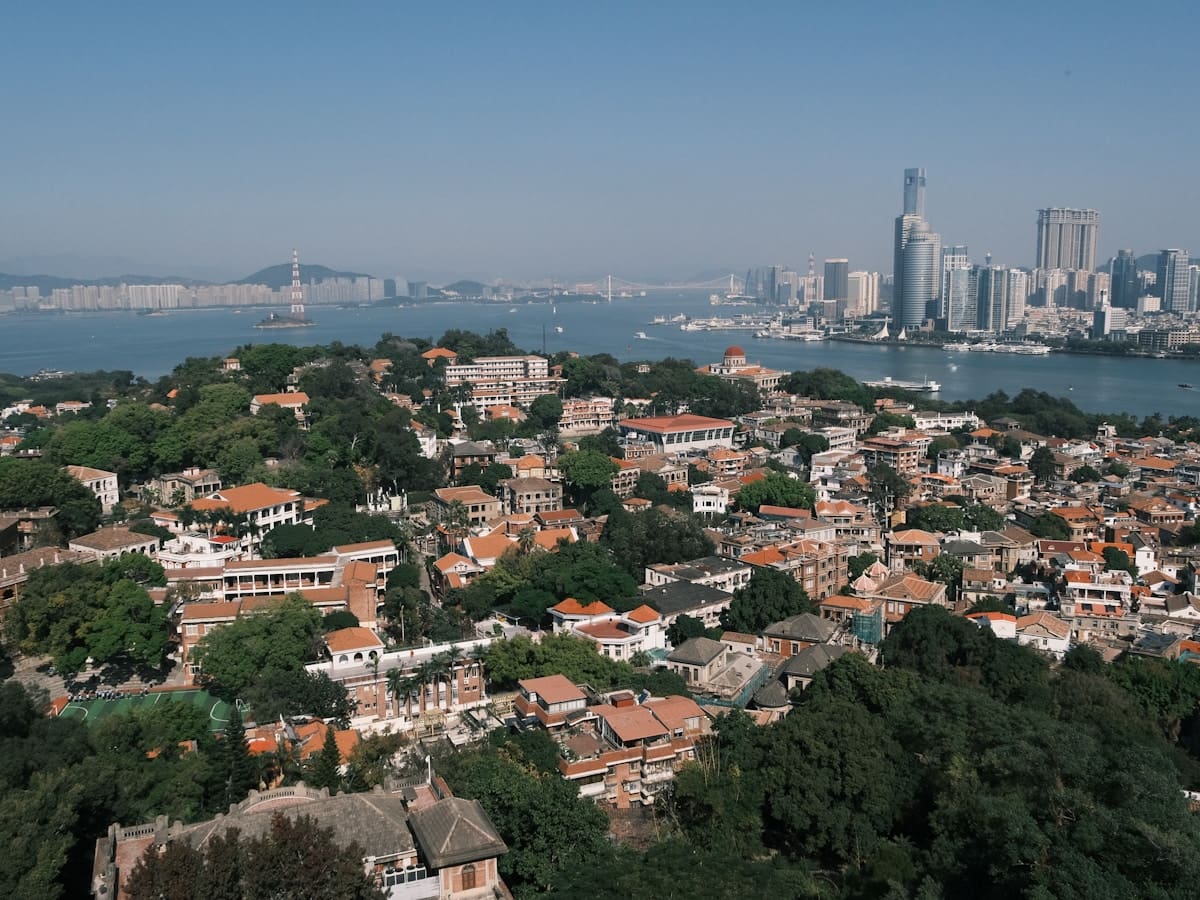
Xiamen厦门
The most visited Fujian city by far — a coastal city built on islands, with one of the best-preserved colonial heritage districts in China. Home of Gulangyu (UNESCO 2017), the car-free pastel-villa island that the locals call the “Piano Island”.
Deep-dive guide coming soon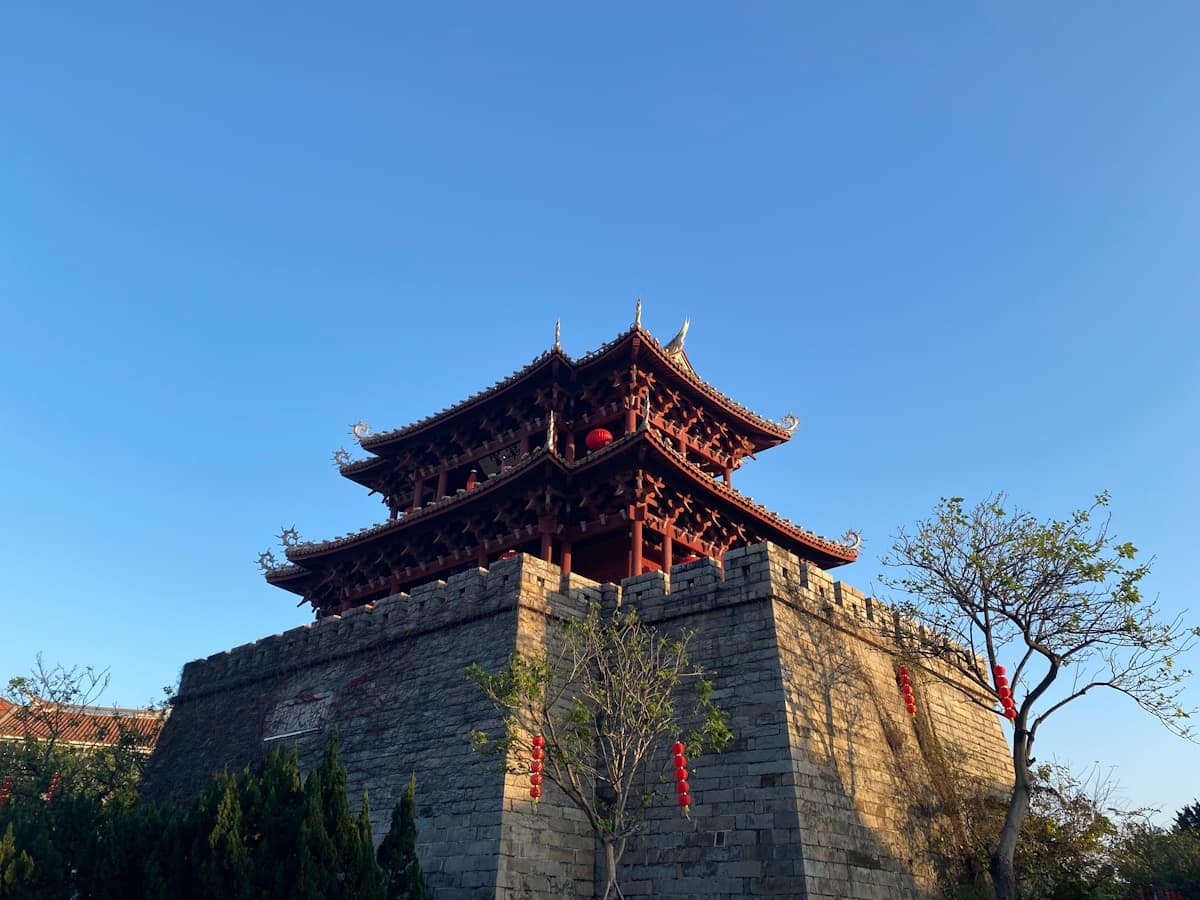
Quanzhou泉州
Marco Polo’s “Zayton”. The most UNESCO-saturated city in Fujian (22 listed monuments covering Buddhist temples, Hindu remnants, Manichaean carvings, Islamic tombs and medieval port infrastructure). The single best place to see how cosmopolitan medieval China was.
Deep-dive guide coming soon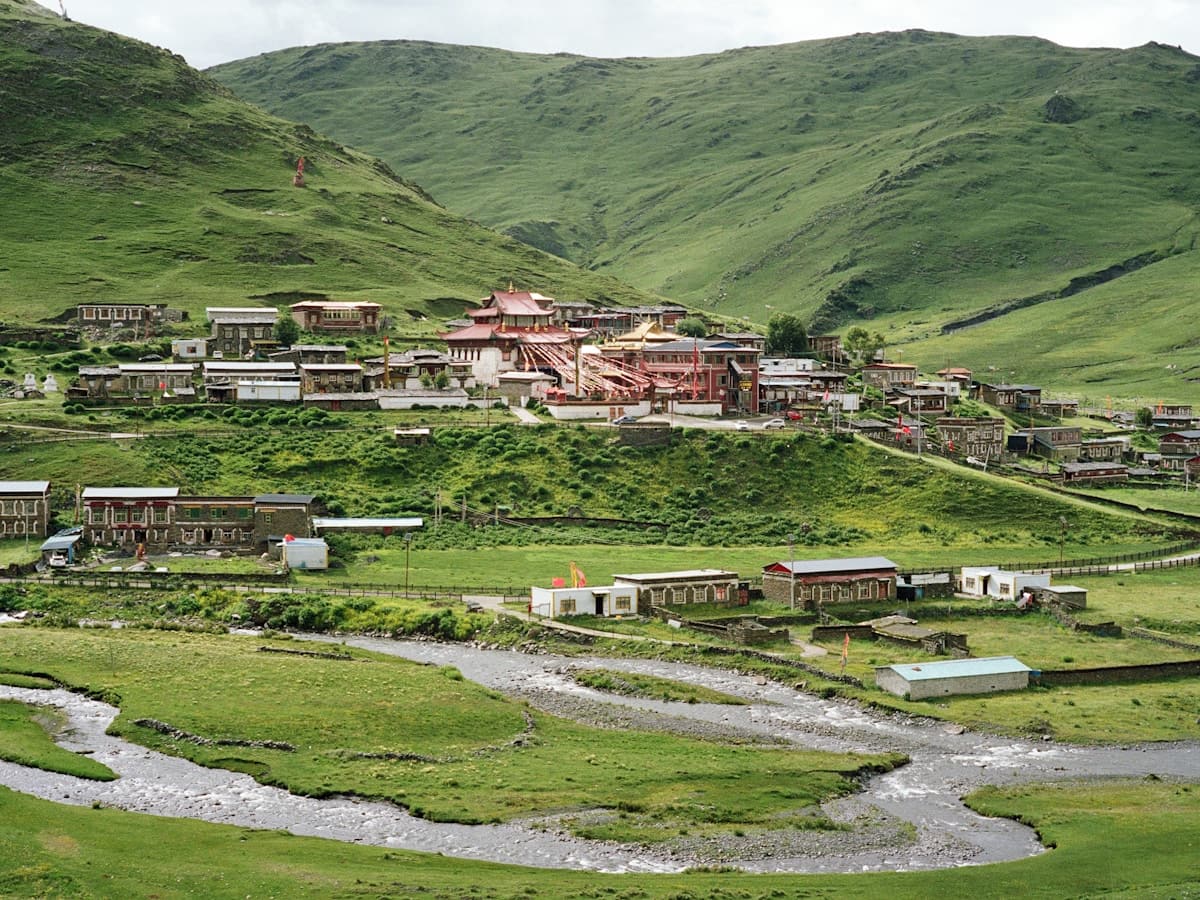
Zhangzhou漳州
The closest major city to the Yongding and Nanjing tulou clusters. Historic gateway between the Hakka mountain interior and the Hokkien coast. Famous for water caltrop, narcissus flowers and a particularly dense food scene.
Deep-dive guide coming soon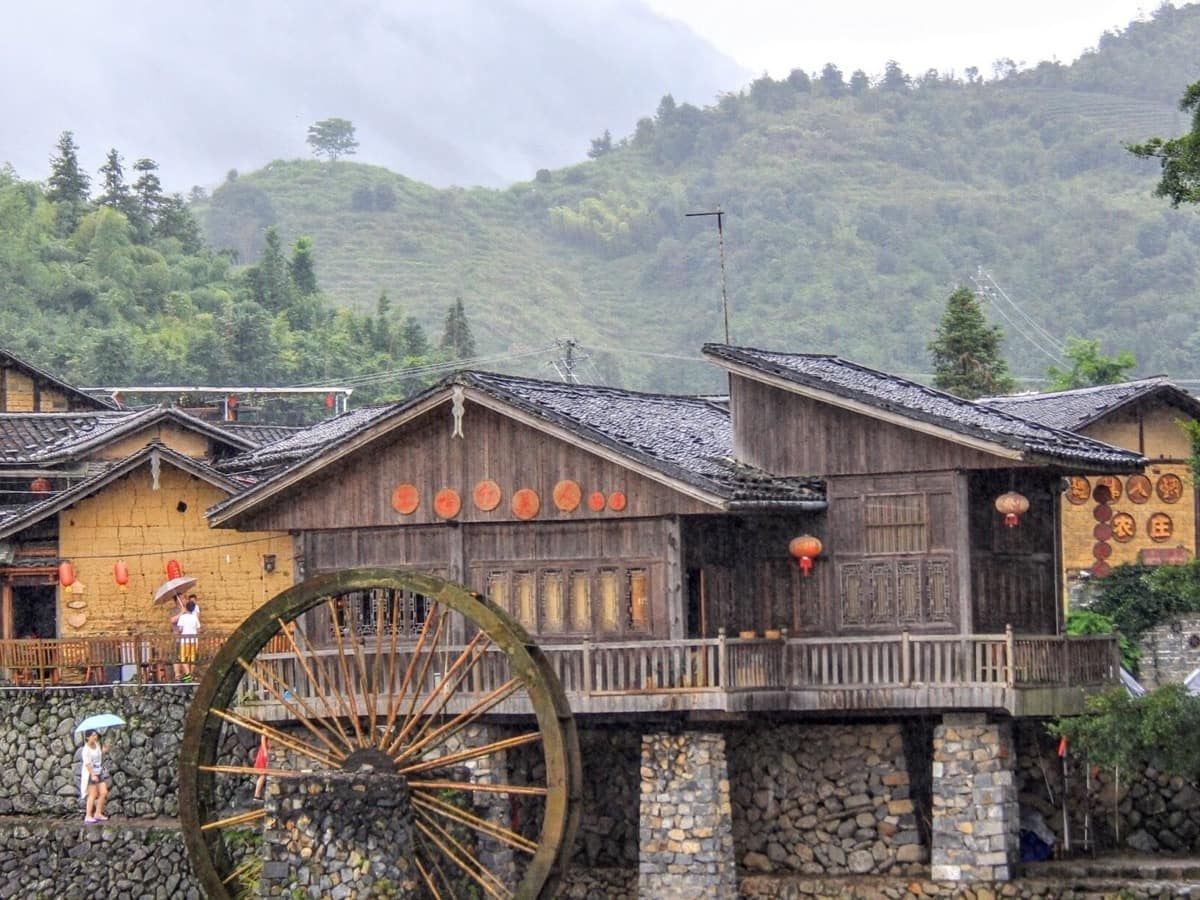
Sanming三明
Fujian’s mountainous inland counterpoint to the coastal cities. ~76% forest coverage — among China’s highest. Home of the Taining UNESCO Global Geopark (Danxia red-sandstone canyons, lakes, cliff-side grottoes). Also known nationally for the “Sanming model” of healthcare reform.
Deep-dive guide coming soonIconic attractions across Fujian
Fujian has one of the highest densities of UNESCO sites of any Chinese province — five separate listings cover both the natural and the cultural-heritage landscape. Five attractions to plan a trip around:
Hakka Tulou 土楼
UNESCO World Heritage (2008) — vast circular and rectangular earthen fortresses built over the 13th to 20th centuries by Hakka communities. Each is essentially a small village in a single structure, three to five storeys of packed-earth wall enclosing a central courtyard. The biggest concentrations are in Yongding and Nanjing counties.
Wuyi Mountains 武夷山
UNESCO Mixed World Heritage Site — recognised both for biodiversity and the Chinese tea-cultivation cultural landscape. Karst sandstone carved by the Nine Bends River, where you raft past tea cliffs and Daoist temples. Home of Da Hong Pao mother bushes — the most legendary Wuyi rock tea.
Gulangyu Island 鼓浪屿
UNESCO World Heritage (2017) — a small car-free island just off Xiamen, dense with pastel-coloured colonial villas, churches and missionary-era institutions. Known as the “Piano Island” for its disproportionate number of pianos per capita. Walking Gulangyu feels less like China and more like a small Mediterranean city.
Quanzhou Historic Core 泉州古城
UNESCO World Heritage (2021) — the entire historic centre as “Emporium of the World in Song-Yuan China”. Kaiyuan Temple, the Qingjing Mosque (one of the oldest in China), Hindu stone carvings from Tamil traders, Manichaean ruins. The single best place to see medieval Chinese cosmopolitanism.
Taining Geopark 泰宁地质公园
UNESCO Global Geopark — in Sanming’s mountains. A Danxia landform of red sandstone canyons, hidden valleys, lake-bordered cliffs and Buddhist grottoes carved out of stone. Less famous than Wuyi but visually rivalling it. The ecotourism heart of inland Fujian.
Famous Fujianese figures
Fujian punches far above its weight in famous historical figures — especially modernisers, reformers and intellectuals.
Lin Zexu (林则徐)
Born in Fuzhou. The central figure in the lead-up to the First Opium War — his seizure and destruction of British opium stocks at Humen in 1839 became one of the most consequential acts of resistance to Western imperialism in the 19th century. A national hero in modern China.
Zheng Chenggong (郑成功)
Known in the West as Koxinga. The Ming-loyalist military commander who, after losing the mainland to the Qing, took Taiwan from the Dutch in 1662 and established a Ming-loyalist state there. Revered in Taiwan, Fujian and Japan in different ways.
Yan Fu (严复)
Fuzhou-born — introduced modern Western thought to late-Qing China through his Mandarin translations of Adam Smith, Mill, Huxley and Spencer. His translation principles — xìn, dá, yǎ (faithful, expressive, elegant) — still shape Chinese translation theory.
Lin Yutang (林语堂)
Fujian-born — wrote some of the most widely-read English-language books about Chinese culture (My Country and My People, The Importance of Living). Invented an early Chinese typewriter and contributed to the development of Chinese romanisation systems.
Tan Kah Kee (陈嘉庚)
Xiamen-born industrialist who built a rubber empire in Singapore and used his fortune to fund education across Fujian. Founder of Xiamen University and Jimei School Village — the patron saint of overseas-Fujianese philanthropy.
Bing Xin (冰心)
Fuzhou-born writer and one of the most influential 20th-century Chinese authors. Her children’s literature is still taught in Chinese schools today. A central figure of the May Fourth literary movement.
Fujian’s modern economy & global role
Fujian has been one of the fastest-growing Chinese provincial economies for decades, with GDP per capita well above the national average. Three structural drivers explain it: Special Economic Zone status, cross-strait ties with Taiwan, and overseas-Chinese diaspora investment.
Xiamen Special Economic Zone
Xiamen was named one of China’s first four SEZs in 1980. Since then it’s been a major foreign-direct-investment and export-manufacturing hub, with particular strength in electronics, machinery and consumer goods.
Taiwan integration
Fujian is the closest mainland province to Taiwan (180km across the strait). Cultural, linguistic and economic ties remain extensive despite political headwinds — many Taiwanese companies maintain Fujian factories, and many Fujian businesses have Taiwan-based investors.
Wuyi & Anxi oolong
Fujian is the global capital of oolong tea production — Wuyi rock teas (Da Hong Pao, Tieguanyin) sit at the premium end of the world tea market. Tea-tourism has become a developed local industry around Wuyi and Anxi.
Overseas-Chinese remittances & investment
Fujian has been one of the largest recipients of overseas-Chinese investment for over a century — from Singapore, Malaysia, Indonesia, the Philippines, and increasingly the Americas. The Tan Kah Kee model — build wealth abroad, invest in your hometown — is a centuries-old Fujianese cultural pattern.
Why Fujian matters for Mandarin learners
The window into global Chinese-speaking diversity
You don’t need to learn Hokkien to be a strong Mandarin speaker. But understanding Fujian — its languages, its history, its diaspora — makes you a much more sophisticated Mandarin learner. “Chinese” in San Francisco, Sydney, Vancouver, Manila or Penang is often Hokkien-rooted, not Mandarin-rooted. If you assume the Chinese diaspora you meet abroad will all speak Mandarin as their default home language, you’ll be wrong more often than you’re right.
Fujian also gives you the linguistic-cultural context for understanding Taiwan, where Min/Hokkien is the heritage layer beneath Standard Mandarin. For learners ready to engage with regional Chinese language diversity, our 1-on-1 Intermediate Mandarin course includes dialectal context where it’s useful. For travellers planning a Fujian trip, our Travel Mandarin course covers the practical phrases you’ll need.
Visiting Fujian — practical notes
Best time
October–early December — comfortable temperatures, dry, tea harvest finishing in Wuyi. March–May also good. Avoid June–September humidity and typhoons.
Getting in
Xiamen Gaoqi (XMN) and Fuzhou Changle (FOC) are the international entry points. From most of China, the Beijing-Fuzhou-Xiamen high-speed line is one of the busiest in southern China.
Visa
240-hour transit visa-free entry for many nationalities (2026). Xiamen is one of the eligible transit airports.
Language
Standard Mandarin universally understood. Hokkien dominant on the street in Xiamen and Quanzhou. English limited outside central Xiamen.
Useful Mandarin phrases — tap to hear
- 你好 (nǐhǎo)Hello
- 谢谢 (xièxie)Thank you
- 多少钱? (duōshao qián?)How much?
- 我要这个 (wǒ yào zhège)I want this
For a fuller traveller’s phrase set, see our essential Mandarin phrases for travelling to China.
Test your Fujian knowledge
1. Is Hokkien mutually intelligible with Standard Mandarin?
2. Which medieval port in Fujian was known as “Zayton” to Marco Polo and Ibn Battuta?
3. Which of these is NOT a Fujianese oolong tea?
Frequently asked questions
Start your Mandarin journey
Want to learn the Standard Mandarin spoken across Fujian and the rest of China? Online 1-on-1 lessons with a native speaker.