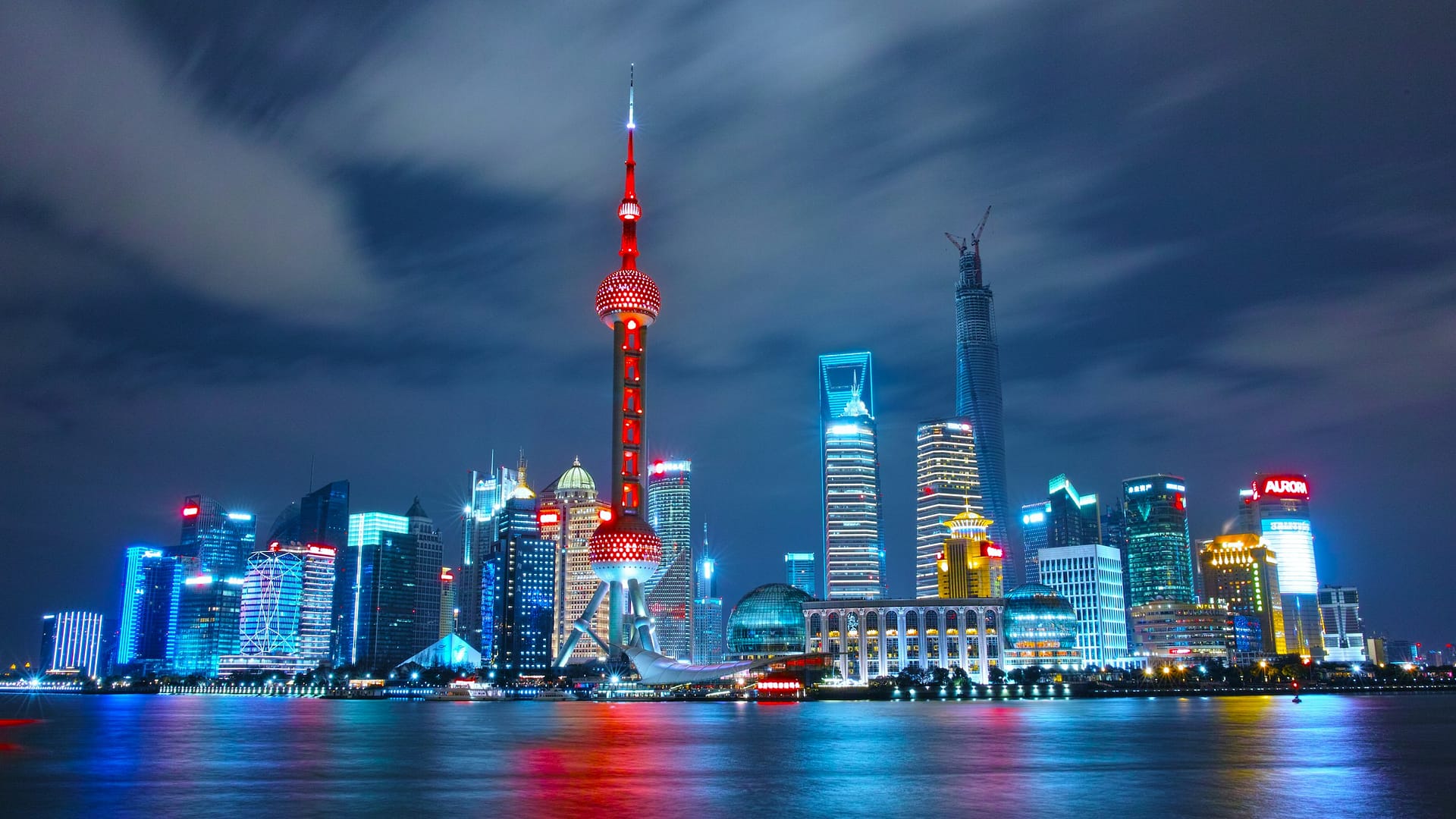
A brief history of Shanghai
Shanghai’s modern story is astonishingly short. Until the mid-19th century, Shanghai was a modest walled fishing and cotton town at the mouth of the Yangtze — never an imperial capital, never a centre of high culture. According to the Wikipedia history of Shanghai, its name literally means “upon the sea” — and the sea is what changed everything.
After China’s defeat in the First Opium War, the 1842 Treaty of Nanking opened Shanghai as one of five treaty ports. British, American and French concessions sprang up along the Huangpu River, and over the next nine decades Shanghai transformed into Asia’s most cosmopolitan city — a place of jazz clubs and trading houses, gangsters and revolutionaries, where the Bund waterfront became one of the most photographed skylines in the world.
Shanghai is the one major Chinese city whose architectural soul was written in the 20th century, not the 14th — and the one whose skyline is still being rewritten right now.
The Communist victory in 1949 closed the foreign concessions and tipped Shanghai into four decades of industrial socialism. Then, in 1990, Beijing authorised the development of Pudong — until then mostly farmland and warehouses on the east bank — as a new financial special economic zone. In thirty years it has produced the world-famous forest of supertall towers facing the Bund: Jin Mao, the Shanghai World Financial Center, and the Shanghai Tower, China’s tallest building.
For a wider view of where Shanghai sits in the country’s geography, see our guide to China’s provinces, and for the imperial history that the city largely sat out of, our guide to the major Chinese dynasties.
Shanghainese and Standard Mandarin
This is the most important section for Mandarin learners — because Shanghai is the first major city in this series where the local language isn’t a flavour of Mandarin.
Shanghainese is a Wu language (吴语 wú yǔ), part of a family spoken across the Yangtze Delta — Shanghai, Suzhou, Hangzhou, Ningbo and Wenzhou all have their own Wu varieties. Wu and Mandarin are separate spoken languages, not mutually intelligible: a Beijinger arriving in Shanghai with no exposure to the dialect understands roughly nothing of a Shanghainese conversation between locals. The grammar overlaps, but the sounds and vocabulary diverge sharply.
The practical good news: Mandarin is universal in Shanghai. Every school teaches in Standard Mandarin , all signage and media are in Mandarin, and a large share of the working-age population can also speak passable English thanks to the city’s international business focus. You will be understood in Standard Mandarin everywhere.
What you’ll notice is the texture. Older locals slip into Shanghainese with each other in markets and on the street. Mandarin spoken by Shanghai people often carries a soft “sh→s” tendency and a markedly different intonation pattern. For the bigger picture of where Wu fits among China’s tongues, see our guide to languages and dialects in China.
Quirky Shanghainese phrases worth knowing
Six distinctly Shanghainese phrases — written in characters, with an approximate Wu pronunciation. Tap 🔊 to hear the audio (note: audio uses the Mandarin reading of the characters, which Shanghai locals also understand).
The Shanghainese 你好. The character 侬 (nóng in Mandarin) means “you” in Wu — instantly identifies a speaker as a Shanghainese.
The most famous Shanghainese pronoun. “阿拉上海人” (“we Shanghainese”) is a flag-of-identity phrase you’ll hear in films and songs.
The Shanghainese version of 谢谢. Using “侬” instead of “你” turns it from polite Mandarin into local Shanghainese — small courtesy, big warmth.
A uniquely Shanghainese export to Mandarin. Describes a feminine cutesy charm — the affectionate “Shanghai girl” energy that’s become a stock film archetype.
An older Shanghainese gentleman with pre-1949 style — well-tailored, jazz-loving, espresso-drinking, fluent in English. A direct loan from “class”.
Literally “able to carry it clearly” — describes someone who reads social situations correctly and knows where the line is. The highest local compliment.
Shanghai cuisine: sweet, savoury and dumpling-led
Shanghainese food sits in its own corner of the Chinese culinary map — sweeter than the north, lighter than Sichuan, more delicate than Cantonese. The classic flavour profile is nóng yóu chì jiàng (浓油赤酱) — “thick oil, red sauce” — soy-and-sugar braises that produce dishes like the famous red-braised pork belly. For a wider view of how Shanghai fits into Chinese regional cuisine, see our regional Chinese cuisine guide.
Xiaolongbao
小笼包 · XiǎolóngbāoShanghai’s most famous export — thin-skinned soup dumplings filled with pork and a spoonful of aspic jelly that melts into broth during steaming. Nanxiang and Jia Jia Tang Bao are the legendary names.
Shengjianbao
生煎包 · ShēngjiānbāoThe pan-fried cousin of xiaolongbao — thicker dough, crispy golden base, sesame and spring onion on top. The classic Shanghai breakfast or 4pm snack.
Red-braised pork
红烧肉 · Hóngshāo ròuCubes of pork belly slow-braised in soy, rock sugar and Shaoxing wine until the fat is glassy and the sauce is mahogany. Shanghai’s signature home dish — sweeter than the Mao-style Hunan version.
Hairy crab
大闸蟹 · DàzháxièThe autumn delicacy — steamed freshwater crabs from Yangcheng Lake, eaten with ginger vinegar and warm Shaoxing wine. October–November is the season; restaurants book out.
Iconic attractions & cultural landmarks
Shanghai’s landmarks tell the city’s compressed modern story — 19th-century colonial waterfront, classical Chinese gardens preserved between high-rises, and a 21st-century financial skyline still being added to. Five anchors worth planning your trip around:
The Bund 外滩
A 1.5-kilometre stretch of pre-1949 European bank and trading-house architecture along the west bank of the Huangpu River — and a front-row view of Pudong’s supertall skyline on the opposite bank. Best at dusk.
Pudong skyline 浦东
The Shanghai Tower (632m, China’s tallest), the Jin Mao Tower, the Shanghai World Financial Center (“the bottle opener”) and the Oriental Pearl TV Tower. Observation decks at all four; Shanghai Tower’s is the highest in the world by floor.
Yu Garden 豫园
A Ming-dynasty classical Chinese garden in the heart of the Old City — rockeries, koi ponds, the Huxinting tea house, and the surrounding bazaar quarter full of xiaolongbao stalls and souvenir shops.
French Concession 法租界
Leafy boulevards of plane trees, art-deco villas and shikumen lane houses converted into boutique cafés, wine bars and design shops. The Wukang Mansion area is the most photographed corner.
Nanjing Road 南京路
China’s most famous shopping street — Nanjing East Road is the pedestrianised tourist zone running west from the Bund; Nanjing West Road is the upscale international fashion corridor.
Famous people from Shanghai
Six figures, all Shanghai-born or Shanghai-defined, whose work shaped Chinese culture in the 20th and 21st centuries.
Eileen Chang (张爱玲)
The defining literary voice of 1940s Shanghai — short stories and novellas of bourgeois romance and decline, later adapted by directors from Stanley Kwan to Ang Lee (Lust, Caution).
Lu Xun (鲁迅)
Born in Shaoxing but spent his final decade in Shanghai’s French Concession. Author of The True Story of Ah Q and Diary of a Madman — the foundational writer of modern Chinese literature.
Xu Beihong (徐悲鸿)
The artist who fused Western realism with Chinese ink-and-brush. His galloping horses are among the most recognised images in 20th-century Chinese art; he taught and exhibited extensively in Shanghai.
Yao Ming (姚明)
2.29-metre NBA Hall-of-Famer who broke Chinese sport into the global mainstream — eight-time All-Star with the Houston Rockets and now president of the Chinese Basketball Association.
Liu Xiang (刘翔)
Gold medallist in the 110m hurdles at Athens 2004 — the first Chinese man to win an Olympic track gold, and the first Asian to set a world record in a men’s sprint event.
Han Han (韩寒)
Bestselling young novelist turned racing driver turned film director (The Continent, Pegasus). The defining cultural voice of post-2000 urban Shanghai youth.
Shanghai’s modern economy & global role
Shanghai is China’s commercial capital — the country’s financial hub, its busiest port, the headquarters city of choice for foreign multinationals, and a manufacturing centre that builds everything from cars to commercial airliners.
Lujiazui · 陆家嘴
The Pudong financial district — home to the Shanghai Stock Exchange (the world’s third largest by market cap), the China headquarters of foreign banks, and the country’s largest concentration of fund managers and traders.
World’s busiest port
The Port of Shanghai has been the world’s busiest container port every year since 2010, processing over 47 million TEU annually — more than Los Angeles, Long Beach and Rotterdam combined.
Autos & aerospace
SAIC Motor (China’s largest carmaker) and joint-venture plants for Volkswagen, GM and Tesla’s Gigafactory 3 are all here. Comac, the country’s commercial aircraft maker, assembles the C919 just outside the city.
International HQ city
Roughly 900 multinational regional headquarters and 550 foreign R&D centres operate in Shanghai — more than any other Chinese city. The standard soft landing for any global firm entering the China market.
Why Shanghai matters for Mandarin learners
The easiest mainland city to soft-land in
Shanghai is the most international of the Chinese megacities and the gentlest first encounter for newcomers. Standard Mandarin is universal, signage is comprehensively bilingual, and English is more widely spoken here than in any other mainland city — particularly in the central business districts and the foreign-trade-facing service economy.
At the same time, Shanghai is a window into something Beijing alone can’t teach you: that “China” contains real linguistic plurality. Once your ear is trained in Mandarin, listen for the Shanghainese undercurrent — between older neighbours in markets, in older film soundtracks, in the lyrics of singers like Faye Wong’s earlier work. For the bigger-picture question of getting started, see our guide to learning Mandarin as an adult, and for the Mandarin/Cantonese decision, our Mandarin vs Cantonese guide.
Visiting Shanghai — practical notes
Best time
Spring (Mar–May) and autumn (Sep–Nov) — mild temperatures. Avoid the hot humid summer and damp cold winter.
Getting around
The world’s longest metro system, all bilingual; Didi for ride-share; Maglev from Pudong airport.
Visa
240-hour transit visa-free entry for many nationalities (as of 2026).
Language
Standard Mandarin universal; English the most widely spoken of any mainland Chinese city.
Useful Mandarin phrases — tap to hear
- 你好 (nǐhǎo)Hello
- 谢谢 (xièxie)Thank you
- 多少钱? (duōshao qián?)How much?
- 我要这个 (wǒ yào zhège)I want this
For a more complete travel-phrase guide, see our essential Mandarin phrases for travelling to China.
Test your Shanghai knowledge
1. Shanghainese (上海话) is part of which language family?
2. The Shanghainese pronoun 阿拉 means:
3. Which event opened Shanghai to foreign trade and concessions?
Frequently asked questions
Start your Mandarin journey
Want to learn the Standard Mandarin spoken across Shanghai and the rest of China? Online 1-on-1 lessons with a native speaker.