Egg Fried Rice — the everyday classic, and a real test of wok technique
“The humblest dish, and the hardest to make truly well.”
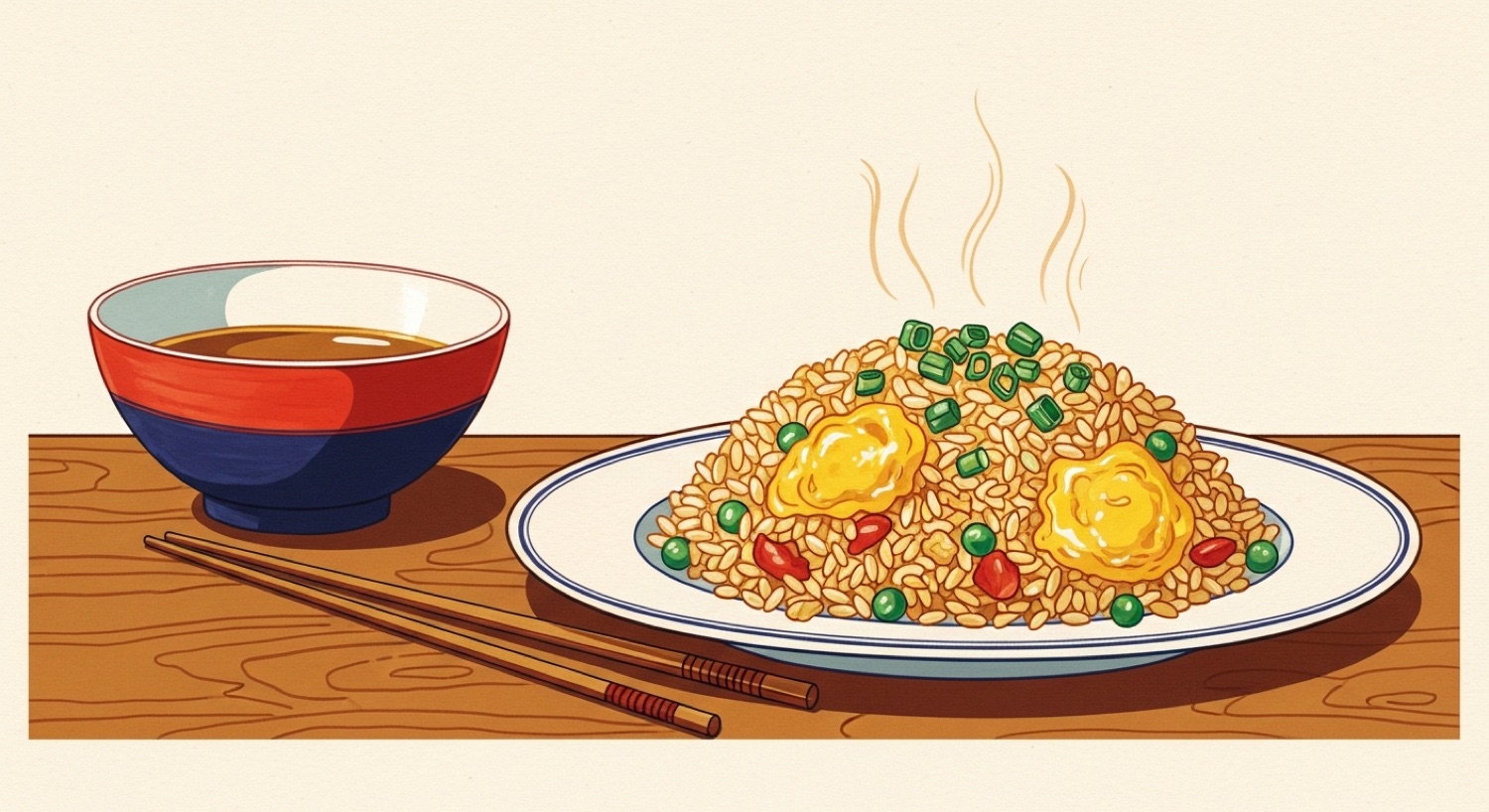
The dish every cook is judged by
Egg fried rice (蛋炒饭) is the most everyday food in China — a way to turn last night’s rice into a quick, satisfying meal. But it’s also the dish Chinese cooks are quietly judged by, because doing it well is all technique: light, separate golden grains with a whisper of smoky “wok breath,” not a greasy, clumpy heap.
The good news is that the secret is almost embarrassingly simple, and we’ll walk through it below. Master this and you’ve mastered the foundation of every fried rice there is — from a plain egg version to the famous Yangzhou style. And because this is WillyChina, you’ll learn to say it too.
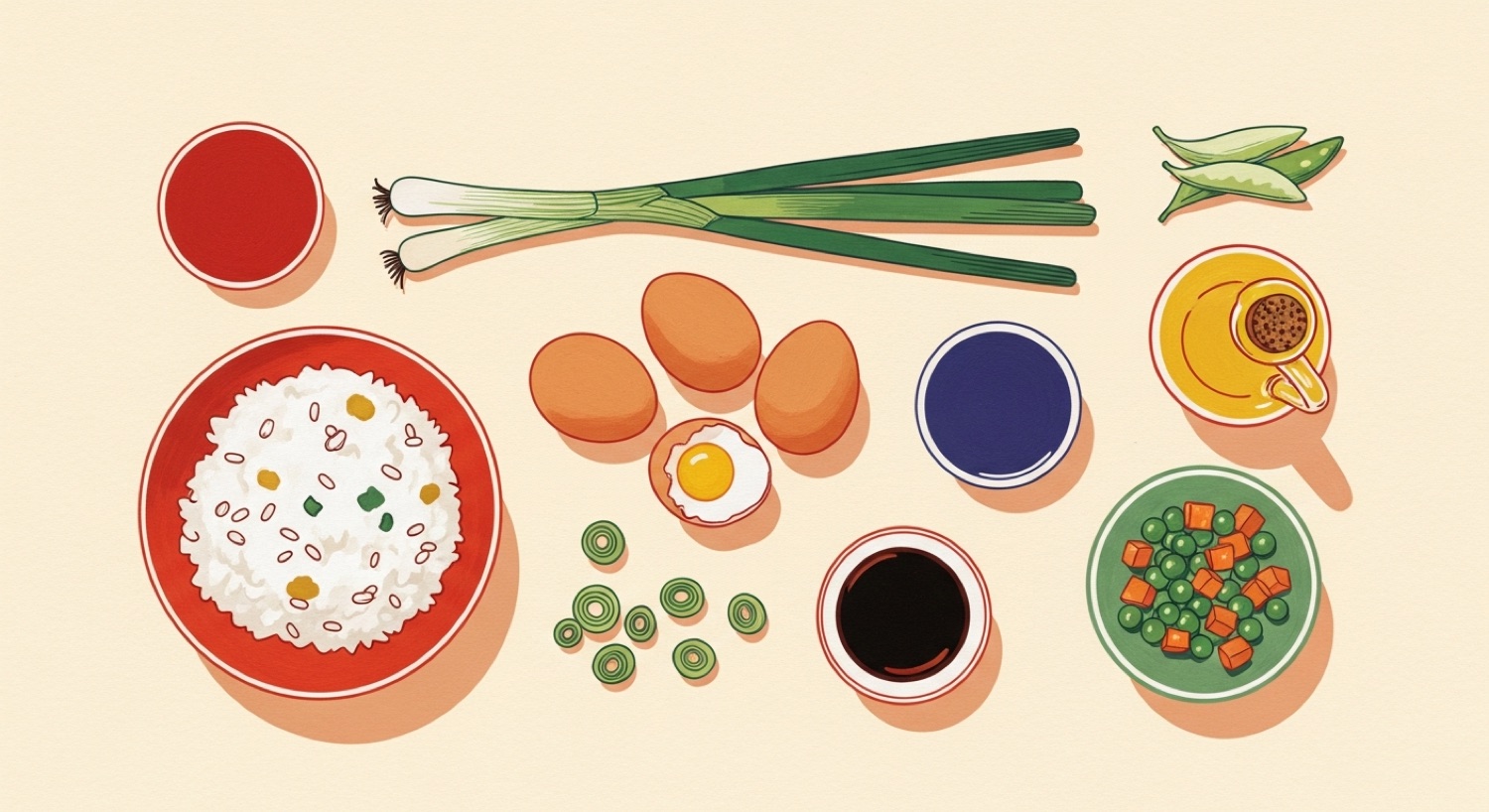
Egg Fried Rice
The essentials
- 600 g cooked rice, cold (ideally day-old) — 米饭
- 4 eggs, beaten — 鸡蛋
- 3 spring onions, whites & greens sliced separately — 葱
- 2 tbsp neutral oil
- 1.5 tbsp light soy sauce — 酱油
- ½ tsp salt · pinch of white pepper
Optional add-ins
- 100 g frozen peas & diced carrot (or leftover ham, prawns, char siu)
Method
- Loosen the rice. With damp hands, break up the cold rice so there are no clumps. Cold, day-old rice is the whole secret — its grains are dry and firm, so they fry up light instead of turning to mush.
- Scramble the eggs. Heat 1 tbsp oil in a wok over high heat. Pour in the beaten egg, let it puff at the edges, then scramble into soft curds and scoop it back out.
- Fry the rice. Add the last of the oil, then the rice. Press it flat, then toss and press again, over and over, so every grain heats through and picks up a little sizzle from the hot wok — that smoky note is 锅气 (guōqì, “wok breath”). Stir the peas and carrot in now, if using.
- Season. Return the egg and add the soy sauce, salt, white pepper and the spring-onion whites. Toss for a minute until everything is hot and evenly coloured.
- Finish. Off the heat, stir through the spring-onion greens. Serve straight away, while it still has its sizzle.
Per serving (approx., 4 servings): 320 kcal · 10 g protein · 12 g fat · 42 g carbs. A rough estimate for guidance only.
Cold rice, high heat
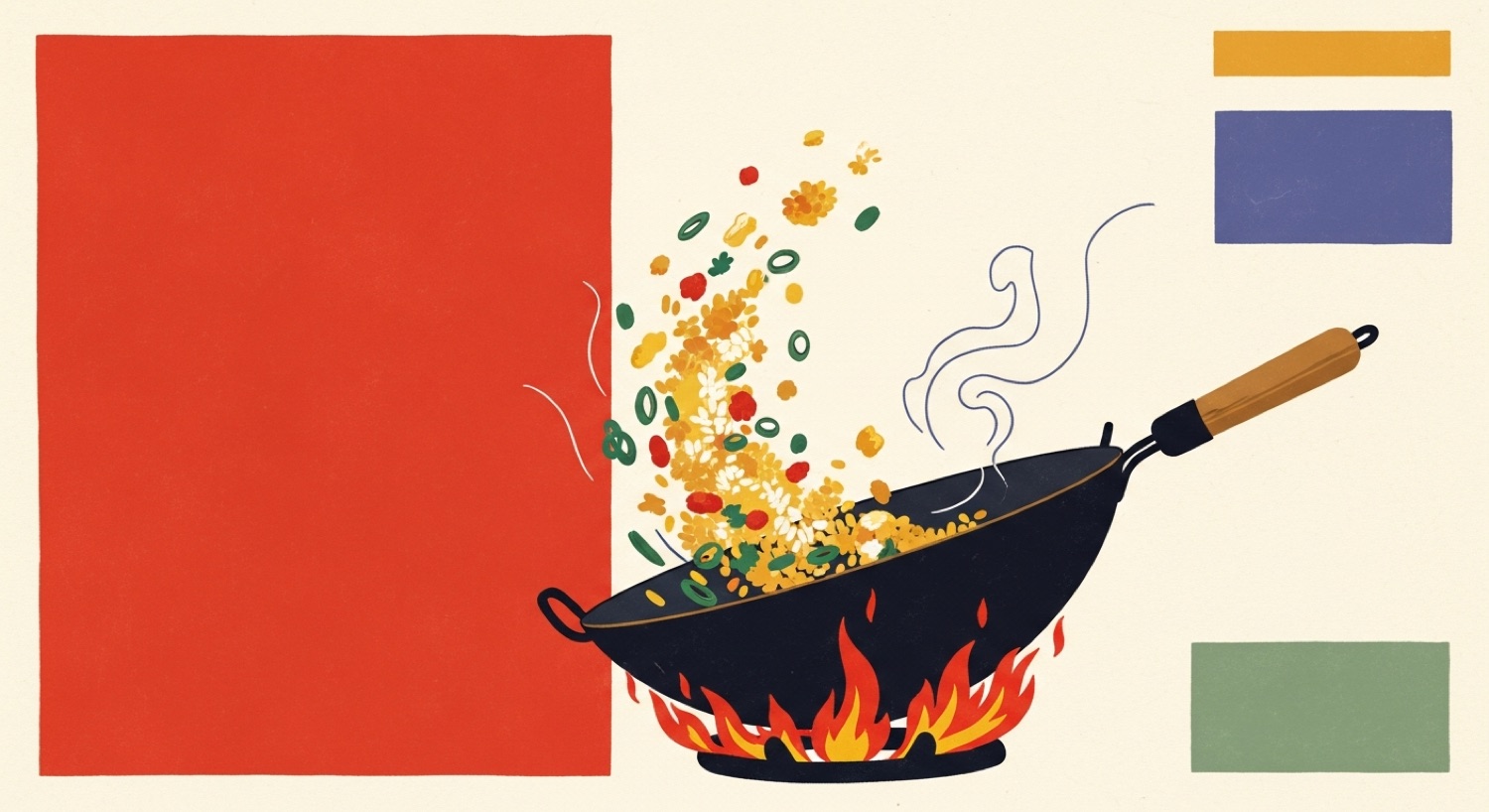
Two things separate great fried rice from a soggy one. The first is cold, day-old rice. Fresh-cooked rice is full of steam and clings together, so it stews rather than fries. Rice that’s spent a night in the fridge has dried out and firmed up — its grains stay separate and turn light and fluffy in the wok. (In a hurry? Spread fresh rice on a tray and chill it for 30 minutes.)
The second is high heat and space. Fried rice wants a screaming-hot wok and room to sear; crowd the pan or use a low flame and the rice steams and goes gluey. Get the wok really hot, keep the rice moving, and don’t cook more than the pan can handle at once. That’s the whole art.
Say it in Chinese
The dish, its key parts and the words for the table — tap to hear each.
Tips & variations
- Golden fried rice (黄金炒饭). For grains that are glossy and separate, toss the raw rice with the beaten egg first, then fry — each grain gets its own golden coat.
- Go Yangzhou. The famous 扬州炒饭 adds prawns, char siu pork, egg and peas — a fancier cousin built on the same technique.
- No wok? A wide, heavy frying pan is fine. Get it very hot and don’t overcrowd it — cook in two batches if your pan is small.
- Use up leftovers. Fried rice is a fridge-clearer: leftover roast meat, ham, prawns, corn or any small diced veg all belong.
FAQs
Learn to order it — and cook it — in Mandarin
Food is the tastiest way into a language. Practise real Mandarin, dishes and all, in 1-on-1 online lessons with a native speaker.
Book a Free Intro Call